Real Surgeries in Russia Are Now Performed With the Help of Virtual Technologies
Russian surgeons are increasingly using VR and AR tools to enhance surgical precision and accelerate patient rehabilitation
VR and AR Move Into Real Operating Rooms
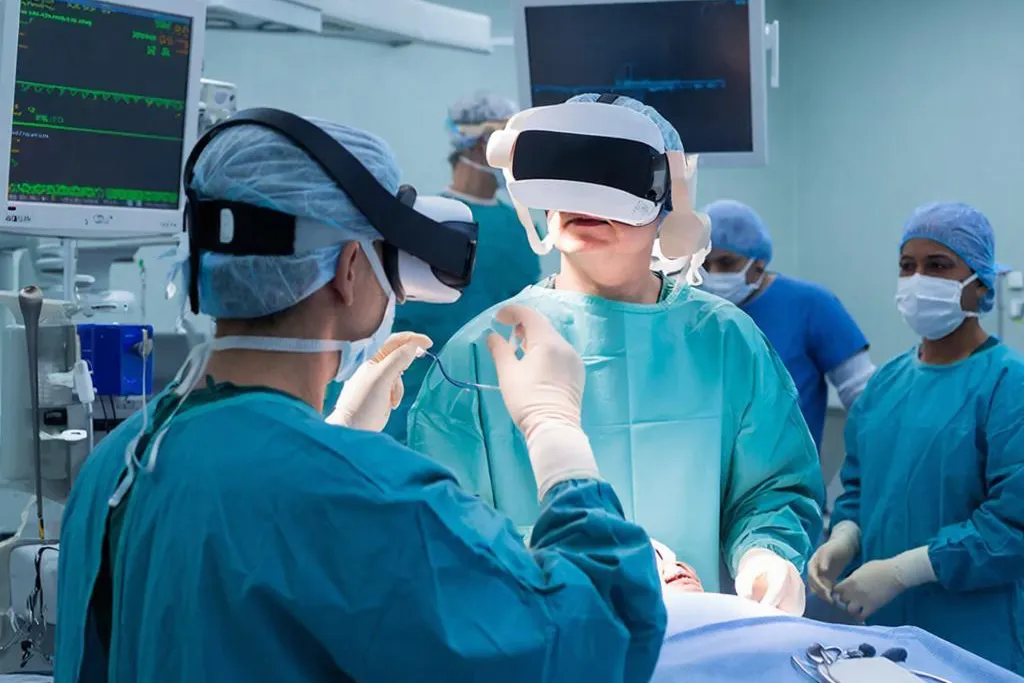
Russian neurosurgeons are rapidly adopting virtual and augmented reality technologies to assist in highly complex procedures. These systems provide three‑dimensional visualizations of surgical zones, helping physicians navigate delicate structures with greater accuracy and reduced risk.
At the Burdenko Main Military Clinical Hospital in Moscow, VR headsets have become part of routine preparation for operations. Surgeons review 3D models generated from CT scans to map reference points and plan the procedure.
VR‑Driven Rehabilitation Rebuilds Neural Pathways
VR is also reshaping rehabilitation science. According to Viktor Chertopolokhov, a researcher at Lomonosov Moscow State University, immersive environments help patients regain motor function even after severe brain injuries.
AR Helps Perform High‑Risk Surgeries
Augmented reality tools are also proving lifesaving. In a recent case at the Burdenko hospital, AR glasses allowed surgeons to visualize a patient’s spine during an operation to remove a metal fragment. The projection helped physicians locate and extract the object quickly and safely.
Chief neurosurgeon Shamil Gizatullin believes these technologies represent the future of neurosurgery, offering new ways to treat injuries once considered irreversible.