Russia Is Sending a “Pocket-Sized” Satellite Into Orbit to Test Software
With the help of a new small satellite, software and mobile app developers will be able to test their products directly in space
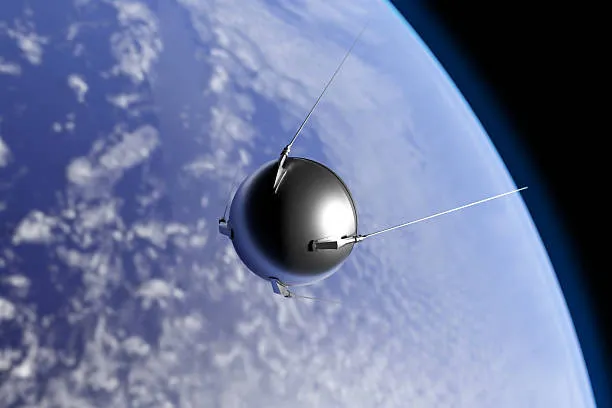
At the end of December 2025, a miniature satellite called RUVDSSat1 will head into space. It was created by the hosting provider RuVDS to conduct experiments with software and telemetry. Its launch method is unusual: instead of being deployed directly from a launch vehicle, the satellite will reach orbit through a specialized “mother” module, Mule 4T, developed by OKB Fifth Generation.
One Engine, Many Satellites
After the Soyuz-2.1b rocket reaches its planned trajectory, Mule 4T will separate and take over the function of a mini upper stage. The module carries its own orientation system, sensors, and deployment mechanism. First, Mule 4T stabilizes itself and verifies communication and system parameters of all “daughter” satellites. Then a built-in spring- or pneumatic-based launcher gently releases the picosatellite into independent flight.
This method removes the need for a full upper-stage system on small satellites and makes it possible to launch several of them at once. According to engineers at OKB Fifth Generation, Mule 4T could become a new standard for deploying small scientific missions: such “orbital docking stations” simplify preparation, reduce launch costs, and allow more frequent space experiments.
Space for Professionals and Enthusiasts
RUVDSSat1 is built on the TriSat platform and is designed to operate for about a year. In orbit, it will allow developers to test their software directly in space: measuring data-transfer latency, algorithm stability, radio-module performance, and power-management behavior in real conditions. RuVDS also plans to launch educational programs so students and engineers can upload their own experimental data to the satellite. Amateur radio operators and independent developers will also be able to use the satellite for their projects.
In essence, RUVDSSat1 is an IT ecosystem in space. Its Raspberry Pi Zero core turns it into a virtual “server above Earth,” enabling users to program, run services, test network products, and work with data. It creates one of the most direct bridges yet between IT teams on the ground and orbital infrastructure.