Atommash Plant Robotizes Reactor Weld Inspection
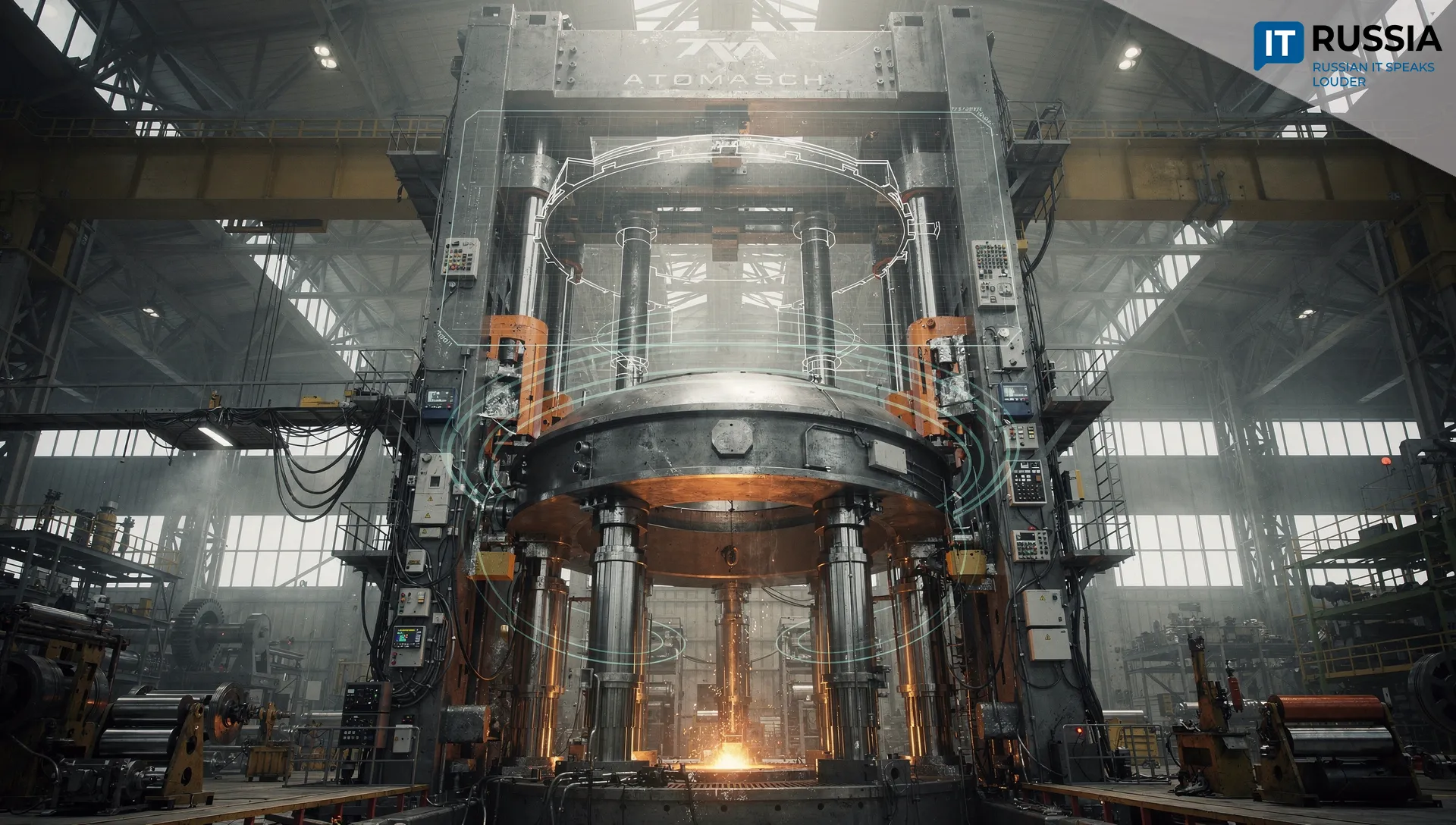
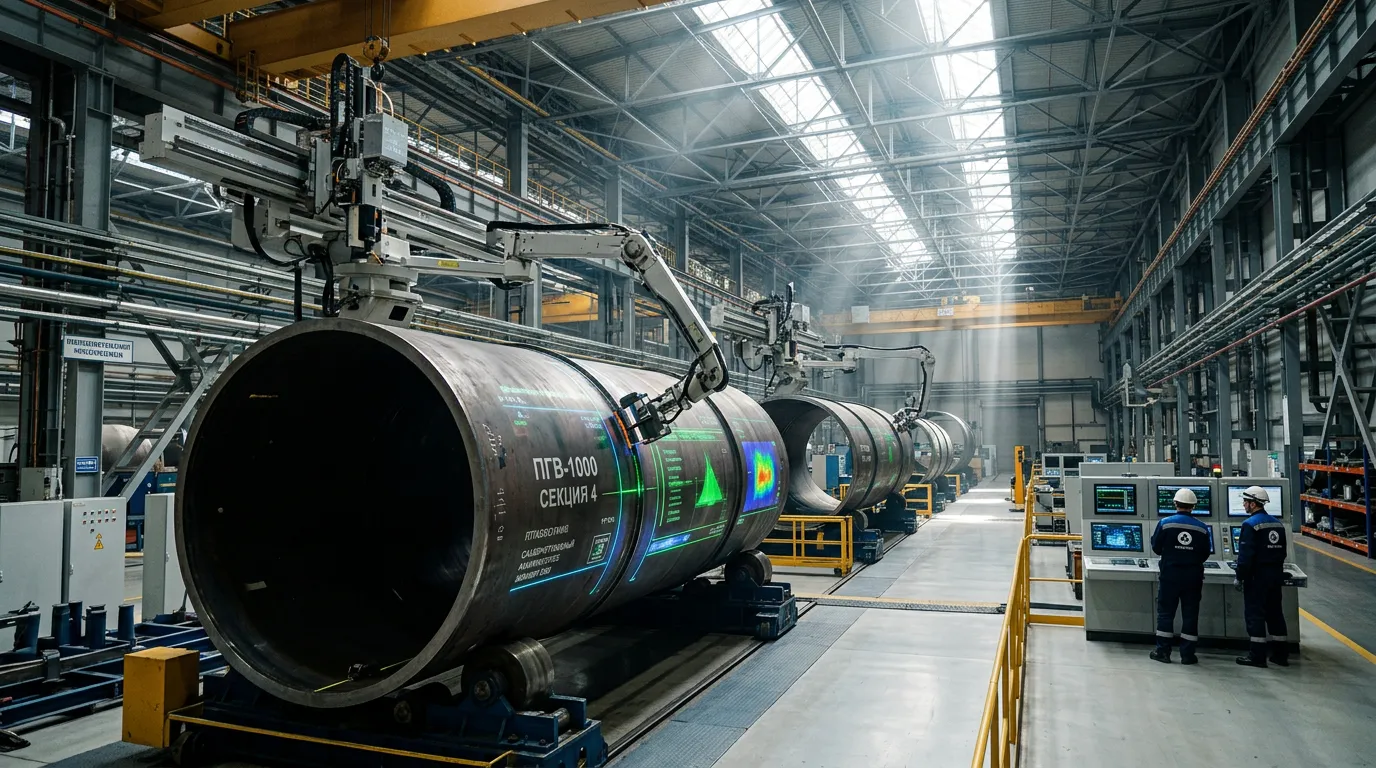
Atommash, a plant in Volgodonsk, has commissioned a second robotic system for ultrasonic inspection of welded joints.
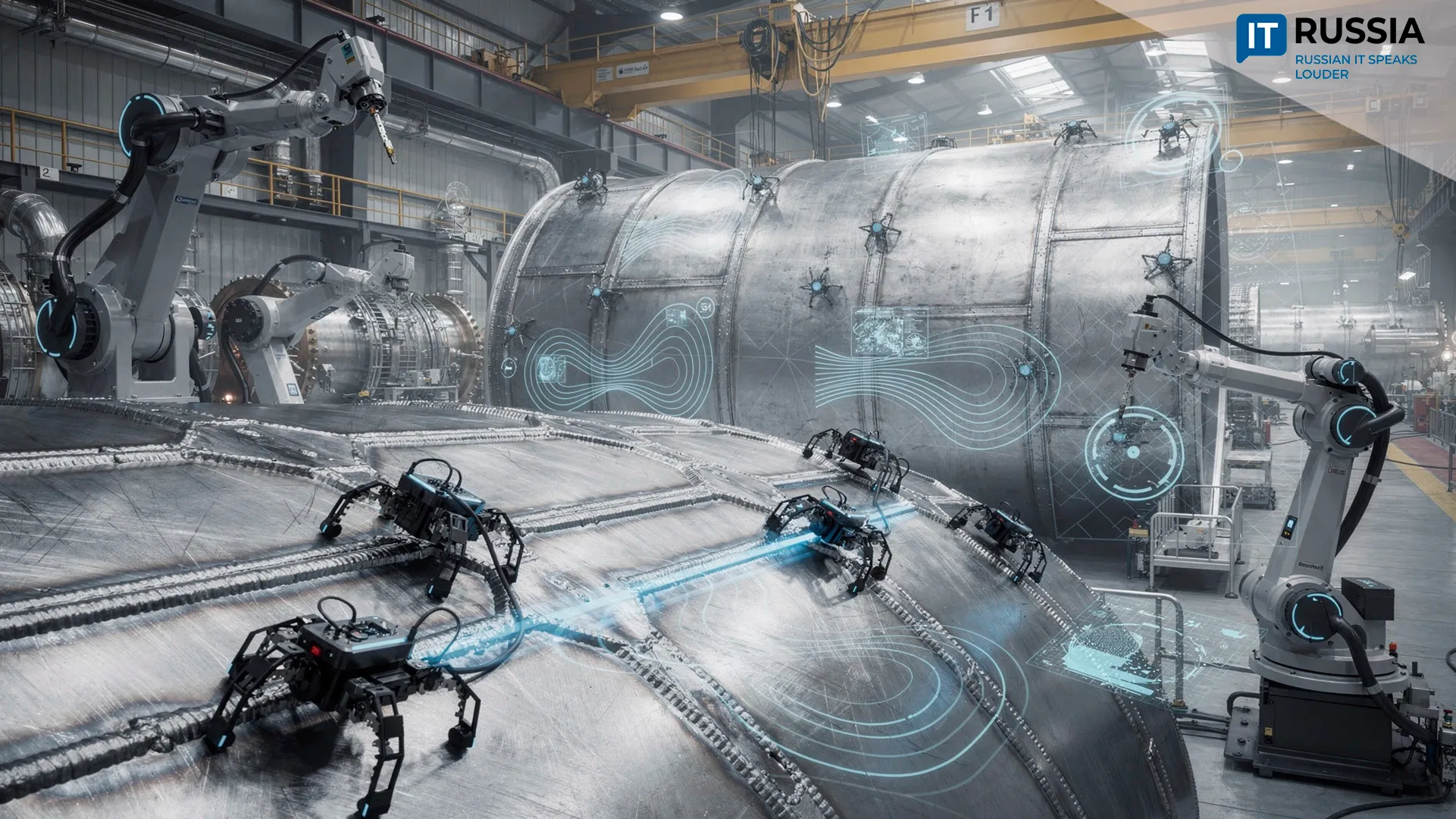
Less than a year after deploying its first robot, the plant has added a second and completely eliminated manual weld scanning in hard-to-reach areas.
Inspecting Complex Weld Geometries
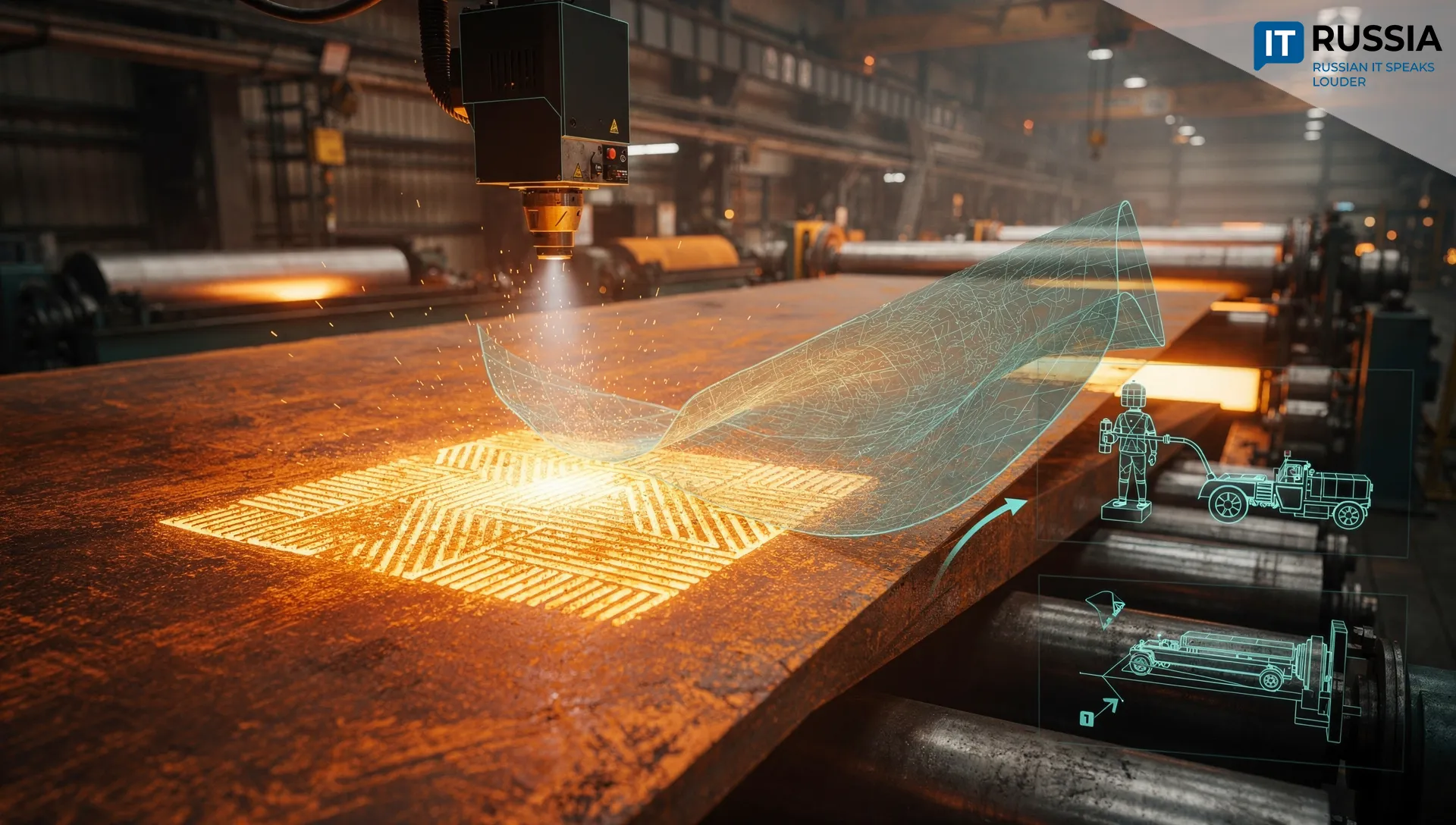
When scanning welds, sensors follow a predefined path without human intervention, while the system automatically identifies the type of defect and its precise coordinates. Ultrasonic inspection detects internal defects in metal, including pores, slag inclusions and microcracks, while the manipulator maintains consistent sensor contact with the surface and uniform sensitivity along the entire weld.
Safety Class 1 equipment requires 100% inspection of welded joints because any deviation from standards can affect the integrity of the circuit. The robot scans at a predefined interval and provides complete coverage of the weld’s heat-affected zone.
When inspecting components with complex geometries, the robot completes the job 30% faster than a human operator. Reactor vessels and steam generators have uneven surfaces and hard-to-reach areas, making manual scanning of these sections time-consuming. Adding the second robot allowed the plant to completely eliminate manual scanning in hard-to-reach areas. It also reduced the amount of couplant fluid used for ultrasonic inspection. Data on weld condition are now stored digitally and incorporated into each component’s electronic passport.
From the First Spider Robot to Production-Scale Deployment
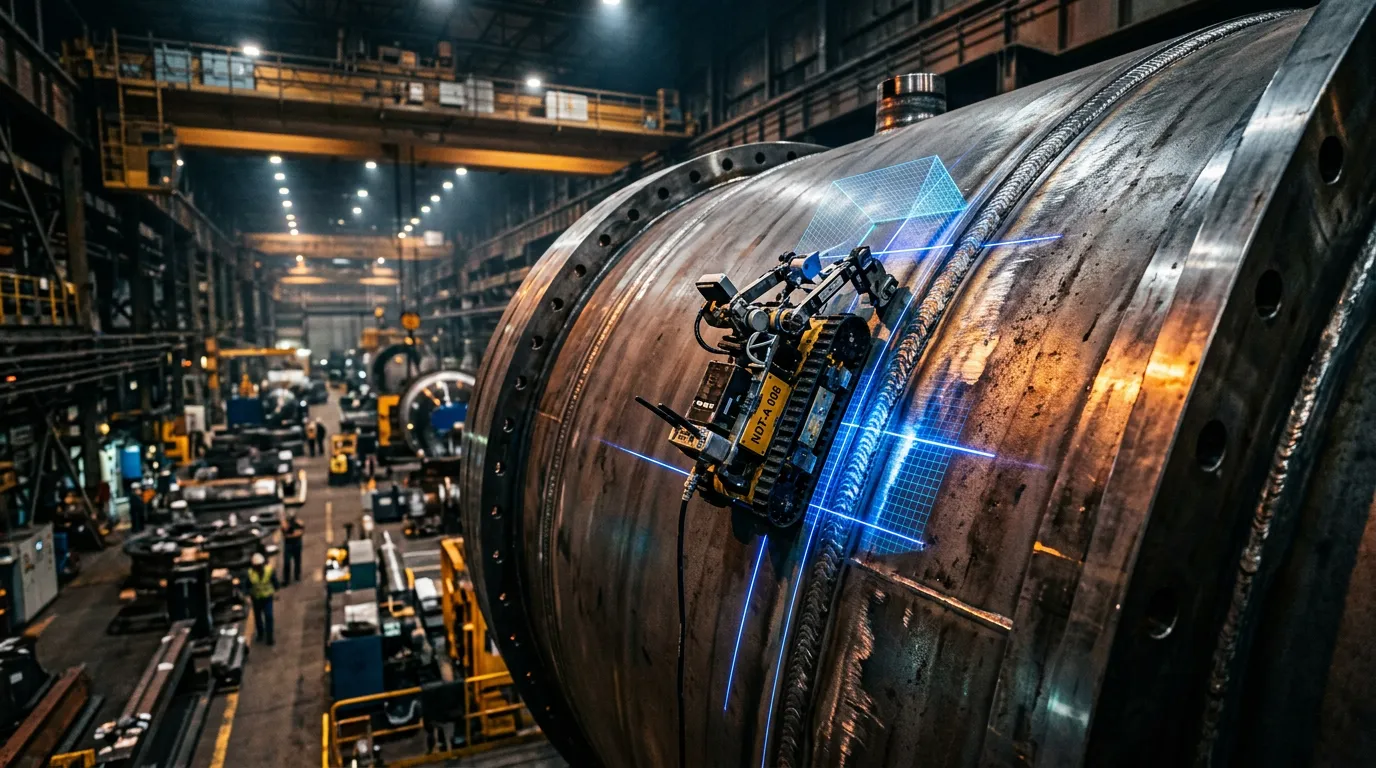
The latest expansion of the robotic fleet is a direct continuation of a program launched at the plant a year earlier. In October 2025, Atommash deployed its first spider robot for ultrasonic inspection. Designed to inspect welds up to 30 centimeters (about 12 inches) thick on reactors and steam generators, it made some inspection operations roughly three times faster. The success of the first system showed that the technology was ready to scale – the plant moved from a pilot deployment to production-scale use in less than a year.
Enterprises in the mechanical engineering division have been systematically working to robotize manufacturing processes. In December 2024, TsKBM in Sosnovy Bor began testing a collaborative robot for laser welding components of main circulation pumps. In July 2025, intelligent robotic arc-welding systems were presented at an industry strategy session. And in January 2026, a welding robot began operating at ZiO-Podolsk in the production of heat-exchange equipment for nuclear power plants. There, automation reduced estimated labor requirements for a series of products from 16,000 to 4,000 standard labor-hours.
A 30-Project Program
The shift from individual installations to systematic robotization has now expanded across the entire division. Atommash and other enterprises have selected 30 projects to automate transportation, welding, surface cleaning and inspection operations. Their combined impact is estimated at roughly 500,000 standard labor-hours saved – an amount comparable to the annual production program of a plant the size of Petrozavodskmash.
Robots are helping fill workforce gaps in manufacturing occupations facing labor shortages, including welders, nondestructive testing professionals and operators of complex machine tools. Automating routine and physically demanding operations also frees employees to take on other work.
Export Potential and the Digital Factory
Certification of robotic inspection under Russian and international standards opens the way for the technology to be used on overseas projects. Atommash manufactures equipment for foreign nuclear power plants being built by Rosatom (State Atomic Energy Corporation Rosatom). In particular, the plant produces reactors and steam generators for Egypt’s El Dabaa Nuclear Power Plant.
Robotization is becoming part of the broader “digital factory” concept. Enterprises across the division are already successfully digitizing processes from component manufacturing through final quality acceptance.