Reshetnev University Unveils Automated Design System for Hybrid Communications Networks
The software can combine satellite and terrestrial networks in a seamless environment.

Building communications networks across Russia is challenging because of the country's vast distances. Many remote areas cannot get reliable data transmission through any single technology. Hybrid networks offer a way to address this problem.
A Full Replacement for Foreign Alternatives
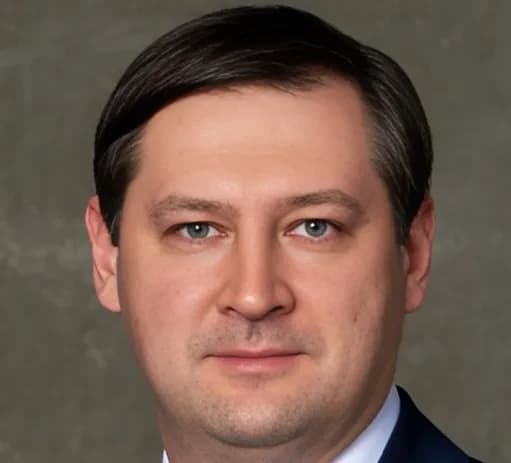
Russia's Reshetnev University has unveiled a unique computer-aided design (CAD) system for hybrid communications networks. The developers say it can fully replace foreign alternatives. Edkham Akbulatov, the university's rector, announced the system at the 30th International Scientific and Practical Conference, Reshetnev Readings.
Hybrid networks can combine different data transmission technologies in a single, seamless infrastructure. “The software can automatically design both space-based and terrestrial networks, replacing an entire suite of foreign alternatives,” Akbulatov said. He also emphasized that the system could be particularly useful in remote areas, where networks may rely on satellites in different orbits, stratospheric platforms and ground stations.
Until now, engineers have designed such hybrid networks using a collection of foreign software tools, including STK, Visualyse, Satsoft and Matlab, manually transferring data between them. “Our goal is to develop a single Russian software platform that takes all relevant factors and International Telecommunication Union (ITU) standards into account, then proposes a network design tailored to the customer's requirements and budget. The engineer specifies the network requirements, and the software tests different configurations to find the most efficient option,” Akbulatov said.
The new software designs a network with its eventual integration into existing equipment in mind. The rector added that the system can handle networks with nearly 1,000 nodes. Traffic distribution takes seconds, while synthesizing the complete network architecture takes at least 4.5 hours, depending on the number of variables and constraints involved. That is dozens of times faster than the time limits set by contractual requirements.

Bringing Together All the Key Technologies
Developing a specialized platform of this kind is important for the entire Russian telecom industry. This is a complex software product designed to address scientific and engineering challenges, not a counterpart to a mass-market office application.
Russia is currently pursuing several telecommunications projects: Skif (Scythian), Express-RV, Marafon IoT (Marathon IoT), and Rassvet (Dawn), a project to provide broadband satellite connectivity through a low Earth orbit (LEO) constellation. These systems differ in their intended uses, orbital parameters, equipment and ground-infrastructure requirements. The new software is designed to bring together the key strengths of all these systems and select the most suitable network parameters for each location.

Growing Interest in Hybrid Networks
Hybrid networks have been attracting growing interest in recent years, and the approach is already being put to practical use. In August 2025, the Bonch-Bruevich St. Petersburg State University of Telecommunications unveiled a hardware and software system for managing drones over cellular and satellite links. The system can transmit both control commands and video streams across different communications channels.
In October 2026, Russian mobile operator MegaFon and satellite company Bureau 1440 announced the country's first hybrid communications session using a domestic low Earth orbit satellite constellation. During a demonstration at the Digital Solutions Forum, the companies established a connection with representatives of Krasnoyarsk Krai. A base station made by Russian manufacturer YADRO provided terrestrial radio access. The technology combines terrestrial mobile infrastructure with a satellite data link. Later that fall, Bureau 1440 also reached an agreement with mobile operator Beeline to test hybrid connectivity. The goal is to give subscribers access to the mobile network through a base station that uses a satellite link for backhaul.
As for Reshetnev University's system, a key next step will be to fully adapt it for Russian operating systems. Only then will it be possible to discuss deployment and test how well it performs in real-world projects.