Snowball Effect: Russia Wraps Up Its Flagship Digital Skills Initiative With ASEAN
An online summit organized by the Agency for the Development of Professional Excellence (ARPE) marked the completion of a two-year Russia-ASEAN digital skills initiative that brought together more than 20 representatives from Russia, BRICS countries, and Southeast Asia.

How would you measure the impact of a digital education initiative? One answer may be the number of people who gain new skills and go on to teach others. That idea was at the heart of the July 28 online summit "Russia – ASEAN: Digital Skills and Workforce Development," organized by the Agency for the Development of Professional Excellence (ARPE). The event quickly established itself as a serious forum for sharing experience, bringing together more than 20 representatives from Russia and ASEAN member states, including BRICS countries. Discussions centered on a project led by Russia's Ministry of Economic Development and supported by the ASEAN Secretariat under the Comprehensive Plan of Action for the Russia-ASEAN Strategic Partnership for 2026–2030. Notably, participants focused on the outcomes of this major two-year initiative rather than simply discussing future intentions. Additional information and photographs from the summit are also available on the Kreativnye Industrii Rossii (Creative Industries of Russia) project website.

Knowledge Multiplies
Teaching students from outdated textbooks has little practical value today. The organizers recognized this from the outset, so they focused the initiative on master trainers rather than students alone. The program's greatest asset is the network of 172 master trainers prepared across the ten ASEAN member states.
The curriculum emphasized practical workplace competencies, including web technologies, graphic design, business software solutions, and drone operations. Artificial intelligence received special attention through a dedicated program that ARPE developed jointly with Skoltech.
"We have done more than prepare educators and industry experts. We have created a sustainable model for international cooperation," said Alina Singh, Deputy Director General for International and Industrial Cooperation at ARPE, summarizing what she sees as the initiative's most important achievement.
Why does that approach matter? Training 300 people creates a limited impact. But if those participants include educators, engineers, and organizational leaders who return home and pass their knowledge to others, the effect begins to compound. Alexey Skornyakov, Head of ARPE's Directorate for Strategic Development, highlighted precisely that point. The project is built around the transfer of skills and knowledge as an ongoing process that can continue to expand and evolve.

Technology as a Safety Net
The initiative is part of a broader partnership between Russia and ASEAN. In June 2026, digital cooperation was one of the central themes discussed by national leaders in Kazan during a summit marking the 35th anniversary of Russia-ASEAN relations. The city welcomed guests with a traditional round loaf and chak-chak, a regional Tatar pastry, before discussions turned toward the future. The business program at the Bashir Rameev IT Park focused on artificial intelligence, cybersecurity, and digital trade.
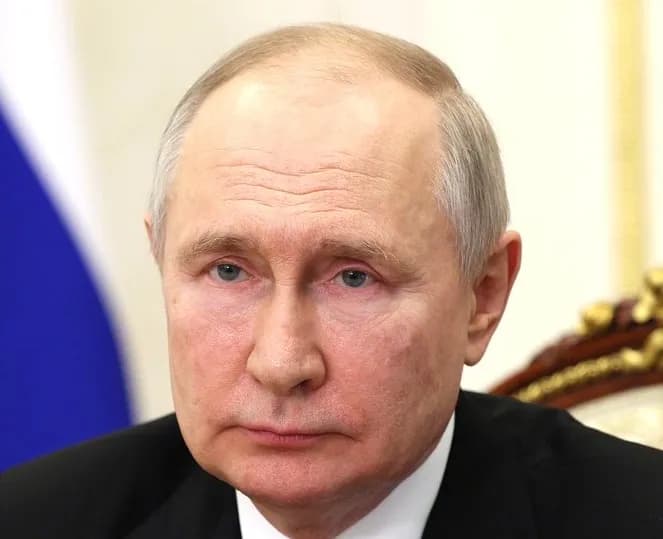
For Southeast Asian countries, these issues are closely tied to economic development and competitiveness. The region's digital economy has already exceeded $305 billion and continues to grow at roughly 15% annually. In that environment, countries are looking for partners that can contribute not only investment but also technology, professional expertise, and educational standards. As ASEAN Secretary-General Kao Kim Hourn noted, Russia has a genuine opportunity to establish its place in that ecosystem. Speaking at the summit, Russian President Vladimir Putin described the strategic partnership as an important stabilizing factor in the Asia-Pacific region. At a time of global economic uncertainty, resilient channels for cooperation in advanced technologies can serve as an important safety net.
Just one month after the Russia-ASEAN summit, those commitments had already taken tangible form through reports, certificates, and hundreds of newly trained professionals. More than 300 participants from Southeast Asia completed the program. As noted earlier, 172 became master trainers, 145 earned independent certification, and another 224 completed remote internships on Russian digital learning platforms.

Turning Goodwill Into Lasting Impact
Malaysian Prime Minister Anwar Ibrahim also addressed the Russia-ASEAN summit. His message captured the initiative's broader ambition: "Let us transform goodwill into partnerships, partnerships into projects, and projects into tangible benefits for our peoples." That principle closely reflects ARPE's own mission. Established in 2020 at the direction of the Russian president, the agency focuses on turning strategic goals into practical action. Training programs, internships, and, most importantly, well-prepared educators create benefits that continue long after a course ends. Across different countries, graduates are becoming professionals capable of implementing Russian technologies, adapting them to local needs, and building new digital products on the foundation of the knowledge they have acquired.