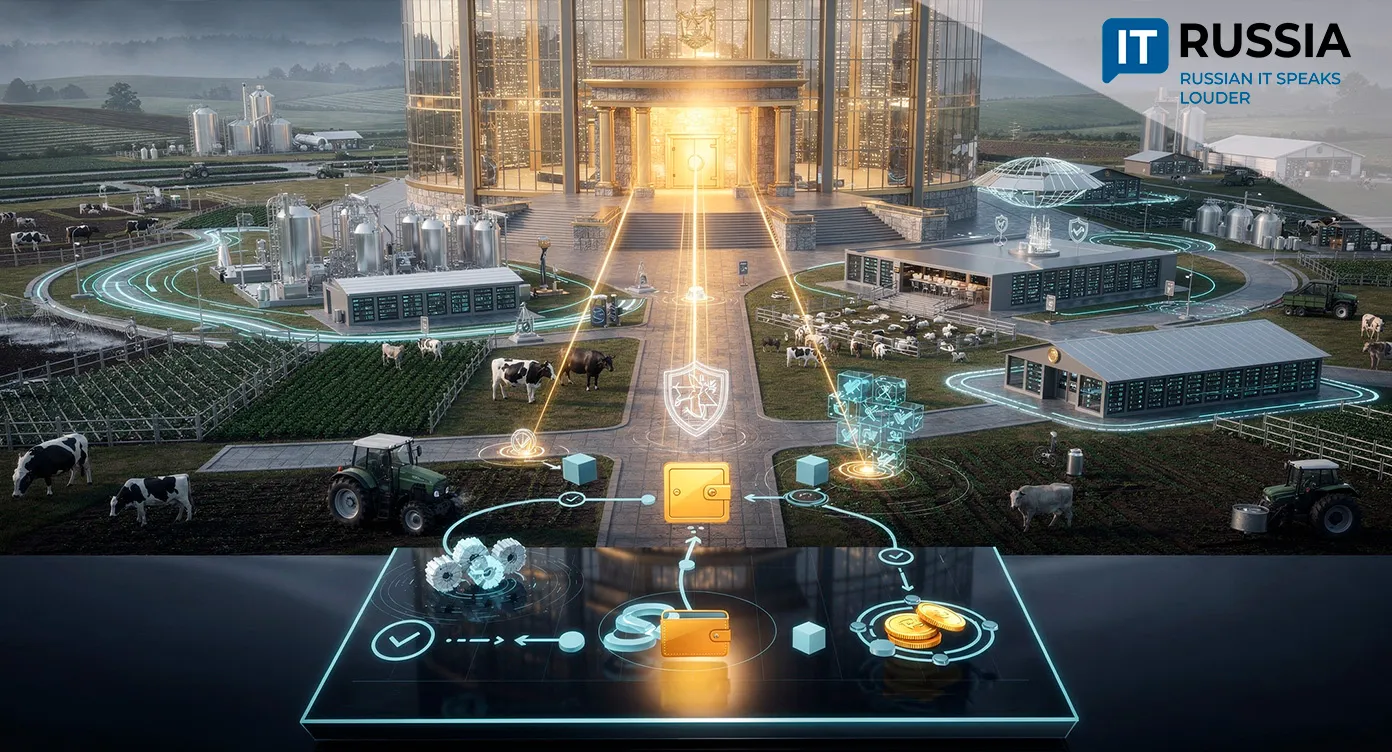
Digital Ruble Smart Contract Platform to Open New Opportunities for Business
The Bank of Russia has unveiled a concept for a Commercial Smart Contract Platform built on the digital ruble. Once launched, the platform will allow not only the regulator, but also other qualified market participants, to develop smart contracts for programmable payments.

The concept has been released for public consultation, with the Bank of Russia accepting comments and proposals through September 30, 2026. The document includes examples of smart contract applications, describes the roles of different participants and outlines information security mechanisms. During the initial rollout, the regulator will operate the platform.
Commercial Smart Contract Platform Concept
The Bank of Russia has proposed allowing businesses, fintech developers and insurance companies to create their own algorithms that automatically transfer digital rubles when predefined conditions are met. Before being published in the shared marketplace, every smart contract will undergo a rigorous review to verify its business logic, legal compliance and adherence to information security standards.
The initiative gives businesses an opportunity not only to automate transactions but also to build new digital services around digital-ruble smart contracts. For government, the platform creates new opportunities to automate public procurement and subsidy programs, with smart contracts helping ensure that budget funds are spent for their intended purposes.

High-Demand Use Cases
For Russia's IT sector, the initiative opens a new market for programmable payment services. A unified infrastructure will eliminate the need for developers to build separate gateways for every bank, while creating broad demand for API integrations, smart contract code auditing and data protection services. Integration with government registries and commercial databases will also be required.
Real estate, e-commerce, insurance, corporate treasury management and charitable giving are expected to become the platform's primary application areas. For example, smart contracts could automatically trigger insurance payouts once an accredited organization confirms that an insured event has occurred.

Digital Currency Moves Toward Broad Market Adoption
The Bank of Russia first introduced the concept of a third form of national currency in 2021-2022, embedding programmable functionality into its design from the outset. Over the following two years, participating banks and selected customers tested payment transactions using real digital rubles. In 2025, Russia adopted the legal framework governing the digital ruble and approved a phased rollout schedule while continuing pilot projects involving salary payments and subsidies in digital currency. In March 2026, Bank of Russia Governor Elvira Nabiullina announced that work was underway on an open Commercial Smart Contract Platform for the digital ruble. By June, the concept had been released for public consultation.

Building a Programmable Finance Ecosystem
The digital ruble is evolving into the foundation of a broader programmable finance ecosystem. In the near term, the regulator will need to define participation requirements, standardize external data sources and strengthen cybersecurity protections. Commercial services are expected to be deployed at scale only after the regulatory framework is complete and stress testing has been finished.
The technology is expected to gain traction first in standardized use cases such as corporate treasury operations, recurring subsidy programs and escrow transactions.
Over the medium term, the platform is expected to establish a new high-technology segment within Russia's fintech industry. In parallel, it is laying the groundwork for future cross-border settlements between central bank digital currencies issued by other countries. As China, India and the European Union continue developing their own CBDC initiatives, Russia's approach could emerge as one of the most mature examples of a centralized smart contract platform.