Russian Plant Sends Robots Into Uranium Mines
Companies are rolling out robotic drilling systems in industrial production.
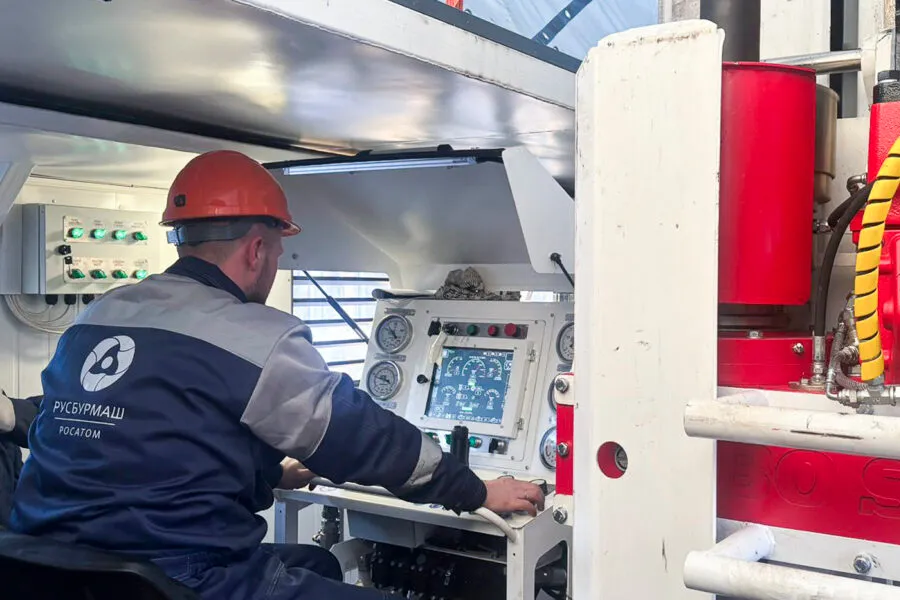
Rusburmash has begun deploying domestically developed robotic drilling systems at uranium deposits, marking an initial step toward autonomous production. The move was reported by the industry outlet Strana Rosatom.
The Birth of the ZBO S50
Amid the need to replace aging imported equipment, Rusburmash partnered with the Orenburg-based Zavod Burovogo Oborudovaniya (Drilling Equipment Plant, ZBO) to develop an autonomous drilling rig equipped with machine-learning systems. The equipment is already operating at the Khiagda uranium deposit in Russia’s Republic of Buryatia.
The key feature of the new rigs is an electrohydraulic drive paired with an intelligent control system. It helps prevent accidents, such as sudden load spikes, and minimizes human error. Since the system was introduced, productivity has increased by 10 percent.
The Model Keeps Learning
A major advantage is the use of artificial intelligence. The rig transmits real-time drilling data to an analytics platform, where a neural network analyzes geological changes and recommends optimal operating parameters, including force, rotation speed, and fluid volume. The model was trained on data from other deposits, and specialists are continuing to collect site-specific geological and geotechnical data to further refine the system.
Rusburmash plans to purchase 10 such rigs from ZBO for uranium production and exploration. Five will be used for technological drilling in uranium extraction via in-situ leaching, and five more for geological exploration. At the same time, the company is rolling out electronic work orders and business analytics systems, reducing data loss and laying the groundwork for more accurate planning.
Earlier, we reported that specialists at Rosneft’s research institute in Ufa had developed RN-ALFA software to model oil and gas production processes.