

SUSU Researchers Develop New Cooling Calculation Method for Reactors and Supercomputers
Researchers at South Ural State University have developed a new method for calculating magnetohydrodynamic liquid-cooling systems.

The program models coolant flow behavior and identifies safe operating regimes for heat exchangers.
Process Physics
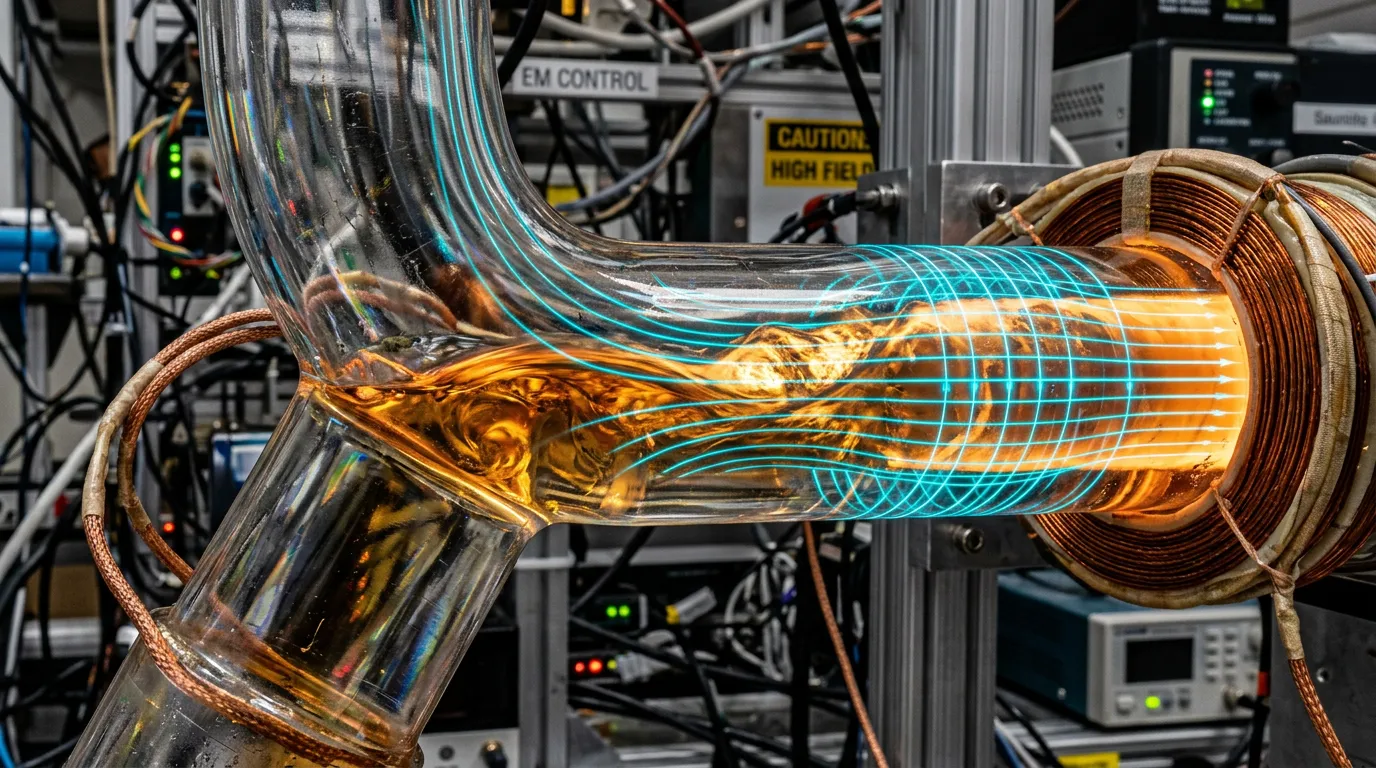
Conventional cooling systems cannot always handle high thermal loads. Systems based on magnetohydrodynamics offer an alternative, using a magnetic field to drive the flow of electrically conductive fluid. This allows thermal processes to be controlled more precisely.
A magnetic field slows fluid motion, an effect characterized by the Hartmann number. At the same time, viscosity and electrical resistance heat the fluid, a process described by the Brinkman number. The researchers analyzed the interaction between these two parameters and found that a strong magnetic field can not only heat the flow but also cool it. This happens when the fluid nearly stops moving and frictional heat generation falls away. The researchers have now precisely identified the parameter ranges in which this cooling effect occurs.
A Python Program
To perform these calculations, the researchers created a computer program in Python. The algorithm models fluid motion through channels of different shapes. It then calculates flow parameters and predicts the fluid’s temperature under specified conditions.
The developers identified safe ranges for both key parameters. For a rectangular channel, the Hartmann number should remain between 8 and 12, while the Brinkman number should range from 0.05 to 0.3. For a circular pipe, the safe ranges are 10–15 and 0.1–0.4, respectively. Exceeding these values introduces risks: when the Brinkman number rises above 0.5, heat generation begins to increase rapidly, while values above 2 can lead to overheating and failure of the channel walls. The algorithm identifies these thresholds and automatically adjusts the system parameters.

Comparing Channel Geometries
The researchers modeled two channel geometries, a circular pipe and a rectangular profile, because channel shape affects how fluid behaves in a magnetic field. Magnetic braking is stronger in a rectangular channel. This is caused by Hartmann layers forming near the walls. These layers combine to create additional resistance to the flow, causing the fluid to heat up more through internal friction.
A circular pipe produces a more uniform distribution of the magnetic field, while slowing the flow more gradually. The calculations showed that under identical external conditions, a circular pipe removes heat 20%–30% more efficiently than a rectangular channel. That gives engineers a way to select the optimal heat-exchanger geometry at the design stage, before equipment is built.
A New Digital Engineering Tool
The algorithm allows engineers to model potentially hazardous operating regimes without testing them on physical installations. In practice, this can reduce design costs and shorten the time required to bring cooling systems into operation.
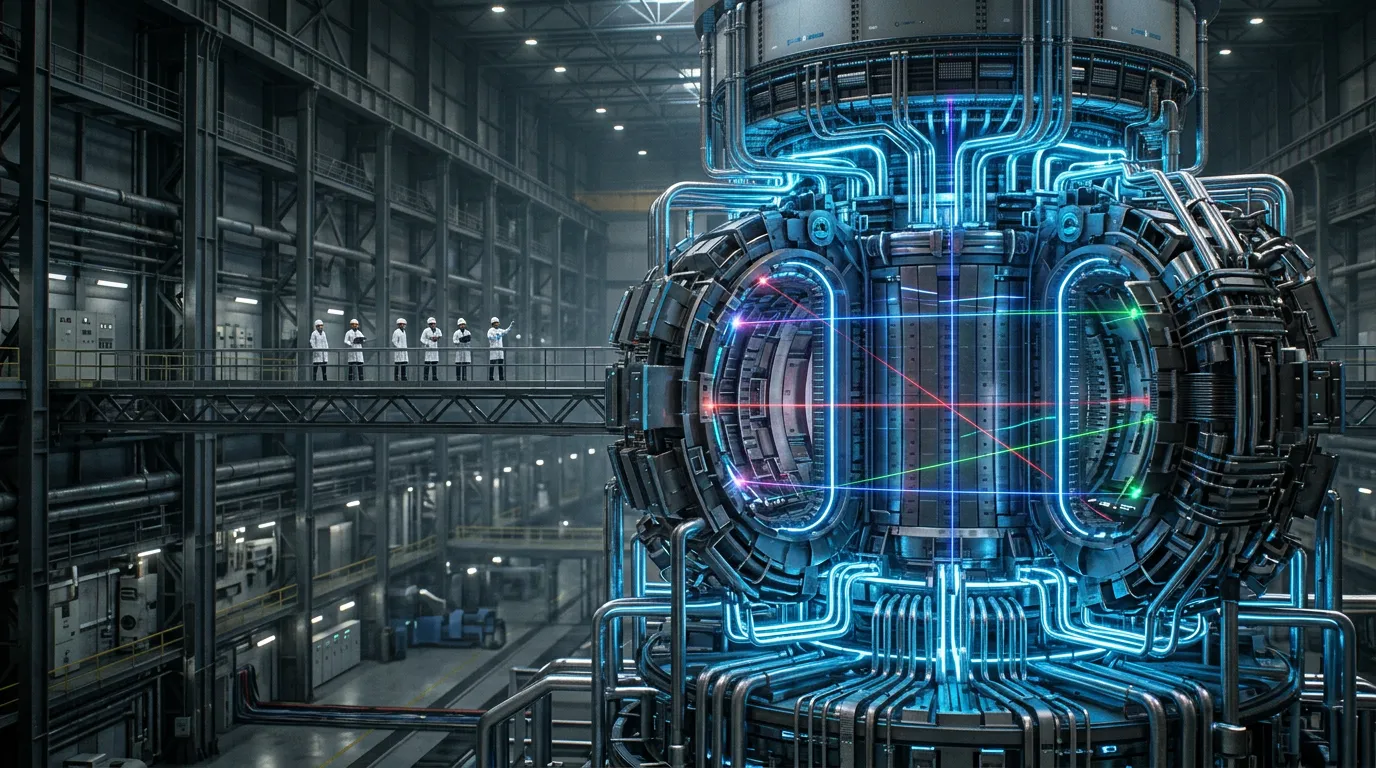
Magnetohydrodynamic liquid cooling has applications across several industries. In nuclear power, such systems are used to remove heat from reactor cores and heat exchangers. Liquid metals and molten salts conduct electricity well, making their flow suitable for magnetic-field control.
The method can also be used to cool supercomputers. As high-performance processors become more powerful, their heat output increases severalfold, while magnetically controlled liquid cooling can remove heat from the hottest components. The algorithm is also applicable to metallurgical equipment and advanced energy systems.