Cherepovets Students Are Building a Tram Without GPS or a Driver
The Cherepovets State University team is setting out to build a tram that can see the road without satellite navigation, relying entirely on its own “intelligence” and cameras.
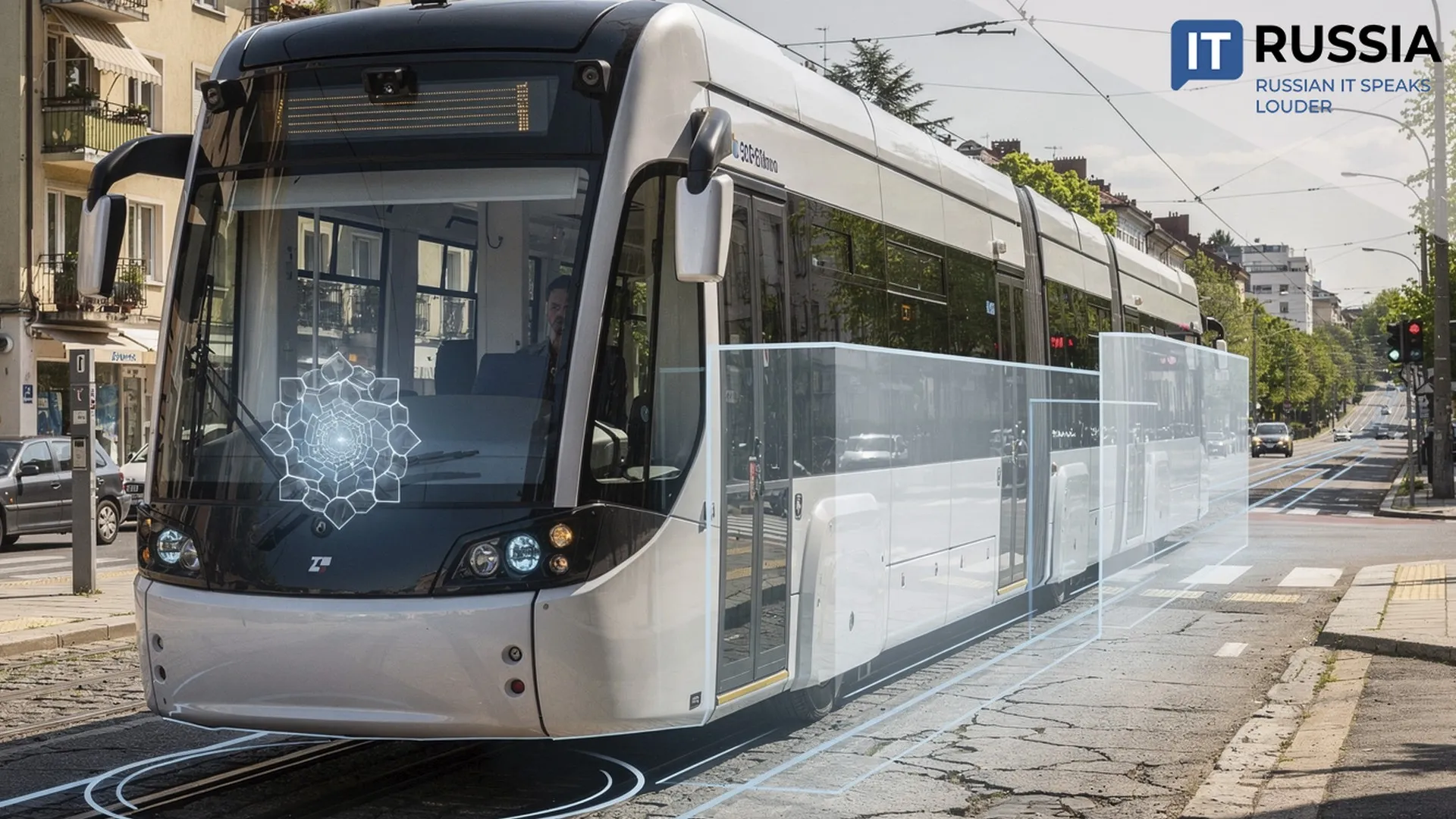
In Cherepovets, a project that could become a showcase for the city’s education and industrial sectors has been launched. A team from Cherepovets State University, working with municipal transportation operator Elektrotrans, is embarking on an ambitious five-year effort to develop a driverless tram. The project’s defining feature is its sophisticated IT architecture. Developers are betting on a combination of computer vision, sensitive sensors and autonomous control software, with complete independence from GPS or GLONASS as a key requirement. The tram will have to navigate and perceive its surroundings using data from its own sensors alone.
The idea of a driverless tram or GPS-independent navigation is not new to Russia. In 2024, Cognitive Pilot introduced a similar system based on an inertial module and digital map, while St. Petersburg has successfully used RFID tags for positioning since 2025. Yet the value of Cherepovets State University’s initiative lies not in technological novelty but in building a regional university center of expertise in autonomous transportation. The goal is to develop engineering capabilities within the region rather than simply purchase an off-the-shelf system.
From the Lab to City Streets
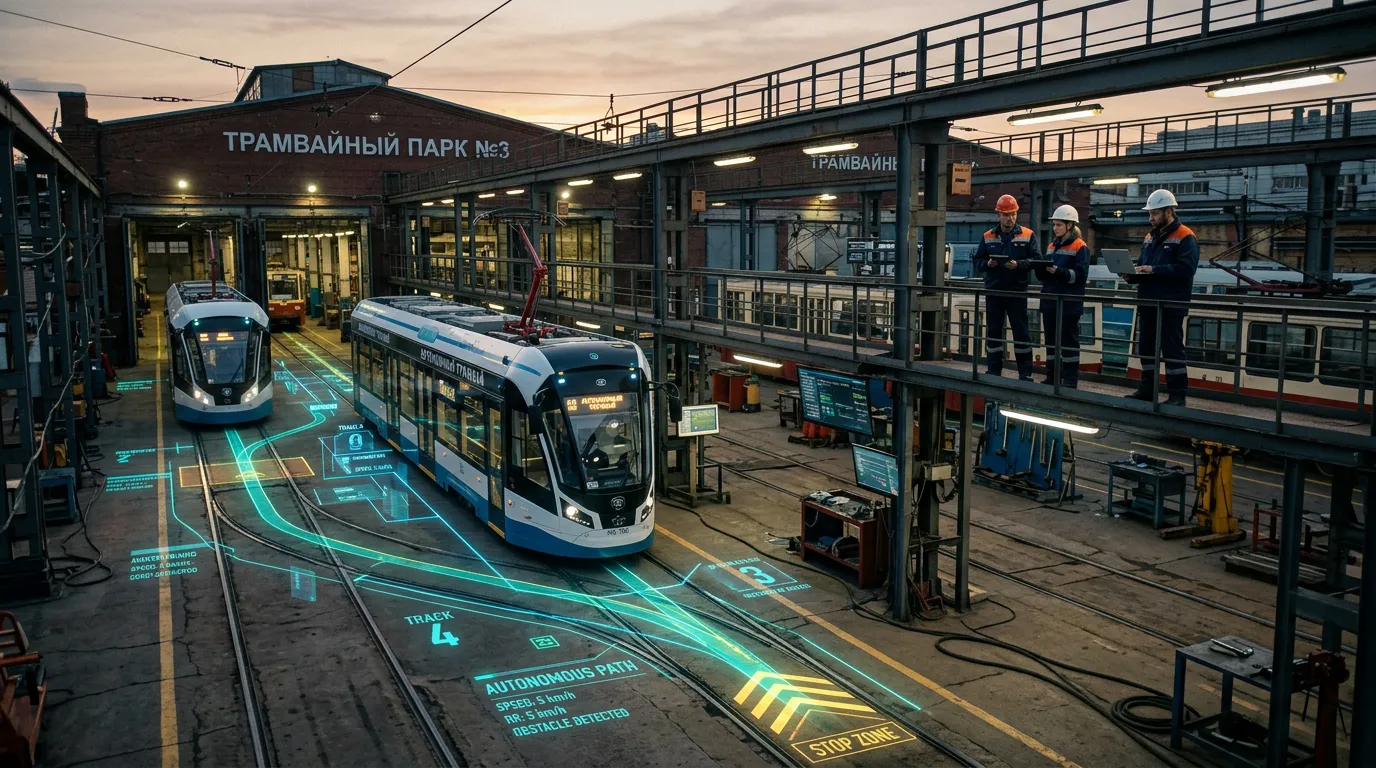
If the student team can complete the entire development cycle from a laboratory test bench to an operational tram, the project will become a distinctive testing ground for autonomous systems in a typical midsize Russian city. Cherepovets is particularly well suited to the task: the city recently replaced its entire tram fleet, but its tracks and overhead power infrastructure remain heavily worn. That means developers will have to harden the system against real-world challenges from the outset rather than develop it solely in the controlled environment of simulations.
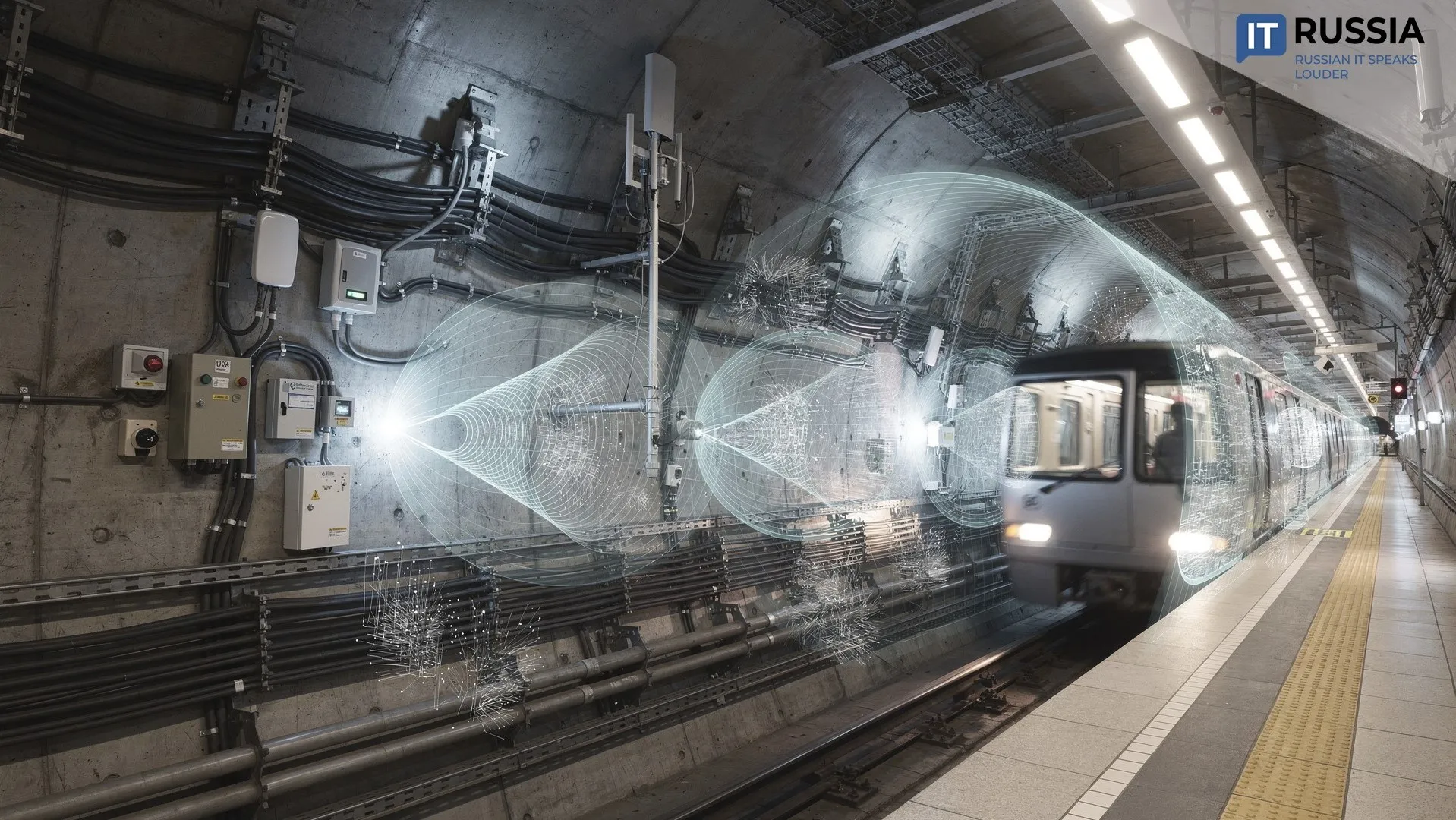
Local positioning technology is another particularly promising area of development. Systems that do not depend on satellites are valuable not only where signals are jammed but also in tunnels, dense urban environments and depots.
Driverless Tram Pioneers
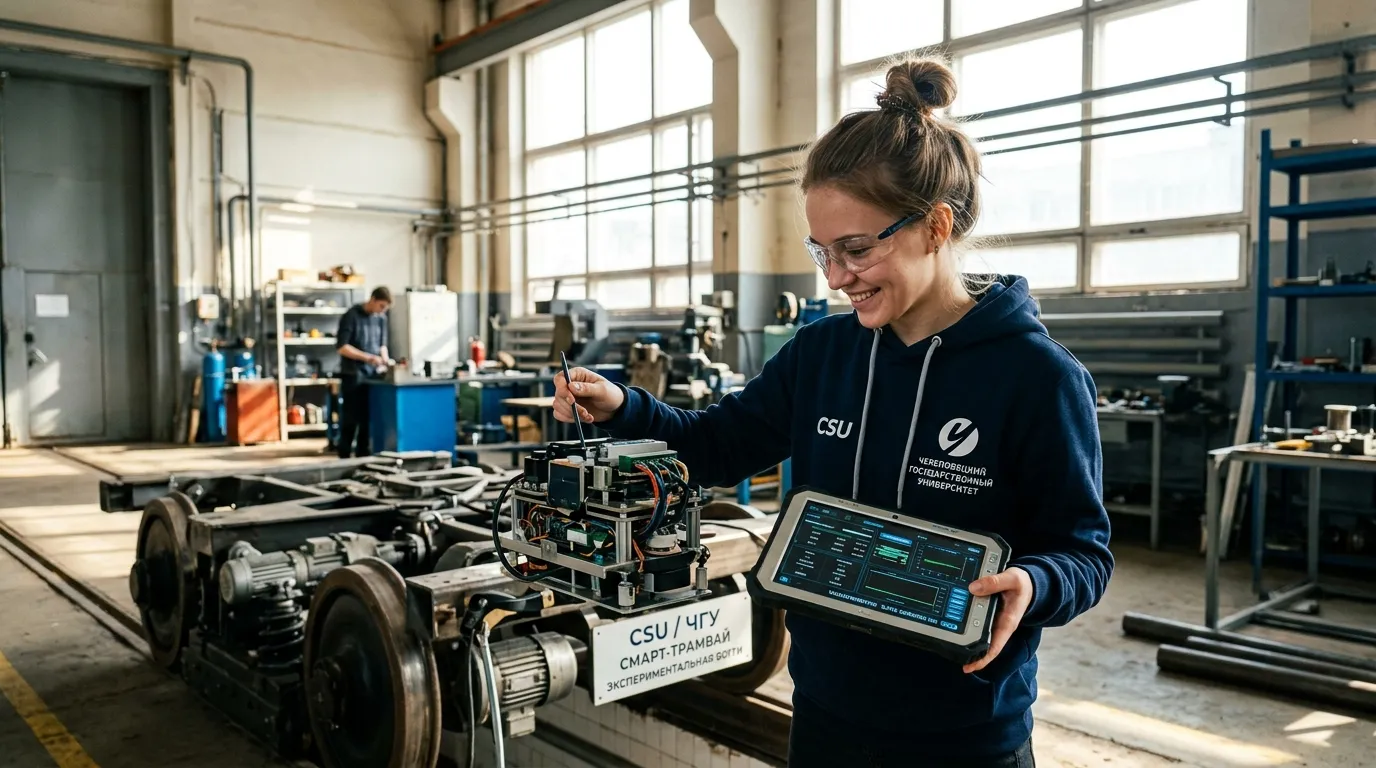
In 2023, PK Transportnye sistemy (Transport Systems), Cognitive Pilot and Gorelektrotrans signed an agreement in St. Petersburg to develop a fully driverless tram, with a prototype planned for 2026. A year later, Moscow began urban testing of its first driverless tram, equipping it with lidar and cameras to train neural networks to recognize objects. In 2024, Cognitive Pilot introduced a GPS-independent navigation system in Russia, while autonomous tram trials were also getting underway abroad – in Poznań, Poland, and Tampere, Finland – involving Škoda and local developers.
A major milestone came on Sept. 3, 2025, when Russia’s first fully driverless tram began carrying passengers on Moscow’s Route 10. The system already controls the tram’s movement on its own, opens the doors and responds to traffic signals and pedestrians. Meanwhile, in 2025 and 2026, St. Petersburg began using RFID tags for precise positioning. Against this backdrop, Cherepovets is not trying to catch up with Russia’s largest cities. Its goal is to demonstrate that sophisticated robotic systems can be developed outside major metropolitan centers, building a foundation for future engineering talent and technological independence.

Betting on Intelligence
The Cherepovets project is first and foremost an ambitious research effort in transportation AI and robotics. Over the next several years, the key measure of success will not be a high-profile launch into passenger service but the development of a working prototype that can “see,” along with evidence that its systems remain reliable under the real and imperfect conditions of Cherepovets’ tram network. If the team clears that technological hurdle, the student project could evolve into an independent engineering platform. Such a product would be more than a local innovation – it could become a deployable tool for municipal electric transit operators facing driver shortages and aging infrastructure.