Digital Monitoring Could Help Protect Pigs From Disease Outbreaks
Experts at Don State Technical University have developed a platform for detecting diseases in farm animals at an early stage.
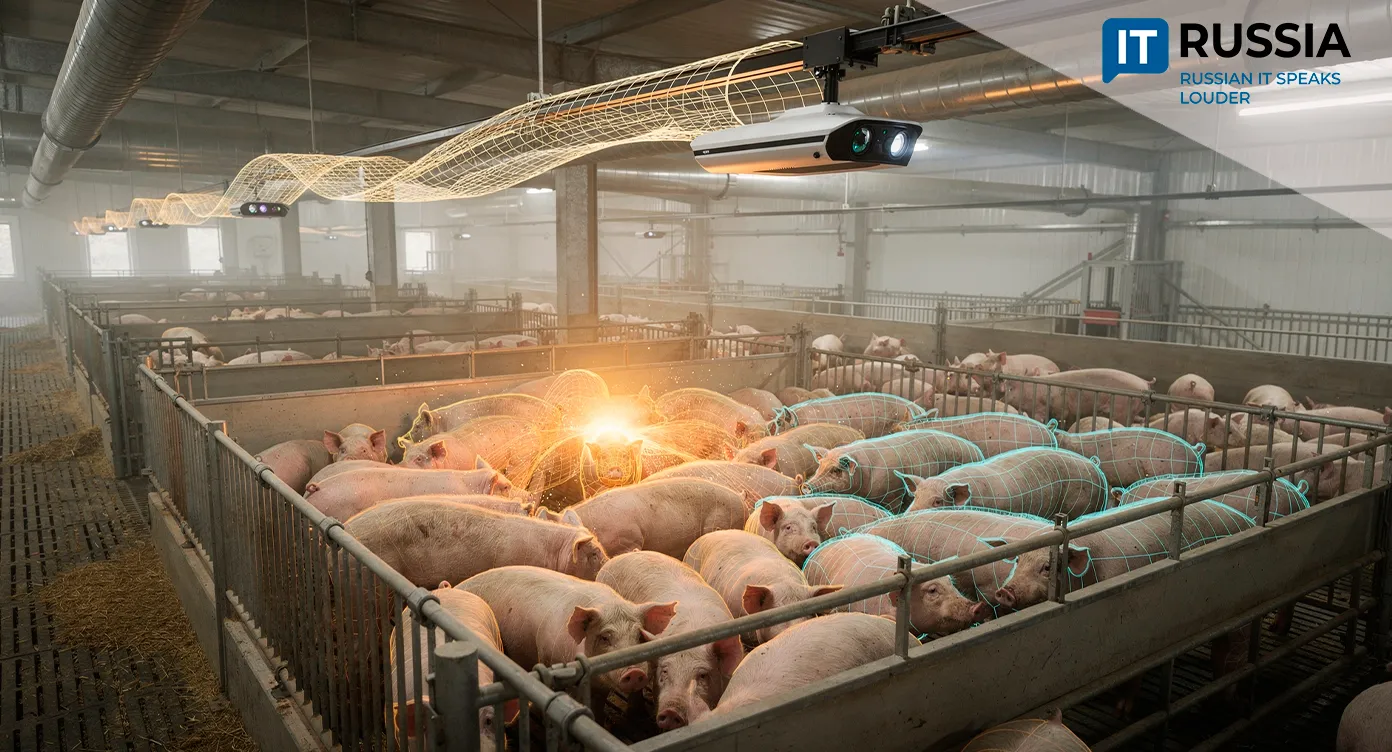
Keeping livestock healthy and preventing the spread of infectious diseases are top priorities for livestock producers, with their success directly affecting the financial health of their operations. According to HealthforAnimals, livestock diseases cause farmers worldwide to lose about 20% of production each year.
For large-scale livestock operations, protection against infection can be a matter of business survival. If one or several animals become sick, the entire herd may have to be treated or culled. That makes it critical to identify disease in an individual animal as early as possible. At large facilities, digital technologies for monitoring the health of livestock and poultry can help.
AgroMonitor for Swine Operations
Students and researchers at the World-Class Research Center “Agroengineering of the Future” at Don State Technical University (DSTU) have developed AgroMonitor (Agricultural Monitoring), a platform for early disease detection in pigs.
The system is based on thermal imaging to monitor animals. Elevated body temperature is an important sign of disease. “Existing diagnostic methods do not fully solve the problem. Fixed thermal cameras require significant investment, handheld devices cannot provide continuous monitoring, and traditional visual inspections can injure animals. That is why we brought this real-world challenge to DSTU. I am confident the development will help our company, Batayskoye JSC, one of the largest swine operations in the Rostov region, address these challenges,” said Sergey Sapotnitsky, CEO of Agrokom Group.
Oleg Rodimov, Danil Korenyuk and Miroslav Grinev, students in the Department of Automation, Mechatronics and Control, created a mobile platform equipped with a thermal camera and a standard camera that scans the animals around the clock without leaving blind spots.
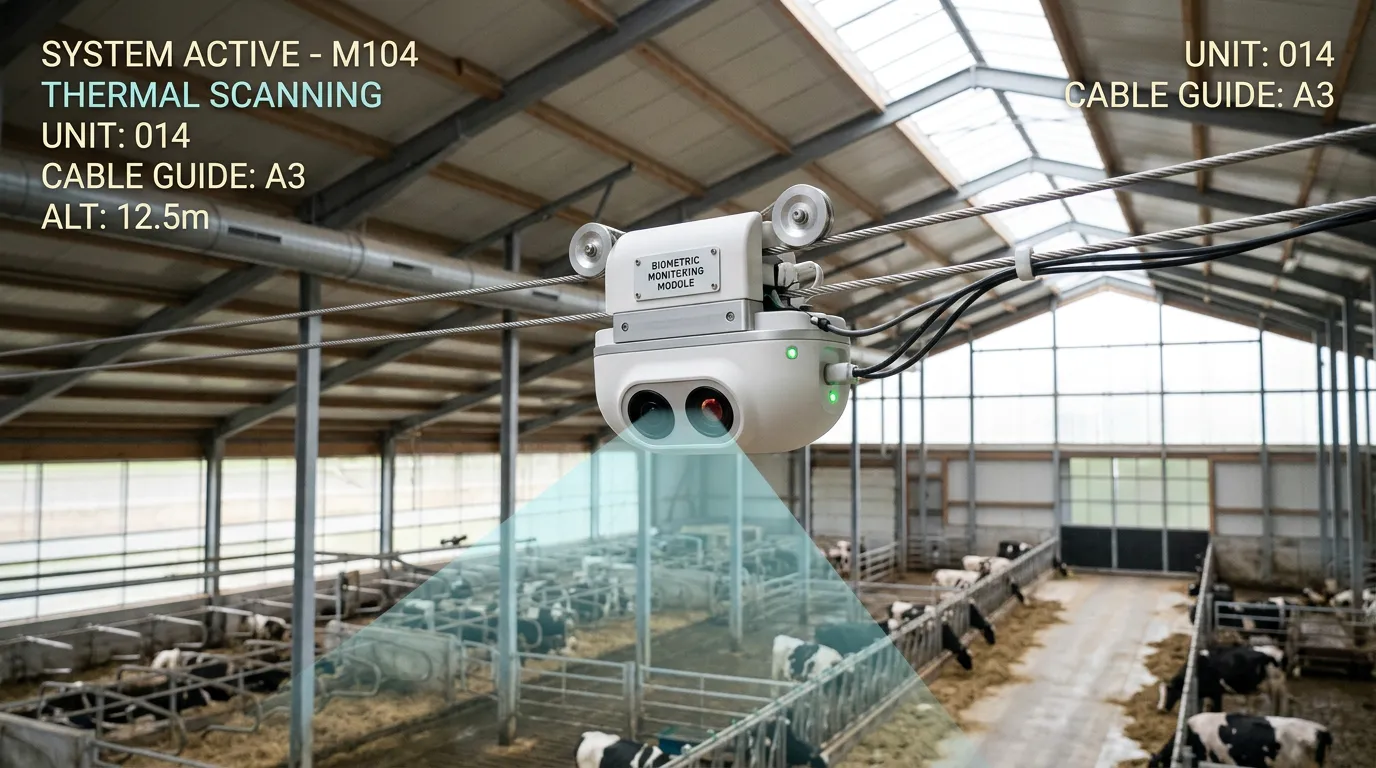
Technologically, AgroMonitor consists of a thermal camera and an RGB camera connected to a microcomputer powered by an autonomous energy source. The entire system is mounted on a suspended cable platform. The camera continuously moves above the pigs along a pre-calculated path and transmits data to an AI-powered analytics platform.
The Economics of Swine Production
The platform was tested at the Batayskoye JSC swine operation, one of Russia’s largest pork producers. Its advantages are clear. Fixed cameras, rail-mounted robots and drones cost substantially more or require heavy structures to be installed above the animals. “We are calculating the economics of deployment: according to the team’s estimates, one mobile sensor module can replace more than 50 fixed cameras, while the cost of monitoring a facility could be about 10 times lower. For the farm, that means lower spending on infrastructure and treatment, as well as fewer losses from disease,” said project developer Oleg Rodimov, a third-year student in DSTU’s Department of Automation, Mechatronics and Control.
The AgroMonitor project is being developed with support from the Prioritet 2030 (Priority 2030) program and the federal Tekhnologii (Technologies) project. The development has already won the Studencheskiy startap (Student Startup) program, and the funding allowed the team to purchase components and configure the sensor module and software.
Going forward, data from the RGB camera and thermal imager will make it possible to monitor the entire herd. The developers plan to further develop the platform by training the algorithm to identify individual pigs even when animals are densely grouped, count the herd and improve the alert system used by veterinary staff.
Healthy Livestock on the Smart Farm
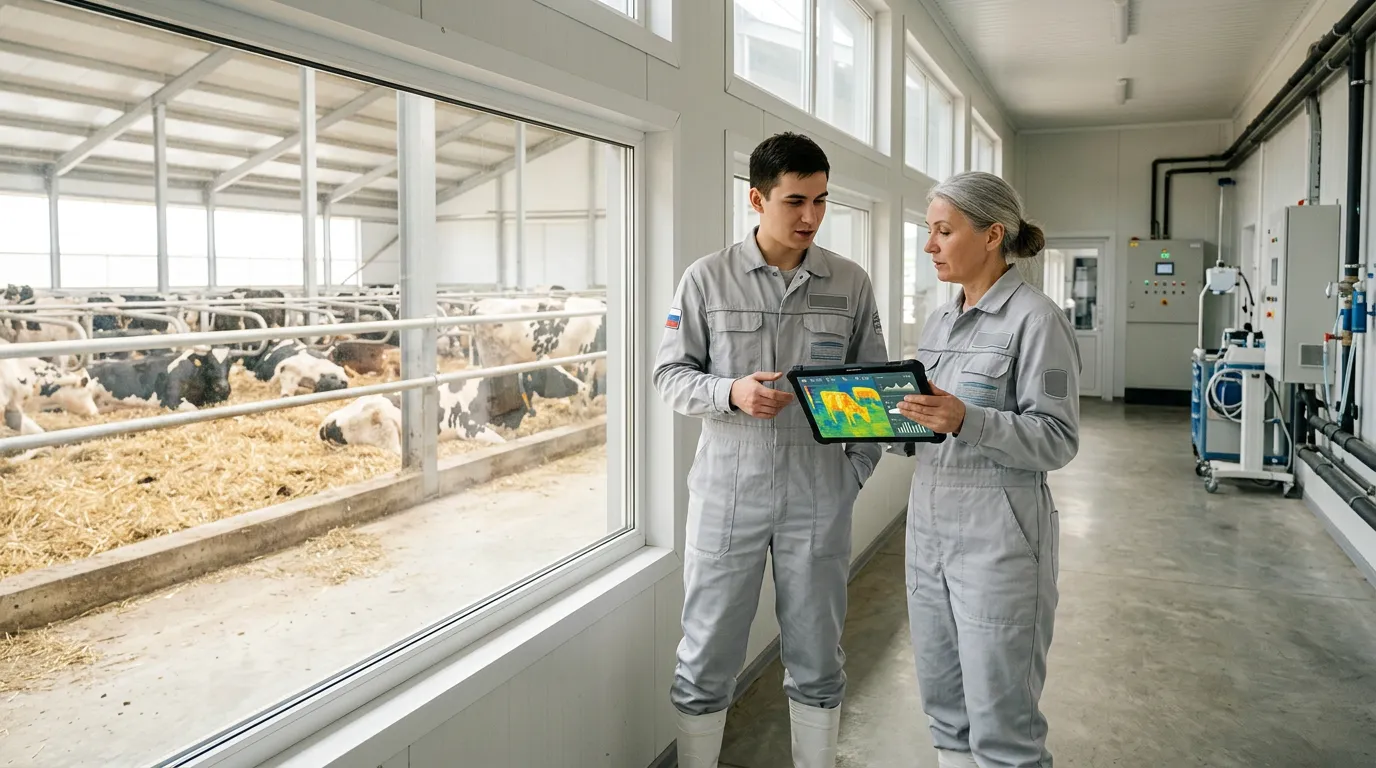
The AgroMonitor project is another step in the transition of Russian livestock farming from traditional methods of monitoring production processes to systems that provide online monitoring and data analysis. This can enable earlier disease detection, reduce the risk of mass animal losses and ease the workload on farm personnel.
Once the new DSTU system can reliably identify sick livestock at an early stage, deployment in commercial production is expected to begin, followed by integration into unified digital farm management systems where decisions are based on continuous data analysis.
Digital technologies are becoming part of the daily work of Russian livestock producers, said Andrey Vasilevsky, production director at Bashkir Meat Company LLC: “In the past, much depended on a veterinarian’s experience and intuition. Now we have precise tools that help us not only treat diseases but prevent them. For example, our company’s swine operations use sensors, automated monitoring systems and smart cameras. As a result, information about the animals’ condition comes in real time, allowing us to respond faster. Over the next two to three years, AI-based solutions will be fully deployed across the operation.”
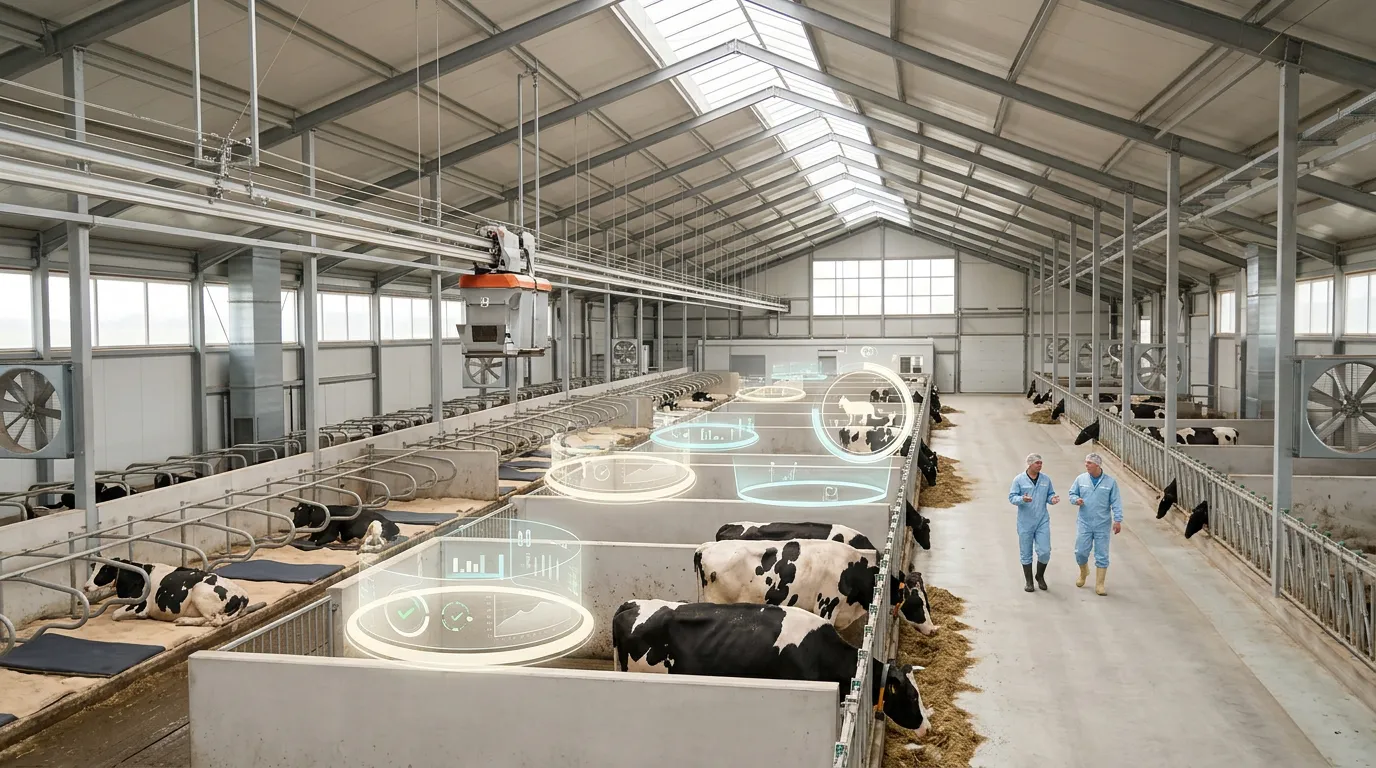
Russia’s emerging precision-livestock systems, which combine digital technologies including video analytics, predictive diagnostics and edge/IoT infrastructure on farms, are expected to become an important stage in the development of the country’s digital industry as a whole. Smart farms will require more accurate algorithms and better integration with enterprise farm-management systems. These integrated digital livestock platforms are expected to become major suppliers of meat to markets in both Russia and friendly countries. Over time, smart-farm digital platforms themselves could become an export product, helping increase production by automating farm operations end to end.