Irkutsk State University and BPMSoft Are Rebooting IT Education
Irkutsk State University (ISU) has signed an agreement with BPMSoft, the Russian developer of a low-code platform. Students will train on modern software, helping them adapt more quickly to jobs at companies after graduation.

The partnership responds to a pressing market need. Russia’s IT sector now employs 1.87 million people, with the workforce growing 20% over the past year. Yet the market continues to need more software developers, AI professionals and workers in other high-demand fields. Russia plans to train more than 313,000 IT professionals over the next seven years, a target set by the Ministry of Labor.
Beyond Theory
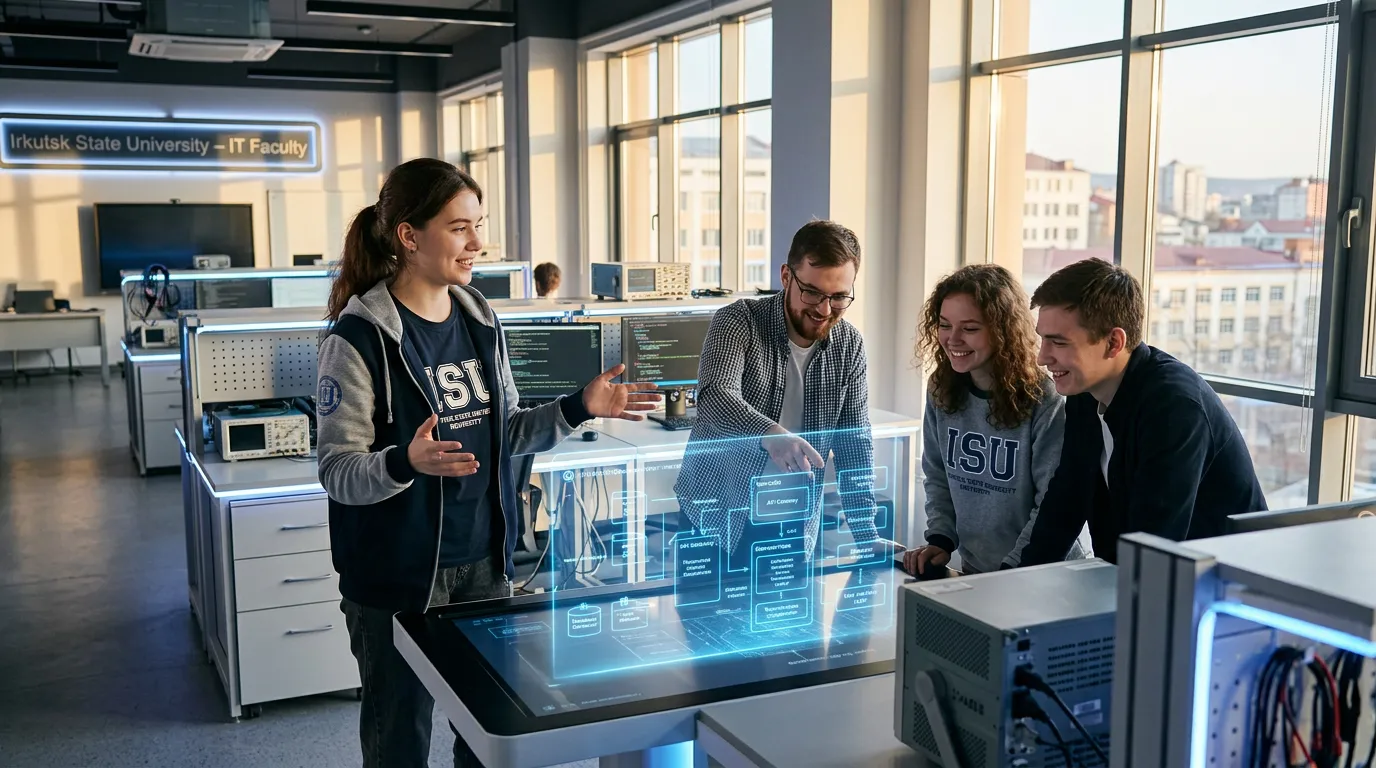
More and more companies are looking for experienced professionals who can quickly reach high levels of productivity. Starting this September, the first cohort of 50 ISU students will begin learning the intricacies of developing enterprise services, using Russian industrial-grade software as their primary tool.
ISU students will gain hands-on skills with a low-code platform already widely used to automate business processes at large companies and in the public sector. BPMSoft experts will do more than give lectures: they will help shape curricula, supervise project work and open up internship opportunities.
The agreement was signed as part of TOP-IT (Top IT), a federal program for training highly qualified IT professionals. The program is supported by Mintsifry (Russian Ministry of Digital Development, Communications and Mass Media) and the Analytical Center for the Government of the Russian Federation. ISU has participated since 2025. TOP-IT brings together 47 universities across Russia, with one central requirement – industry partners must participate directly in teaching. There are already 120 such partners.
Building a Talent Network
The BPMSoft Obrazovanie (BPMSoft Education) project has been running since 2023. By August of this year, more than 50 Russian universities had joined, and over 5,000 students had been trained to work with the platform. The vendor is deliberately building a “talent network,” recognizing that the platform’s adoption depends on having enough professionals who know how to use it.
In 2024, Bauman Moscow State Technical University became one of the first flagship institutions to sign an agreement with the developer. At the time, the program covered just 18 universities. Plekhanov Russian University of Economics followed in 2025, with BPMSoft serving as the anchor partner in launching the Enterprise and Information Systems Engineering bachelor’s program. There, the curriculum actively incorporated both low-code development and AI-related projects. Reshetnev University in Krasnoyarsk also announced a partnership, with an emphasis on internships and graduate employment. In 2026, BPMSoft announced programs with Central University and Vyatka State Agrotechnological University. Each partnership follows the same model: move students from theory into practice, bring the company’s own digital technologies into the curriculum and involve businesses in assessing students’ skills.

IT Moves to the Top
For ISU, the agreement with BPMSoft offers a way to raise the profile of its regional IT program. Meanwhile, the company is developing a pipeline of professionals who will already be thoroughly familiar with the platform by the time they graduate.
Today, 39% of Russian companies use artificial intelligence to automate business processes. Demand will continue to grow for IT professionals capable of tackling digital transformation projects. At the same time, employers will no longer need to spend months providing additional training to new hires.

Going forward, universities will expand the number of courses built around low-code and BPM tools and bring students into real-world corporate projects. That is expected to create a sustainable pool of professionals in automation, systems analysis and enterprise development who will be in demand both at the vendor itself and among its partners. ISU is already putting its expertise to work beyond the university: together with telecom operator T2, it held a case competition in which 123 TOP-IT students tackled applied software development challenges.