Language of the Heart: Yamal Launches First App for Learning the Khanty Language
The app features animated audio flashcards, games, crossword puzzles and coloring pages focused on everyday Khanty life.
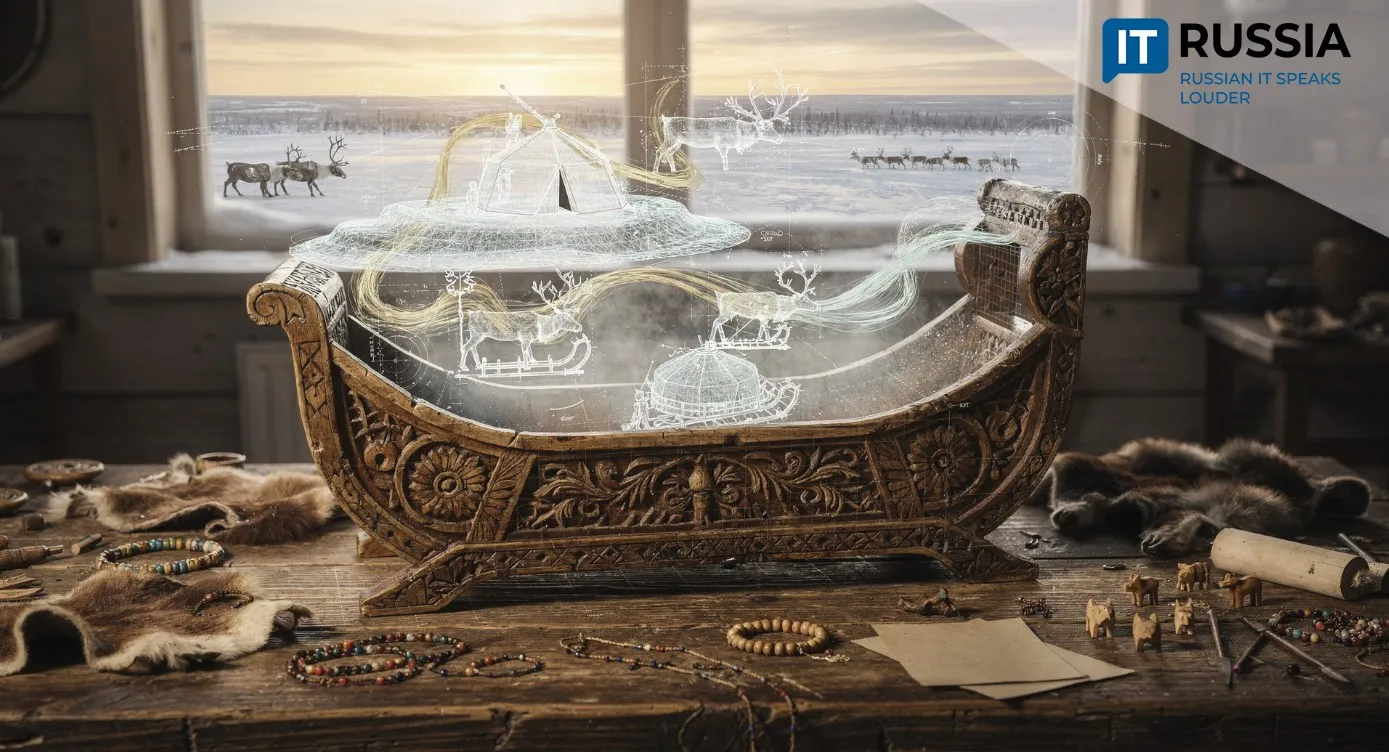
The project is called Yӑlәpkhantyposәt. It was developed by the autonomous nonprofit organization Na yazyke serdtsa (In the Language of the Heart), while the research foundation was prepared by Lyubov Vozelova, a researcher at the Scientific Center for the Study of the Arctic. She also provided the voice recordings for all of the linguistic material. In a 2024 interview with Vesti. Yamal, Vozelova acknowledged: “For me, as a researcher, working with words means immersing myself in my native language.”
Artist Varvara Sermer created the project’s visual design. The app is available free of charge through the App Store and Google Play, and its completion was timed to coincide with the International Decade of Indigenous Languages (2022–2032).
When Words Sound Anew
The number of speakers of minority languages is declining year after year, while modern educational materials are in very short supply. That is why the launch of an app like this is an important development. It also shows how preserving the linguistic heritage of Indigenous peoples is increasingly moving beyond the traditional classroom and into the digital environment. Mobile apps can make language learning more accessible to young people who are accustomed to learning through smartphones. The project is particularly important for families from the Indigenous peoples of the North.

A Mosaic of Northern Languages
Similar language projects have been developing across Russia for years, with each stage adding new capabilities. In 2021, the Sam’kill service appeared in the Murmansk region. It helps users learn the Kildin dialect of the Sámi language. The service was developed by the Loparskaya tribal community with funding from a grant provided by the regional Ministry of Internal Policy. It was initially designed as an educational app for children, but adults can use it as well. Users can learn the Sámi alphabet and hear how words are pronounced. The creators later expanded the project and released a computer game. It essentially replicates the app’s functions but offers more options, including different ways to memorize vocabulary.
A year later, an online translator for the Mansi language called Torumashlatyn was introduced in Yugra. It was developed by the Uzor mira (Pattern of the World) creative workshop led by Denis Vyngilev with support from LUKOIL-West Siberia. The dictionary was based on Russian-Mansi dictionaries compiled by Evdokia Rombandeeva and Evdokia Kuzakova and contains more than 5,000 words. The translator’s main distinguishing feature is male and female voice output. The project’s head explained the approach this way: “Mansi culture is dual. We brought that duality into the translator as well. The female world has its own themes, its own color palette and everyday-life topics. And so does the male world. The voice recordings differ too. The female voice is softer.” The name translates as “the language of the Creator.”
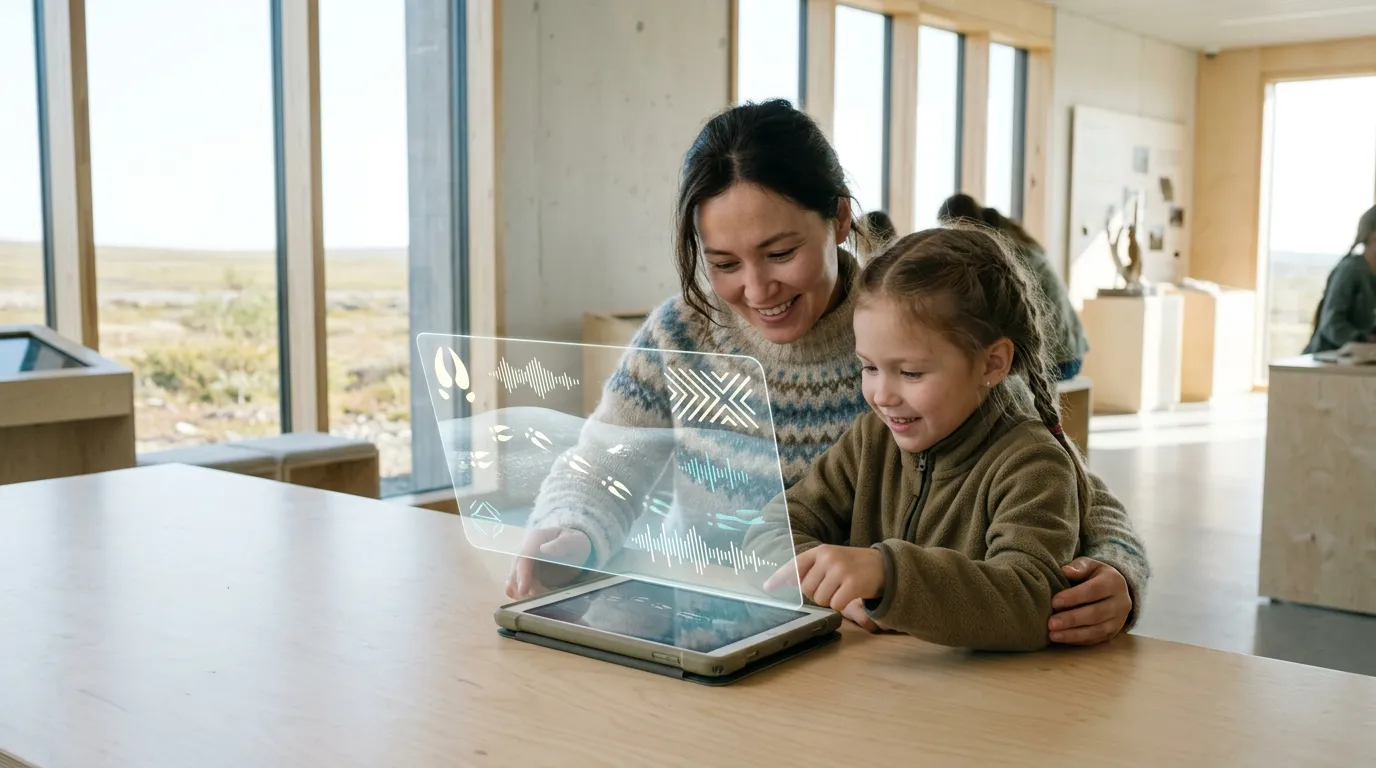
In 2023, the Osikat app was introduced in Yakutia. The word means “star” in Even. It is a shared learning platform for several Indigenous languages of the North: Even, Evenki, Chukchi, Dolgan and Yukaghir. The plan was to build a dictionary of about 2,000 words for each language, including spelling, pronunciation and exercises for reinforcement. Linguists, illustrators, language students, IT professionals and native speakers worked together on the project. The development team prepared the technical specifications with guidance and methodological support from Boris Osipov, a young linguist.
In Yamal, meanwhile, teachers created a computer game for learning the Komi and Khanty languages. It is another example of the shift toward digital learning with a game-based approach. The concept is simple: children must correctly match a word in their native language with the corresponding picture. Officials in the Shuryshkarsky District said that these digital mnemonic techniques can make learning more engaging and enjoyable for children. The new Yӑlәpkhantyposәt app continues that progression, expanding the possibilities for language learning through digital tools.
AI Speaks Khanty
The developers of the new app said they plan to create similar applications for the Selkup and Nenets languages. If this area continues to develop, it could eventually produce an entire line of digital tools for the languages of Indigenous peoples of the North, ranging from mobile apps to voice assistants and learning services.
Artificial intelligence is another important area. Minority languages particularly need tools for machine translation, speech recognition and text-to-speech conversion. For Russia’s IT industry, this creates a new niche at the intersection of EdTech, AI and the digital preservation of cultural heritage. The market is small, but the potential social value of these projects is substantial. They could also provide a foundation for developing additional digital services for minority languages.