Rosel Routers Earn FSTEC Certification
The equipment can now be used in government information systems and for processing personal data.

The devices are built around a Russian-made processor and run proprietary software developed for the platform. The certification also clears them for use in protected government agency and industrial networks.
More Secure Data Transmission
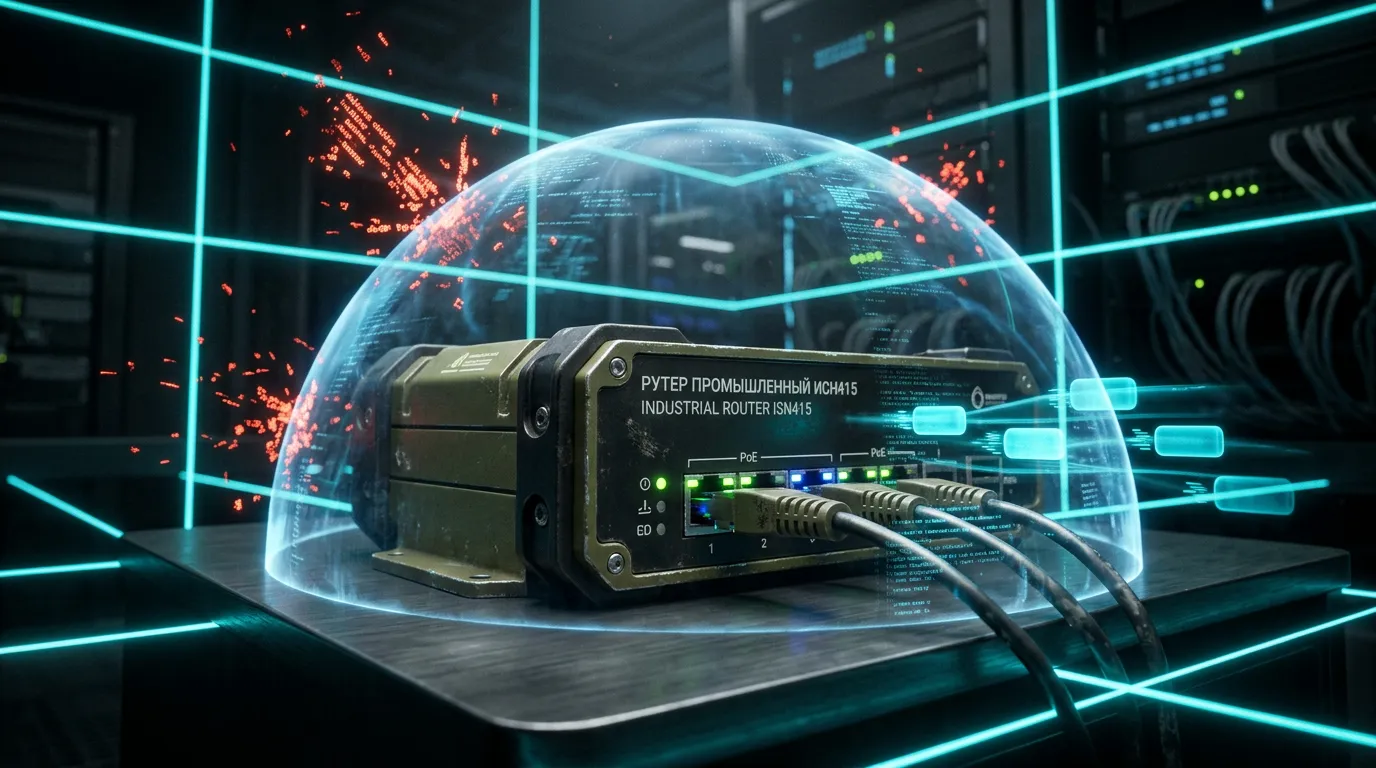
The routers are designed for corporate networks, supporting internet access, local network infrastructure and VPN connections, traffic filtering and prioritization, bandwidth management, as well as Power over Ethernet (PoE) for IP cameras and other equipment.
The certification cannot be considered a technological breakthrough on a global scale, but it removes an important regulatory barrier to deploying Russian network equipment in the public sector and at organizations subject to heightened information security requirements.
For citizens, the benefits are indirect. They include more secure transmission of personal data and reliable operation of government digital services, as well as health care, education and municipal information systems. For Russia more broadly, the certification expands the domestic portfolio of trusted telecom equipment and reduces reliance on foreign routers.
Competing With Russian Vendors
Russia remains the primary market for the ISN415 router, with potential customers including government agencies, public institutions, industrial enterprises, health care and educational organizations, urban infrastructure operators and companies that process personal data. The certified routers can also be deployed in segmented corporate networks, video surveillance systems and secure remote-access environments.
Demand is likely to be supported by large corporate customers shifting to domestically produced telecom equipment. At the same time, the ISN415 will have to compete with certified products from Eltex, UserGate, Solar, Kaspersky and other Russian vendors. Eltex, for example, already offers FSTEC-certified routers and firewalls for government organizations and personal data information systems.
For exports, FSTEC certification is tied to Russian requirements and does not automatically clear the equipment for foreign markets. Overseas sales would require local certifications, compatibility with customers’ infrastructure, a service network and competitive pricing. Still, the equipment could attract customers in Belarus, Kazakhstan, Armenia and other CIS countries.
A Logical End to an Important Stage
In April 2022, Rostec introduced the first line of domestically produced ISN415 routers based on Russia’s Baikal-T1 processor, positioning them as a secure alternative to foreign network equipment for corporate users.
In October of the same year, Ruselectronics announced the start of mass production and manufactured 2,000 routers, with another 3,000 planned by the end of the year.
Meanwhile, Russia’s market for certified network security products continued to expand. In September 2024, the Solar NGFW software-and-hardware platform received FSTEC certification, clearing it to protect the network perimeter of organizations with heightened security requirements. In November 2025, Kaspersky NGFW was also certified under FSTEC’s new requirements, with the certification covering the company’s entire corresponding product line.
Against that backdrop, certification of the ISN415 marks the logical completion of an important stage that began with the router’s introduction and the launch of mass production in 2022.

Toward Large-Scale Deployments
FSTEC certification moves the ISN415 from the category of promising import-substitution equipment into that of a product eligible for projects to build secure government and corporate networks. The next step could well be pilot projects followed by large-scale deployments across government agencies, regional institutions and industrial facilities.
Future success will depend not only on certification but also on performance, reliable supplies of processors and components, compatibility with Russian operating systems and cybersecurity tools, the quality of technical support and total cost of ownership.
Looking ahead, Rosel could extend certification to other ISN models and build a unified product line spanning the access, edge and core layers of corporate networks. Successful deployments in Russia could also provide a foundation for expansion into the CIS and other countries where demand exists for independent network infrastructure.