Saving Fields From Giant Hogweed With a Robot
An autonomous ground robotic system has been developed in Russia’s Nizhny Novgorod Region to combat an aggressive, persistent weed that poses a health risk to people.
One of the oldest problems crop growers around the world are facing is weeds. Weeds deprive crops of sunlight, water and nutrients. Even worse, some weed species can release compounds that inhibit the growth of other plants.
Giant hogweed is a particularly serious weed. A single plant produces 20,000 to 70,000 seeds a year, while those seeds actively inhibit the germination of other plants. Experts estimate that the area covered by the weed can expand by 10% annually. In 2015, giant hogweed was added to Russia’s register of weeds.
Until recently, the only way to control giant hogweed was to remove it mechanically with shovels and hoes, followed by herbicide treatment. But the weed is dangerous to people. Giant hogweed can cause respiratory problems, while contact with its sap can result in severe burns and blisters. That makes automated systems a safer way to tackle such a hazardous weed.
Effective Robot
The Nizhny Novgorod-based Scientific and Production Center for Unmanned Aviation Systems (SPC UAS) and Korona, a company based in Nizhny Novgorod, recently presented farmers with a joint development – an autonomous ground robotic system designed to destroy the weed.
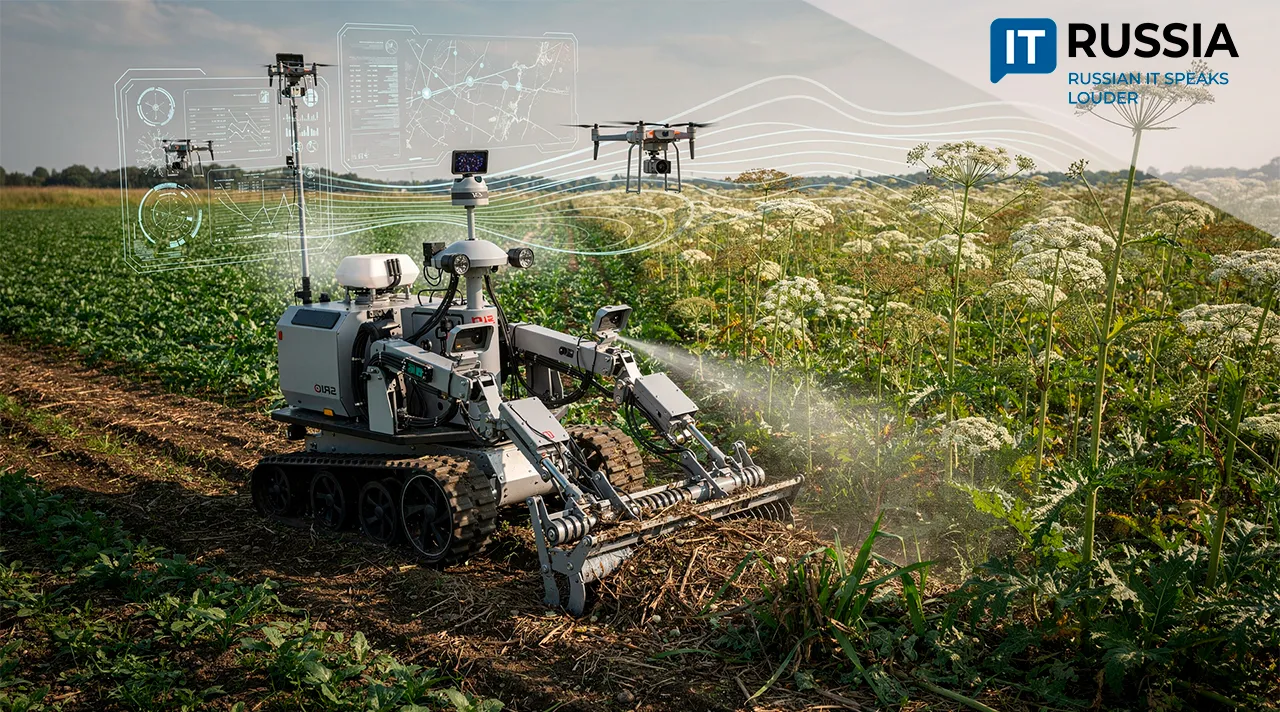
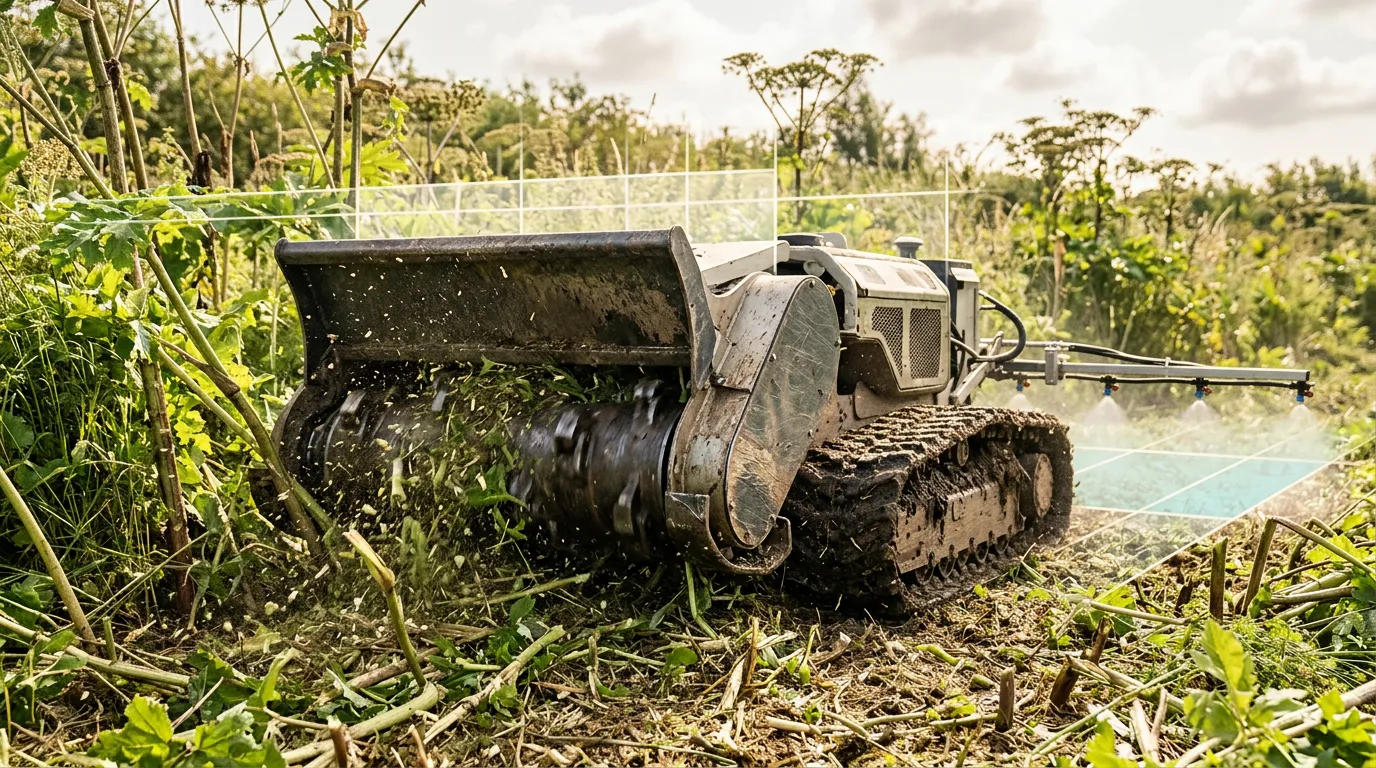
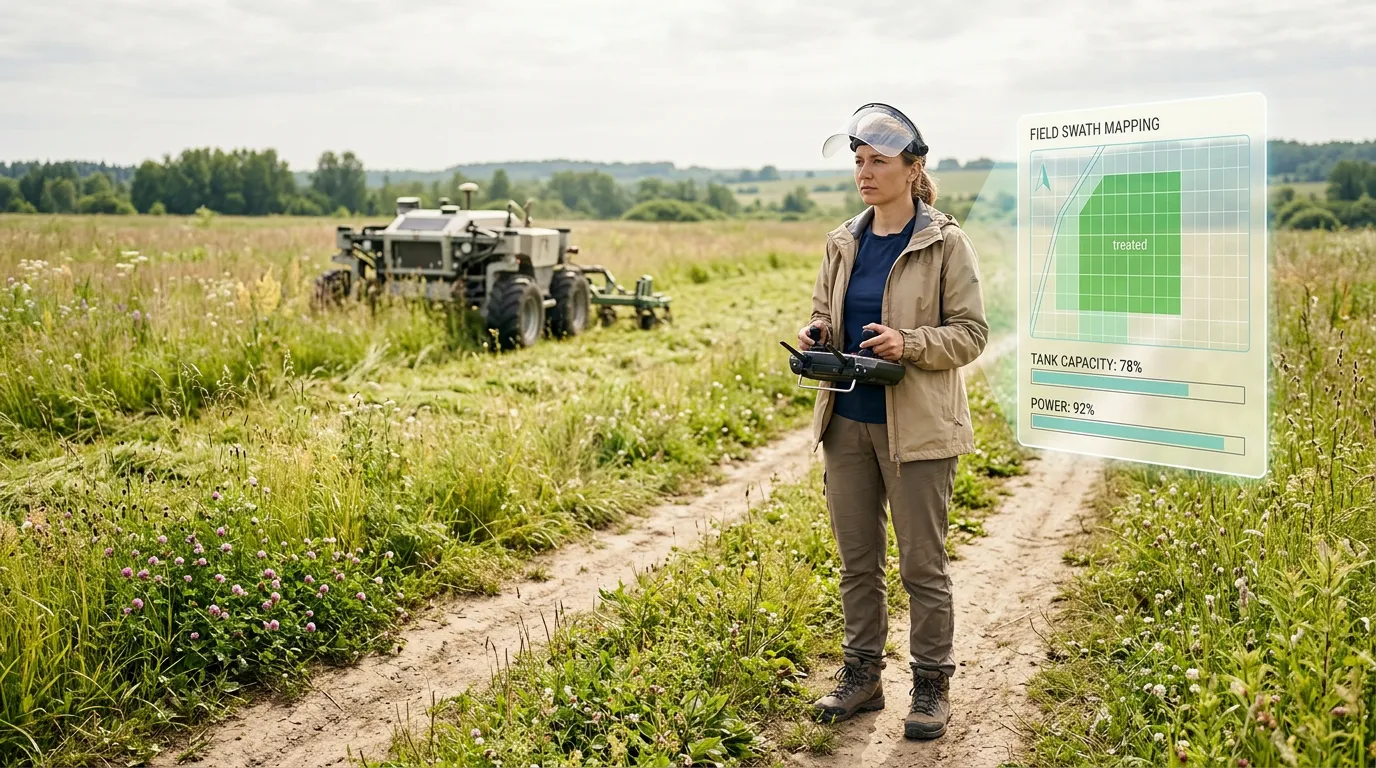
The platform consists of a mulcher and a sprayer. The machines operate one after the other. The mulcher destroys the weed growth, after which the sprayer treats the prepared area with a special solution. The system is designed to keep people as safe as possible: it can be operated remotely from a distance of up to 300 meters from the work site.
Giant hogweed is a serious problem in the Nizhny Novgorod Region. In 2025, it covered about 4,800 hectares there. The robot’s performance was therefore evaluated by Yevgeny Lyulin, chairman of the Legislative Assembly of the Nizhny Novgorod Region, and two regional government ministers: Maksim Cherkasov, minister of industry, trade and entrepreneurship, and Nikolai Denisov, minister of agriculture and food resources.
UAVs in the Sky, Robots on the Ground
“We have been fighting giant hogweed for years, but conventional methods have not produced the results we need. The development by Nizhny Novgorod engineers will make this work more effective. Together with our colleagues, we saw that the unmanned system performed extremely well – the harmful weed was chopped to bits. They did not simply present us with a prototype; they demonstrated the equipment in operation. An operator controls a robotic mower and a tracked robotic sprayer, which work as a pair – mowing and spraying the giant hogweed and then destroying its roots. The system has many advantages. It replaces heavy manual labor. Previously, workers had to mow the weed with a trimmer, spray it with a backpack sprayer and then dig out the roots with a shovel. Now the work is done 10 times faster, reducing the time required by 90%,” said Yevgeny Lyulin, chairman of the Legislative Assembly of the Nizhny Novgorod Region.
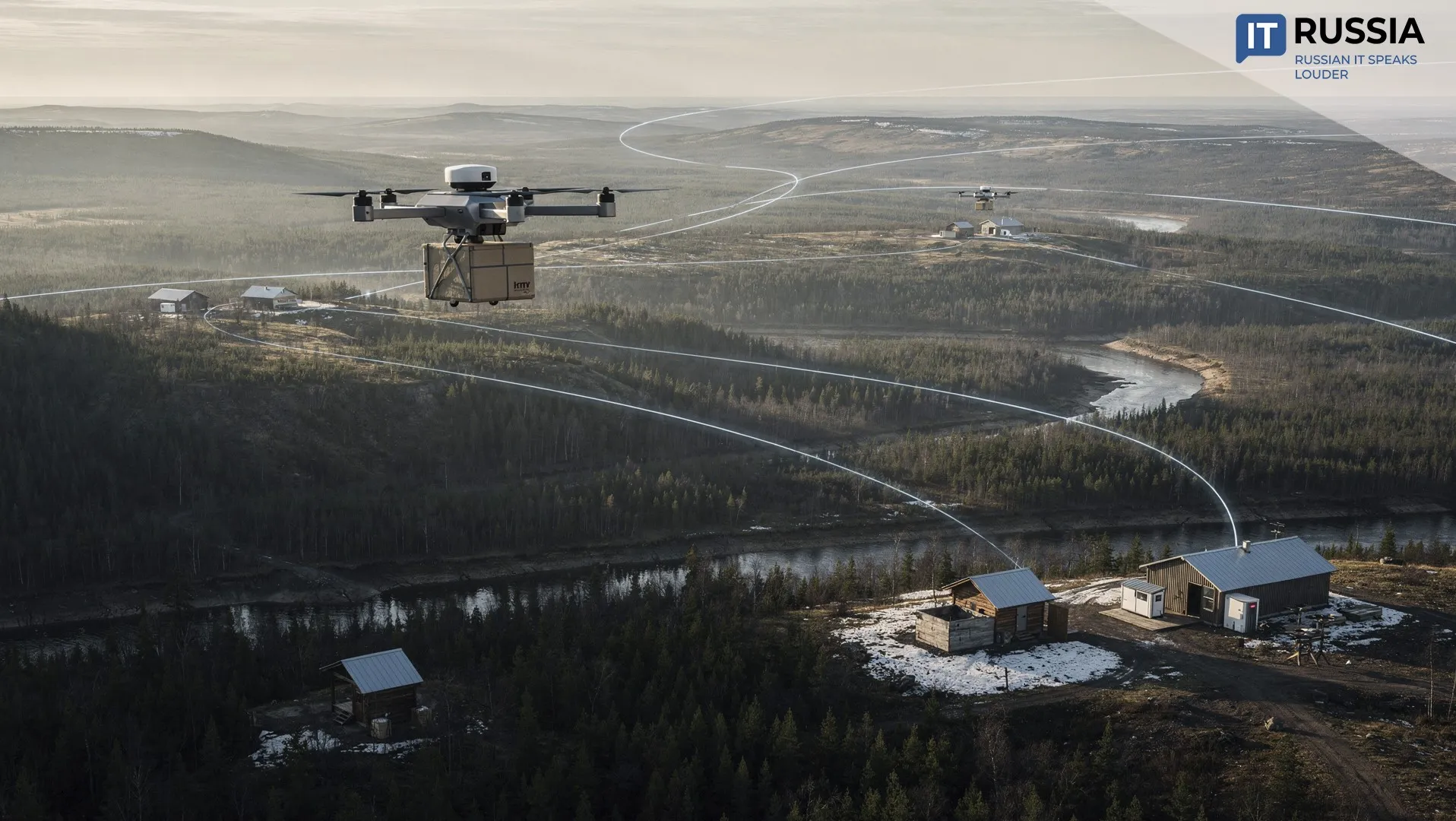
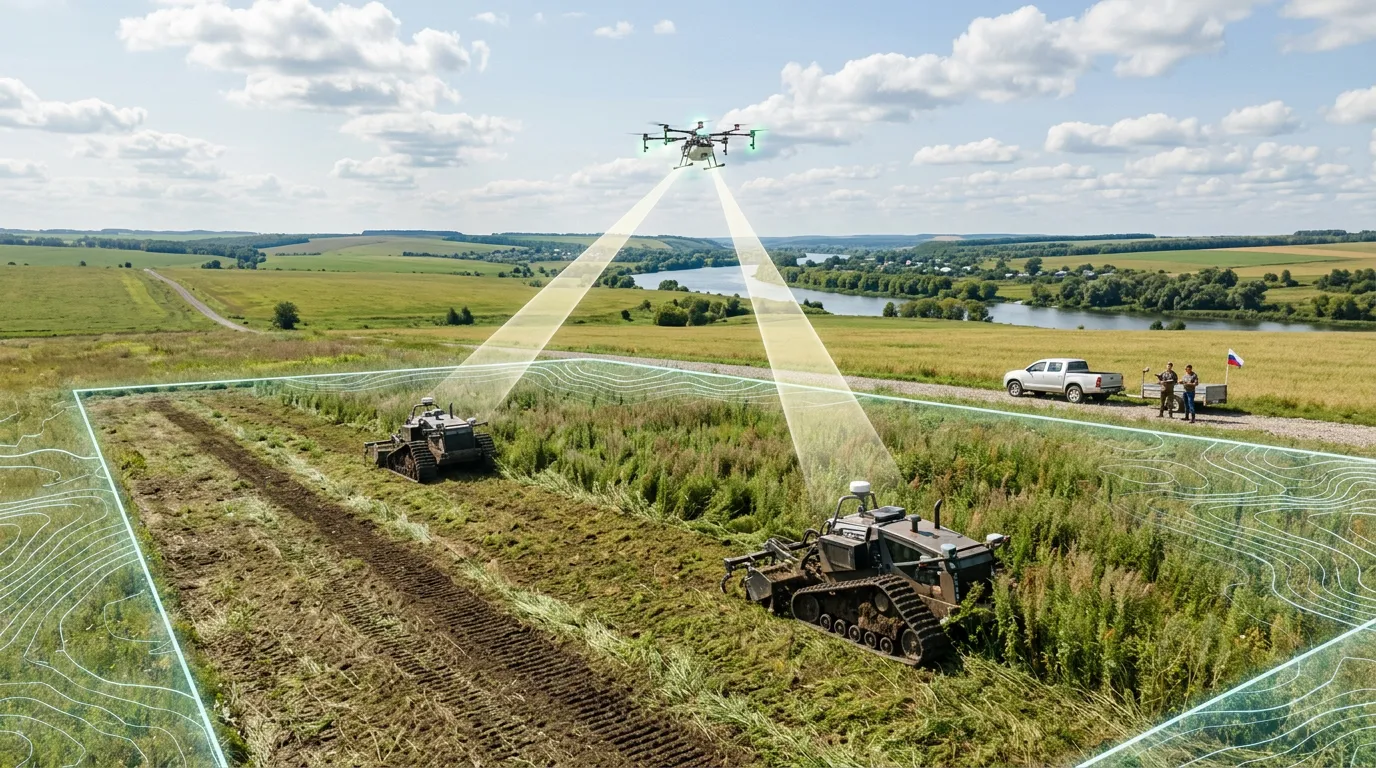
The region already uses UAVs to combat the weed, and the plan now is to combine the two technologies. “The SPC UAS already has experience treating agricultural fields for giant hogweed with agricultural drones. The new project adds ground-based robotic technologies to those capabilities. This is the first project in Russia to remotely treat areas infested with giant hogweed using ground equipment. For our Center, it is also a new way of working – for the first time, we have implemented a project jointly with a company that specializes not in aircraft, but in ground equipment,” said Maksim Cherkasov, minister of industry, trade and entrepreneurship of the Nizhny Novgorod Region.
Protecting Fields in Russia and Friendly Countries
The Nizhny Novgorod project could be useful both to farmers and to landowners. As of March 1, 2026, amendments to the Land Code of the Russian Federation require land-rights holders and holders of public easements to protect land from the spread of hazardous plant species.
Russia’s market for digital technologies to control weeds is developing rapidly. In 2021, Russian engineers developed a UAV that detects giant hogweed using computer vision and marks the plants in images for subsequent destruction. Its detection accuracy is now about 97%. In 2024, researchers at Southwestern State University in Kursk began developing a tracked robotic system that combats the plant using microwave radiation. In 2025, work began in Russia on a unified national system for monitoring the spread of giant hogweed with the use of UAVs.
The new robotic platform could become part of an end-to-end digital system for weed control. A monitoring system detects giant hogweed infestations and creates a digital map, unmanned equipment carries out the treatment, and follow-up imaging makes it possible to assess how effective the work was.
Today, giant hogweed threatens farmers in much of the world. It is spreading across countries in Eastern and Western Europe, has been documented in the United Kingdom, and has become a serious problem in the United States and Canada. An affordable digital system that has demonstrated its effectiveness in practice could be useful to crop growers seeking to protect their land and harvests.