Ultra-High-Frequency Welding for the Next Generation
From ultrasound to machine vision: Russia’s auto industry builds its own robotics.
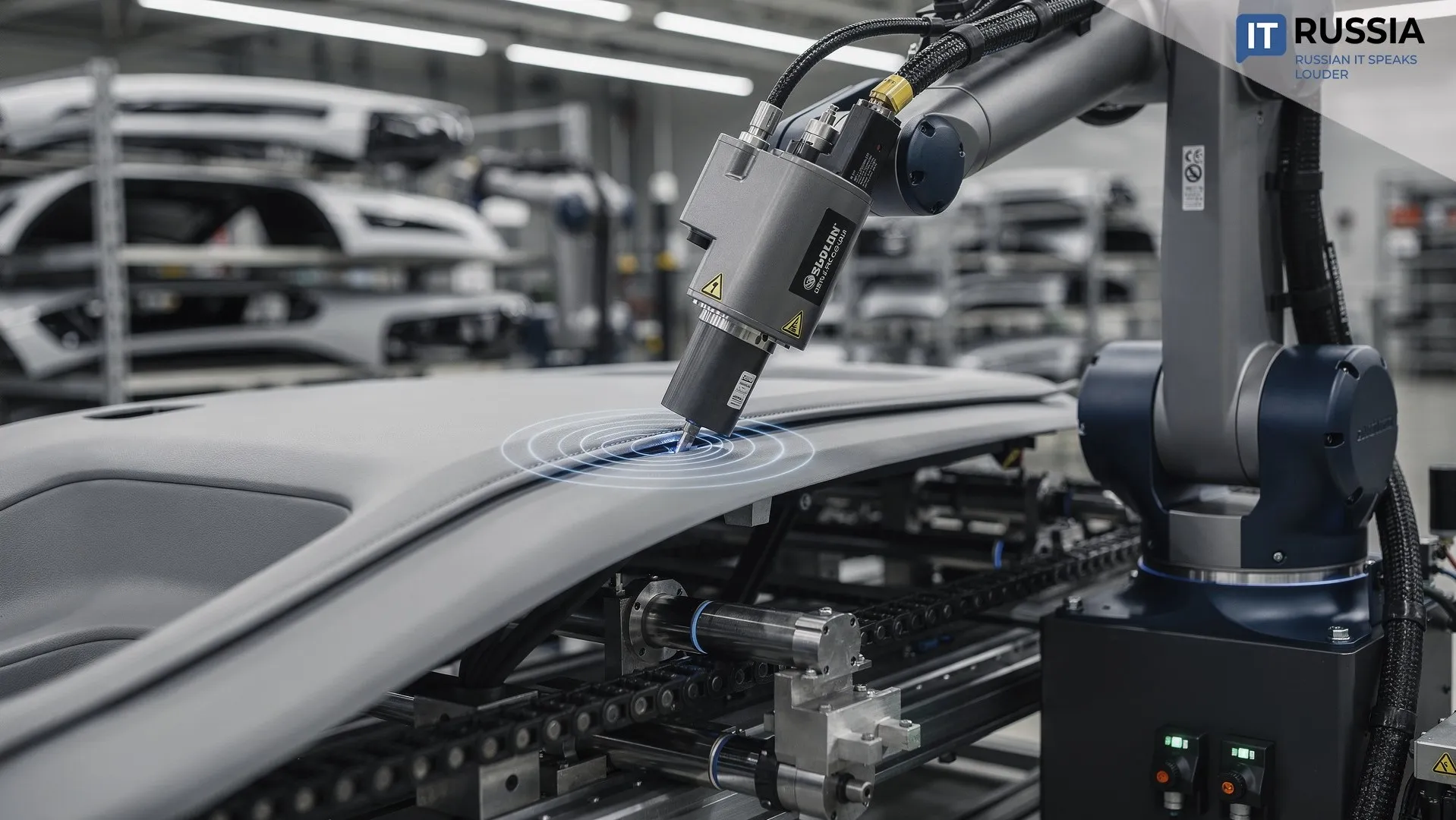
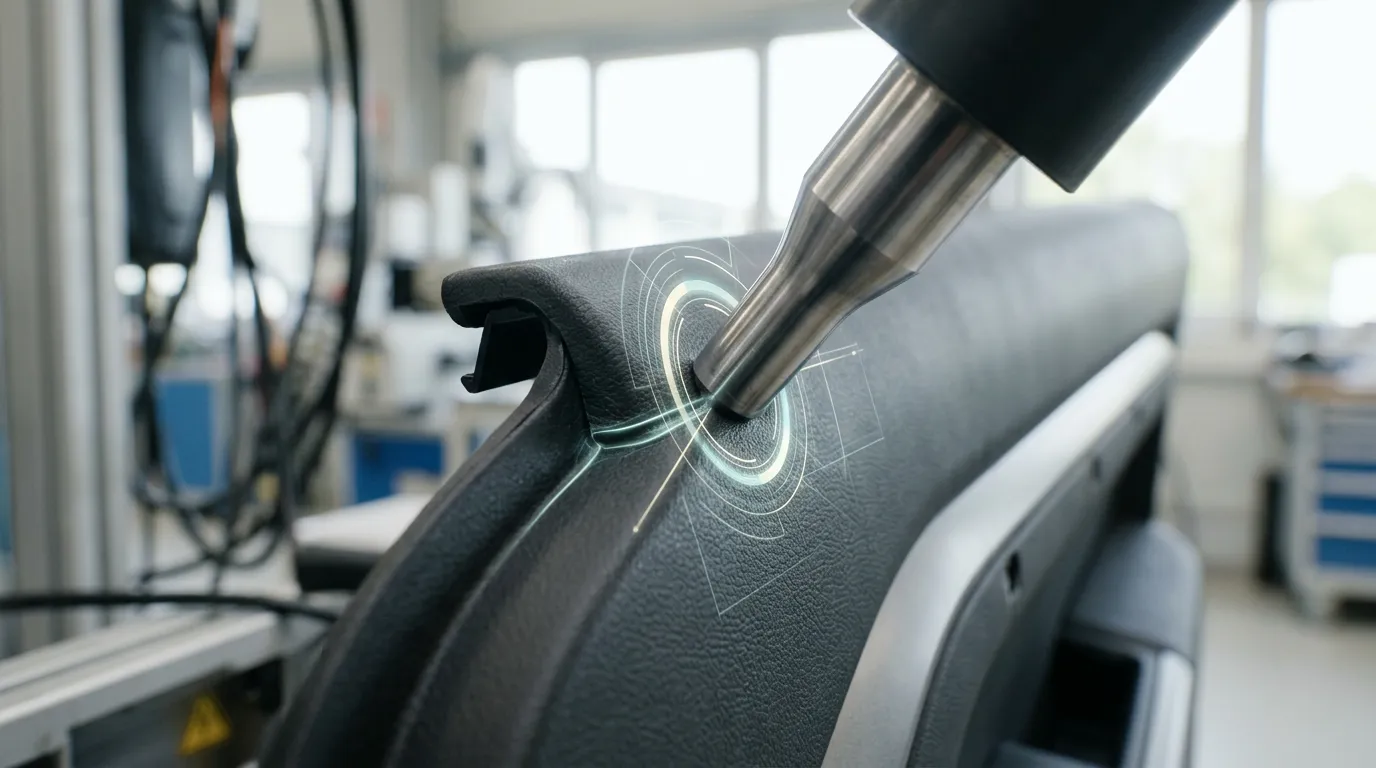
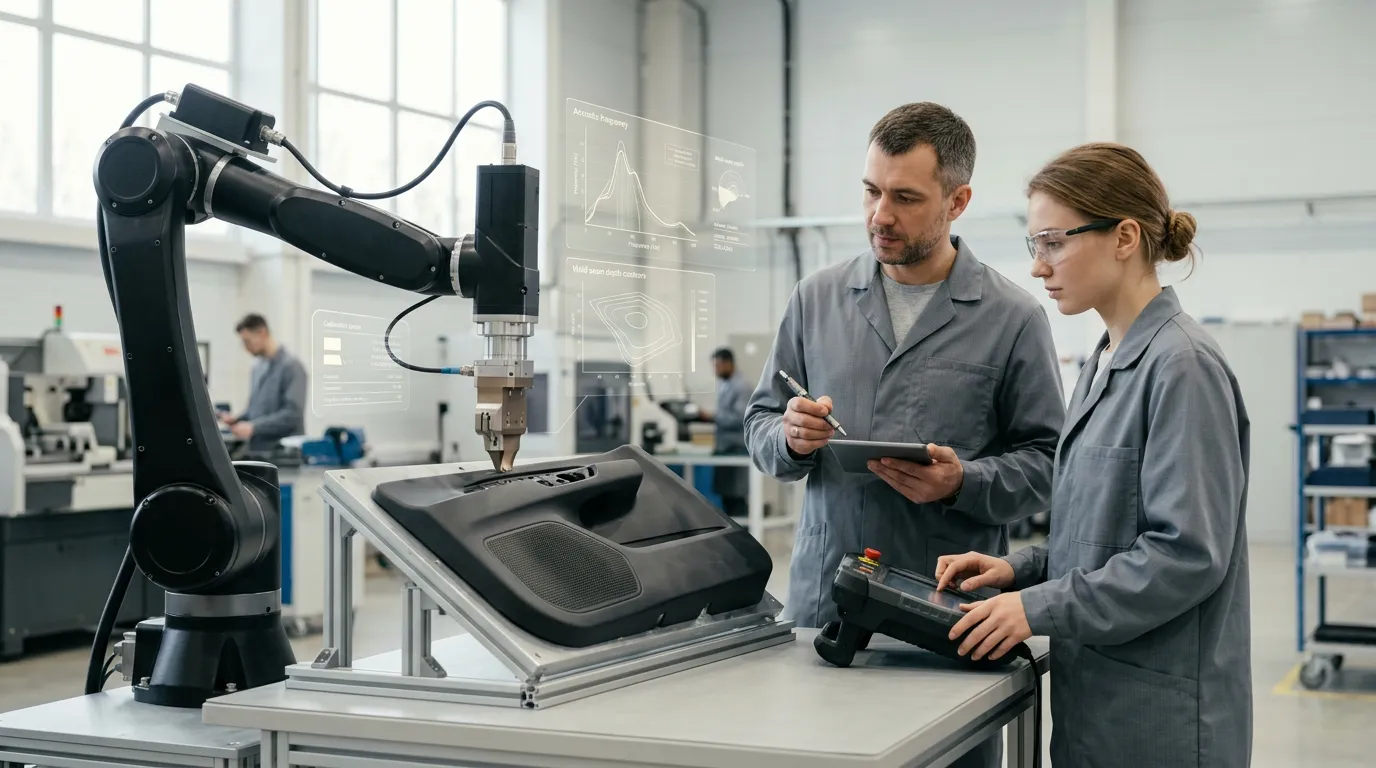
Engineers at the Advanced Engineering School “GibridTekh” (Hybrid Technologies) of Togliatti State University (TSU), working with AVTOVAZ JSC, are developing Russia’s first robotic ultrasonic welding cell. The equipment is designed to automatically join polymer interior components for the Lada Vesta and Lada Azimut.
Universal Cell Without Manual Changeovers
The universal system will weld trunk-liner components for both models without mechanical changeover: the operator will only need to select the product type on the control panel, after which the system will automatically adjust its operating parameters. To provide that flexibility, the design incorporates sensors and pneumatic actuators with adjustable clamps, while cable routing is designed to keep the tooling clear when processing workpieces with different geometries. The developers estimate that there is currently no equivalent solution elsewhere in the world: manufacturers typically use specialized equipment that requires manual changeovers.
From Classroom to Production Line
The Advanced Engineering School “GibridTekh” was established in 2023 at TSU with AVTOVAZ as its lead industry partner under a federal project of Russia’s Ministry of Science and Higher Education. Its goal is to train automotive engineers who can tackle real production challenges from their first day on the job. The school’s distinctive feature is the integration of the university classroom with the factory floor. Research and engineering projects are broken down into educational assignments that student teams tackle under the guidance of TSU faculty and AVTOVAZ engineers.
In 2026, 80 students are studying under targeted agreements with the automaker, 284 are completing internships, 22 master’s students are on placements, and 670 people are working in 64 project teams. As a result, TSU graduates can join AVTOVAZ’s engineering center without additional adaptation, helping reduce the outflow of skilled workers from the region and accelerating the launch of new models.
Solutions already put into operation include upgrades to five automated ultrasonic welding lines and a cylinder-block inspection line, with a complete switch to Russian-made components. Engineers have also designed 31 manual ultrasonic welding units that are already operating successfully on the production line. The teams are also automating bumper riveting, developing machine-vision-based quality-control systems and building prototypes of industrial carts.
Long-Term Automation Strategy
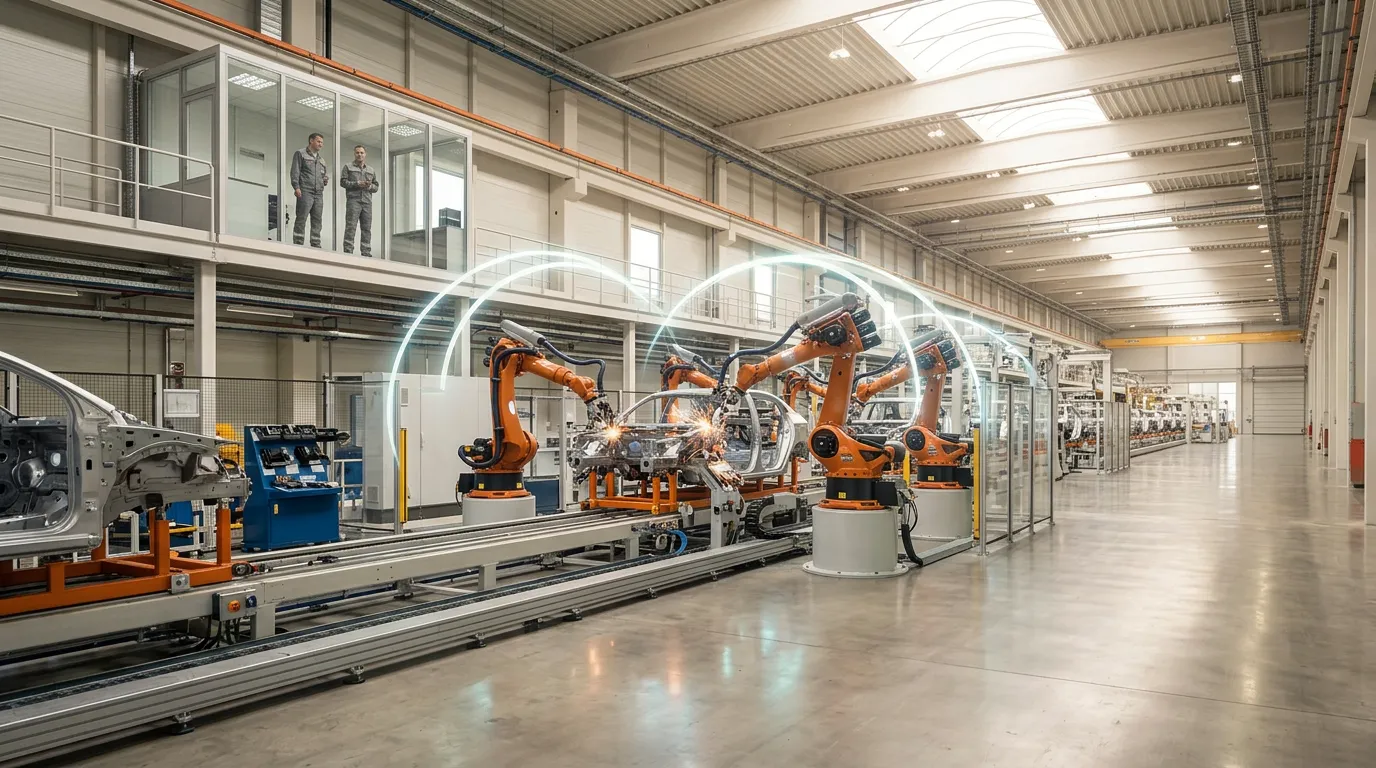
These projects are part of the plant’s broader technical modernization strategy. In 2025, the company invested more than 347 million rubles (about $4.1 million) in modernization, while in 2026 it completed the rollout of a Russian computer-aided design system after investing 500 million rubles (about $5.9 million). The long-term strategy calls for annual investments of more than 45 billion rubles (about $534 million) through 2030, with robotics remaining a key condition for reaching a planned annual output of 600,000 to 650,000 vehicles. Over five years, the plant has launched a new body-welding area for the Lada Iskra and Azimut with 112 robots. By 2026, the total number of industrial robots across its facilities had exceeded 1,600.
Building an In-House Technology Base
Russia’s automotive industry is steadily building its own technology base, addressing production needs across the manufacturing process. In 2021, KAMAZ launched a pilot Private LTE/5G network to test autonomous carts that deliver heavy components and assemblies to production lines without human involvement. In 2022, Kazan-based Eidos Robotics began supplying robotic cells to automate labor-intensive welding and assembly operations for automotive components. In 2023, Perm-based ROBOTEKH deployed machine-vision systems at auto-component plants to automatically detect defects during casting and machining. In 2024, Chelyabinsk launched serial production of industrial robotic manipulators designed to replace imported equipment in welding and painting areas at automotive plants. In 2025, KAMAZ deployed computer-vision systems to inspect the quality of cab paint coatings.
Beyond the Auto Industry
Demand for automation is growing: the automotive industry accounts for about 15% to 25% of the country’s industrial robot fleet, putting it among the top three sectors by robot use. Manufacturers are actively adopting cobots, AI systems for predictive maintenance and digital twins of production lines. The market reached 7.86 billion rubles (about $93 million) in 2025, up 14%. By 2030, Russia aims to rank among the world’s top 25 countries by robot adoption, with the automotive sector serving as one of the main drivers of that expansion.
The ultrasonic welding system being developed in Togliatti could become the basis for a product line adaptable to electronics, medical equipment and other sectors where polymer processing is required. The next step is to integrate such systems with machine-vision platforms, analytics systems and the Industrial Internet of Things. That would allow separate operations to be combined into unified automated work areas under centralized control. In the longer term, the technology could reach export markets, but doing so would require establishing serial production, building a service network and demonstrating competitiveness. For now, the main priority is domestic demand.