Russia May Become the Lowest-Cost Hub for AI
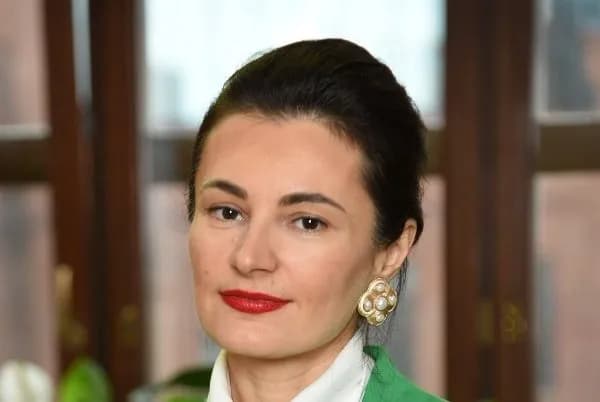
Russia may provide the lowest-cost electricity for the rapidly growing needs of artificial intelligence operators. That was the message delivered by Kirill Dmitriev, Special Representative of the President of Russia and CEO of the Russian Direct Investment Fund (RDIF), at the St. Petersburg International Economic Forum.

Kirill Dmitriev said Russia could supply generative AI data centers with electricity at costs three to four times lower than alternative options available in other countries. According to the RDIF chief, this is “the most important competitive advantage in a rapidly changing technological world.” Low-cost power could help attract major investors and support new partnerships in the artificial intelligence sector.
Over time, this could make AI services more affordable for Russian citizens across a wide range of fields, from government services to healthcare and education. At the national level, it could also help Russia secure a significant position within global AI infrastructure, as the availability and cost of electricity are becoming critical factors for the industry worldwide.

Export Potential of Low-Cost Electricity
According to estimates from the International Energy Agency, data centers worldwide are expected to increase electricity consumption by 26% in 2026, reaching 565 TWh. By 2030, that figure could rise to 950 TWh. For comparison, this is slightly higher than Japan’s total annual electricity consumption. Against that backdrop, Russia’s energy advantage could open substantial opportunities for the country.
The focus would not be on exporting electricity itself. Instead, the strategy would center on building computing infrastructure for partners from friendly countries, ranging from providing power capacity to hosting new data centers.
The Russian government is already preparing artificial intelligence legislation. Some provisions call for the creation of special energy zones for data centers featuring preferential electricity tariffs, simplified grid connection procedures, and government co-financing.

From National Strategy to Concrete Action
Kirill Dmitriev’s statement is more than an observation about Russia’s comparatively low electricity costs. It reflects the continuation of the country’s broader AI policy that has been taking shape over recent years.
In 2024, President Vladimir Putin signed a decree updating the National AI Strategy, which defined priority development areas through 2030. In 2025, Prime Minister Mikhail Mishustin proposed examining special electricity tariffs for data centers located in regions with surplus generating capacity. Later that year, Vladimir Putin instructed the government to prepare proposals for placing data centers in such territories.

What Could an Energy-Led AI Expansion Deliver?
Kirill Dmitriev’s remarks clearly illustrate that competition in artificial intelligence is no longer limited to software developers and manufacturers of processors, memory systems, and graphics accelerators. Increasingly, success depends on supporting infrastructure and access to low-cost power generation.
Affordable electricity for data centers could help attract foreign investment into Russian regions that host major nuclear and hydroelectric power facilities. Russian companies already have experience locating their own data centers near such assets. Over time, these territories could develop into major AI infrastructure hubs.
Friendly countries could operate their own or leased data centers at lower energy costs, reducing overall operating expenses. At the same time, inexpensive electricity alone does not guarantee success. Russia will still need to provide reliable power supply, modern infrastructure, data security, and attractive conditions for investors. Only on such a foundation can genuine technological sovereignty be built.