Magnonics Instead of Silicon: LETI Builds a Low-Cost Hardware Neural Network Using Spin Waves
A low-cost hardware neural network capable of performing neuromorphic computing with spin waves has been developed at Saint Petersburg Electrotechnical University “LETI.”
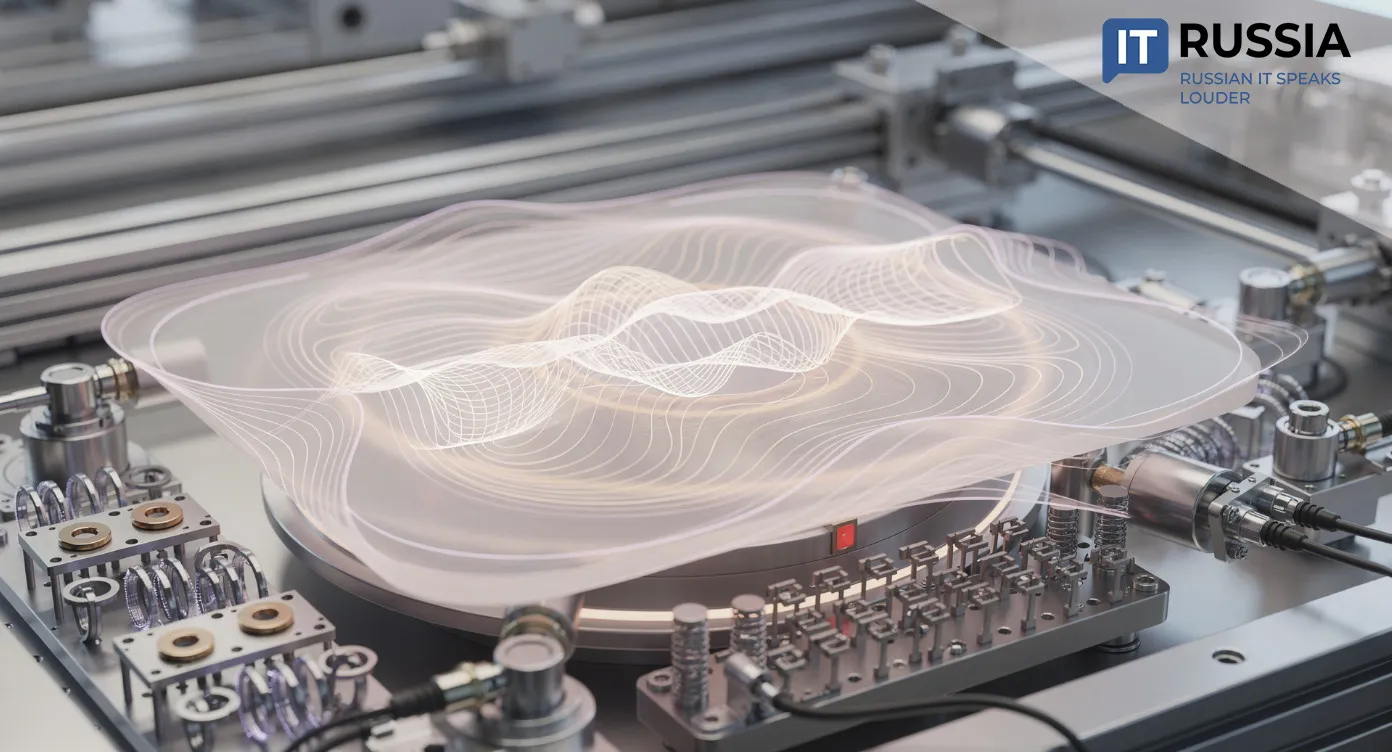
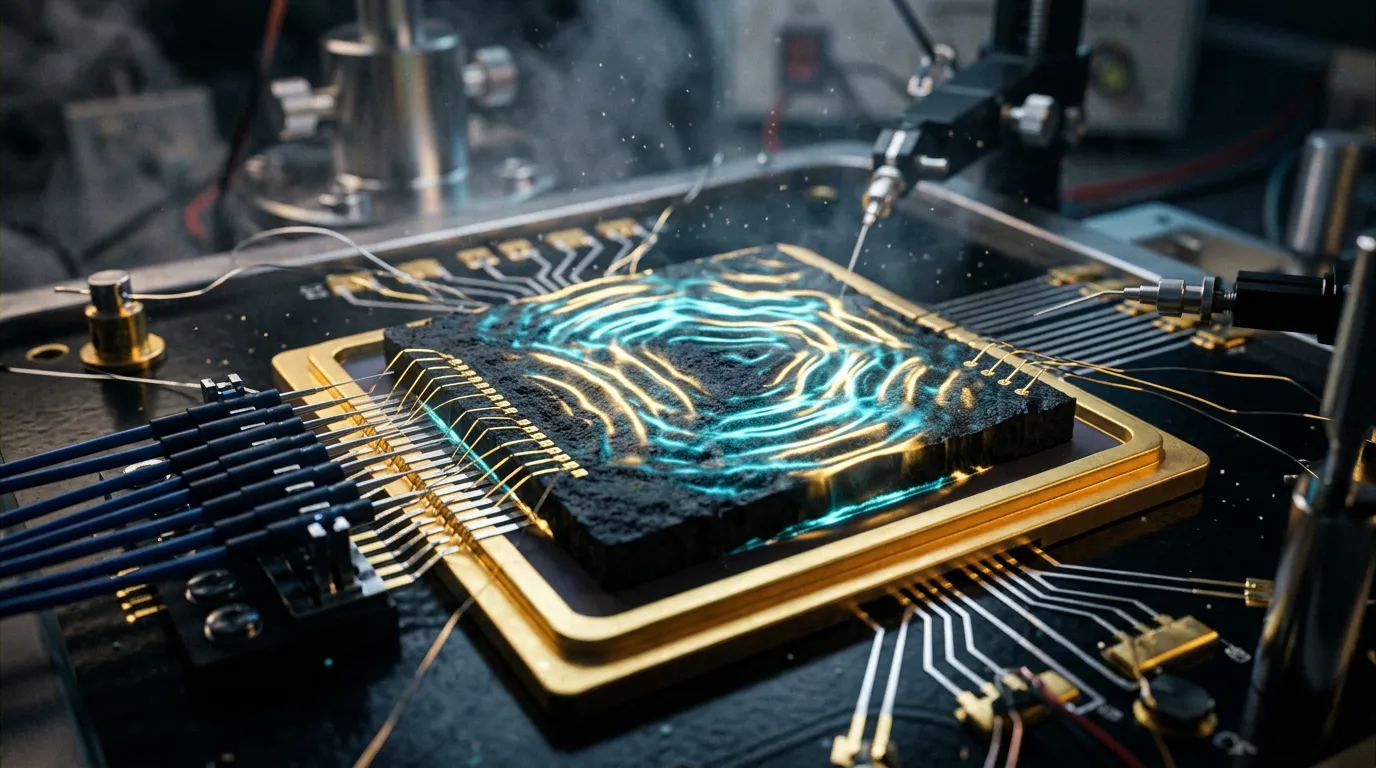
At the heart of the system is a ceramic ferrite plate made of yttrium iron garnet (YIG), replacing expensive single-crystal films.
Researchers at Saint Petersburg Electrotechnical University “LETI” have demonstrated a hardware neural network for image recognition based on magnonics. Magnonics is a field of modern physics and electronics that explores how magnons – quasiparticles associated with spin waves – can be used to transmit, process and store information.
The key difference between the new system and earlier magnonic devices is its use of an inexpensive ceramic yttrium iron garnet (YIG) plate instead of costly single-crystal films grown through epitaxy. That could fundamentally reduce the cost of future components for hardware AI. Here, computations are performed not by transistors but by spin waves – collective oscillations of magnetic moments within the material.
How the System Works
The device is a physical reservoir computer – a hardware analog of a recurrent neural network. Unlike conventional computing, where an algorithm processes data sequentially on a CPU or GPU, the physical medium itself serves as the computational layer. Spin waves excited in the ceramic YIG plate naturally transform the input signal; the researchers’ task is to read the system’s response correctly and interpret it as a classification result.
In experiments, the device recognized digits from 0 through 9. At a 20% noise level, accuracy reached 98% for 10×10-pixel images, exceeded 76% for 5×4-pixel images and reached 71% for handwritten digits. For a laboratory prototype, those results provide strong evidence that the architecture itself works.
Why It Matters for the Industry
The main value of the research lies not in record-setting accuracy but in the attempt to lower the cost of the physical platform for hardware AI. The single-crystal films previously required for magnonic devices are difficult and expensive to manufacture. Ceramic YIG could pave the way for more affordable specialized accelerators. For Russia’s IT industry, that could mean an opportunity to develop energy-efficient coprocessors for recognition and classification tasks without relying on imported GPUs. The university itself sees systems of this kind as a potential foundation for future magnonic coprocessors.
Prospects and Applications
The researchers say their next task is to refine the device architecture by improving accuracy and processing speed while increasing the complexity of the patterns it can recognize. Potential applications include autonomous systems, robotics, audio and video stream processing, computer vision and intelligent sensors. More broadly, the technology points toward shifting some AI computation away from general-purpose processors and onto compact physical neuromorphic systems embedded directly in sensors and autonomous devices.
Meanwhile, it is too early to describe the technology as an export-ready product: it remains at the research stage, and industrial production is still a long way off.
Neuromorphic Technologies in Russia
In 2023, STC Modul introduced the NM Quad (NM Quad) neural computing system with four Russian-made NeuroMatrix neural processors. That same year, a neuromorphic chip for spiking neural networks was demonstrated with the participation of Kaspersky Lab. In 2024, Lobachevsky University developed a prototype superconducting neuromorphic network, while the Moscow Institute of Physics and Technology began developing a Russian neuristor – an artificial neuron for future neuromorphic computers. LETI’s magnonic reservoir computer adds another approach to this lineup, using a fundamentally different physical medium for computation.
Greater complexity in the images the system can recognize, higher processing speeds, device miniaturization and integration with conventional computing electronics will be the key indicators of the technology’s maturity. End users, however, will see a direct benefit only once the system moves from a laboratory prototype into practical devices. Still, the demonstration that hardware AI can be built using inexpensive ceramics opens up a broad range of possibilities.