Murmansk Scientists Enlist Smartphones in the Fight Against Invasive Plants
A unique Arctic environmental monitoring project has launched in Russia’s Murmansk Region. Scientists at the Polar-Alpine Botanical Garden-Institute of the Kola Science Center of the Russian Academy of Sciences (KSC RAS) have developed a digital platform that can turn ordinary residents into citizen scientists.
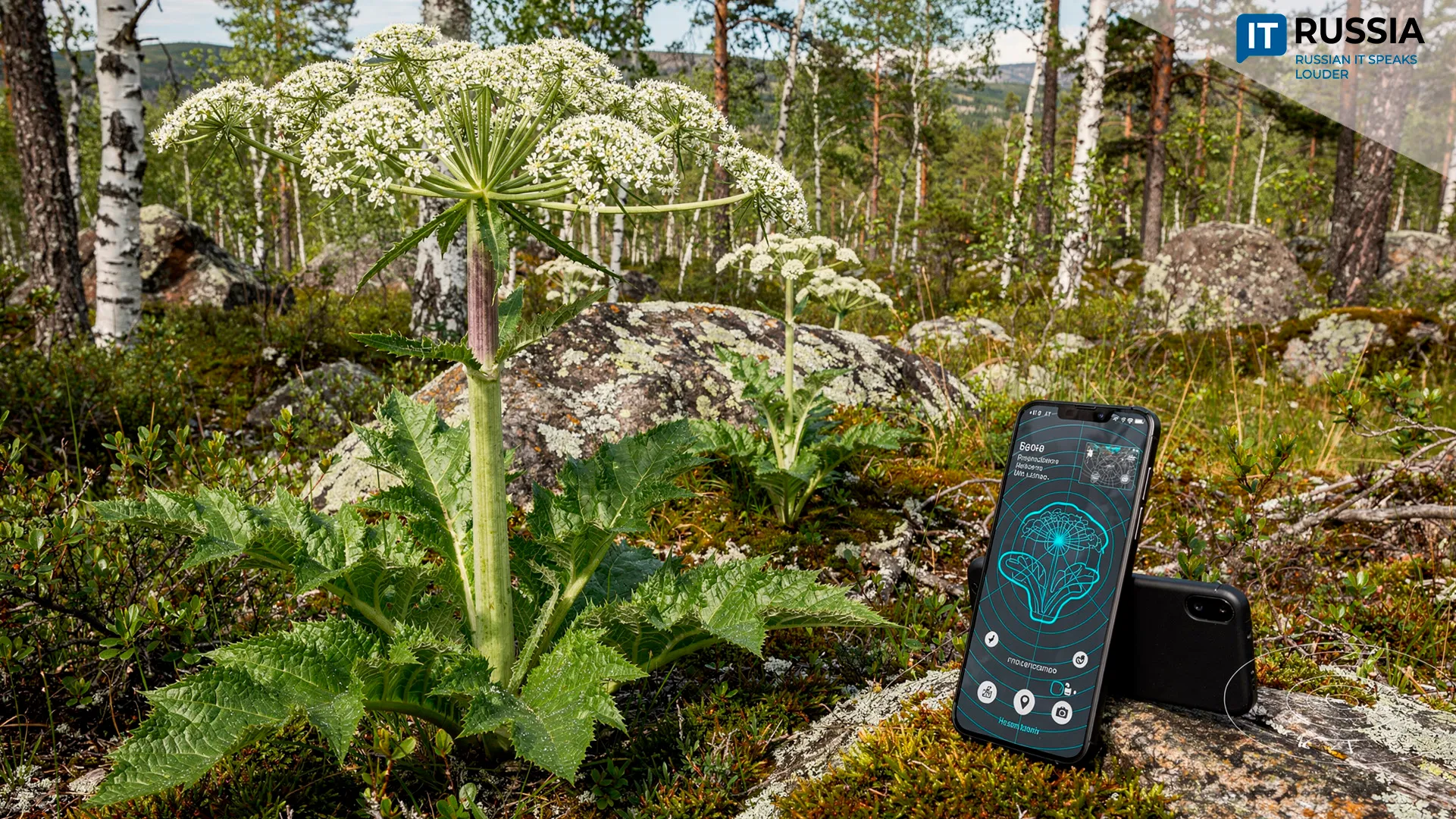
Through the Invasionnye rasteniya Murmanskoy oblasti (Invasive Plants of the Murmansk Region) web platform and mobile app, anyone can contribute to scientific research and help the region combat dangerous plant species.
Aliens Among Natives
A resident photographs a potentially dangerous plant and records its species, coordinates and approximate abundance. The observation is verified by professionals before appearing on a shared map. The identification guide and maps work without an internet connection, while collected data is automatically uploaded to the server once connectivity is restored.
For now, the project covers 10 species considered potentially dangerous to the region, including Sosnowsky’s hogweed, common ragweed, lupines, Himalayan balsam and rugosa rose. But these represent only a fraction of the problem – more than 550 adventive plant species have been recorded in the Murmansk Region, compared with 250 in the middle of the last century. That makes this digital “ecologist” useful for both environmental protection and regional management. The system has already demonstrated practical demand, with about 1,600 observations recorded on the platform.
Invasive species are a global problem. According to a UN report, at least 3,500 harmful invasive species have been recorded across the world’s regions. They cost the global economy at least $423 billion annually. In Russia, their combined environmental damage reaches 60 billion rubles (about $740 million).
The “Black Book”
Russia has 584 invasive plant species, and the number continues to grow. Human activity brings them into new areas, where they can establish themselves rapidly, displace native plants and pose threats to animals and people. According to the St. Petersburg Research Institute of Forestry, these “aggressors” have contributed to 60% of plant and animal extinctions worldwide. Of them, 107 “invaders” are considered particularly dangerous because they can fundamentally alter ecosystems. Russia’s Ministry of Natural Resources and Environment is preparing a “Black Book” that will include all such “enemies” of agriculture and forestry. Classifying them will help authorities develop measures to combat their spread, ranging from quarantine lists to biological control programs.
Since March 1 of this year, Federal Law No. 294-FZ has been in effect to protect the environment from dangerous invasive plant species. Each region will have its own list of invasive species, and such regional lists have already been approved in 41 of Russia’s federal subjects.
Responsibility also falls directly on landowners and land users, who are required to take measures to prevent dangerous invasive plants from spreading. The Murmansk project could provide the basis for a reliable digital map of infestation hotspots. A regularly updated geospatial database is needed to detect dangerous stands earlier, plan surveys and treatment of affected areas, and assess the directions in which invasive plants are spreading.
Useful Technology Against Harmful Plants
In 2025, KSC RAS scientists introduced the Invasionnye rasteniya Murmanskoy oblasti (Invasive Plants of the Murmansk Region) Telegram bot. It has since evolved into a full-fledged digital platform with an offline mode. That same year, Gorodovoy (City Watchman) mobile neural-network systems in St. Petersburg began automatically detecting hogweed, while residents of the Pskov Region were given a way to report hogweed locations through a regional digital platform. In 2026, Yandex introduced an AI service that detects hogweed in satellite imagery and speeds up the mapping of affected areas by about 50 times.
The main strength of the KSC RAS project lies in its combination of large-scale data collection by residents, the ability to operate without reliable mobile internet and mandatory verification of observations by professional botanists.
The technological approach could be scaled to other regions of Russia’s North and Arctic. Municipalities and landowners could be connected to the shared system, verification of detected sites could be automated, and user photographs could be combined with data from satellites, drones and ground-based cameras. At the federal level, the Murmansk project could serve as a model for developing regional modules within a unified invasive-plant monitoring system.