Optical Fiber Line Learns to Monitor Activity Across a Campus
In Novosibirsk, researchers conducted an experiment using an existing optical fiber communications line to monitor activity across a university campus.
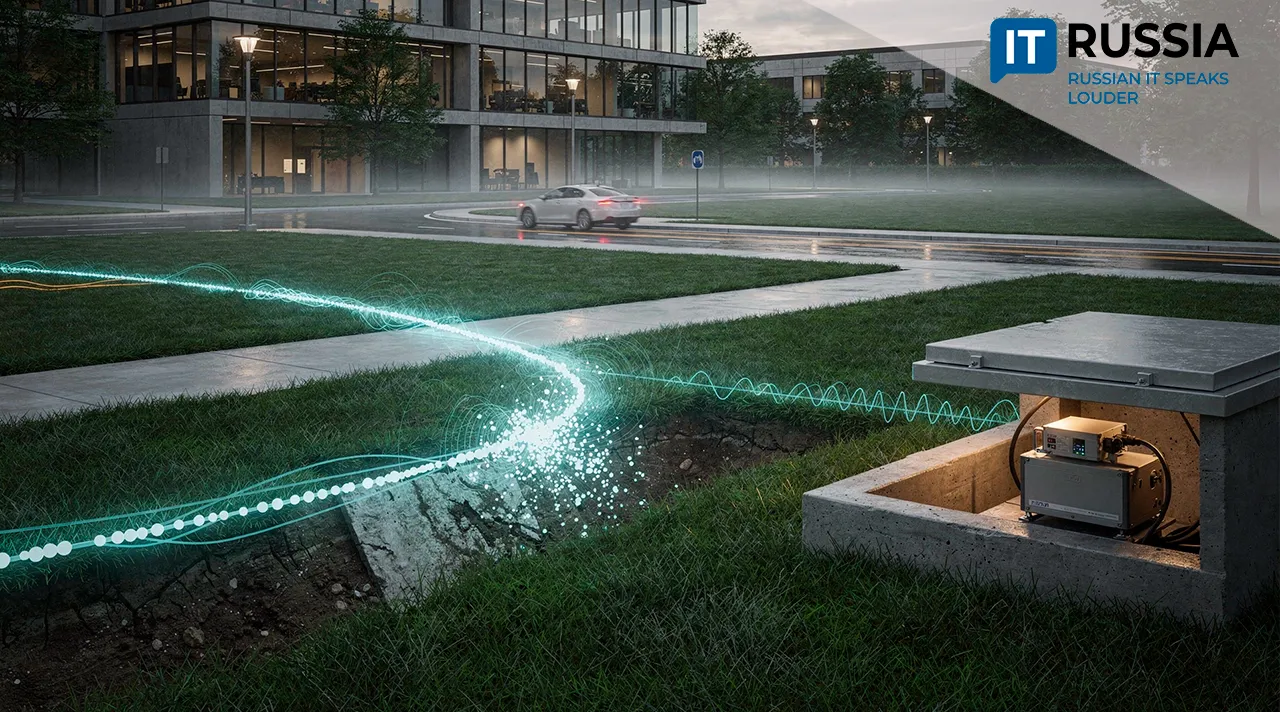
Researchers tested whether an existing fiber-optic cable could be used as a distributed vibration sensor and whether artificial intelligence could identify events in the surrounding environment. The results were promising. The scientists concluded that, over time, the technology could be used to monitor industrial and urban infrastructure. The experiment involved researchers from Novosibirsk State University and T8, a company that manufactures equipment and components for fiber-optic communications.
Optical fiber is a thin, flexible cable made of glass fiber that can transmit enormous amounts of data at the speed of light.
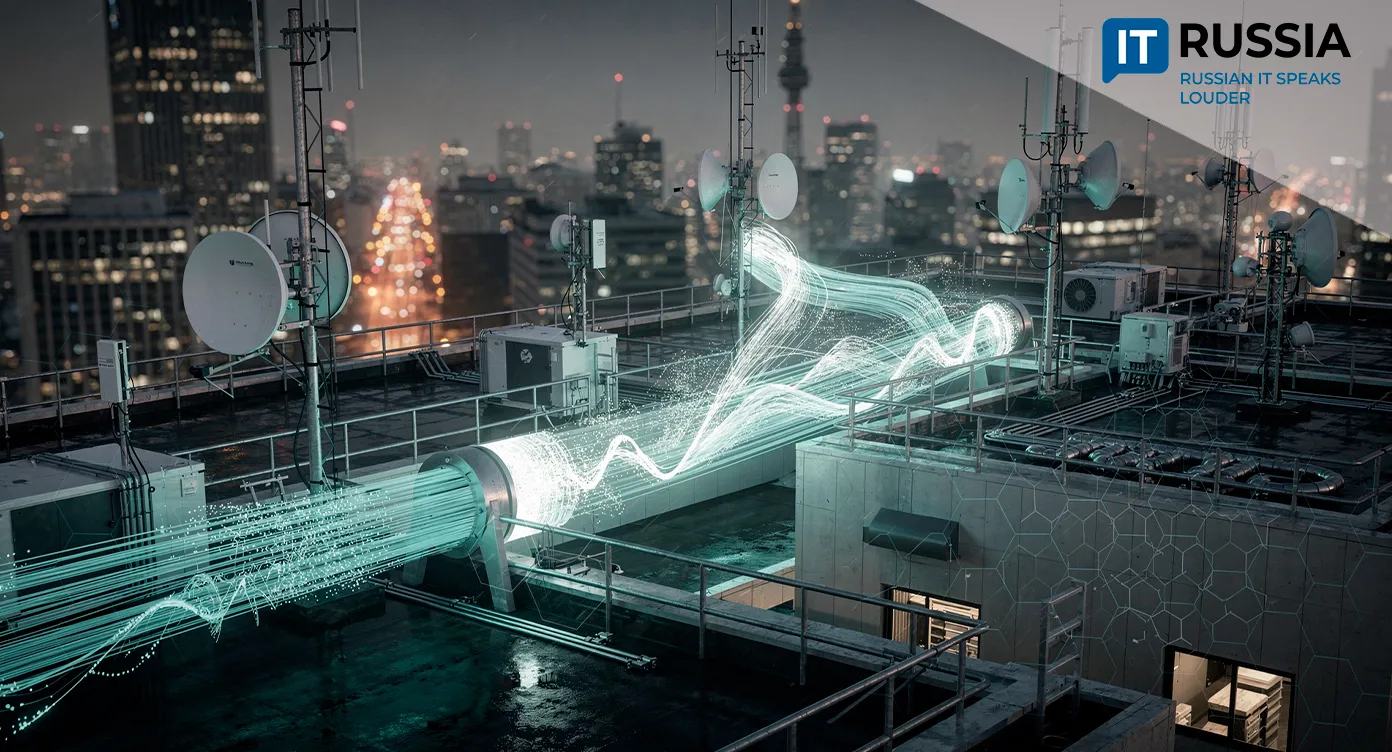
Researchers in Novosibirsk found a way to turn an ordinary fiber-optic communications line into a distributed network of sensors. A specialized device connected to the existing cable records vibrations. Using artificial intelligence, the system can determine what is happening near the line, such as detecting a passing vehicle, people walking, or excavation work.
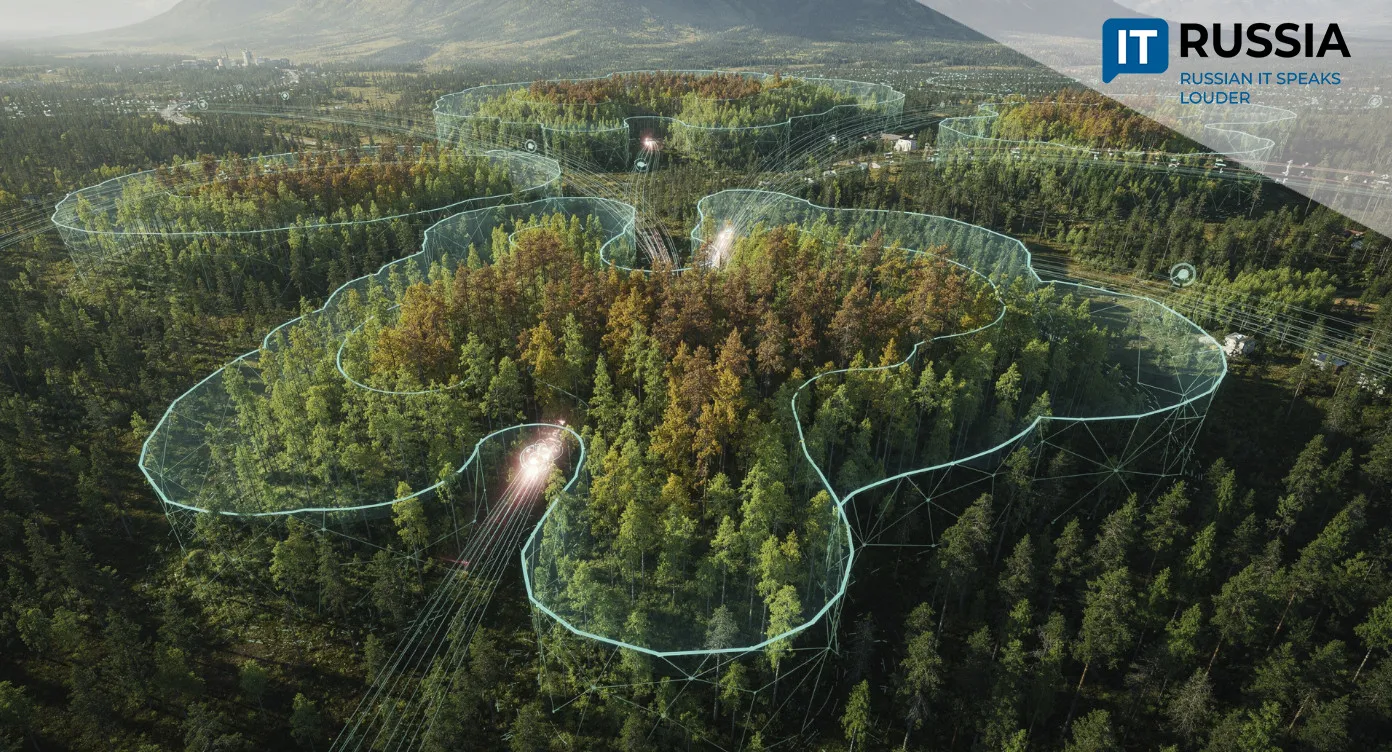
Distributed Acoustic Sensing (DAS) changes the basic paradigm of monitoring: a long cable becomes thousands of virtual sensors. Instead of burying a dense network of expensive sensors, engineers are learning to “listen” to light.
A Brief History: From 1990s Patents to New Breakthroughs
The idea of “listening” to light is not new. The technology’s foundations were laid in the early 1990s. The first key patent for a fiber-optic intrusion detection device and method, a direct precursor to modern DAS, was obtained in March 1993 by researchers H. Taylor and S. Lee at Texas A&M University.
For years, the technology remained an expensive laboratory curiosity. DAS experienced a renaissance in the 2010s as coherent lasers became less expensive and machine-learning algorithms advanced. This made it possible to move from simply detecting that an intrusion had occurred to accurately classifying events. Russian engineers have not only adopted these global advances but have also developed their own competitive hardware and software systems, such as Dunay from T8.
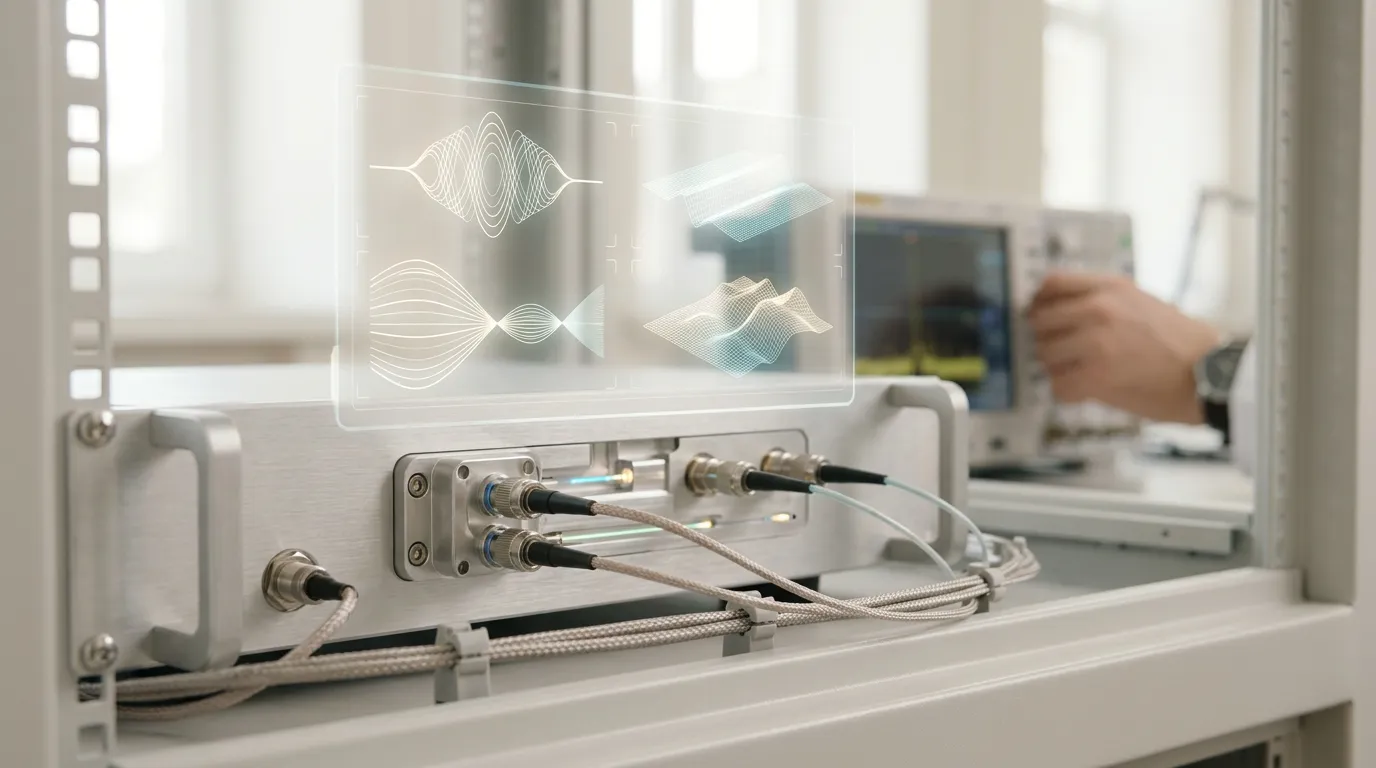
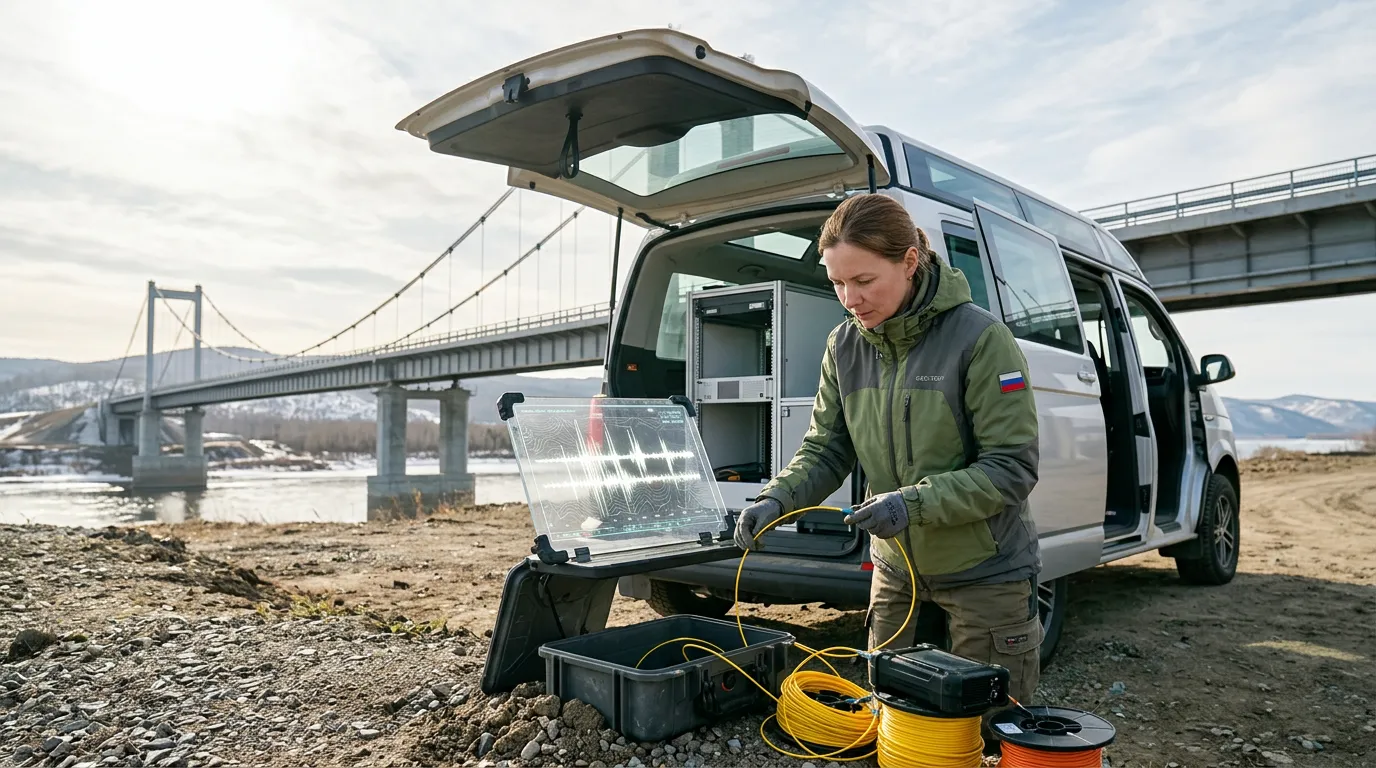
In practice, the process works as follows: the hardware system sends pulses of light into the fiber. The light scatters, and any external disturbance – a person’s footsteps, a passing truck, or a slight shift in the ground – changes the characteristics of the backscattered light. The software immediately pinpoints the location of the disturbance along the line.
Machine learning comes into play next. The data stream is sent to a server, where AI algorithms analyze the signals, distinguishing wind noise from an excavator at work or a fluid leak. In effect, this is a deep symbiosis of photonics, high-speed digital signal processing, and server infrastructure.
From Power Lines to the Ocean Floor: Russia’s Experience
In Russia, the effort to turn infrastructure into a sensing system has been underway for several years. The progress of recent years is striking.
2021: Companies Incab and T8 Sensor taught optical fiber to detect ice buildup on power lines by measuring the elongation of wires under load.
2023: Dunay was already reliably detecting pipeline leaks and perimeter intrusion attempts, covering sections of up to 75 kilometers.
2024: In Khakassia, optical fiber successfully underwent testing for conventional seismic exploration, collecting hundreds of gigabytes of spatial data.
2025: At an exhibition at the Moscow State Mining University, the technology was demonstrated working with fiber-optic cables directly inside geological exploration wells in real time.
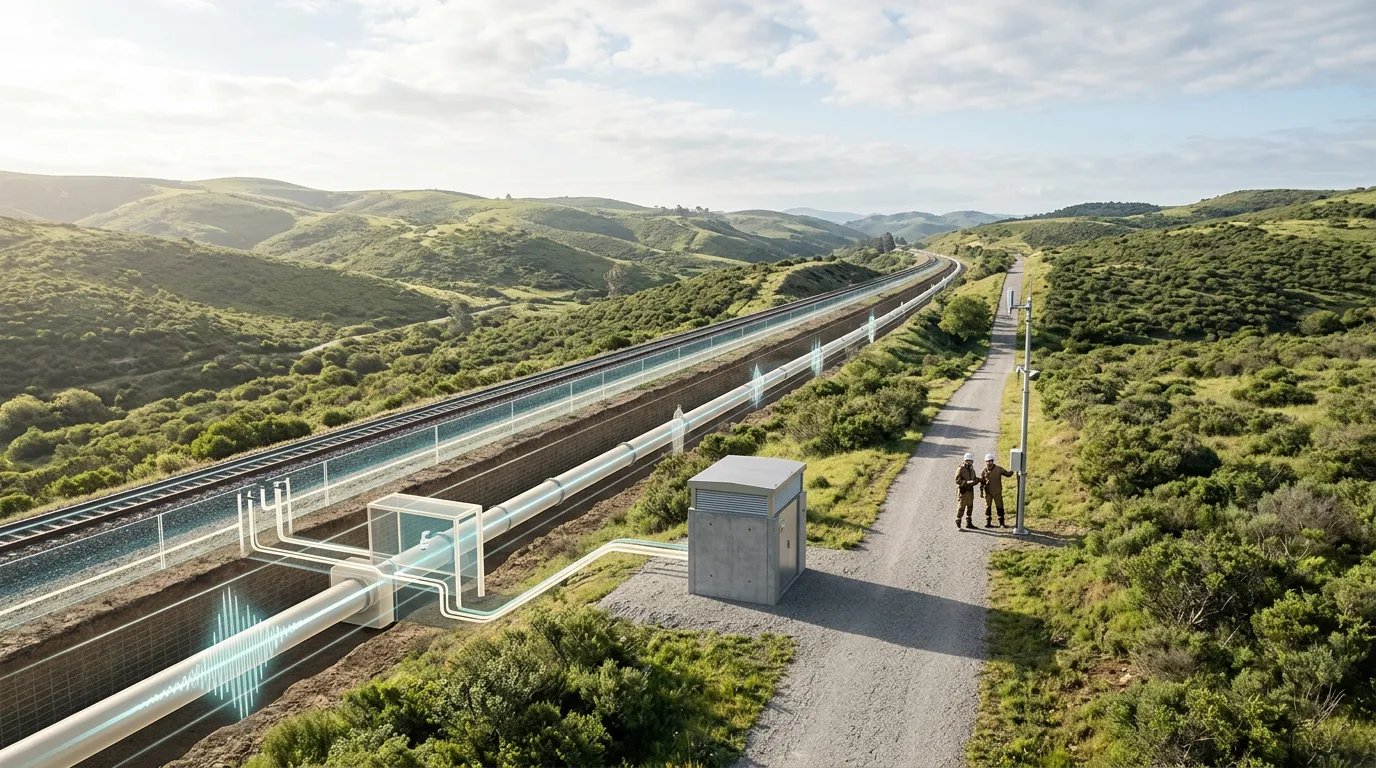
Using optical fiber in seismic zones is a separate area of promise. It is important to understand that optical fiber is neither a precise earthquake prediction tool nor a universal replacement for conventional geophones. Its sensitivity depends directly on the type of ground, how the cable is installed, and the characteristics of the cable itself. As a supplemental tool, however, it is invaluable. DAS can expand the area under observation and detect seismic waves where installing conventional monitoring stations would not be economically feasible.
Big Data Challenges and Export Potential
The main barrier to widespread use of optical fiber for monitoring is a lack of effective software. The high density of virtual sensors generates enormous amounts of data – tens or hundreds of gigabytes in a single survey. Scaling the technology will require algorithms capable of filtering and classifying information in near real time.
The second challenge is transferring what neural networks have learned from one environment to another. A model trained on sand in Khakassia may make mistakes on clay in the Moscow region. AI models will have to be retrained to account for local sources of noise. Even so, having a fully Russian-made hardware and software complex opens up significant prospects. Competitiveness in the global market will be determined by operating range, the cost of integrating the technology into existing telecommunications lines, and the quality of event recognition.
Infrastructure Gets a Second Life
Despite these challenges, current experiments mark a transition from isolated pilots toward universal infrastructure monitoring. The next steps include proving the technology’s accuracy, testing false-positive rates, and evaluating its performance under different weather and geological conditions. But the key shift has already occurred: existing fiber-optic infrastructure is gaining a second function. Millions of kilometers of cable could potentially become a vast distributed sensor network, with artificial intelligence taking on the role of interpreter.