From Lectures to Logs: UserGate Opens Belarus’s First Cybersecurity Training Lab
The Russian vendor is exporting more than equipment and licenses: it is bringing an entire educational system, from teaching methods and hands-on work with real firewalls to a pipeline for future cybersecurity professionals.

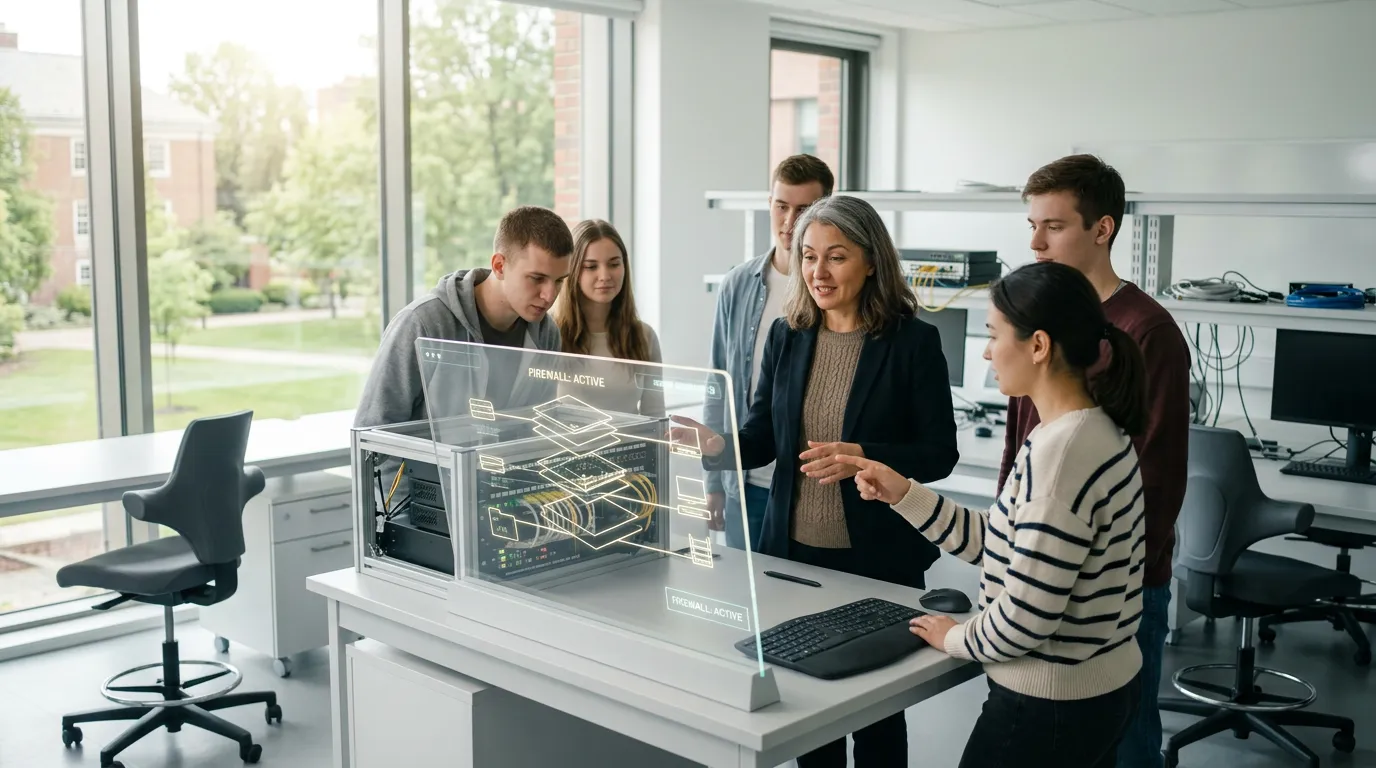
A cybersecurity training lab from Russian vendor UserGate has opened at the Department of Telecommunications and Information Technologies at Belarusian State University (BSU) in Minsk. About 200 university students will be able to work with real equipment each year, learn to configure next-generation firewalls (uNGFWs) and gain hands-on skills that can translate directly into future cybersecurity jobs.
A Classroom With Some Serious Hardware
UserGate became the project’s full-scale investor. The company renovated the classroom, supplied new furniture, and purchased projectors and laptops for hands-on classes. But the most valuable contribution was a demonstration unit of the UserGate D200 hardware platform, a hardware-and-software complex that will give students a chance to learn how information security tools are integrated.
UserGate also provided the university with a dedicated training course, a set of laboratory exercises and all the necessary licenses. Students learn the fundamentals of cybersecurity and practice configuring uNGFWs, the next-generation firewalls developed by the Russian vendor.
Representatives of the Ministry of Education, the Ministry of Communications and Informatization, the State Committee on Science and Technology, the United Institute of Informatics Problems of the National Academy of Sciences of Belarus and other organizations attended the opening. The event also included a review of the results of a workshop on working with uNGFW hardware-and-software complexes, with awards presented to the competition’s winners.
60 Universities, Nearly 3,000 Students
UserGate’s cooperation with Belarus dates back several years. In November 2021, the company announced its entry into the country’s market after obtaining certifications confirming that its solutions met local technical requirements.
Later, in April 2026, UserGate and BSU signed a partnership agreement covering workforce training and joint cybersecurity research. The agreement also brought plans to open two UserGate laboratories at BSU and provide the university with specialized courses and licenses.
Meanwhile, the company was strengthening its ties with academia. It signed agreements with the Belarusian State Academy of Communications and the Belarusian State University of Informatics and Radioelectronics, while cooperation with Polotsk State University began in fall 2025. In August 2026, UserGate joined the Belarusian Association of High Technologies and Digital Infrastructure.
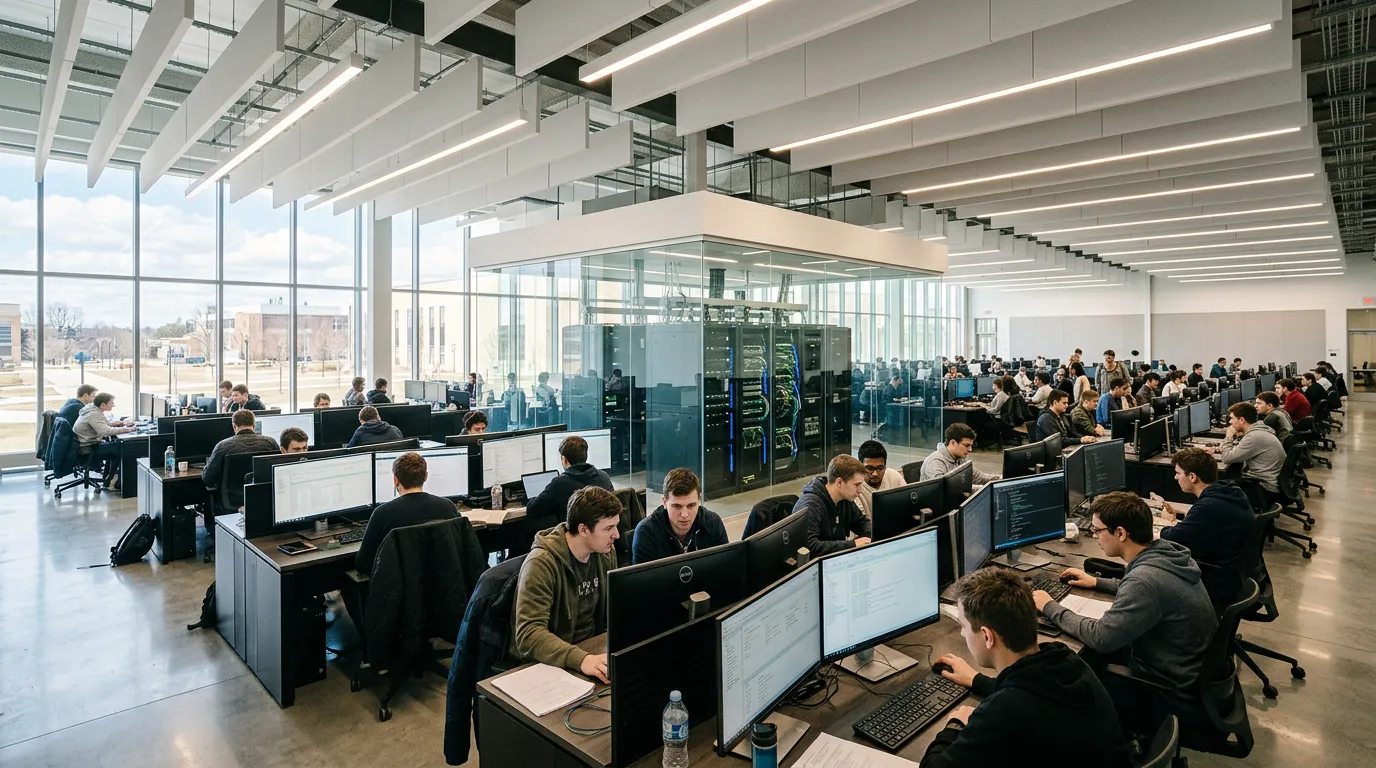
Similar examples exist in Russia. In 2023, Kaspersky Lab and Orenburg State University opened a research and education center focused on industrial control system security. In 2024, UTSIB launched its second cybersecurity laboratory at Ural Federal University. In 2025, UserGate significantly expanded its network of university labs in Russia, including at Novosibirsk State Technical University, National Research Nuclear University MEPhI and RTU MIREA. The company now works with 60 educational institutions, reaches 2,800 students and has trained and certified 6,800 professionals. The Belarusian project takes this already tested model beyond Russia.

Training Talent for Belarus, Expanding Russia’s Market
For Russia, the project matters because it helps a Russian technology company establish itself in an international market. But that is not the main point, said Margarita Zaitseva, director of the UserGate Academy: “Our partnership with the university is particularly important to us. It will allow companies in Belarus, in the near future, to hire qualified professionals with a strong academic foundation and hands-on experience using modern infrastructure protection tools. From their first days on the job, these graduates will be able to deliver significant value to their employers.”
For Belarus, then, the central benefit is workforce development. Pavel Tkach, first deputy minister of communications and informatization, linked the new lab to training cybersecurity professionals and strengthening the country’s technological independence. Students can now do more than study theory: they can work with real hardware-and-software complexes and NGFWs. BSU Rector Andrei Korol noted that the lab stands out for its software component and strong emphasis on hands-on learning.
From Minsk to the CIS
New UserGate training sites could also appear elsewhere in Belarus. The possibility is supported by the agreements already signed with the Belarusian State Academy of Communications, the Belarusian State University of Informatics and Radioelectronics and Polotsk State University, as well as the original plan to open two labs at BSU itself.
Kaspersky Lab’s experience shows that academic programs run by Russian cybersecurity companies can operate successfully across dozens of countries. The partnership model UserGate is now building in Belarus could therefore also work in other CIS markets.