Russian Robotic Platform Takes Over from Imported Mining Equipment
Russian industrial robotics developers are moving from point solutions to universal machines for demanding environments, combining off-road capability, stability and remote control in a single architecture.
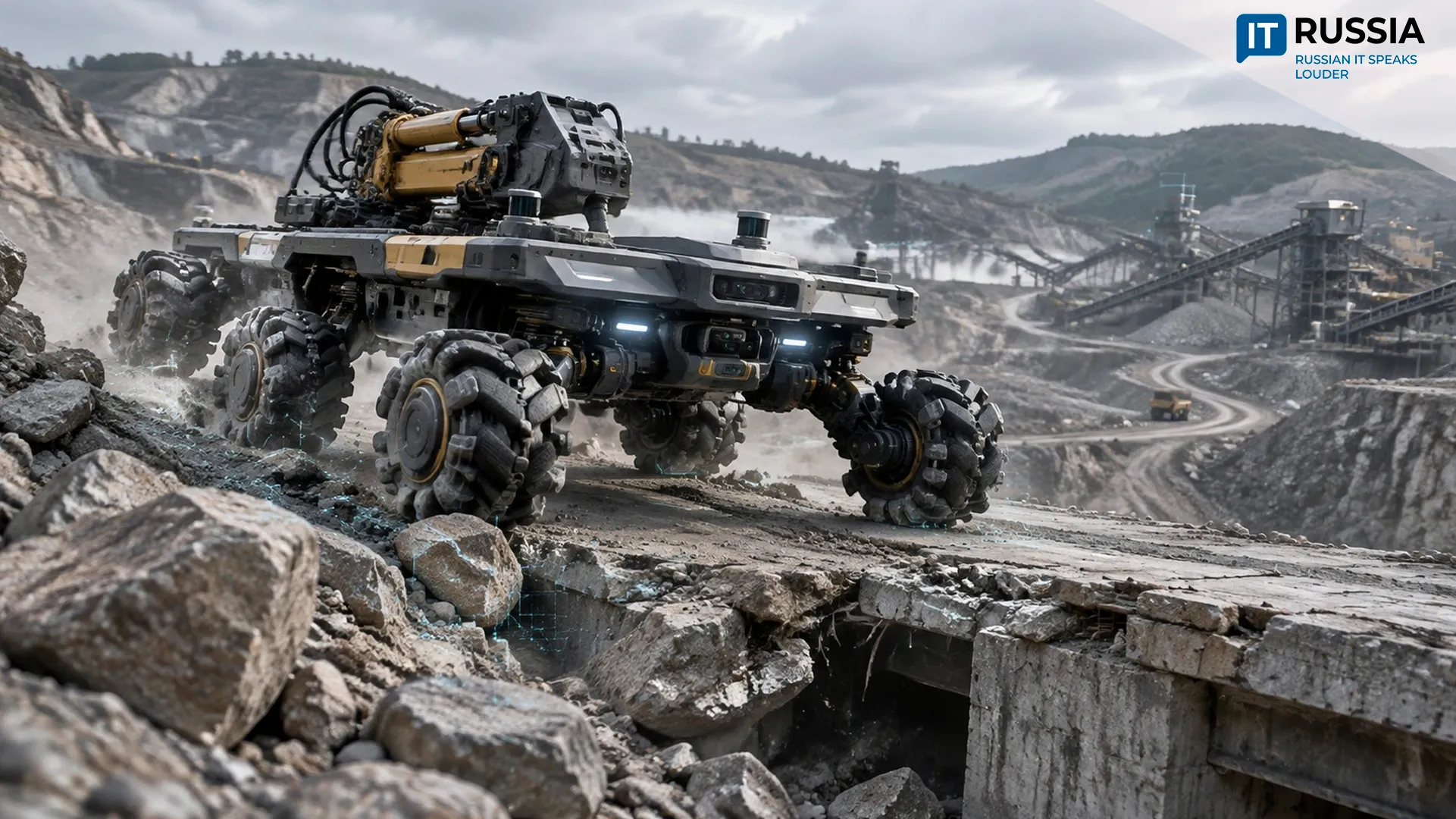
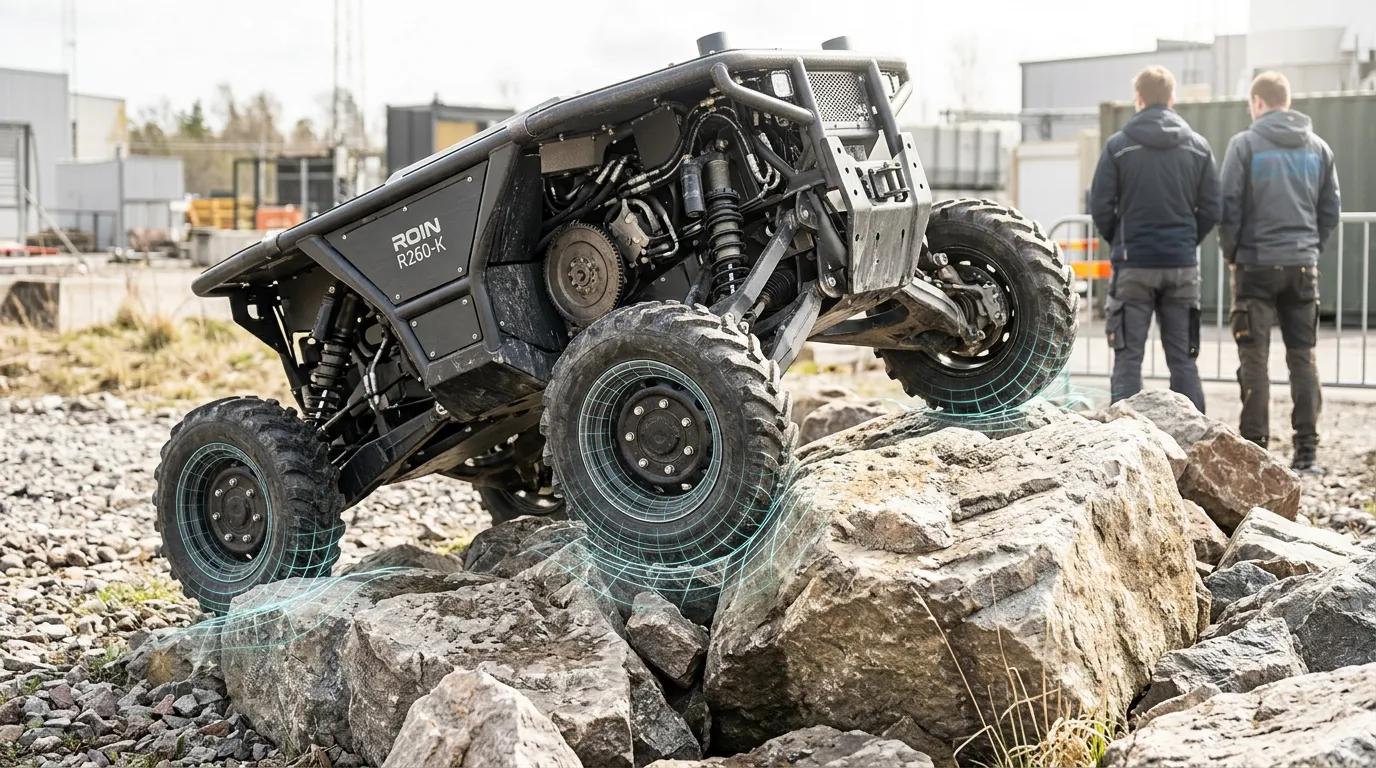
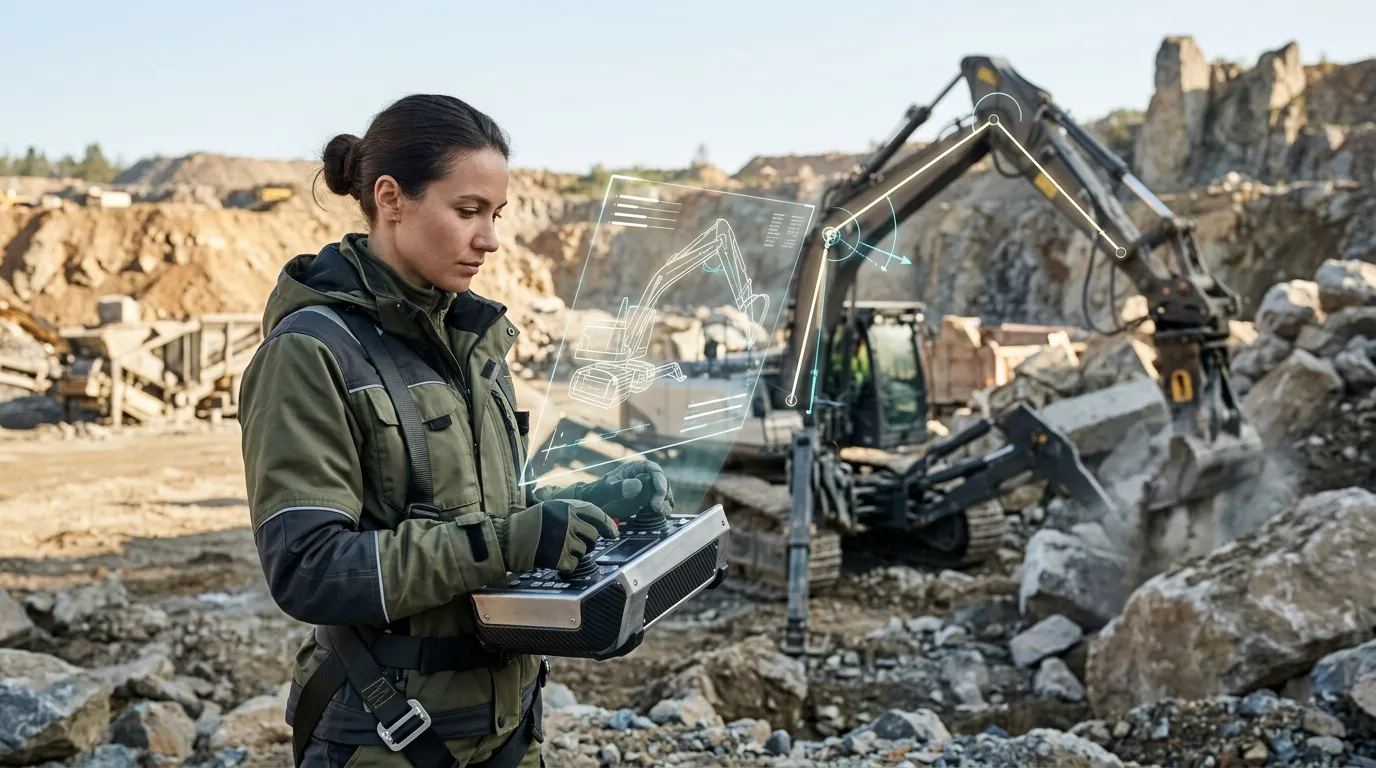
One example is the remotely operated ROIN R260 K robotic complex, an extreme off-road platform developed by JSC MGC INTEKHROS. The machine is designed to replace imported mining excavators, for which Russia previously had no domestic equivalent.
Equipment for Extreme Terrain
The complex is designed for engineering and emergency-response operations on terrain where conventional equipment cannot operate, including landslide slopes and areas of structural collapse. Its mobility comes from an adaptive chassis with independent kinematics. Each wheel responds individually to uneven ground, while an automatic leveling system compensates for tilting and helps prevent rollovers. Operators control the machine remotely through a secure communications channel. At the heart of the system is an industrial computer designed to withstand vibration and temperature fluctuations. The platform's capabilities can also be expanded through rapid attachment changes.
From Energy to Bridges
The platform's developer, JSC MGC INTEKHROS, is a leading Russian manufacturer of hydraulic robots for six industrial sectors. Its product line includes more than 25 equipment models serving the nuclear power, conventional power, metallurgy, rail transportation, oil and gas, and mining industries. About 90% of the machines are built to individual customer requirements, allowing the equipment to be adapted to the specific tasks of each operation.
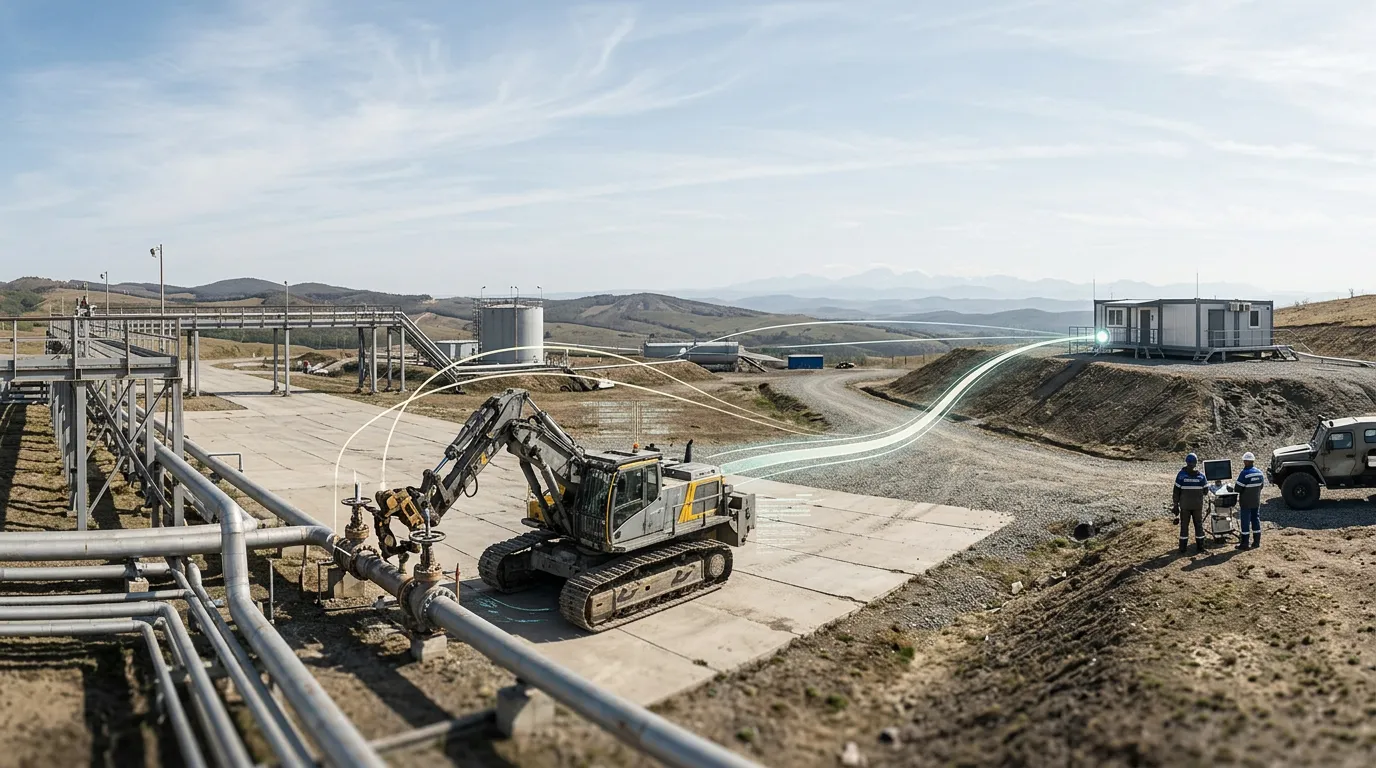
The ROIN R260 K can be deployed where putting people on site would expose them to danger. In the fuel and energy sector, the new machine can be used to inspect facilities, while in mining it can assist with work on unstable ground and emergency response. The platform is also expected to be used for bridge and tunnel repairs.
Looking ahead, INTEKHROS plans to continue developing integrated hardware and software systems. Its AVSURO automatic robot control system is already being installed not only on the company's own machines but also on third-party specialized equipment, including conventional excavators, giving them robotic capabilities.
The company consistently expands its product range, introducing one or two new models each year. Last year, that included the P250 platform, which is already being used in the construction of the Krasnoyarsk Metro and is being prepared for deployment in mining projects.
Interest in the company's technologies extends beyond the CIS. INTEKHROS has agreements with partners in Saudi Arabia and the United Arab Emirates.
Russia's Robotics Market Set for Sevenfold Growth
Russia's robotics market was worth 30 billion rubles (about $353 million) in 2025. According to a forecast by AFK Sistema's robotics asset and the Robotics Consortium, the market is expected to grow sevenfold by 2030, reaching 211.7 billion rubles (more than $2.5 billion). The Sredstva proizvodstva i avtomatizatsiya (Means of Production and Automation) national project calls for a robot density of 145 units per 10,000 workers by 2030, which would place Russia among the world's top 25 countries by this measure. The Russian fuel and energy sector's overall need for robotic systems is estimated at 6,600 units. Serial production of platforms such as the ROIN R260 K is becoming a foundation for meeting these government targets and moving the industry from scattered pilot projects toward coordinated procurement.
From Assembly to a Closed-Loop System
Russia's heavy industrial robotics market has moved toward building closed technological cycles. Earlier in the decade, manufacturers assembled machines from imported components and adapted only the upper software layer. Today, the hardware is based on Russian microcontrollers and processors, while the software runs on the certified Astra Linux and RED OS platforms. Developers are also actively working on machine-vision algorithms. In practice, this approach is intended to protect data and keep production processes running without interruption.
Specific engineering projects illustrate the trend. In 2020, Perm-based SST LLC introduced the Atlant 6000 (Atlant 6000 complex), a system for remotely dismantling structures in the metallurgical and nuclear industries that can operate at extreme temperatures. Robotechnics LLC began serial production of the Betonolom (Concrete Breaker) demolition robots, which can work in underground mine workings to safely break up rock masses. The Special Design and Technology Bureau of Applied Robotics (SKB PR) at Bauman Moscow State Technical University is developing a line of emergency-response machines, including the MRK-25 Kuznechik (Grasshopper), with variable chassis geometry, and the MRK-46M for responding to radiation accidents. Cognitive Pilot has moved its Cognitive Mining autonomous control system to Russian processors and the Astra Linux operating system. A multisensor approach allows the algorithms to process video streams from several cameras simultaneously, enabling accurate obstacle recognition in heavily dusty environments and on difficult terrain. KAMAZ PJSC has updated its line of autonomous haul trucks, replacing imported sensors with Russian control units and adapting navigation algorithms so the equipment can operate reliably within the GLONASS navigation environment.
Building an Autonomous Equipment Ecosystem
The launch of the ROIN R260 K marks a new stage in the development of Russian robotics. Looking ahead, the industry is expected to produce a family of autonomous platforms built around a common control and navigation architecture. That could create a full ecosystem of industrial solutions capable of competing in global markets while strengthening Russia's technological independence in strategically important sectors.