Old Derbent From a Bird’s-Eye View
A new VR tour of old Derbent has launched at the Naryn-Kala Citadel. Visitors are virtually transported several thousand years into the past, where they can walk through the city and see it from above.
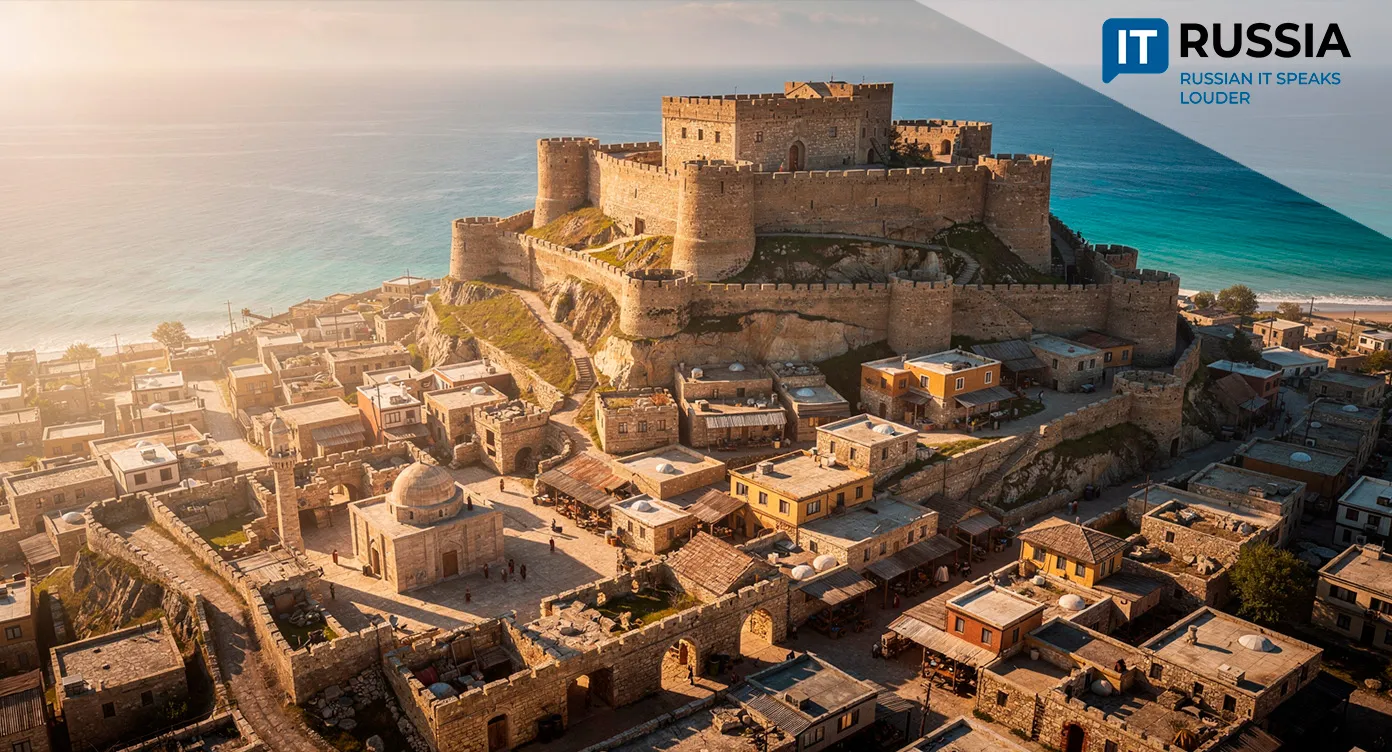
Derbent is one of the world’s oldest cities. People settled here, on the Caspian Sea coast, more than 5,000 years ago. In 2003, UNESCO added the Naryn-Kala Citadel and the ancient city, including the eighth-century Juma Mosque and Derbent’s fortifications, to the World Heritage List as outstanding monuments of the Sasanian Empire and the cultures that followed.
Excavations in and around the city are still underway. Researchers continue to uncover artifacts that offer glimpses into the culture of people who lived here thousands of years ago. Until recently, little was known about the Naryn-Kala Citadel itself, with no information available about its layout or buildings. Researchers knew only that the palace of Fatali Khan had stood in the eastern section, near the entrance to the fortress.
“Excavations in 2024 and 2025 revealed that during the 17th through 19th centuries, the entire territory of the Naryn-Kala fortress was densely built up and therefore populated much like the mahallas, or neighborhoods, in Derbent’s main urban area. The district itself was constantly being rebuilt. Apparently, its layout changed every 20 to 50 years,” says Vladimir Koval, a researcher at the Russian Academy of Sciences who holds a Ph.D. in history.
Today, the information gathered by archaeologists and historians has become the basis for a new tour.
A Market, a Mosque and a Balloon Ride
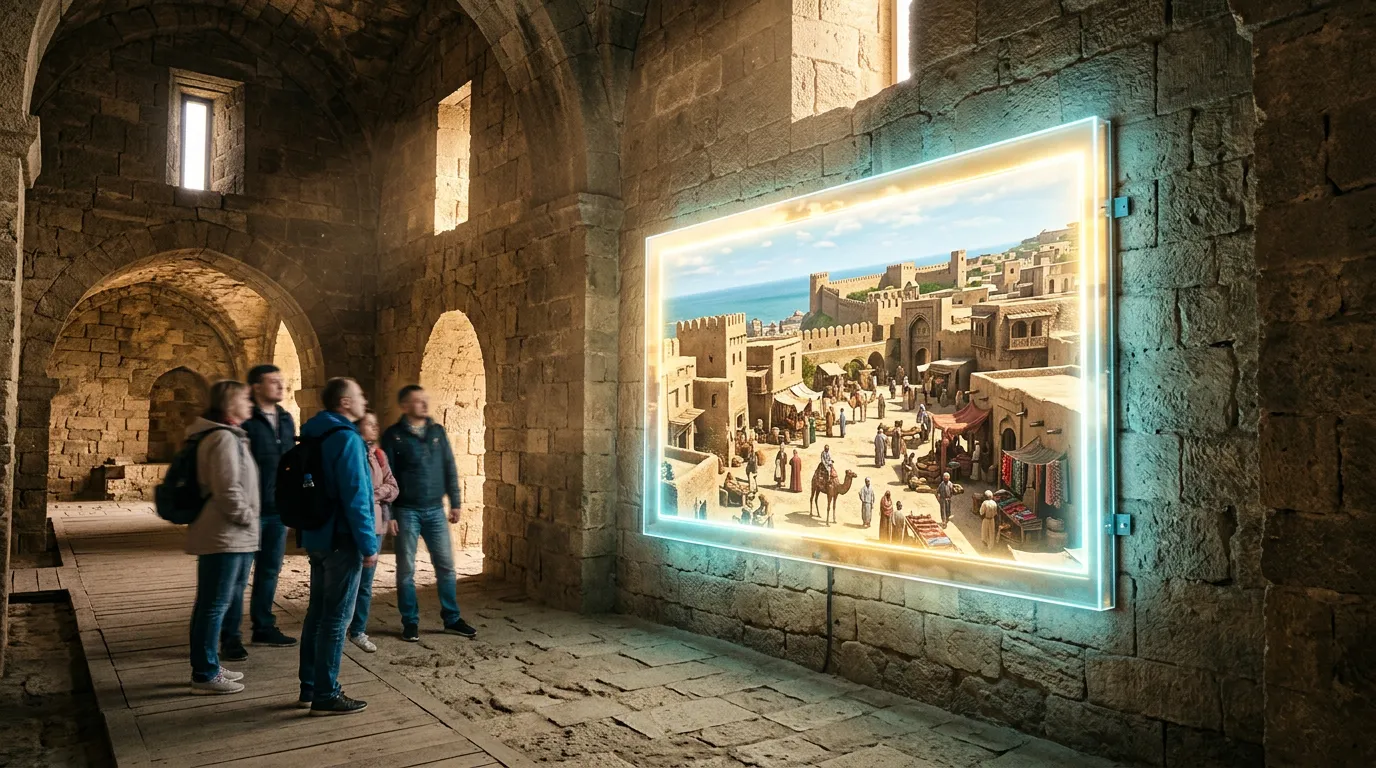
After putting on a virtual reality headset, visitors can take a virtual walk through an eastern market, step inside an ancient mosque and, at the end of the journey, look down on Derbent from a bird’s-eye view in the basket of a hot-air balloon. The tour is available to visitors touring the underground water reservoir dating to the 16th and 17th centuries and costs just 150 rubles (about $2).
For visitors, the tour offers a more visual and interactive way to experience history. After such an immersive journey through time, city officials expect that visitors may be more inclined to return.
Dagestan has been actively developing its tourism sector for several years, and projects like this can make the region more attractive to travelers. Bringing VR into the tour program also extends the historic complex’s broader digitization: back in 2021, Naryn-Kala added fiber-optic internet, seamless Wi-Fi and online broadcasts from the fortress grounds.
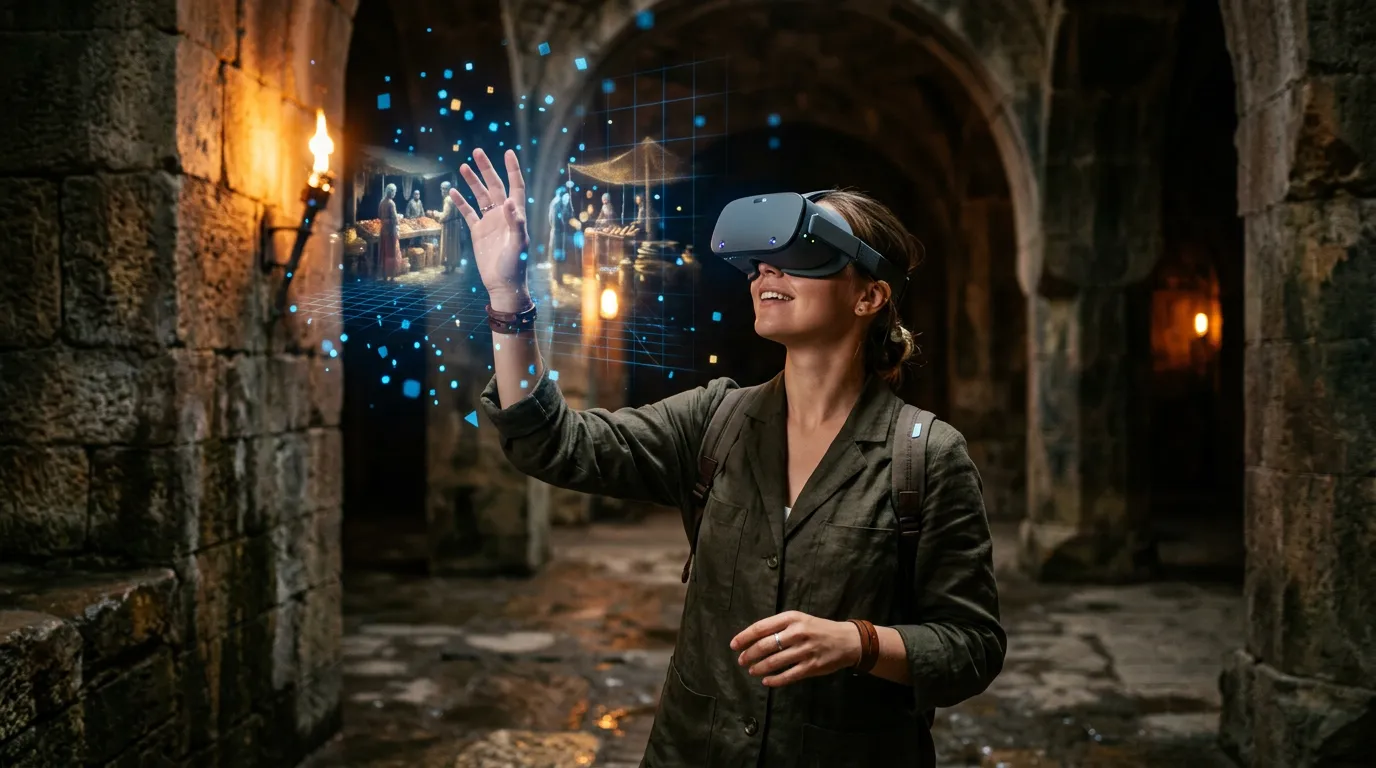
The Future of Digital Derbent
The biggest opportunity for projects like this lies in expanding the digital reconstruction of historic Derbent. In January 2026, the management of the Derbent Museum-Reserve announced preparations for an interactive 5D exhibition featuring VR headsets and virtual tours designed to immerse visitors in the atmosphere of eighth-century Derbent. The new VR experience offering a bird’s-eye view of the city is therefore part of the museum’s broader shift toward immersive technologies for engaging visitors.
One promising direction is to create multiple historical scenarios covering different periods in Derbent’s history, along with digital reconstructions of lost or inaccessible sites. These solutions could be used not only at the fortress itself, but also in museums, educational institutions or tourism exhibitions.
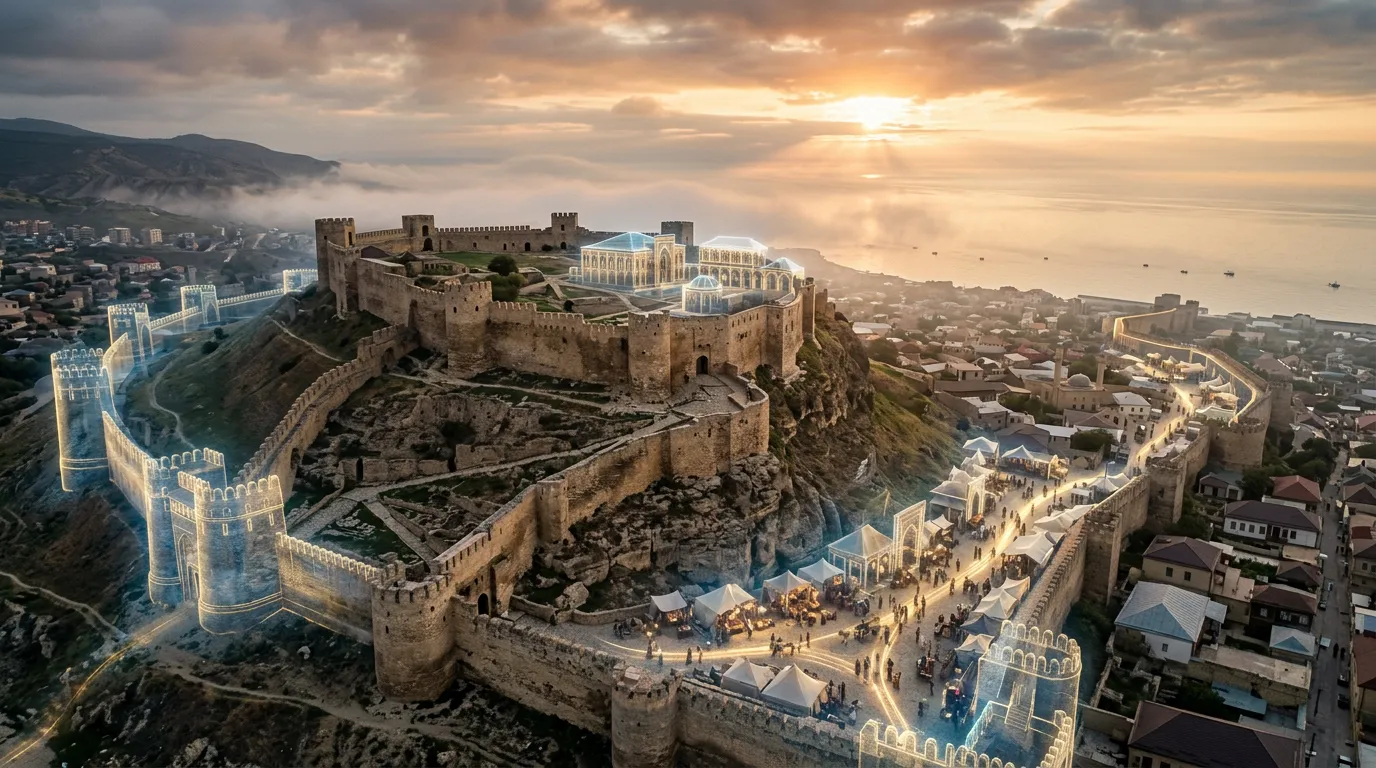
Tourists Are Choosing VR
Today, VR-based travel experiences are expanding across Russia. Under the federal Tsifrovaya kultura (Digital Culture) project, 433 multimedia guides using augmented reality were created for state and municipal museums between 2019 and 2024, pointing to sustained demand for immersive technologies from the government and cultural institutions.
According to Marina Egorova, marketing director at Ozon Travel, the virtual tourism market could reach nearly $60 billion by 2033. New technologies are changing travelers’ habits, and the market is changing along with them. VR can already deliver experiences comparable to actually being there. But the tech industry continues to advance, with new developments emerging that could eventually make the boundary between physical reality and virtual space almost disappear.
The VR tour at Naryn-Kala is a vivid local example of the digital transformation underway at Russian museums. The project’s main value lies in its ability to show visitors not only the monuments that have survived, but also a reconstructed historical environment of ancient Derbent. With the 5D exhibition already announced, the museum is likely to continue expanding its VR content with additional historical periods, sites and interactive scenarios.