Doctors and Algorithms: Innopolis and Kazan Medical University Team Up to Build Digital Medicine
Kazan State Medical University and Innopolis University have signed an agreement to jointly develop AI tools for diagnostics, medical-data analysis, and clinical decision support.
At the St. Petersburg International Economic Forum, held June 3-6, 2026, Kazan State Medical University and Innopolis University signed a long-term cooperation agreement in the field of digital medicine. The document was signed by Acting Rector of Kazan State Medical University Airat Farrakhov and Innopolis University Director Dmitry Vandyukov. Russian Health Minister Mikhail Murashko and Rais of Tatarstan Rustam Minnikhanov attended the ceremony.
The agreement covers medical education, scientific research, and the development of applied digital solutions for healthcare. The collaboration will focus on three key areas: educational programs that build AI competencies among healthcare professionals; research in genomics, molecular biology, and aging biology using machine-learning technologies; and the creation of intelligent clinical decision-support tools, healthcare-quality analytics systems, and platforms for processing medical data.

Who Does What
Each university will play a distinct role. Kazan State Medical University will define medical challenges, formulate clinical requirements, develop risk-profiling methodologies, and conduct expert review and clinical validation using its healthcare and research facilities. Innopolis University will handle the technology side, including software development, machine-learning algorithms and models, user-interface design, and integration with regional medical information systems.
Acting Rector Airat Farrakhov emphasized that a key advantage of the partnership is its coverage of the entire innovation chain - from workforce training to bringing products to market.
Training Physicians to Work With AI
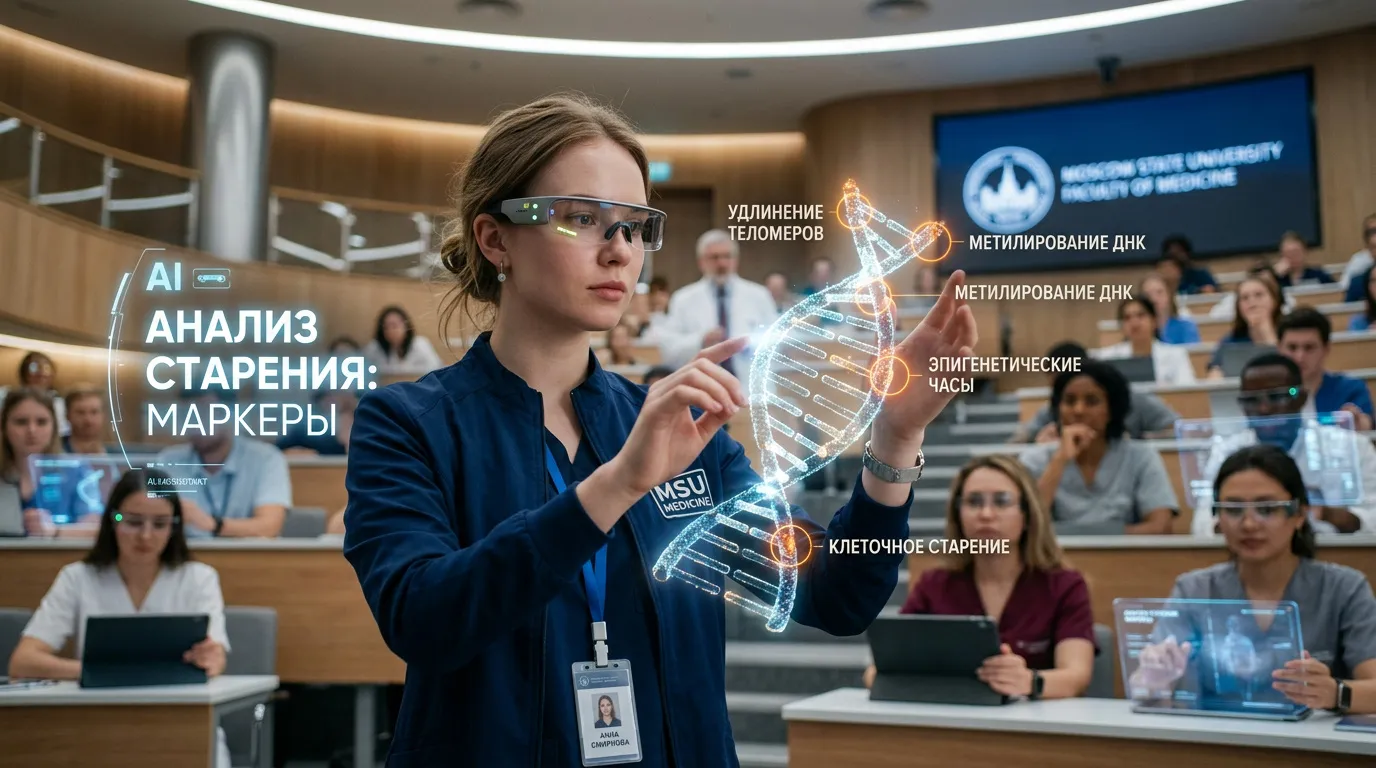
Innopolis University already has experience in medical education. In 2025, it developed a module titled "Artificial Intelligence in Medicine: Data Analysis Technologies and Clinical Decision Support" for medical students. The 144-hour program teaches medical-data analysis, development of digital assistants, and optimization of healthcare delivery. These competencies will now be expanded and refined jointly with Kazan State Medical University.
Among the most promising areas are clinical decision-support systems, electronic health-record analysis, patient risk profiling, medical imaging, and genomic and biomedical research powered by machine learning. According to a review of AI implementation in healthcare between 2019 and 2024, federal healthcare institutions have already identified more than 100 clinical use cases for AI and prepared over 190 datasets for machine-learning applications. The new partnership aims to turn those opportunities into working tools.
What It Means for the Region and the Country
For Tatarstan, the agreement between two major universities strengthens the region's position as a hub for medical AI development. For Russia, it offers a model for how an IT-focused university and a medical university can operate as a unified innovation partnership.
Globally, successful AI deployments in healthcare range from IBM Watson to Silicon Valley startups. What distinguishes the Russian approach is its focus from the outset on the practical needs of a public healthcare system rather than primarily on private commercial clinics.

A Solid Foundation
Over the past five years, Russia has accumulated substantial experience in deploying AI across healthcare.
Since 2020, Moscow has been developing one of the world's largest computer-vision initiatives in radiology. Over five years, neural-network systems have processed more than 14 million medical studies. The project has demonstrated that AI can operate effectively at very large data scales.
Kazan State Medical University, meanwhile, established a Department of Digital Technologies in Healthcare in 2023. Its focus areas include neurodegenerative diseases, cognitive functions, medical informatics, and data science.
The market itself is also ready. The SberMedII platform operates in more than 70 Russian regions, and the number of requests processed through its AI services has exceeded 86 million. As a result, new developments from Innopolis University and Kazan State Medical University will enter an ecosystem that already includes real-world clinical data, educational infrastructure, and an operational market for healthcare AI solutions.