Digital Foundation for Arctic Wind Power
Researchers at Peter the Great St. Petersburg Polytechnic University have developed a comprehensive digital engineering methodology that will support the design of wind power facilities for Arctic conditions.
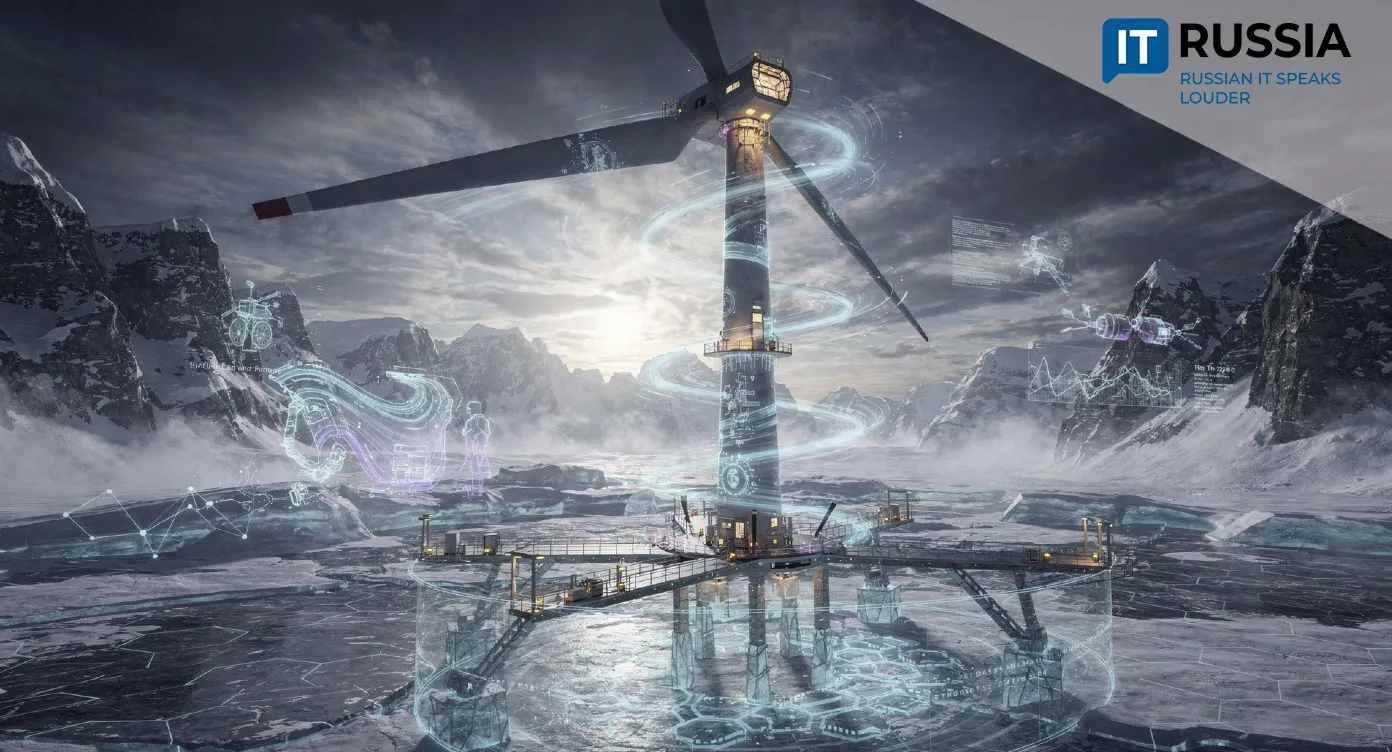
Arctic energy is both a promising opportunity and one of the most demanding engineering challenges, requiring load-bearing structures capable of operating reliably under truly extreme environmental conditions.
The structural design methodology for wind turbine generators (WTGs) was developed by SPbPU postgraduate alumnus Ivan Rigel. Unlike conventional engineering approaches, it models the combined effects of permafrost behavior, wind loading, and dynamic oscillations of the turbine itself, enabling more realistic structural calculations.
Field studies showed that thawing permafrost beneath a turbine foundation can reduce the tower's natural vibration frequencies by 4-10%. Blade icing combined with wind loading can increase those changes to as much as 15%. Under such conditions, the turbine may resonate at the rotor's operating frequencies, creating a risk of structural failure.
The new methodology predicts how a wind turbine's supporting structure will behave under virtually any climatic conditions. The mathematical model has also been validated in real operating environments. In August 2025, researchers conducted field tests on a 120kW operating wind turbine beyond the Arctic Circle. Sensors were installed both on the turbine itself and in the ground beneath its foundation.
Ivan Rigel's methodology makes it possible to calculate the key factors affecting wind turbine structures before construction begins, helping reduce capital investment requirements. The software can also be adapted for designing wind turbines in other climate zones by incorporating the relevant environmental parameters. Rosatom Vozobnovlyaemaya energiya (Rosatom Renewable Energy) is already using the methodology to design prototype Arctic-class wind turbines.
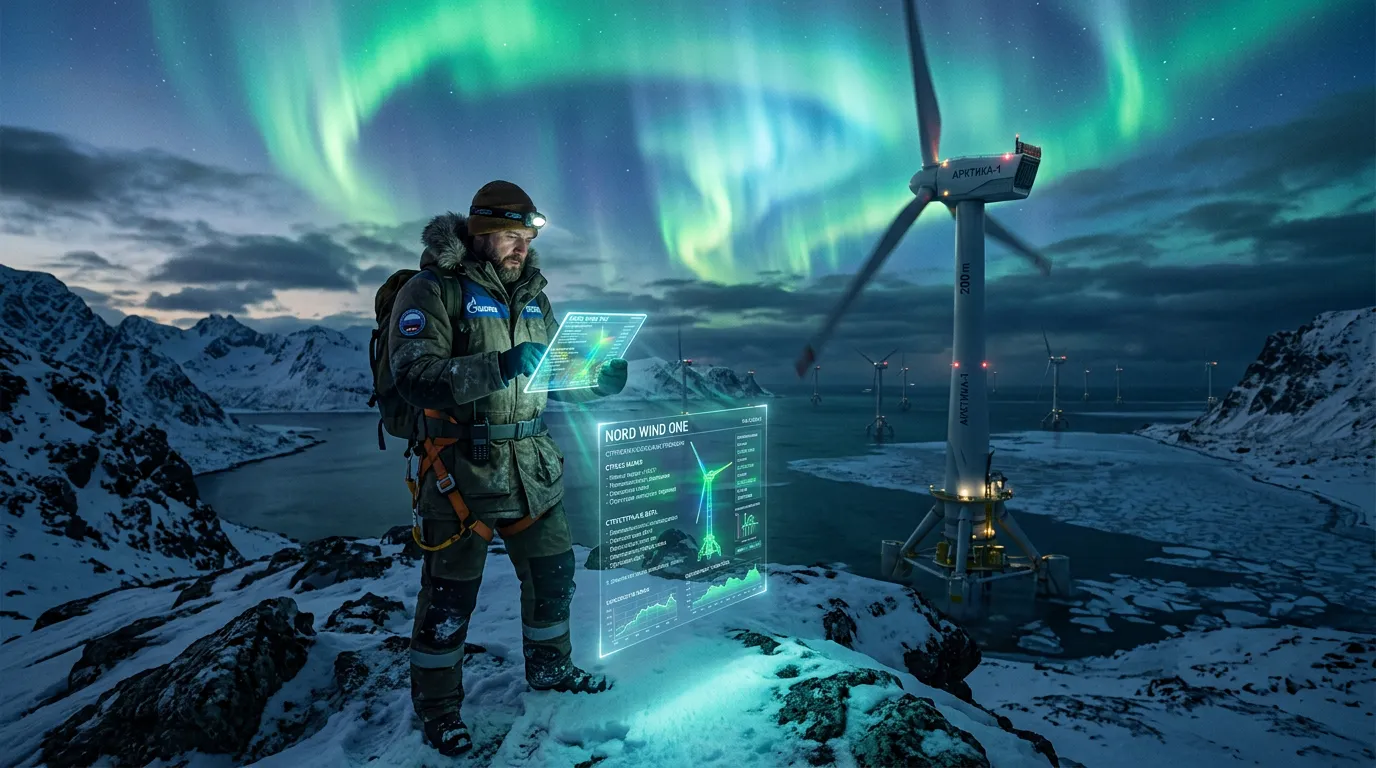
A Design Methodology for the Arctic and the Russian Far East
If the methodology proves effective during the design of full-scale production wind turbines, it could be applied to energy installations across the Arctic, Siberia, and the Russian Far East.
Wind power development is a strategic priority for Russia's Arctic regions. Natural conditions there make wind generation particularly efficient, primarily because of stable and predictable atmospheric circulation patterns.
Over the longer term, software platforms developed from the SPbPU methodology could become an export product for other countries expanding their own wind energy sectors, including projects in Arctic environments.
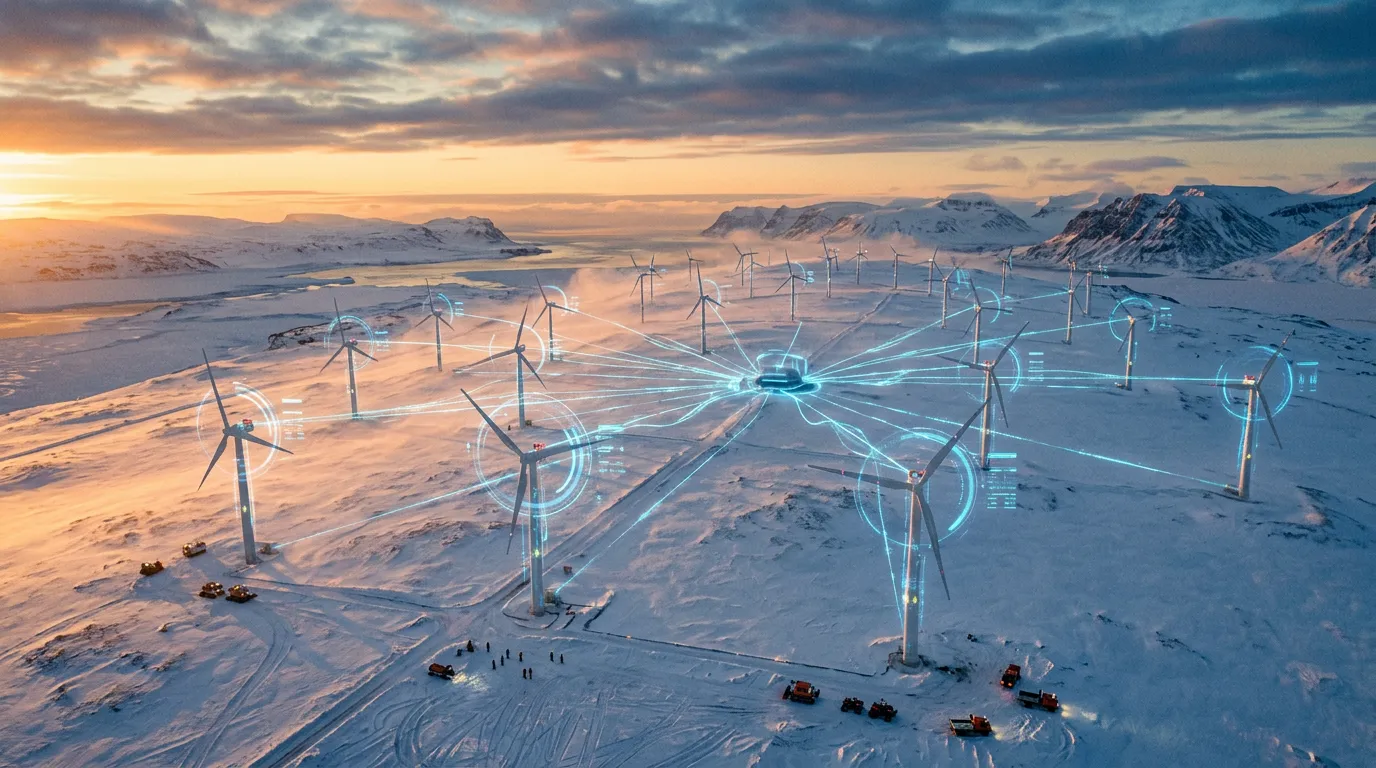
Advancing Arctic Wind Energy
Ivan Rigel's work represents another step in the evolution of Russia's wind power industry. By 2022, Rosatom (State Atomic Energy Corporation Rosatom) had already commissioned seven wind farms with a combined installed capacity of 780MW. In 2024, the company completed construction of the 95MW Trunovskaya Wind Farm.
Commercial operation of the Kola Wind Farm began in 2023. The strategic project is being implemented by EL5-Energo, a subsidiary of LUKOIL. Russia also established domestic production of wind turbine blades in Ulyanovsk Region, where the first Rusatom Vetrolopasti (Rosatom Wind Blades) manufacturing facility opened in December 2024.
During 2024-2025, digital engineering methods for wind power design advanced rapidly. Russian researchers introduced integrated computational models that combine engineering, economic, and climate data within a single analytical framework.
Meanwhile, wind turbine designs themselves continue to evolve. In January 2026, engineers in Krasnoyarsk developed a turbine specifically engineered for Arctic conditions. One of its distinguishing features is the use of aluminum blades instead of fiberglass ones, reducing rotor weight and making transportation to remote northern locations easier.
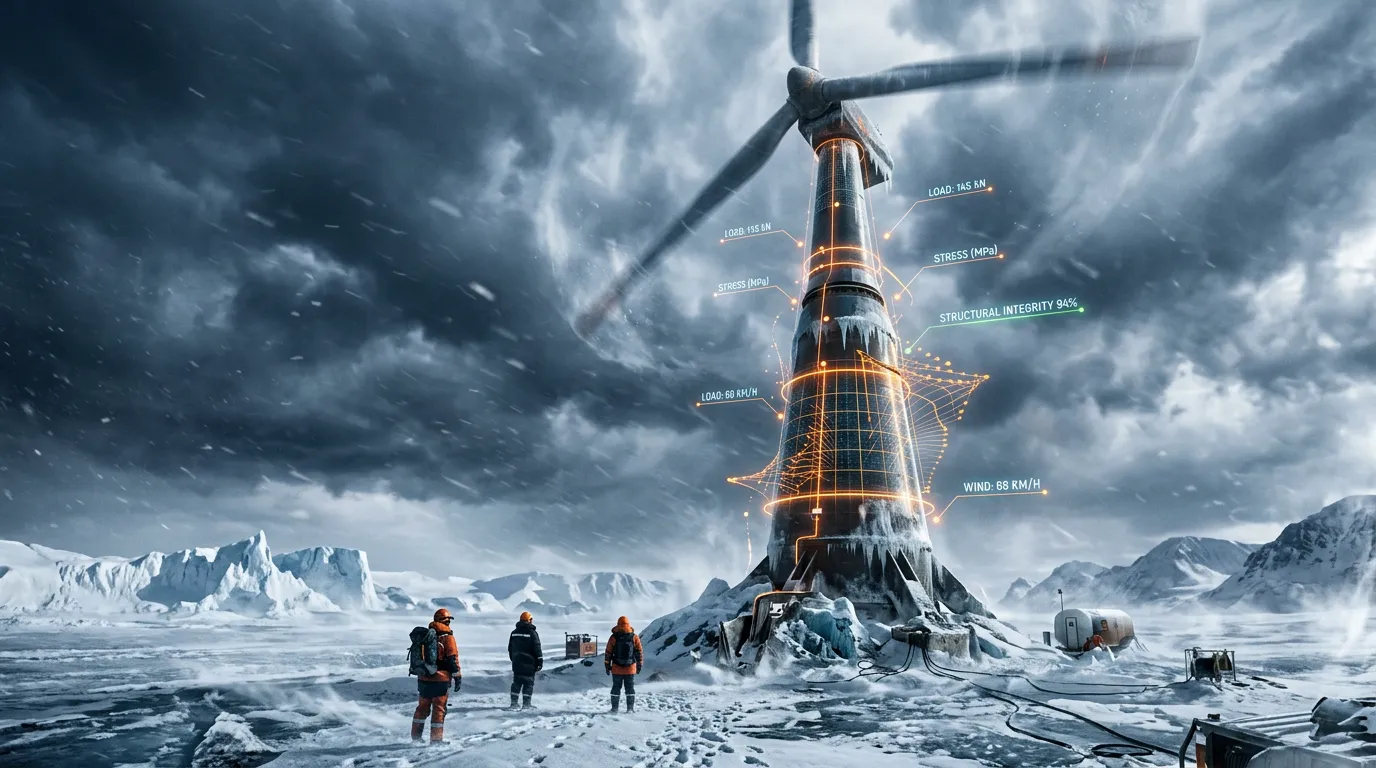
Intelligent Design Instead of Costly Physical Testing
The SPbPU development represents an important element of Russia's emerging technological platform for Arctic wind energy. It is more than a new structural calculation technique. The methodology integrates engineering analysis, climate data, and digital monitoring into a unified design framework. Demand for the approach is expected to grow over the next several years. Under the development plans of Rosatom Vozobnovlyaemaya energiya, the number of operating wind farms is expected to increase from nine to twelve by 2027. Another ten facilities are currently under construction.