ForestScout: Russian Researchers Train AI to Help Protect Forests
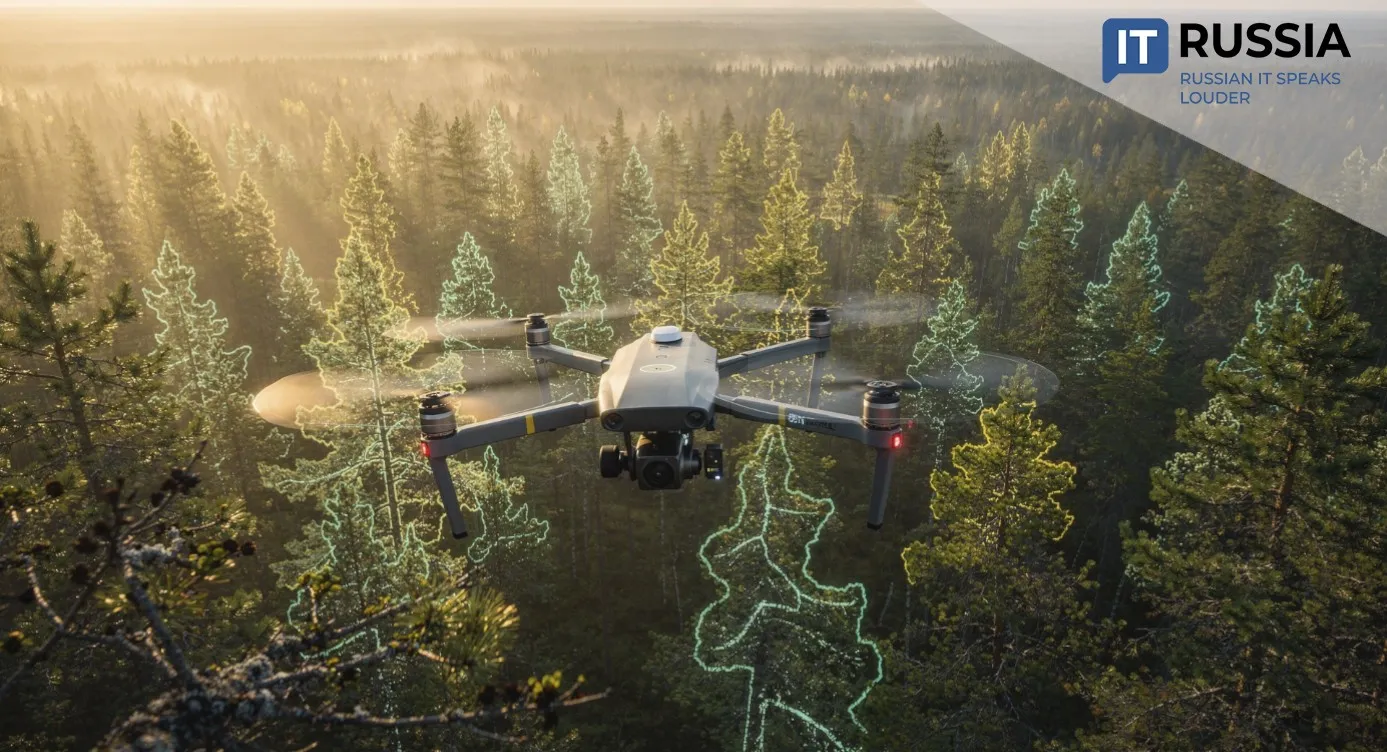
Researchers at the Buryat State Academy of Agriculture are developing LesSkaut (ForestScout), a software and analytics platform that automates forest monitoring using drones and artificial intelligence.
Roughly half of all forest loss in Russia is associated with diseases and insect pests, and that share continues to grow. The new system is designed to detect signs of tree disease at much earlier stages while dramatically reducing the time required to survey vast forested areas.
The Deeper Into the Forest, the Better the Oversight
Ground inspections by forest pathologists and aerial patrols require substantial time and financial resources while limiting how quickly authorities can respond to emerging threats. LesSkaut combines unmanned aerial systems, Earth observation technologies and neural networks into a single monitoring platform. Researchers plan to train the AI to identify tree species, evaluate forest health and detect the earliest signs of disease and pest outbreaks. Achieving that goal will require building a training dataset of at least 5,000 annotated images.
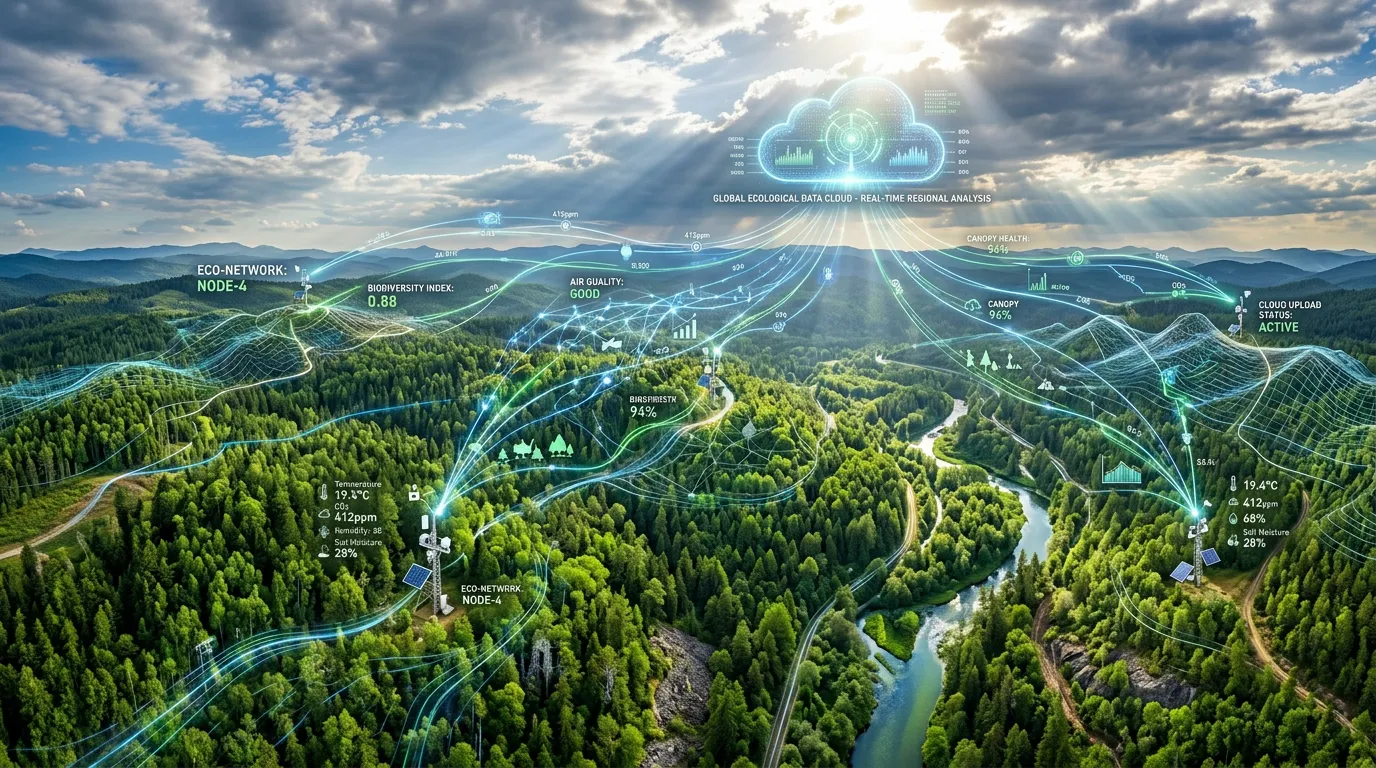
The project is supported by Rosleskhoz (Federal Forestry Agency), Roslesozashchita (Russian Center for Forest Protection), Roslesinformg (Russian Forest Inventory Agency) and regional forestry authorities. Data generated by the platform will be integrated into Agrika, a digital platform designed to centralize forest information storage and analysis. Those data will also support the Federal State Information System. Since January 1, 2025, that nationwide system has operated across Russia under a unified digital standard for regional forestry agencies. As a result, delays or errors in data transmission are expected to be eliminated as Rosleskhoz works toward digitally mapping every hectare of the country's forests.
A Digital Forest
Since 2022, Russia has steadily expanded remote forest monitoring based on satellite imagery analyzed with neural networks. Roslesinformg began using AI at scale to detect illegal logging, with early trials showing the technology identified unauthorized logging operations 62% faster and 12% more accurately than human inspectors. In 2024, forestry agencies also began systematically deploying drones. More than 1,200 unmanned aerial vehicles were delivered to regional forestry services that year, and more than 5,100 are expected to be deployed by the end of 2030. The aircraft have demonstrated value across a wide range of forestry tasks, from assessing damage caused by disease and pests to forest inventories, reforestation monitoring, illegal logging detection and wildfire surveillance. As expected, by 2028-2030 unmanned aviation could account for as much as 30% of all aerial operations in Russia's forestry sector.
Roslesinformg, working with the Perm Pulp and Paper Company, also plans to scale the innovative LesProfi (ForestPro) technology nationwide. A single drone flight can scan up to 250 hectares (about 618 acres), while daily operations can cover as much as 1,500 hectares (about 3,700 acres) of forest. After processing, the collected data are transformed into a detailed three-dimensional digital twin. The model records the characteristics of every tree, including its location, height, diameter, species, crown area and timber volume. Meanwhile, researchers from Skoltech, Irkutsk Polytechnic University and the AIRI Institute have developed a neural network tool that can effectively "see" through forest canopies, identifying tree species, estimating tree age and, most importantly, measuring carbon stocks.
From Individual Flights to Continuous Monitoring
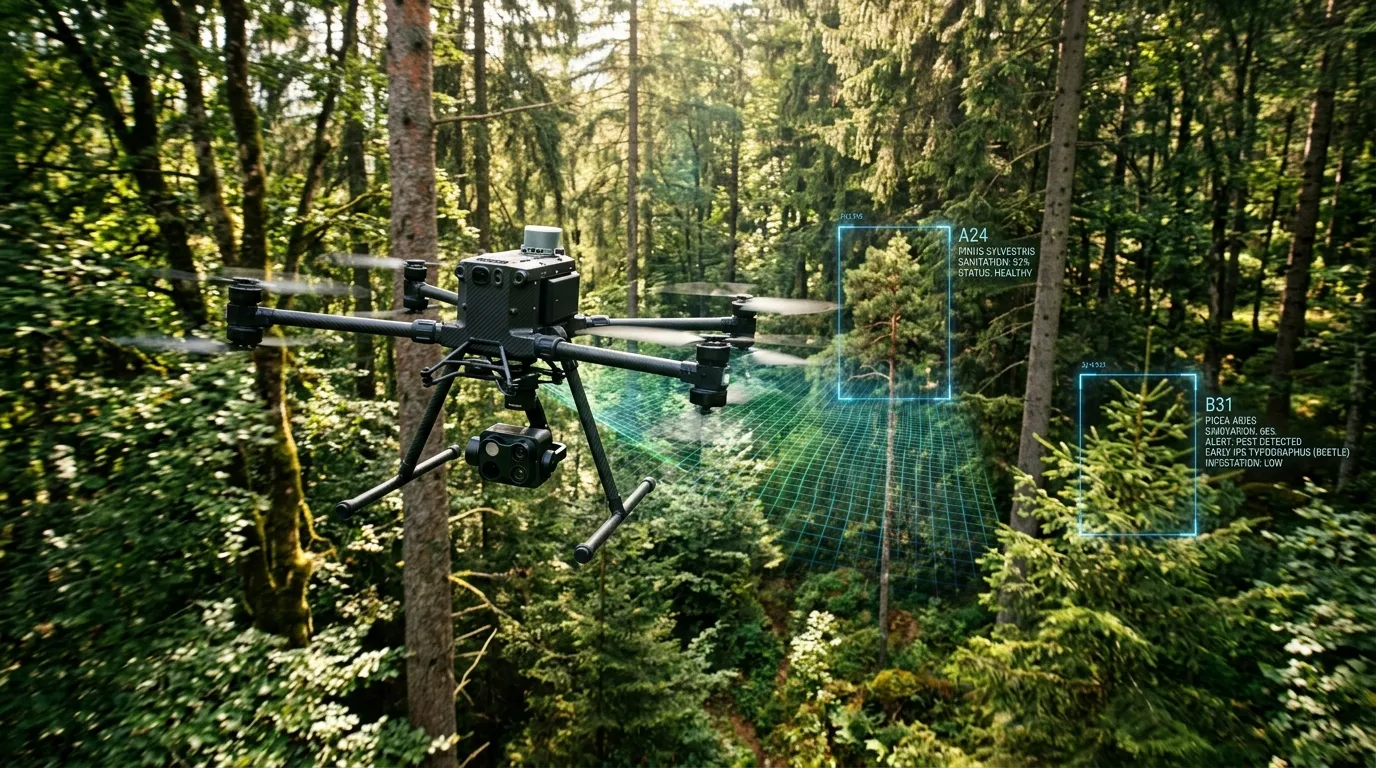
LesSkaut is expected to evolve from isolated test flights into continuous monitoring of large forest landscapes. Drones equipped with RGB, multispectral, hyperspectral and LiDAR sensors will rapidly collect field data, while artificial intelligence identifies areas requiring inspection by forest pathologists. That approach allows forest pathologists to concentrate on locations most likely to present problems instead of surveying entire forests.
The project's immediate priority is to build a representative collection of primary data and validate the model under a wide range of natural conditions. A significantly larger dataset covering multiple regions, seasons, tree species and stages of disease will be required before the platform can support nationwide deployment.
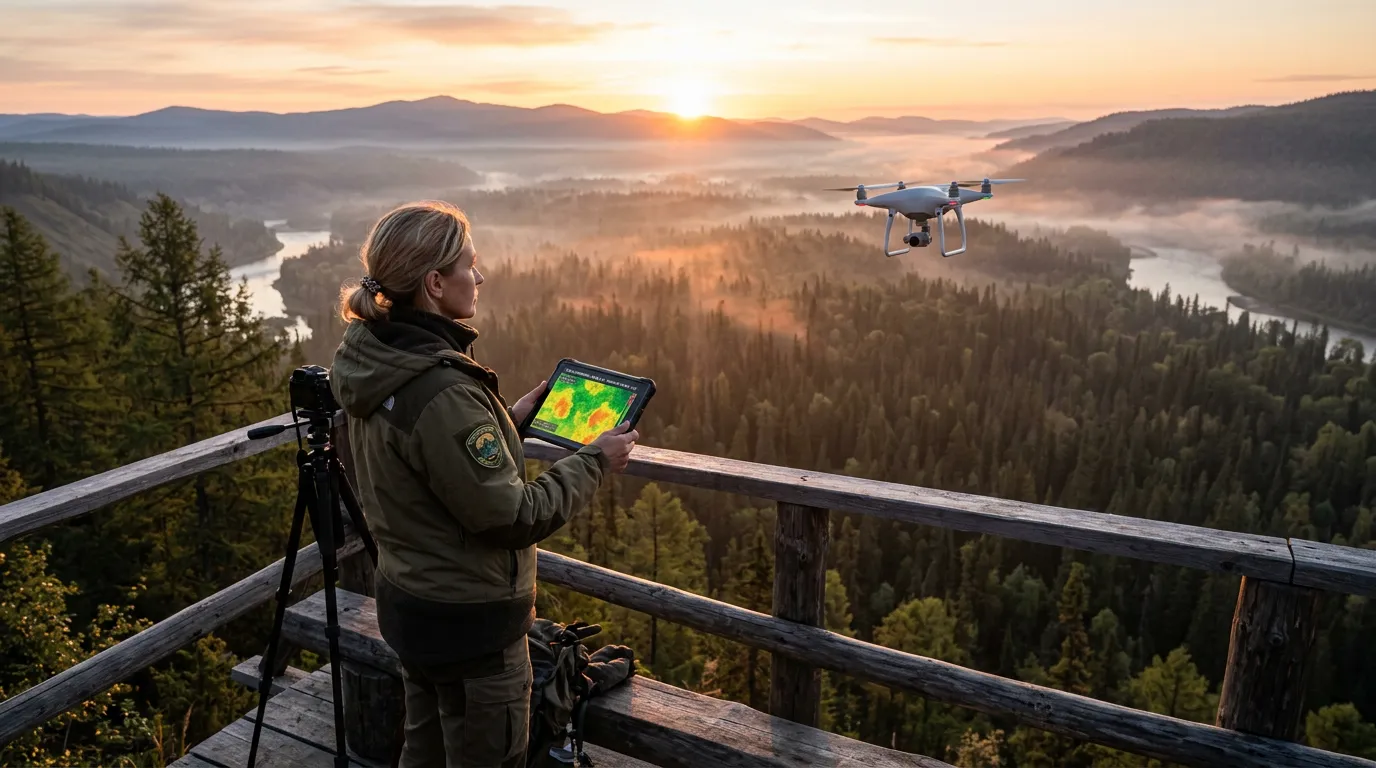
Even so, the technology could become an important part of the digital future of Russia's forestry sector because LesSkaut brings together drones, satellite observations and artificial intelligence within a single forest management system.