High-Precision Molecular Calculations Without Supercomputers: Russian-Chinese Research Could Reshape Molecular Physics
Researchers at Tomsk Polytechnic University and collaborators in China have developed a universal method for determining the intramolecular potential function with high precision. Because this function governs how molecules behave under different conditions, the new approach could improve predictions of molecular spectra and dynamics in the atmospheres of Solar System planets while enabling more accurate quantum-level simulations of chemical processes.
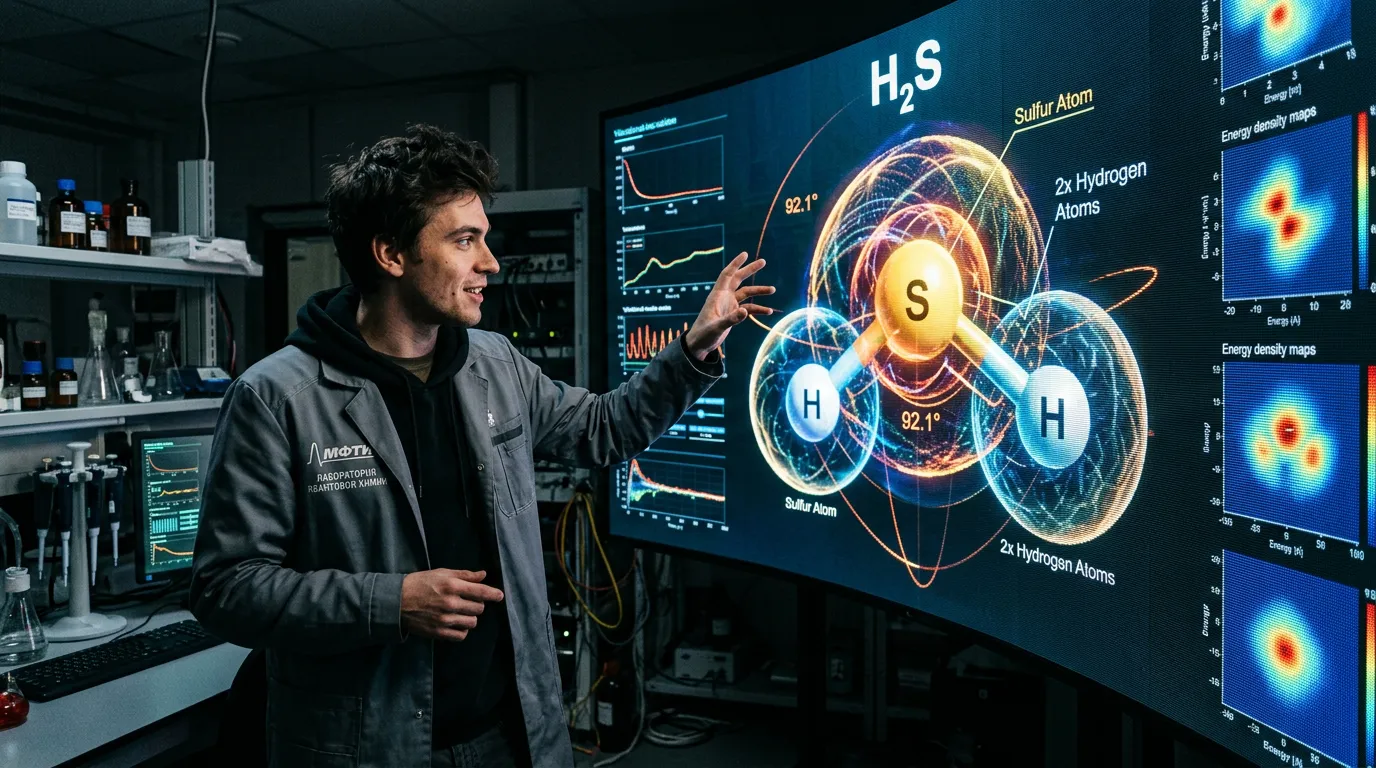
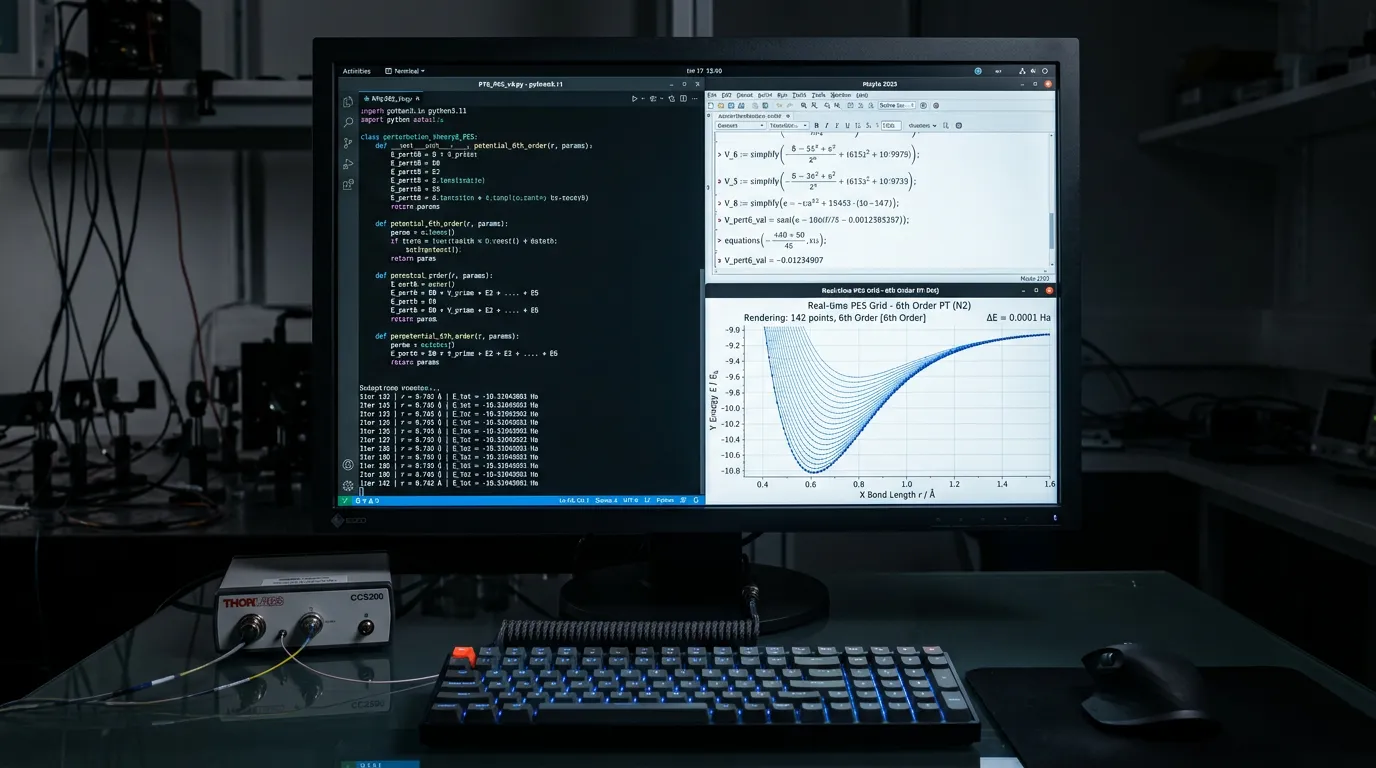
Professors Oleg Ulenekov, Elena Bekhtereva, and Olga Gromova of Tomsk Polytechnic University (TPU), working with colleagues from Heilongjiang University in China, have introduced an analytical method for determining the intramolecular potential function with high precision. This function describes how a molecule's energy changes as its atoms move. Knowing it allows researchers to predict molecular spectra, dynamics, and the behavior of matter under a wide range of conditions. The key advance over existing approaches is the replacement of computationally intensive numerical calculations with universal analytical algorithms. The method captures subtle effects through the sixth order of perturbation theory and has already been validated using the hydrogen sulfide molecule, producing complete agreement with experimental observations. Software implementing the approach has already been developed in both MAPLE and Python.
Implications for Science and Scientific Computing
Although the work remains a fundamental scientific method rather than a commercial product, its potential impact is considerable. It sits at the intersection of physics, chemistry, and information technology. For Russia's software sector, it represents an important step toward developing specialized scientific computing tools. The new algorithms dramatically reduce the computational effort required to model complex polyatomic molecules. Over time, they could become the foundation of domestic software platforms for molecular modeling, spectroscopy, and materials science, reducing dependence on foreign computational packages while strengthening Russia's scientific software capabilities.

From Pharmaceuticals to Planetary Atmospheres
How could this affect everyday life and scientific research? The impact will not be immediate, but more accurate molecular simulations could eventually accelerate the development of new materials, pharmaceuticals, and chemical technologies. One particularly promising application is astrochemistry and atmospheric physics. Highly accurate molecular spectral models are essential for interpreting satellite remote-sensing data. They help scientists determine the composition of Earth's atmosphere and those of other planets while improving studies of physical and chemical processes in the upper atmosphere. The method also has strong international potential. It could be distributed as algorithm libraries or computational modeling services for laboratories working in space science and pharmaceutical research.
The Shift Toward Smarter, Leaner Computational Chemistry
TPU's work aligns closely with a broader trend toward optimizing computational chemistry workflows. Recent developments show Russian researchers steadily replacing computationally intensive calculations with more efficient digital approaches.
In 2024, researchers introduced a Russian "virtual cell" that allows scientists to test biological hypotheses without relying on costly physical experiments.
In 2025, researchers at the N. D. Zelinsky Institute of Organic Chemistry of the Russian Academy of Sciences and Lomonosov Moscow State University applied artificial intelligence to reconstruct molecular geometries, while another research team combined machine learning with molecular dynamics simulations to study hydrogen under high pressure.
During 2025 and 2026, development has continued on USPEX 25, an algorithm rewritten in Python and enhanced with neural networks. It enables researchers to solve problems that traditionally required supercomputers using much more accessible computing hardware. TPU's latest method follows the same trajectory by replacing resource-intensive numerical techniques with universal analytical tools.
Next Steps
The researchers' immediate goal is to scale the method to more complex molecules, including asymmetric-top molecular structures. For the approach to become a widely used research tool, it will require a user-friendly software interface and integration with existing spectroscopy software packages.
For now, the method will remain a tool primarily for specialized research groups. Even so, it has strategic importance for both Russian science and the country's software sector. It demonstrates how advances in fundamental mathematics and algorithm design can create the technological foundation for future breakthroughs in materials science, climate research, and pharmaceutical development while reinforcing Russia's position in digital chemistry.