MTS Switches Off 3G in Moscow and the Moscow Region
The freed-up spectrum will be used to expand LTE network coverage.

3G Is No Longer Needed
Russian mobile operators are coordinately moving ahead with shutting down 3G networks. The reason is straightforward: the number of devices that rely exclusively on this legacy standard is rapidly declining. As a result, reallocating spectrum to expand LTE coverage is a more efficient use of limited frequency resources.
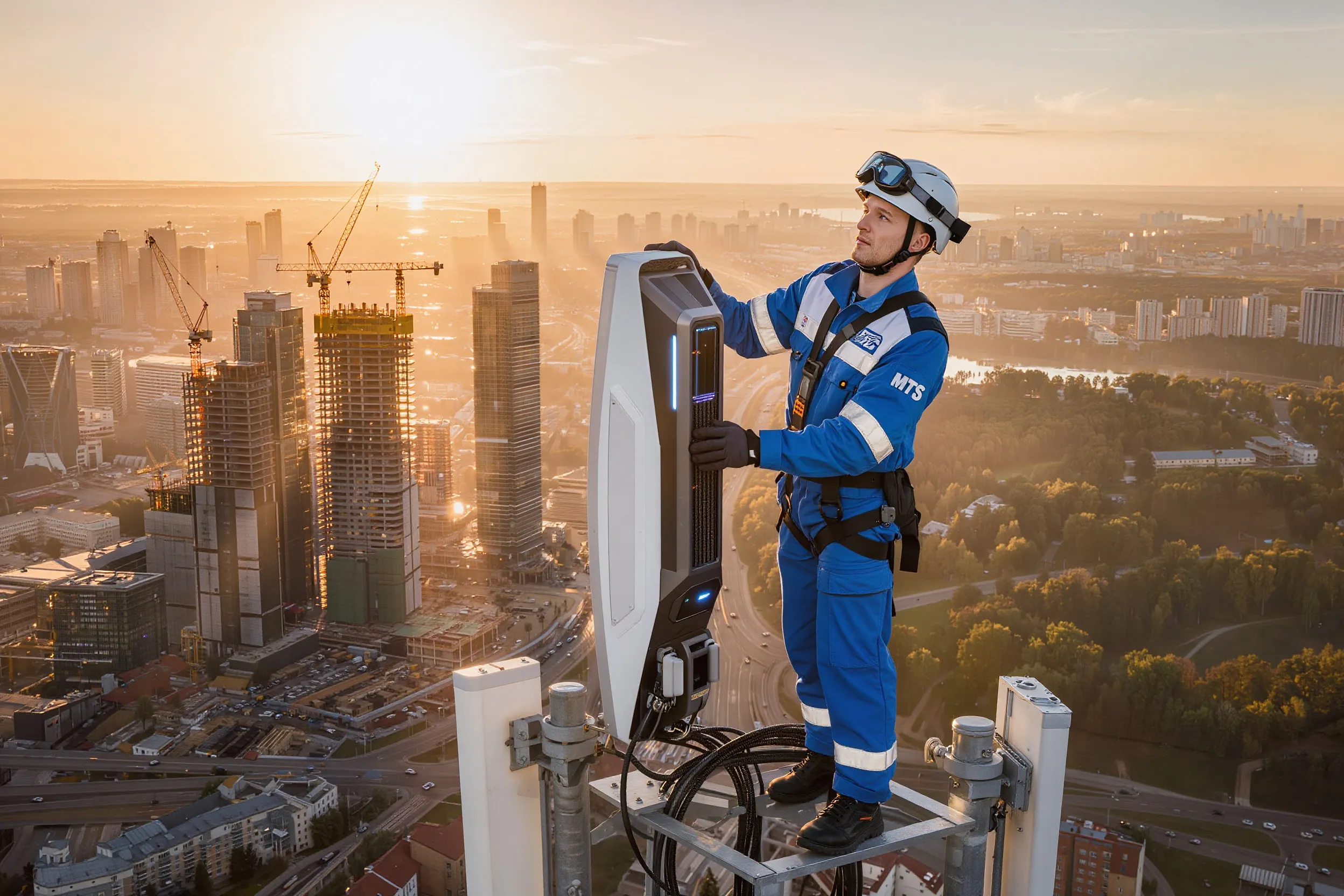
In particular, PJSC MTS is actively upgrading network equipment in Moscow and the Moscow region. The 900 MHz band is being cleared for use by more advanced standards. As a result, the coverage radius of LTE-enabled base stations will increase by 1.5 to 2 times, while indoor signal penetration will also improve.
In the Moscow region, 3G networks previously operated in two frequency bands – 2100 MHz and 900 MHz. Between 2023 and 2025, MTS migrated almost the entire 2100 MHz band from 3G to LTE. This transition increased average mobile internet speeds in the capital and surrounding region by around 25%.
Freeing Up Scarce Spectrum
“There is no sense in maintaining 3G networks that occupy scarce frequency resources. This year, we are accelerating the refarming of spectrum from 3G to LTE and, in two stages – in February and March – will shut down almost all remaining 3G base stations in the 900 MHz band across Moscow and the region. This will improve the quality of voice services and mobile internet: LTE coverage radius will expand across the entire region, and signal penetration in dense urban areas will improve, especially on lower floors and in basements,” said Vladislav Medvedev, Technical Director for the Moscow region at MTS.
The work in the capital region is part of MTS’s broader strategy launched in 2023. The shutdown of 3G-enabled base stations is taking place across multiple regions. The goal goes beyond higher data speeds and wider coverage. Following network upgrades, subscribers with compatible devices gain access to digital services and high-quality voice technology based on VoLTE. To date, MTS has migrated base stations from 3G to LTE in 35 cities across 21 regions of Russia. Major cities and regions where 3G networks have already been switched off include Komsomolsk-on-Amur, Naberezhnye Chelny, Novosibirsk, Saint Petersburg and the Leningrad region, Sochi and the Krasnodar Territory, and Yaroslavl.

MTS management expects the complete phase-out of 3G to be completed by 2027. During 2025, the company switched off half of the remaining 3G base stations nationwide.

An Industry-Wide Strategy
Similar efforts are now underway at other operators as well. Russia’s largest telecom players – Beeline, MegaFon, and T2 – are actively refarming spectrum previously allocated to third-generation networks. The process focuses on two main bands: 900 MHz and 2100 MHz. These bands allow the use of so-called technological neutrality, enabling multiple standards to operate. At the same time, MegaFon, which holds the largest volume of LTE spectrum, typically retains at least one 3G carrier to ensure compatibility with older devices that do not support LTE or VoLTE.
New Equipment Without Outdated Technologies
Russian telecom equipment manufacturers are also actively supporting the transition. New base stations now leave factories with support only for GSM and LTE, while being technically prepared for future 5G deployment.
The move away from 3G is part of a global trend. In several countries, the standard has already been completely switched off. In Russia, the process progressed more slowly due to sanctions and the need for operators to transition from imported equipment to domestically produced alternatives.
In effect, LTE is set to firmly establish itself as the dominant communications standard across Russia in the near future. After that, resources will increasingly be directed toward the rollout of 5G networks. The first commercial next-generation networks could begin operating as early as 2026 in selected cities and districts.