Russian University Trains “Universal Modelers” for the Nuclear Industry
A new graduate program at MEPhI is designed to train highly qualified IT specialists for the nuclear sector.
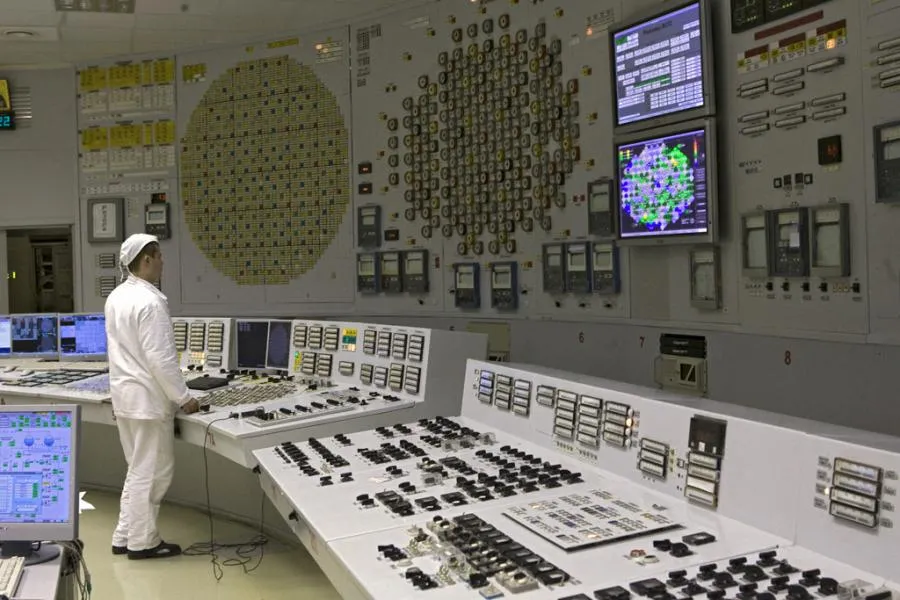
The design and operation of any nuclear facility always rely on calculations and on defining relationships between physical processes. Today, those calculations in the nuclear industry are carried out using software systems. This has created demand for specialists who understand both modern applied mathematics and the physical processes taking place inside nuclear reactors.
To meet that demand, the National Research Nuclear University MEPhI has launched a new master’s program titled Mathematical Modeling and Software Systems for Nuclear Power Engineering.
Modeling Is a Complex World
As the university told IT-Russia, the core goal of the new program is to train so-called “universal modelers” — specialists capable of using advanced software tools to model physical processes in next-generation nuclear reactors. Such experts are also indispensable in the reactor design phase.
Graduates of the program are expected not only to know how to use modern computational software, but also to understand how these tools are built and how they work internally.
In Demand at Rosatom
The need for the new educational program has emerged alongside the development of modern digital technologies, including predictive data analytics and artificial intelligence. Attempts to simply integrate “digital disciplines” into traditional curricula have failed, highlighting an acute shortage of highly qualified IT specialists deeply immersed in the specifics of the nuclear industry.
Students in the program will focus on topics at the intersection of applied mathematics and physics. A key feature of the curriculum is the study of specialized industry computational codes used in nuclear reactor design.
Some graduates may stay on as instructors at the university, while others are expected to move on to Rosatom, the Kurchatov Institute, and specialized institutes of the Russian Academy of Sciences.
Previously, IT-Russia reported that artificial intelligence is already being used in the nuclear energy sector for data analysis and forecasting. However, it remains a tool that supports human decision-making rather than replacing it. Safety, rules, and transparency remain paramount.