A Digital Twin on the Rails
Researchers in Irkutsk have developed a smart solution for freight rail operations – a digital twin of a train’s braking system that can predict failures in real time and support locomotive engineers during operation.
How the “Smart Brake” Works
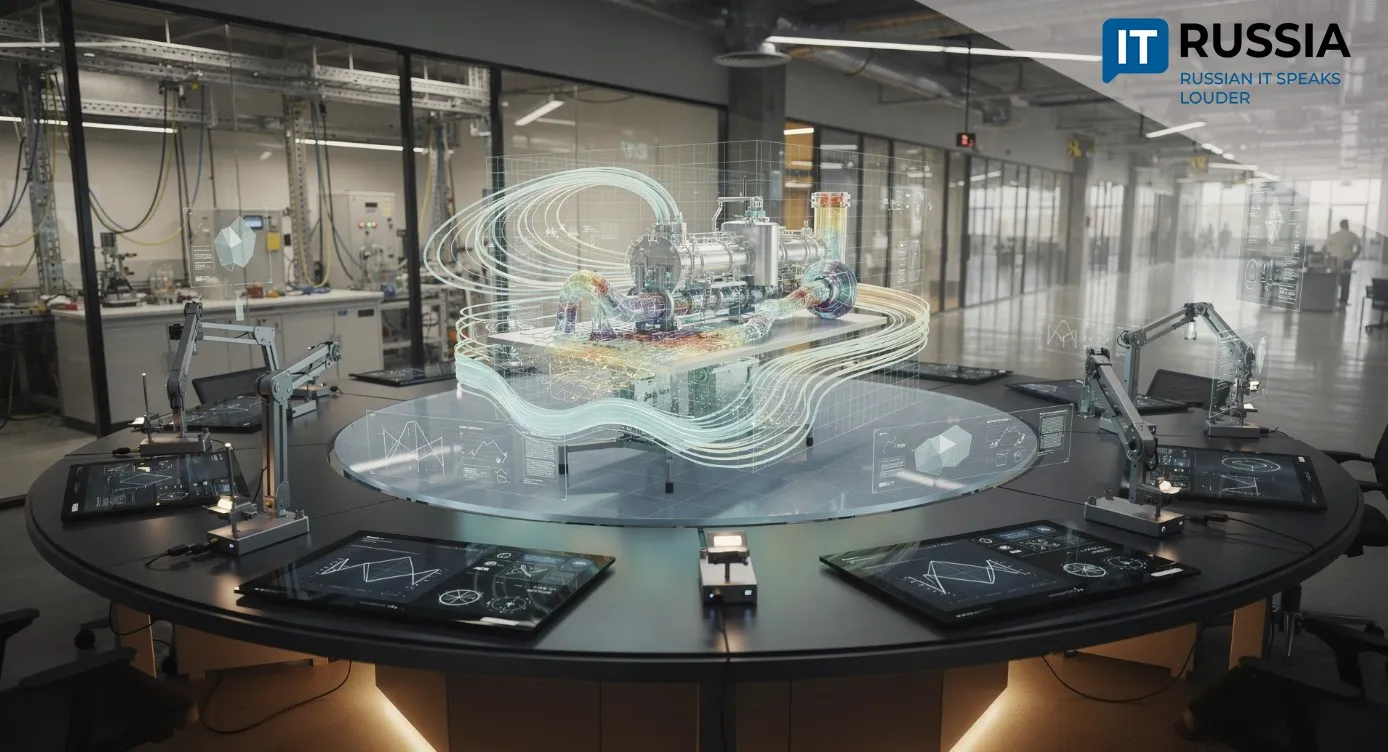
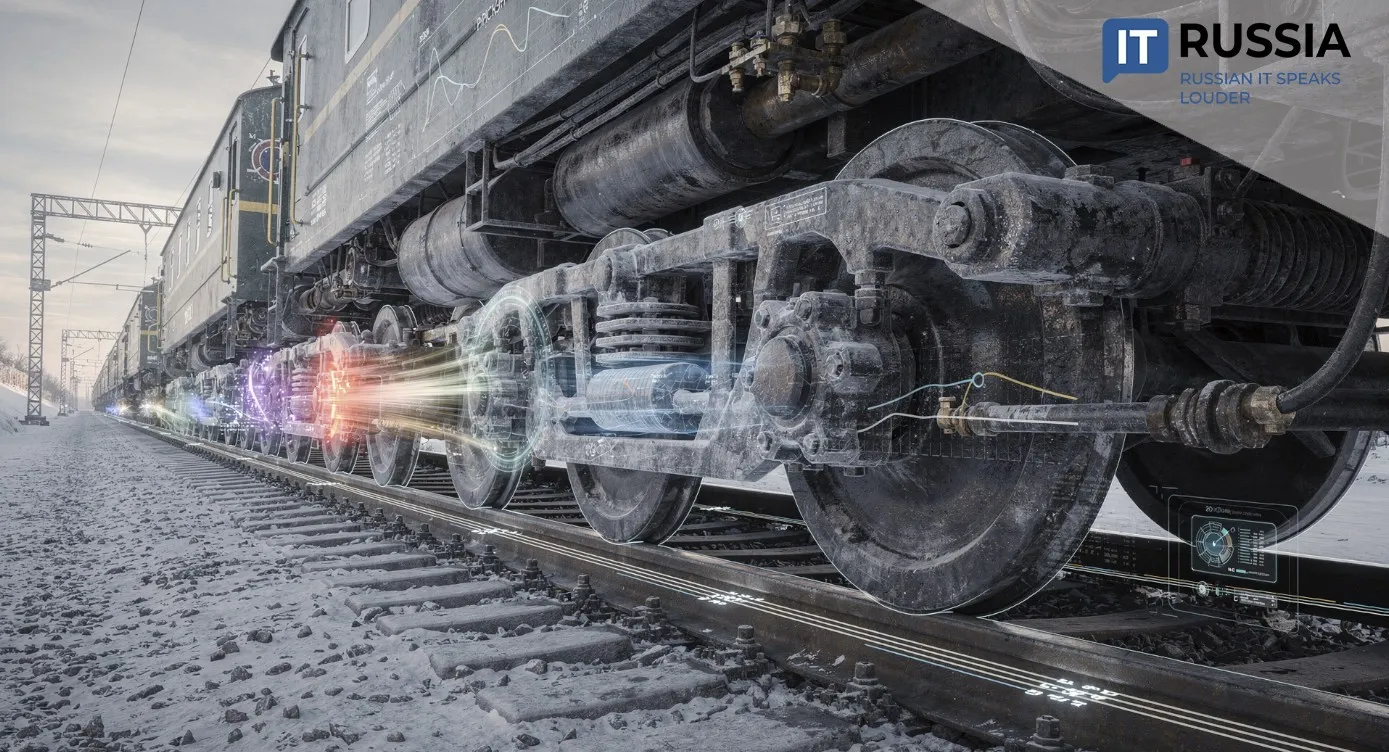
At Irkutsk State Transport University (IrGUPS), engineers have created a hardware-software system that turns a locomotive’s onboard computer into a center for predictive diagnostics. The system consists of three interconnected modules. The first is the digital twin itself – a virtual model of the real braking system. Data on the current state of mechanical components is continuously fed into this model through electronic sensors.
The second module, known as the “engineer advisor,” analyzes the incoming data and builds driving scenarios, predicting in advance how the train will brake under different conditions. The third component, the diagnostics module, focuses on detecting anomalies. It identifies losses in braking efficiency, unintended brake activations, and other types of malfunctions.
The system’s key advantage lies in the speed of simulation. The virtual model processes data faster than real-world processes unfold. This makes it possible to detect warning signals before they escalate into emergency situations. Tests conducted on Ermak-series electric locomotives on the East Siberian Railway confirmed the practical viability of the technology.
For the transport sector, this represents a shift to a fundamentally new level of safety. The system does not simply record the current condition of the brakes. It predicts their future behavior, giving locomotive engineers additional time to respond. The project illustrates how digital twins are moving beyond industrial design and becoming an integral part of the day-to-day operation of complex technical systems.
Where the Technology Is Headed
In Russia, the development has the potential to significantly change the way freight rail operations are managed. Deploying digital twins could shorten braking distances, increase the capacity of rail corridors, and reduce intervals between trains without compromising safety.
The technology dovetails naturally with the broader digitalization of transport infrastructure. It complements existing systems for predictive diagnostics, modeling, and decision support for engineers. With backing from federal programs, large-scale deployment of the solution could become a reality within the next few years.


The development also has export potential. The Russian system could attract interest from countries with extensive rail networks, including Europe, China, and members of the CIS. However, entering international markets will require addressing several challenges. The technology must first be refined to an industrial standard. It will also need to pass certification under foreign safety regulations and be adapted to local operational requirements.
From Bridges to Oil Wells
Over the past five years, digital twins have evolved into a universal tool for optimizing complex systems. In Irkutsk, a similar project aimed at increasing rail network capacity was tested as early as 2025. Later, researchers there received a patent for a digital twin of a bridge crossing as part of a large-scale program to digitize transport infrastructure.
In 2026, scientists at Siberian Federal University developed a virtual model for oil production, demonstrating that the technology extends well beyond the transport sector. Globally, digital twin solutions are already widely used in aircraft engine design, power grid management, and industrial process monitoring.
The broader trend is becoming increasingly clear. One-off inspections are being replaced by continuous digital monitoring, and reactive responses to failures are giving way to early prediction. Russia’s railways, where freight volumes reach millions of tons, provide an ideal testing ground for deploying such systems at scale.
The Future on Digital Rails
The advantages of the technology are clear. Predictive diagnostics help reduce downtime, while higher transport efficiency is achieved without additional investment in physical infrastructure.
Meanwhile, there are challenges to address. Widespread adoption will require a supporting ecosystem, ranging from service centers to cloud platforms. It is also critical to integrate digital twins with existing signaling and control systems, many of which have been in operation for decades. Certification issues remain particularly important, especially for international projects.
The outlook for the next three to five years appears optimistic. There is reason to believe that digital twins will become a standard tool for diagnosing and managing rolling stock on major rail networks.
Irkutsk is playing a pioneering role in this process. It was here that researchers first demonstrated that a virtual “twin” of a braking system is not just a theoretical concept but a working solution capable of operating effectively under the demanding conditions of Siberian railways. This suggests that the next stage of the technology’s evolution is no longer a question of if, but when.