Moscow River of Knowledge: New Project Turns Electric Ferries Into Floating Learning Hubs
Free intensive courses on generative artificial intelligence have been launched aboard Moscow's regular electric river ferries.
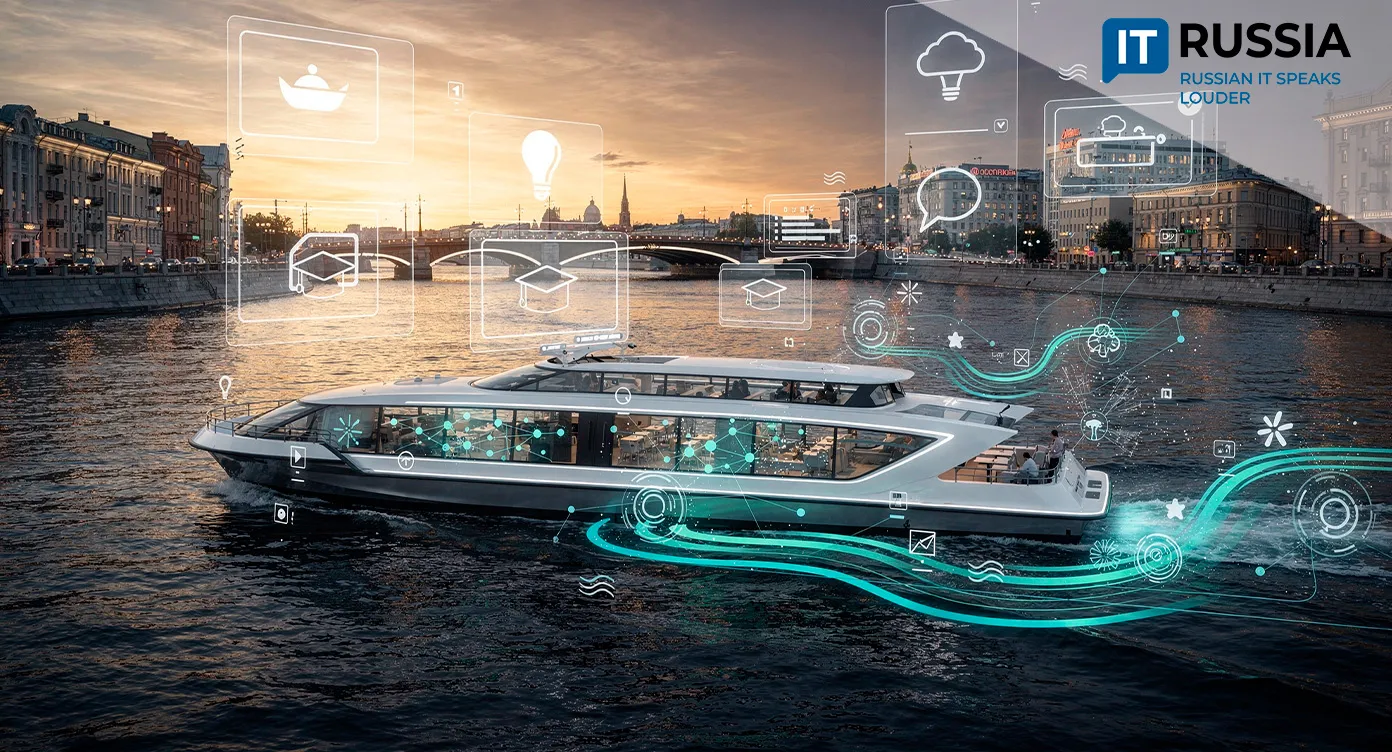
Russia's capital continues to astonish with unconventional approaches to education. This time, the classroom has moved onto the river. Moscow's Department of Transport, the MTS AI Center (MWS AI), and Moscow's HSE University have launched a series of free classes aboard the city's regularly scheduled electric ferries. The vessels are becoming floating lecture halls where passengers can explore the latest advances in artificial intelligence. All aboard.
Riding the Waves of Ideas
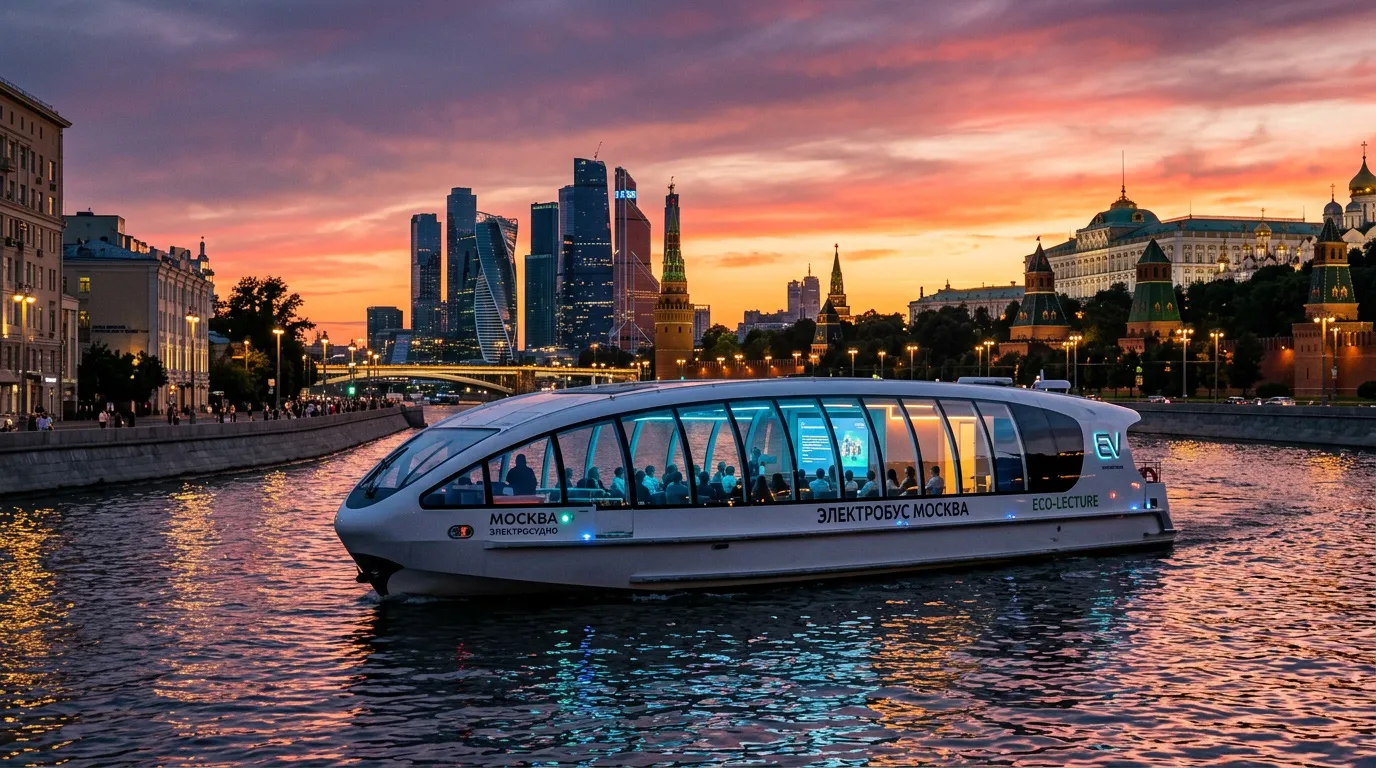
Moscow recently opened its fourth regular electric ferry route, Luzhniki – Kiyevsky. The new line connects the Khamovniki, Ramenki, and Dorogomilovo districts, improving transportation access for more than 30,000 residents. It also launched a new stream of learning. Today, discussions of generative AI are taking place aboard the ferries themselves.
MWS AI CEO Denis Filippov pointed to a striking shift. Not long ago, turning an idea into a functioning AI agent could take months. Today, the same process can often be completed in just a few hours. That change is reshaping how people learn. That is why the organizers opted for short, hands-on intensive sessions rather than traditional academic lectures. The emphasis is on real-world environments and practical challenges instead of classroom distance. Filippov noted that Moscow's Department of Transport is among the world's most technologically advanced transportation agencies. Holding AI lectures aboard electric ferries, he said, is proof of that approach.
According to the head of MWS AI, the ferries now serve as perhaps the country's most unconventional educational venue: "A short intensive course, a real-world environment, and no academic distance. We want students to step ashore not as spectators of the technological revolution, but as its participants."
How to Make a Video Go Viral
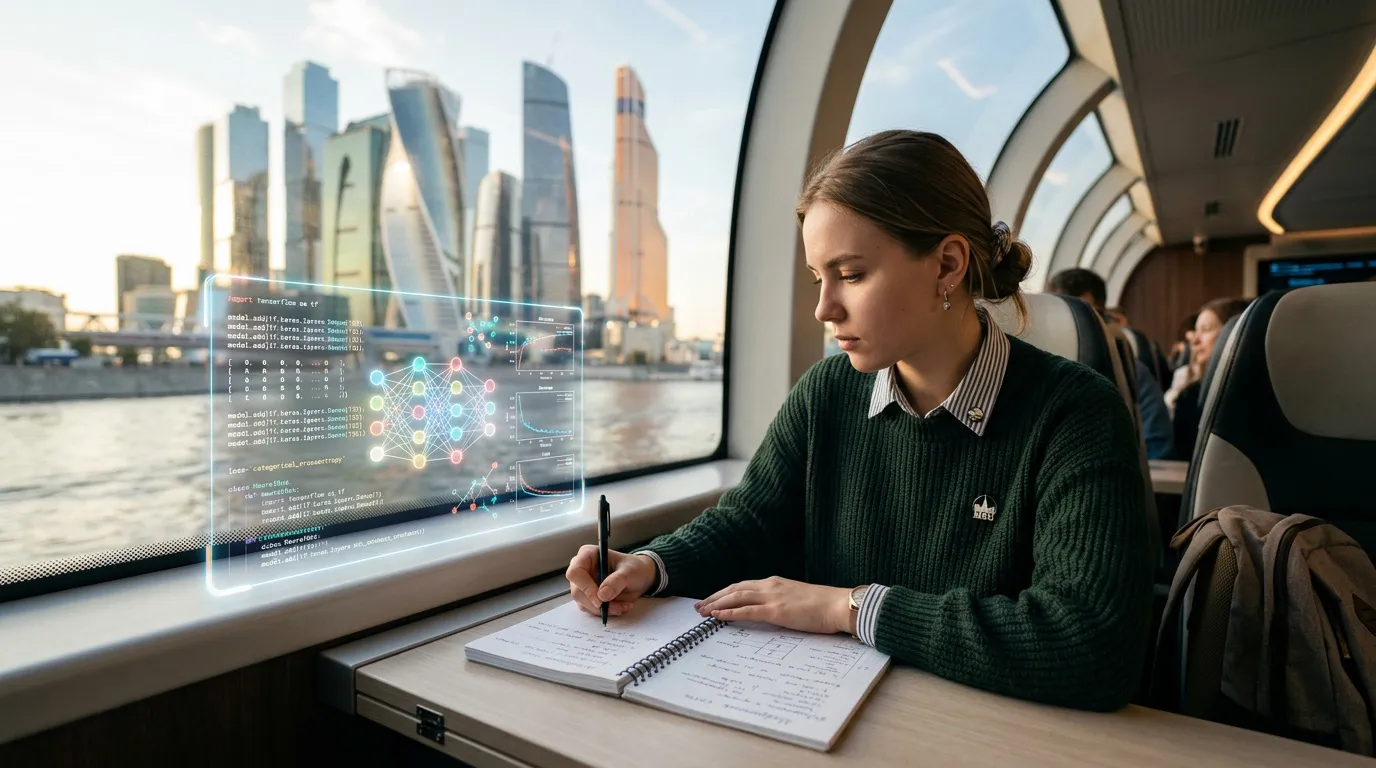
What will participants learn? They will practice writing prompts for AI models that produce usable scripts, explore the cost of AI-generated video production, examine why some AI-created videos go viral while others do not, and, most importantly, create videos themselves using different AI platforms.
Participants will also examine AI's current limitations, discuss copyright issues, and explore the professions that are likely to emerge in the future. Lectures are delivered by experts from information technology, finance, manufacturing, retail, and even well-known content creators with practical industry experience. The first session has already taken place aboard an electric ferry operating on the ZIL – Pechatniki route.
More Than Four Thousand "Students"
The initiative builds on Moscow's broader effort to popularize artificial intelligence. In 2024, the Moscow 2030 forum at Gostiny Dvor hosted public lectures by Russian scientists. At the time, though, the activities were largely experimental and entertainment-focused, but they demonstrated strong interest among young people.
In parallel, Moscow began training schoolteachers to use AI, laying the groundwork for its systematic integration into education. The trend accelerated in 2025. The Technograd education center launched the course "Artificial Intelligence in Creative Professions," the closest predecessor to the current project in both target audience and practical focus. At the federal level, the Kod budushchego. Iskusstvenny intellekt (Code of the Future. Artificial Intelligence) program also began offering free instruction in Python and machine learning for high school and vocational college students.
Now those earlier efforts have come together in a new format that combines transportation, education, and leisure. Maksim Liksutov, Moscow's deputy mayor for transport and industry, said that more than 4,000 people have already attended events held aboard the city's electric ferries since the free educational initiative began. And this is only the beginning.
A Floating University
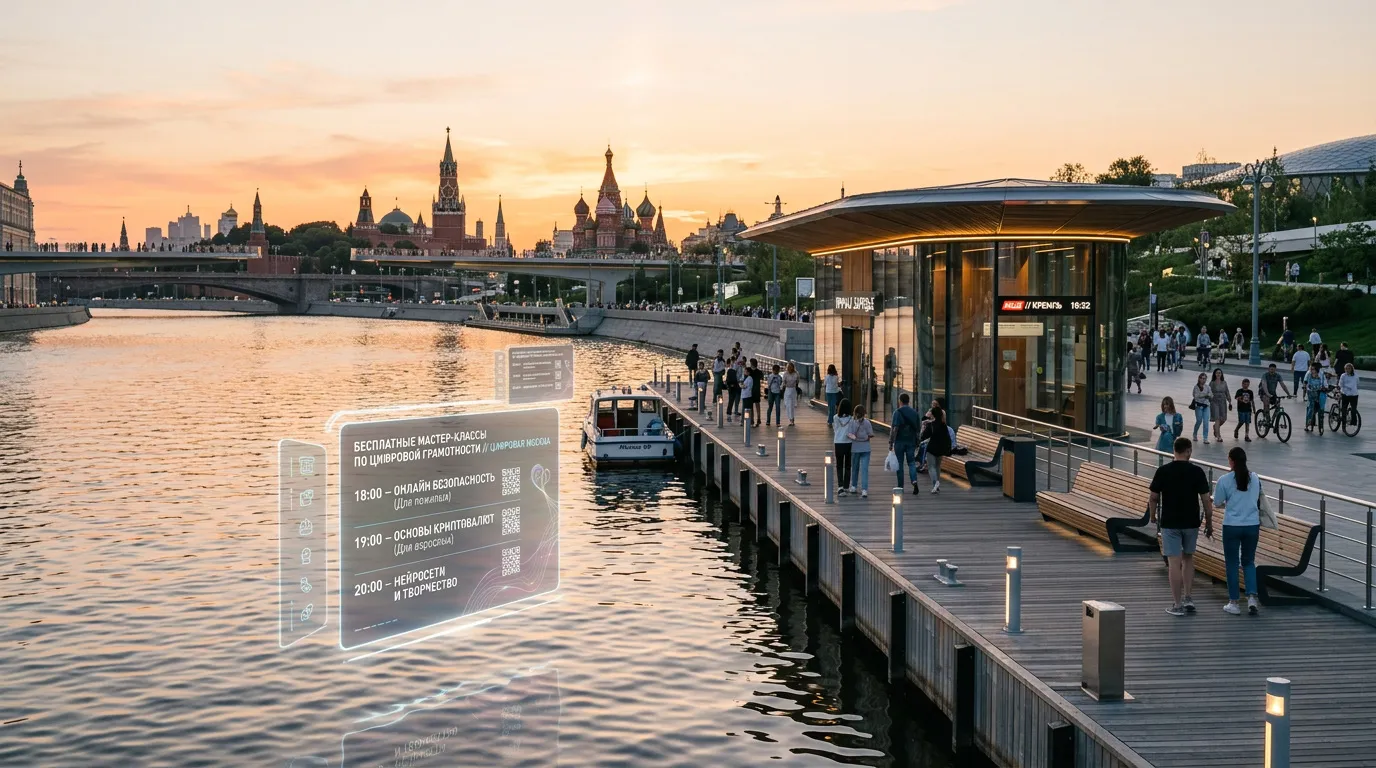
The project has huge growth potential. First, the themed river trips operate every day and are open to people of all ages. Second, the initiative brings together partners including the Moscow Department of Culture, the city's museums, the Committee for Youth Policy, and the Russian Geographical Society. That means the range of educational content is expected to continue expanding.
Attendance at the lectures is free. Participants pay only the standard fare for boarding the ferry. That allows anyone to combine a scenic river trip with access to knowledge that would often come at a significant cost elsewhere.
Lyubov Shabrova, director of the Center for Continuing Education at HSE University's Faculty of Computer Science, said the initiative gives the Center an opportunity to make complex topics accessible to everyone. At a time when generative AI is reshaping everyday life, knowing how to use these technologies is becoming a fundamental skill.
For many participants, these short intensive courses could become their first step toward a technology career. They are not intended to replace a full university education, but they can spark lasting interest. Someone looking out across the river from one of these electric ferries may realize for the first time that they could do more than use AI systems – they could build them.