Next-Generation Video Analytics
Traffic enforcement cameras could soon identify vehicles even without license plates. Researchers at Volgograd State Technical University have developed an innovative software platform that combines computer vision with blockchain technology.

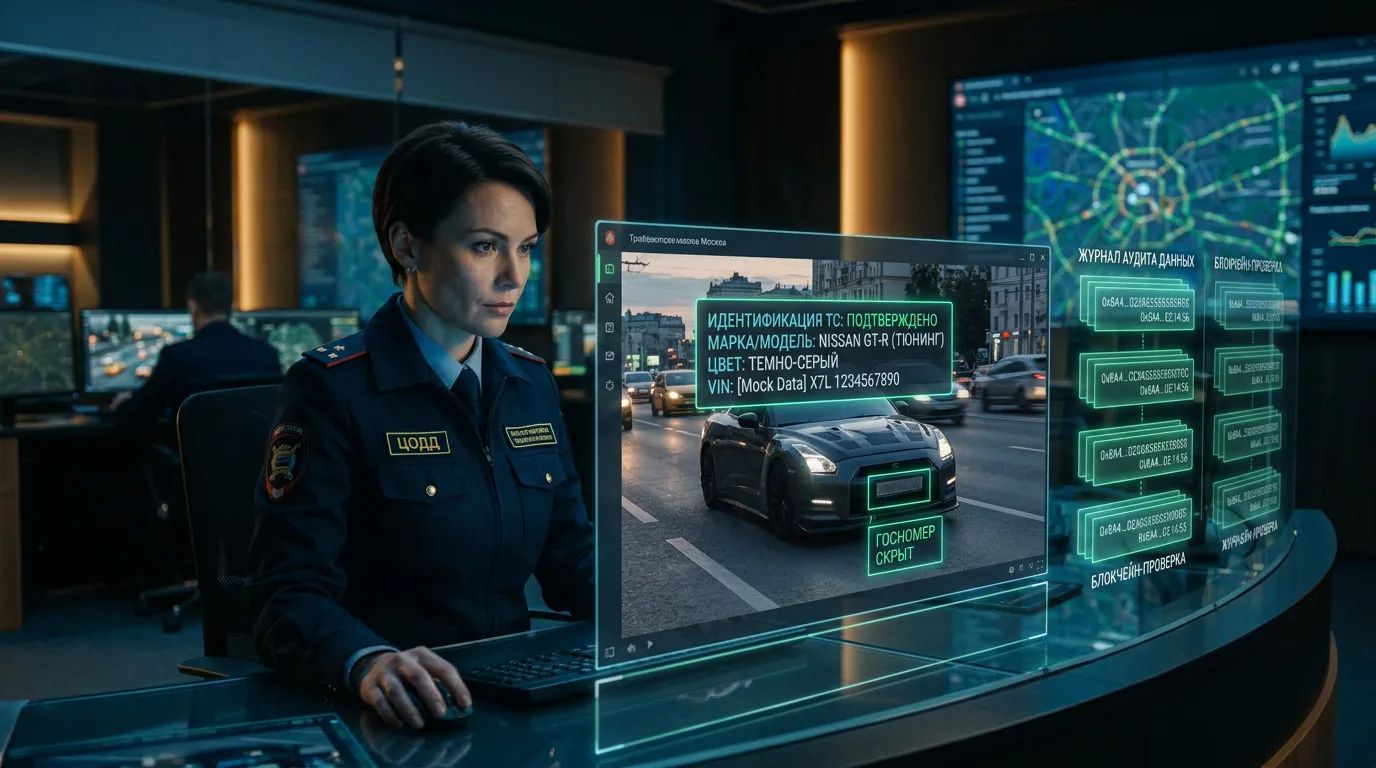
Researchers at Volgograd State Technical University (VolgGTU) have created a software platform for photo and video traffic enforcement cameras that can detect traffic violations even when critical identifying information is incomplete or deliberately altered. The system can recognize vehicles with concealed or missing license plates, modified paint colors, or substituted registration numbers. At its core is blockchain technology, which provides cryptographic data protection, maintains an immutable audit log, and verifies the integrity of recorded information.
The significance of the development extends well beyond traffic enforcement. For residents, it could improve the detection of dangerous repeat offenders and make roads safer. For public agencies, the platform offers a more reliable tool for the Ministry of Internal Affairs, traffic management centers, and transportation monitoring systems by strengthening both the trustworthiness of camera data and protection against evidence tampering. More broadly, the project reinforces the position of Russian developers in computer vision, video analytics, and intelligent transportation systems.

From Volgograd to National and Global Deployment
Within Russia, the most immediate opportunity lies in integrating the platform into intelligent transportation systems (ITS), regional traffic management centers, and automated traffic enforcement networks. That aligns closely with the country's broader effort to digitize transport infrastructure. According to the Ministry of Transport, ITS had been deployed across 62 urban agglomerations in 56 Russian regions by 2024, with further expansion continuing under the national Infrastruktura dlya zhizni (Infrastructure for Life) project beginning in 2025.
One distinctive feature of the Volgograd system is its reliance on indirect vehicle characteristics, including make, model, color, and other identifying attributes. That addresses a key limitation of many existing enforcement systems, which depend primarily on license plate recognition. When plates are concealed, obscured by dirt, or replaced, detection rates can decline sharply. The new platform is designed to identify repeat offenders even under those more challenging conditions.
The technology also has export potential, although commercialization abroad will require careful validation. International deployment would depend on demonstrating recognition accuracy, obtaining regulatory certification, ensuring the legal admissibility of collected evidence, and adapting the software to local traffic regulations. Countries investing in smart city infrastructure and automated traffic enforcement could become early adopters.
From License Plates to Driving Behavior
The VolgGTU platform did not emerge in isolation. It reflects the broader rollout of digital traffic management technologies across Russia. Since 2020, the federal government has allocated more than 22 billion rubles (approximately US$280 million) to the development of intelligent transportation systems.
Major Russian cities already illustrate how video analytics is evolving. In Moscow, AI-enabled cameras detect dozens of traffic violations, including unfastened seat belts, motorcyclists riding without helmets, drivers using mobile phones, and even parking stops that obstruct traffic. In St. Petersburg, expanded camera deployment helped reduce road accidents by 10% in 2024. Meanwhile, the city of Perm introduced the domestically developed PAUK (Spider) photo and video enforcement system, a core ITS infrastructure component created as part of Russia's import substitution programme.
Together, these examples illustrate how traffic monitoring is evolving beyond license plate recognition toward a broader understanding of driver behavior and overall road conditions.

The Future of Road Safety
The Volgograd platform addresses one of the fundamental limitations of traditional traffic enforcement cameras: their dependence on readable license plates. The most likely next step is pilot deployment within regional transportation monitoring systems, followed by further refinement of the algorithms under real-world operating conditions, including poor weather, nighttime driving, dirty vehicles, heavy traffic, and unconventional camera angles.
For widespread deployment, several challenges remain essential: establishing the legal reliability of collected evidence, minimizing false positives, ensuring transparent verification algorithms, and protecting personal data. If the platform demonstrates the required levels of accuracy and reliability, it could become part of a broader transformation in road safety, shifting from cameras designed primarily to issue fines toward integrated digital safety platforms. Such systems analyze not only license plates but also vehicle behavior, travel trajectories, signs of data manipulation, and the integrity of digital evidence, all with the goal of making roads safer for every road user.