Russia’s AI-and-Cloud Strategy in an Era of Global Volatility (part I)
As the global AI market shakes under financial turbulence, hardware bottlenecks, and spiraling cloud costs, Russia is betting on a slower, steadier, and ultimately less risky path — one built on open-model adaptation, diversified hardware, and technological sovereignty.

The Global AI Market Enters Turbulence
By 2025, the worldwide AI and cloud-infrastructure market had entered a phase of extreme volatility. In the United States, that volatility appeared in violent market swings: NVIDIA’s stock plunged after China unveiled its DeepSeek R1 model; tech giants’ valuations whipsawed; short positions from institutional investors grew; and cloud-and-AI infrastructure spending hit new aggressive highs.
At the same time, the U.S. cloud ecosystem saw a painful but predictable shake-out among GPU-focused startups — companies that had bet on “infinite AI demand” as a permanent market condition.
Against this backdrop, Russia’s strategy looks far less flashy but far more stable. Instead of racing toward AGI by 2027–2028 or inflating a hardware bubble, Russia is focusing on:
- adapting open AI models,
- diversifying hardware sources,
- using compute resources efficiently,
- and building long-term technological autonomy


The U.S. Model: A Closed Capital Loop With amplified Systemic Risks
Today’s American AI ecosystem increasingly resembles a closed investment circuit among its most powerful players.
- NVIDIA — the world’s dominant GPU supplier — hit a peak valuation of $5 trillion.
- Microsoft is nearing $3.9 trillion.
- OpenAI is valued at around $500 billion.
- Microsoft owns 32.5% of OpenAI.
- OpenAI signed a $300 billion contract with Oracle and ordered 6 GW worth of AMD GPUs for $100 billion.
- Oracle is spending tens of billions on NVIDIA chips.
- NVIDIA is reinvesting up to $100 billion back into OpenAI-related projects.
Meanwhile, AMD, CoreWeave, xAI, Mistral, and Figure AI form additional links in a chain through which capital endlessly circulates.

On paper, everyone wins — revenue rises, valuations skyrocket, and the “AI sector” looks like the only guaranteed engine of future growth. But the same cycle creates dangerous interdependence: a shock to GPU demand, new regulation, or a geopolitical event can ripple into the entire system within hours.
The single greatest structural vulnerability is hardware concentration. Up to 90% of all cutting-edge chips (3 nm and below) are manufactured by TSMC in Taiwan. That means nearly the entire U.S. AI and cloud market sits on top of a fragile geopolitical hinge.
The Models Still Aren’t Close to AGI
Despite marketing narratives, leading models such as o3 and Claude 4 Opus score below 60% on ARC-AGI — a benchmark designed to test abstract reasoning without allowing dataset memorization.
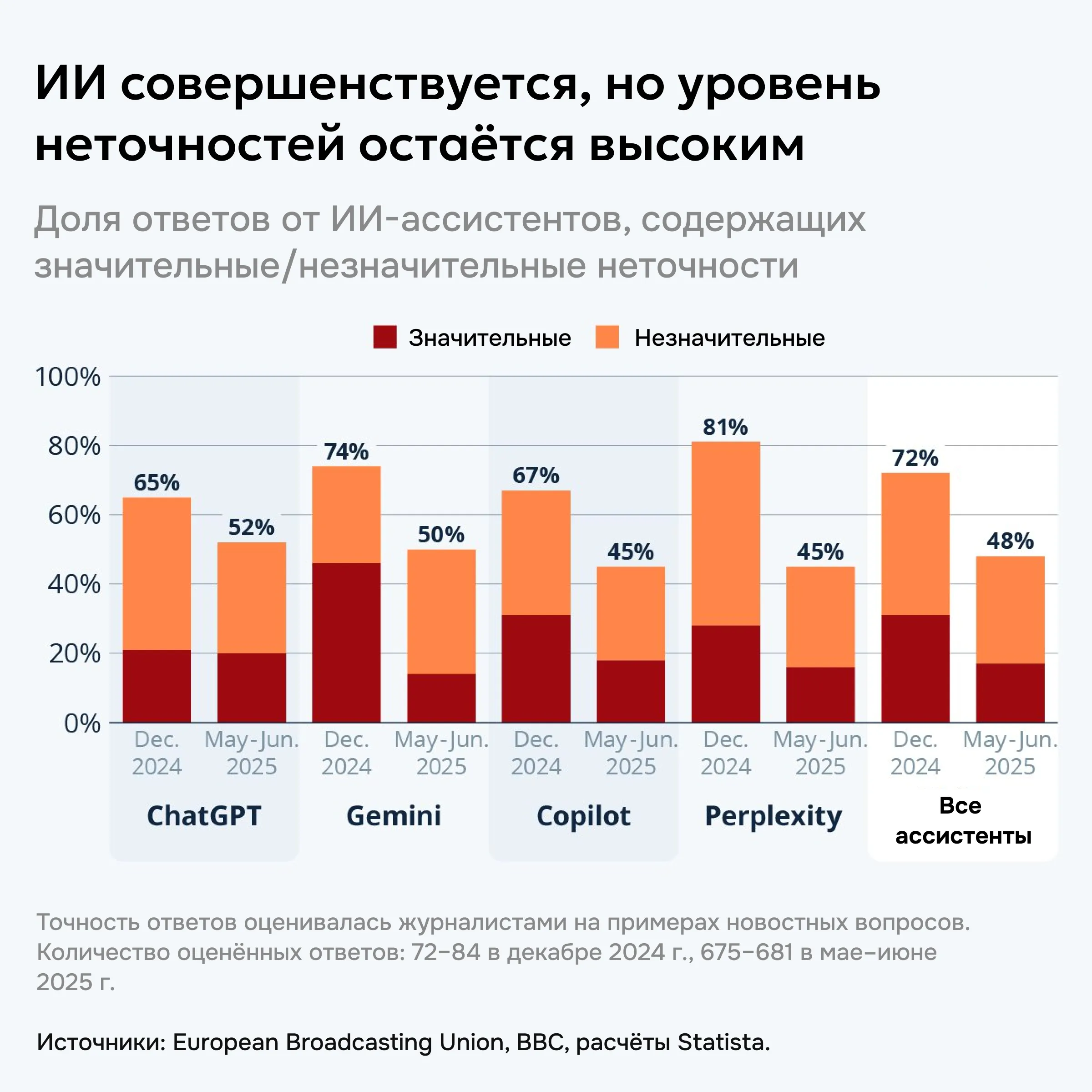
This means real generalization remains far off, even as compute costs balloon. Solving just one ARC-AGI problem today costs $25–35 in compute. Scaling that across millions of tasks generates an enormous financial and infrastructural burden.
Meanwhile, AI is already reshaping the workforce. McKinsey’s deployment of its internal platform Lilli, a suite of AI agents for analytics, led to 5,000 job cuts by mid-2025 — a shift affecting highly educated MBA-level employees.
The technology is powerful, but the economics are nowhere near efficient.
Cloud Market Reality: A Forest of Giants and Short-Lived Startups
Critics often warn that “the cloud industry is at risk of collapse,” citing investors like Jim Chanos — the short seller who foresaw Enron’s fall. But these warnings conflate two separate things:
- the stability of cloud infrastructure itself, and
- the survival prospects of the startups built on top of it.
In reality, what’s happening is completely normal for the venture ecosystem. Out of ten startups, one wins big, six or seven go bankrupt, and the rest barely break even. Amazon, Google, and Microsoft aren’t going anywhere: they run massive, profitable cloud businesses built on traditional workloads — enterprise systems, databases, logistics infrastructure.

They continue acquiring promising young companies, integrating their tech, while the rest quietly disappear.
The cloud ecosystem behaves like a forest:
- the massive trees (hyperscalers) live for decades,
- the grasses and saplings (startups) bloom fast and die faster,
- and in doing so, fertilize the soil that feeds the giants.
So the narrative of “cloud collapse” misreads what is simply the normal recycling of resources inside a mature IT ecosystem.
GPU Clouds and the Inflated Hardware Market
A separate phenomenon is the emergence of GPU-only clouds — companies like CoreWeave and FluidStack. Their business depends on stuffing data centers with GPUs and renting them to AI developers.
Traditional clouds rely on workloads where 95% of compute is stable, predictable, and tied to enterprise applications. GPU clouds depend almost entirely on AI hype cycles, investor sentiment, and breakthrough models — a far riskier foundation.
Two major risks define this model:
1. Demand risk. If the AI bubble deflates and companies cut exploratory spending, GPU clouds will have no cushion of traditional cloud revenue. They will still owe banks for GPU leases and data-center build-outs.
2. Market self-inflation. NVIDIA sells GPUs to startup clouds, then invests back into those same companies, which in turn buy more NVIDIA GPUs. Oracle built one of the world’s largest Nvidia fleets — and its biggest customer is NVIDIA itself, supposedly for internal chip development.
These circular transactions inflate valuations and revenue without reflecting genuine external demand.
A financing time bomb
Most GPU-heavy AI startups build their data centers through loans secured by the GPUs themselves. If hardware prices fall faster than companies can recover the investment, collateral collapses.
The parallels to the 2008 U.S. mortgage crisis are hard to ignore: falling asset values → margin calls → cascading defaults.

Dependency on proprietary APIs
U.S. AI startups also depend heavily on expensive, closed models. According to Brex and Scale Venture Partners:
- In 2024, U.S. startups spent $25–30 million per month on OpenAI APIs.
- By October 2025, that number had grown by 80%, reaching $50–60 million per month.
Many tried switching to Anthropic in early 2025, but by summer OpenAI regained the lead.
What This Means — and Why Russia’s Strategy Reduces Systemic Risk
The American model combines:
- extreme hardware concentration (TSMC, NVIDIA),
- capital looping among a small set of mega-corporations,
- and a startup ecosystem locked into expensive proprietary APIs.
Russia’s approach, in contrast, prioritizes adaptability over acceleration, resource efficiency over capital intensity, and technological sovereignty over dependency.
While it may seem slower, it exposes the country to far fewer systemic shocks — and positions its AI sector for steady, long-term growth in a world where volatility is becoming the norm.










![Astra AI [Code] vs. Open Source: Why Deploying an Open Model in a Secure Environment Is Costly and Risky](https://storage.yandexcloud.net/itrussia/uploads/c3b5b6da-1bf7-49cb-817e-0bab1cea8cff.webp)