Russia’s Yamal Region Creates the Country’s Only Scientifically Accurate 17th-Century Koch Model
Historians in Russia’s Yamal Region have completed a project to create an accurate Admiralty model of a 17th-century northern Russian koch.

A koch was a wooden vessel used for maritime expeditions to explore the Arctic and navigate the extreme conditions of the Far North. Specialists have completed a reconstruction of a 17th-century Admiralty model of the vessel. There is no comparable scientifically grounded and detailed reconstruction in Russia.
Archaeological Basis for the Reconstruction
The “Mangazeya: Legendarnyy KOCH” (Mangazeya: Legendary KOCH) project was carried out by the autonomous nonprofit organization Sibirskoye Naslediye (Siberian Heritage). The work was supported by grants from the governor of the Yamalo-Nenets Autonomous Okrug and the Presidential Grants Fund.
The koch’s appearance was reconstructed from materials recovered during extensive archaeological excavations at the ancient city of Mangazeya. Founded in the early 17th century in northern Western Siberia, it became Russia’s first Arctic city and an important base for the exploration of Arctic territories.
Over 14 field seasons, archaeologists assembled Russia’s largest collection of 17th-century ship timber. No koch drawings have survived, so every part of the vessel was reproduced from archaeological finds, museum specimens and archival documents. The research team studied more than 15 historical sources from the 16th to 18th centuries in archives in Moscow and St. Petersburg. They produced dozens of drawings detailing the vessel’s construction and the daily life of its sailors, making it possible to create a scientifically grounded reconstruction rather than simply an interpretation of what the ship might have looked like.
Model-Building Techniques
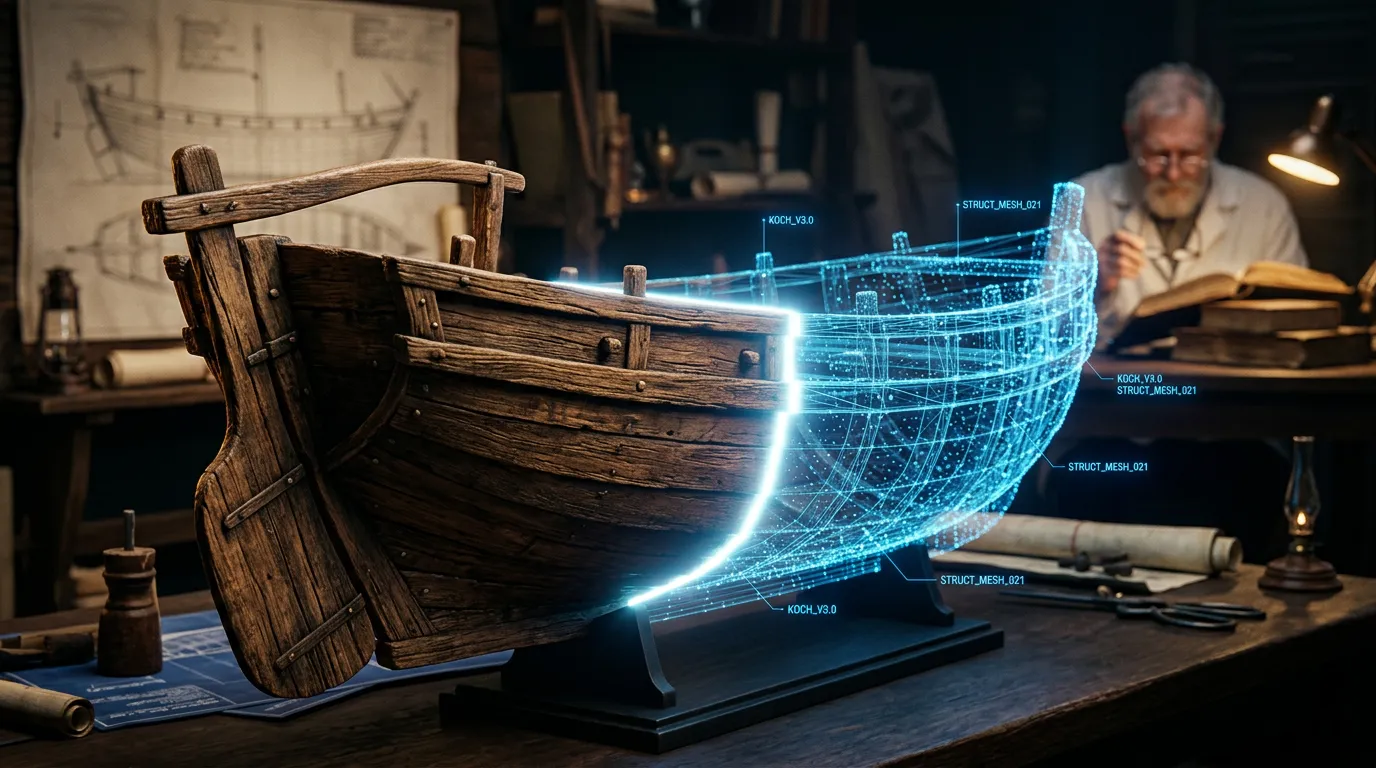
The two-meter-long model was built at a 1:10 scale. Craftsmen prepared about 100 spruce and pine logs to recreate authentic materials. The wood was dried using traditional techniques and processed by hand.
The koch’s hull was assembled without a single nail. That matches the historical construction methods used for northern Russian vessels. Craftsmen used wooden treenails, grooves and specialized methods for joining the components.
Inside the model, they recreated a hold for storing supplies, a heating stove and living quarters. The result offers a view of the conditions sailors faced during long Arctic voyages.
Kochs had flat bottoms that allowed the vessels to navigate shallow waters and spend winters in the ice. Their design provided stability in stormy conditions and allowed them to withstand pressure from the ice. That made kochs indispensable to the exploration of the Northern Sea Route.
Digital Copy and Virtual Access
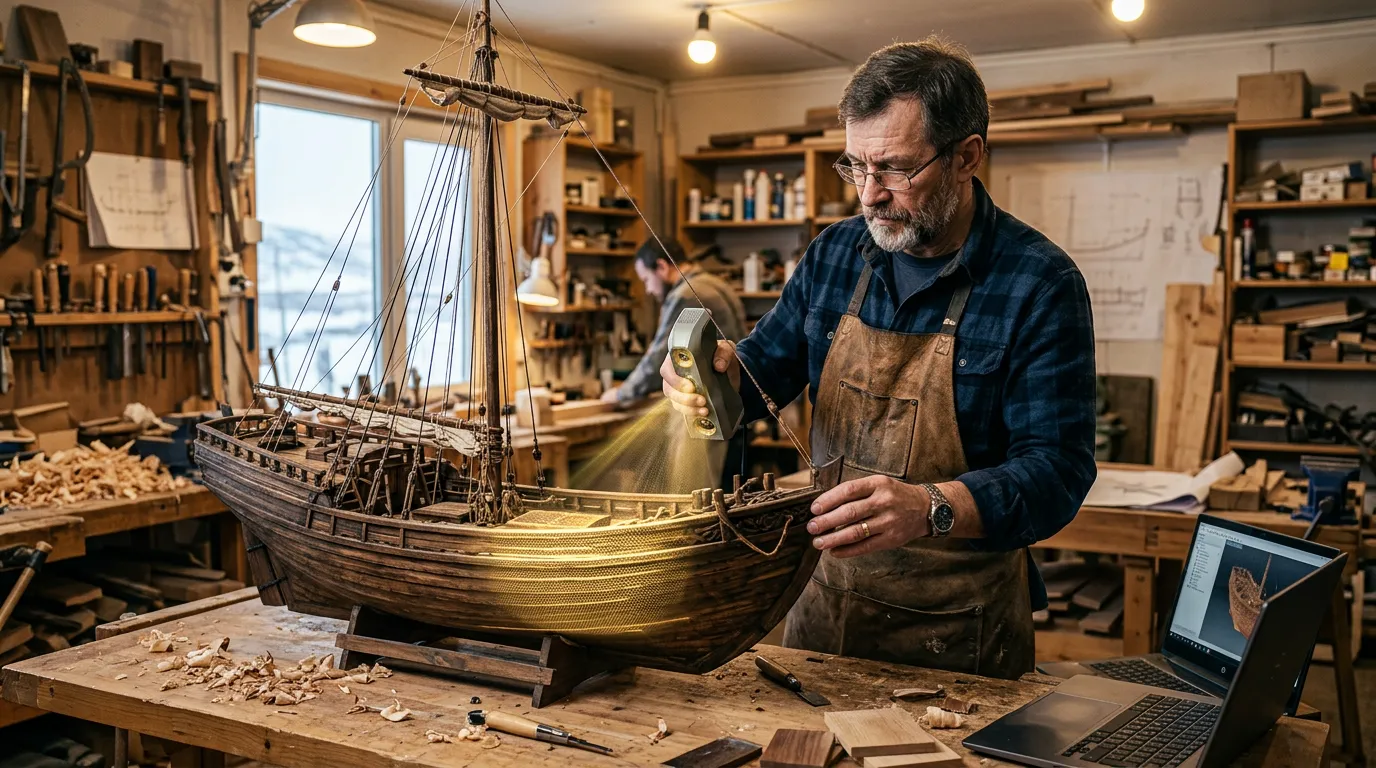
Using the physical vessel as its basis, the team is creating a digital 3D model of the koch. Photographs are now being processed to enable virtual inspection of the vessel from both inside and outside. Users will be able to examine every structural element in detail through an interactive interface. A video about the koch will also be released soon, showing the vessel in motion and demonstrating its sailing characteristics. These materials will become part of educational programs on Russia’s maritime traditions.
The virtual copy will broaden access to Russia’s historical heritage. Researchers, students and anyone interested will be able to study the koch’s construction online.
Traveling Exhibition
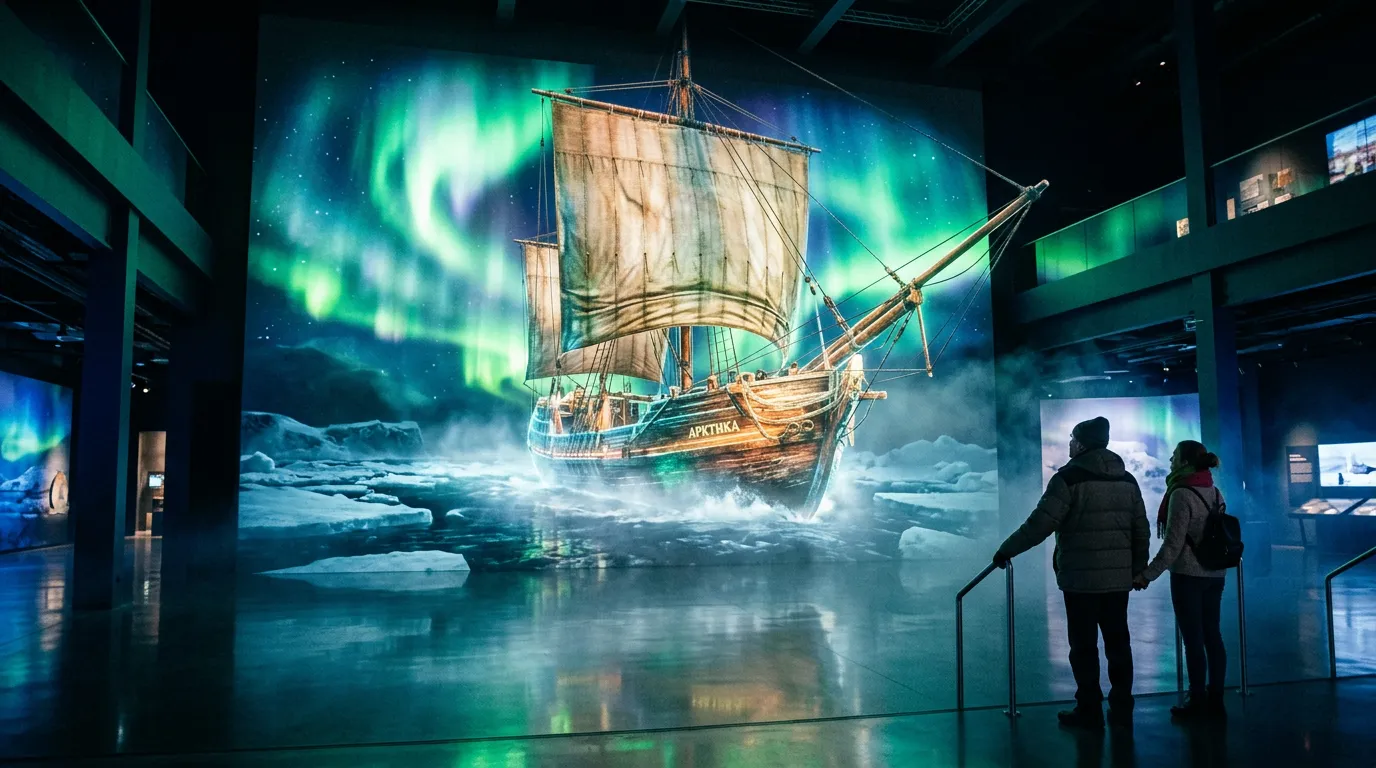
In September and November 2026, a traveling exhibition featuring the koch model will visit Nefteyugansk and Nizhnevartovsk. In spring 2027, the exhibition will travel to Salekhard, Tarko-Sale, Tazovsky and Krasnoselkup. After visiting cities across the Yamalo-Nenets Autonomous Okrug, it will go on to Moscow, St. Petersburg, Arkhangelsk and other Russian cities. This will give people in different regions of the country an opportunity to learn about the history of Arctic navigation.
The exhibition includes not only the model itself, but also informational materials on the history of Mangazeya, archaeological research and the traditions of northern Russian shipbuilding. Visitors will learn about the role kochs played in the exploration of Siberia and the Arctic.
The “Mangazeya: Legendarnyy KOCH” project continues a series of initiatives to preserve Yamal’s historical heritage. For example, in August 2026, restoration of a 29-meter-tall wooden lighthouse was completed on Bely Island. The navigational marker had served as a guide for vessels in Arctic waters since 1936.
Creating an accurate model of a 17th-century koch brings the technologies of traditional northern Russian shipbuilding back from obscurity while preserving the memory of the pioneers who opened up Russia’s Arctic expanses.