Impassable Becomes Passable
Using AI‑driven digital twins, Russian researchers are developing road‑design tools capable of predicting structural performance on wetlands and permafrost with more than 90% accuracy

From Ancient Problem to Digital Twin
Russia’s vast forestry sector holds roughly one‑fifth of the world’s timber resources—about 894.4 million hectares—but much of this potential remains untapped. The primary barrier is logistics: in remote territories, extreme natural conditions make traditional road construction economically unfeasible.
Researchers at Perm National Research Polytechnic University (PNRPU) have proposed a breakthrough solution. They created an AI‑based digital twin capable of predicting how geosynthetic‑reinforced road structures will behave on weak soils. The neural network analyzes 13 parameters of the road structure and soil, delivering two core indicators: expected surface settlement under load and stress levels within the reinforcing layer.
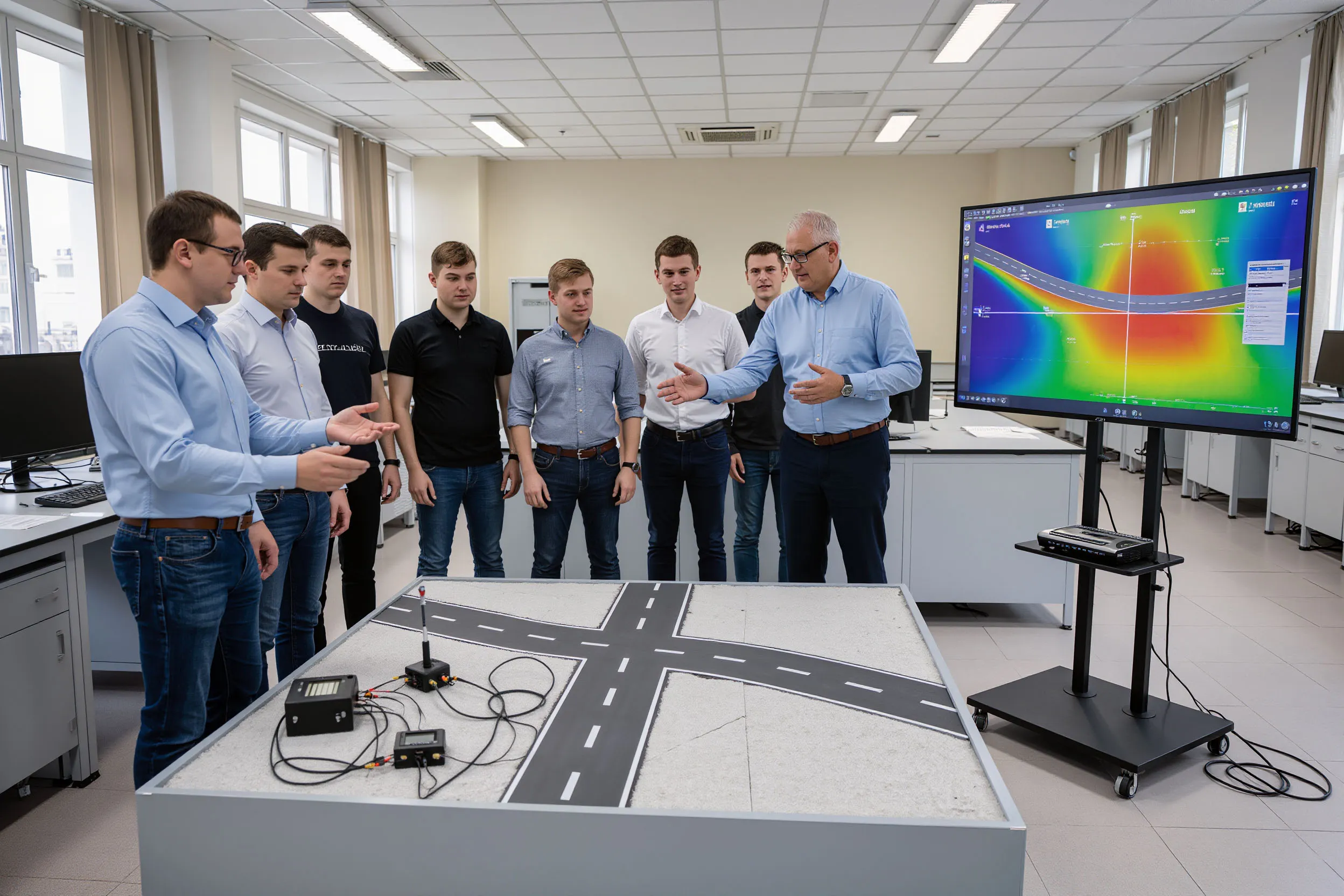
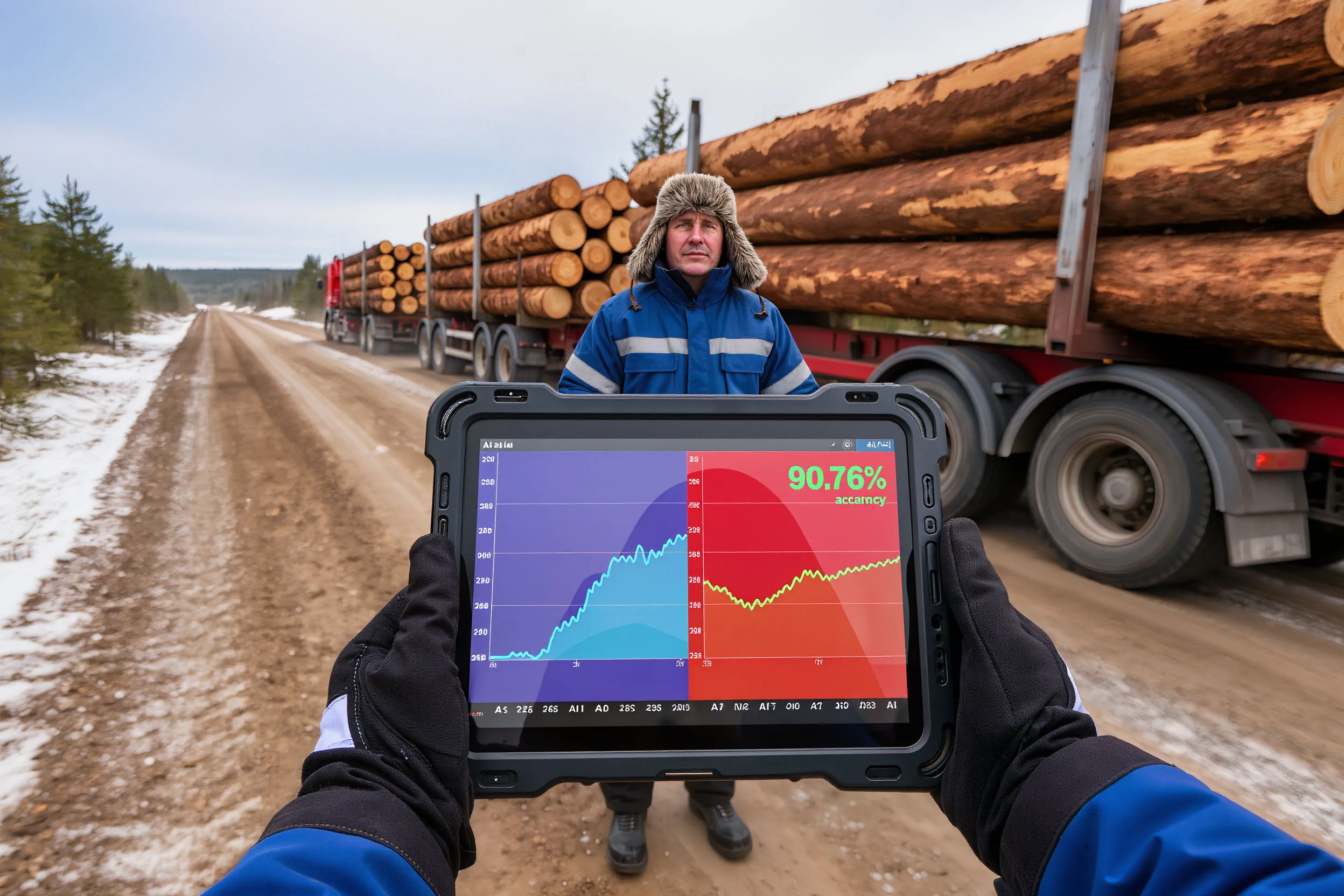
With a predictive accuracy of 90.76% and an error margin under 10%, the system is considered viable for engineering practice—enabling designers to optimize materials without overbuilding and without risking insufficient load capacity.
From Seasonal Ice Roads to All‑Season Infrastructure
For decades, Russia’s timber logistics depended on winter roads—temporary routes passable only when frozen ground and ice crossings provided natural stability. Warming trends, including a 15–20% reduction in winter season length and recurring thaws, have disrupted this model. As permafrost degradation accelerates, seasonal transport routes have become unreliable and increasingly unsafe.


All‑season roads are now essential, but swampy soils typical of forest regions cannot support heavy timber trucks without reinforcement. Geosynthetics—durable polymer grids and fabrics—distribute wheel loads, but current design methods fall short when dealing with the complexity of modern materials and unstable soils.
PNRPU’s AI system closes this gap. Independent tests show stable predictive performance ranging from 88.27% to 92.06%, making it one of the most advanced tools globally for designing roads in extreme geotechnical environments.
Engineering for Extreme Conditions
AI in road engineering is not new, but past projects focused mainly on maintenance tasks—pavement wear assessment, defect detection, or asphalt‑mix optimization. PNRPU’s development represents a leap forward: a shift from monitoring existing structures to designing entirely new ones for harsh conditions.
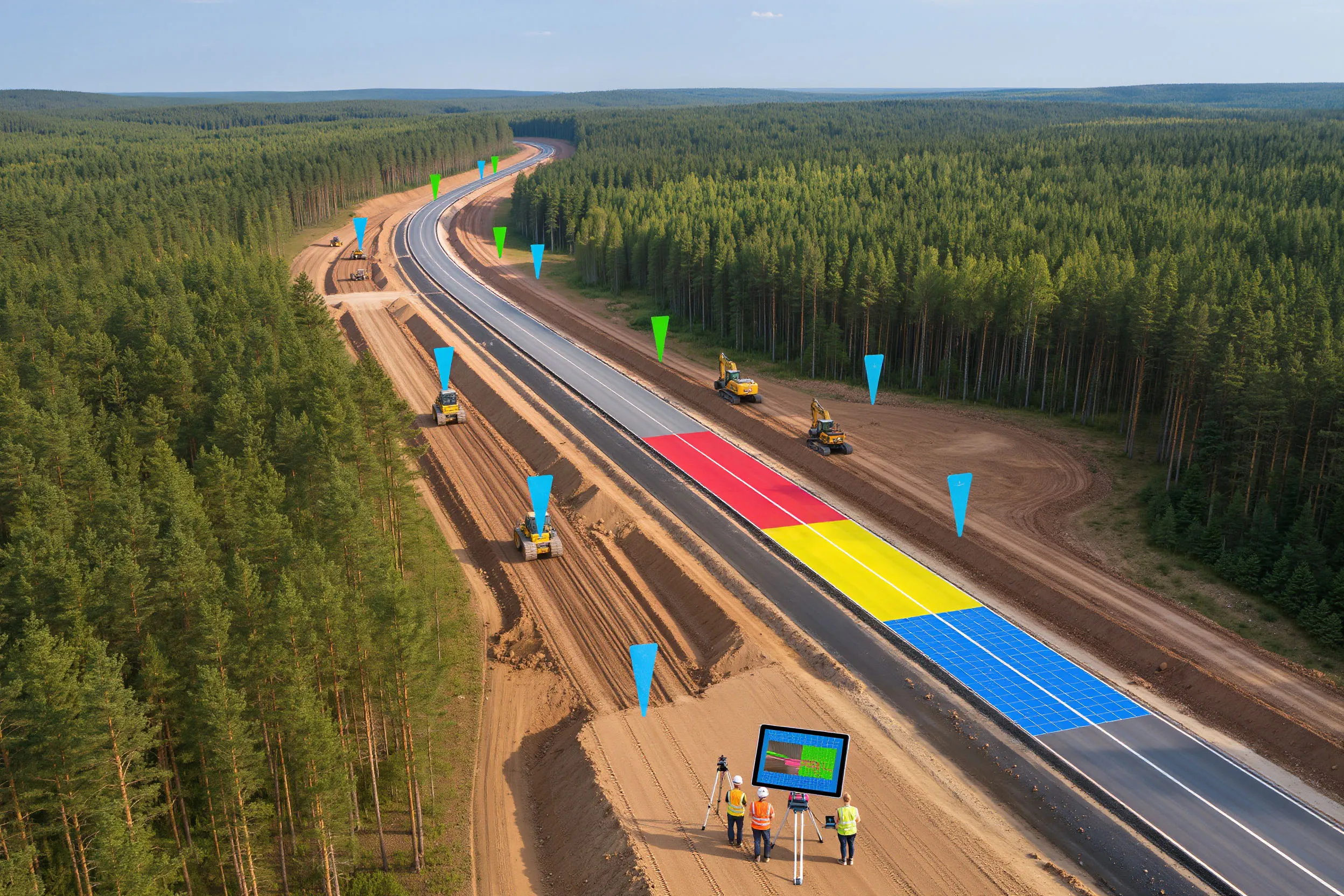
Globally, no comparable calculation system exists for modeling geosynthetic‑reinforced roads on weak soils with this level of predictive precision. That gives the technology export potential in regions facing similar challenges, including Scandinavia, northern Canada, Alaska, Siberia, and tropical swamp zones.
A History of Innovation
Road building on permafrost in Russia dates back to the Soviet era, relying on conservative design with large safety margins—reliable but costly. By the 1990s and 2000s, Western geosynthetics entered the market, but local methodologies lagged behind. Advances in computational modeling and machine learning in the 2010s made high‑resolution simulation feasible.
Early neural‑network applications focused on predicting road degradation. With expanding datasets and computing power, engineers can now model structural behavior under dynamic loads. PNRPU’s work marks a decisive shift from diagnostics to design, signaling a digital transformation of civil engineering.
Toward a Logistics Revolution
If implemented at scale, PNRPU’s system could transform logistics across Russia’s remote regions. More affordable, resilient all‑season roads would make timber extraction economically viable in previously inaccessible areas, lowering transportation costs and reducing the price of downstream products—from construction materials to consumer goods.
The wider economic effects include new jobs in remote areas, stronger regional infrastructure, and more efficient use of national forest resources. At a strategic level, the project reflects a broader transition to AI‑assisted engineering, where machine learning becomes a co‑author of infrastructure solutions.