Novosibirsk Buses Will Become Smart Road Inspectors
Russia’s road authorities are moving from periodic inspections by specialized laboratories to continuous digital monitoring. The Novosibirsk region is emerging as a leader, offering a scalable and cost-effective model for tracking pavement conditions.
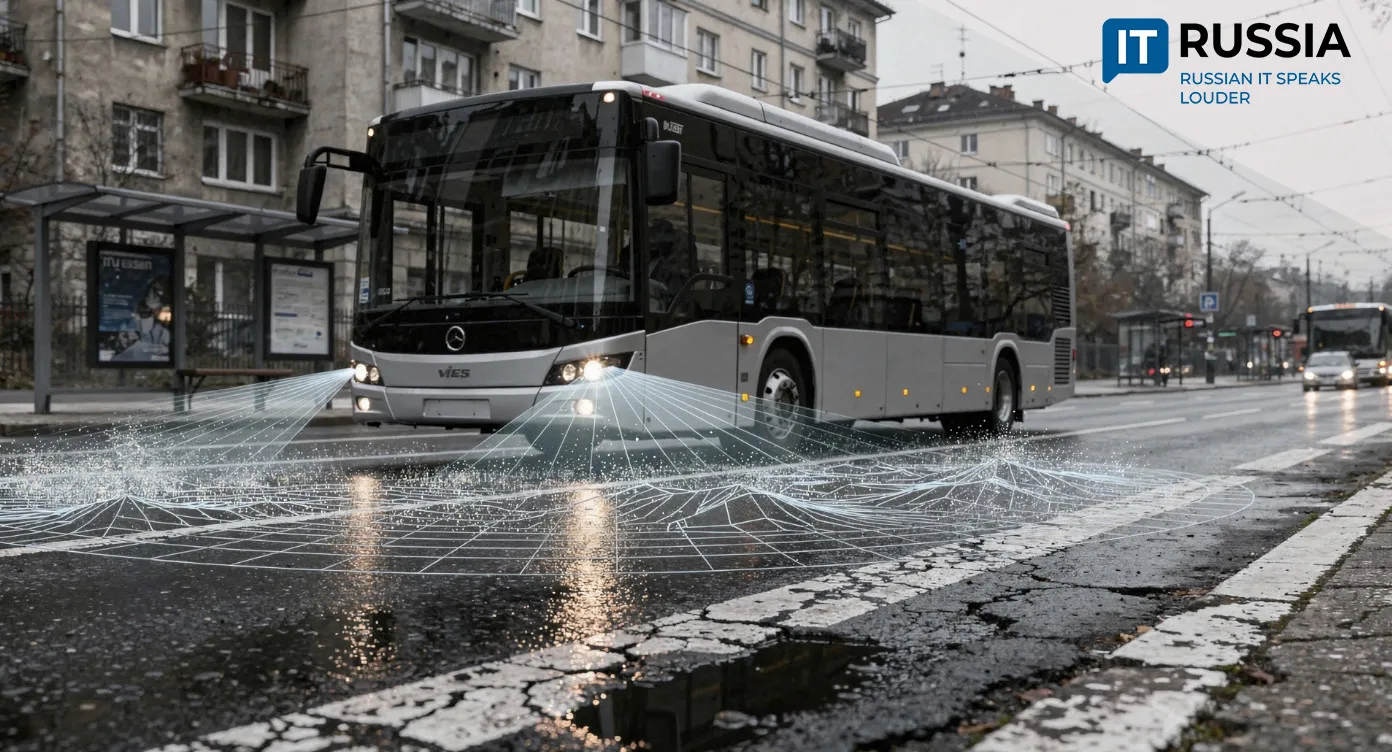
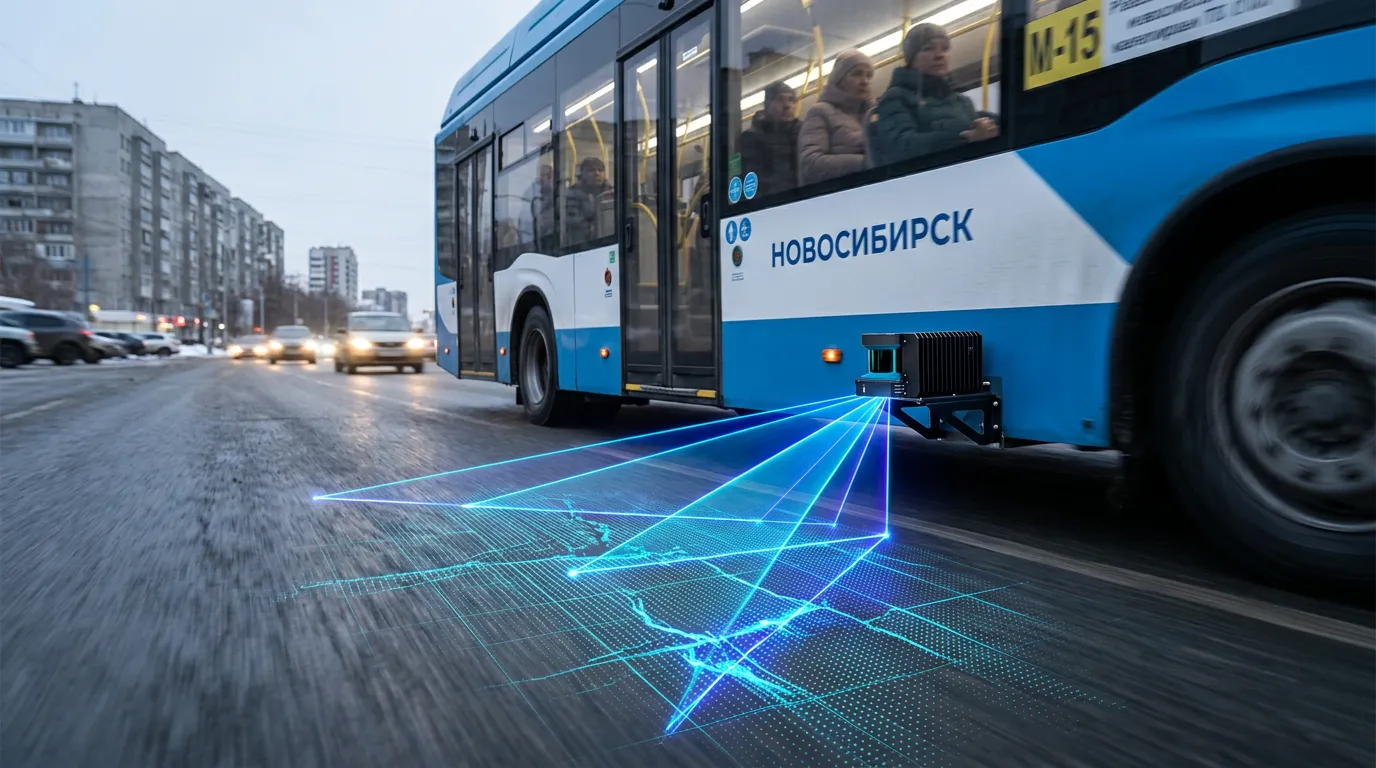
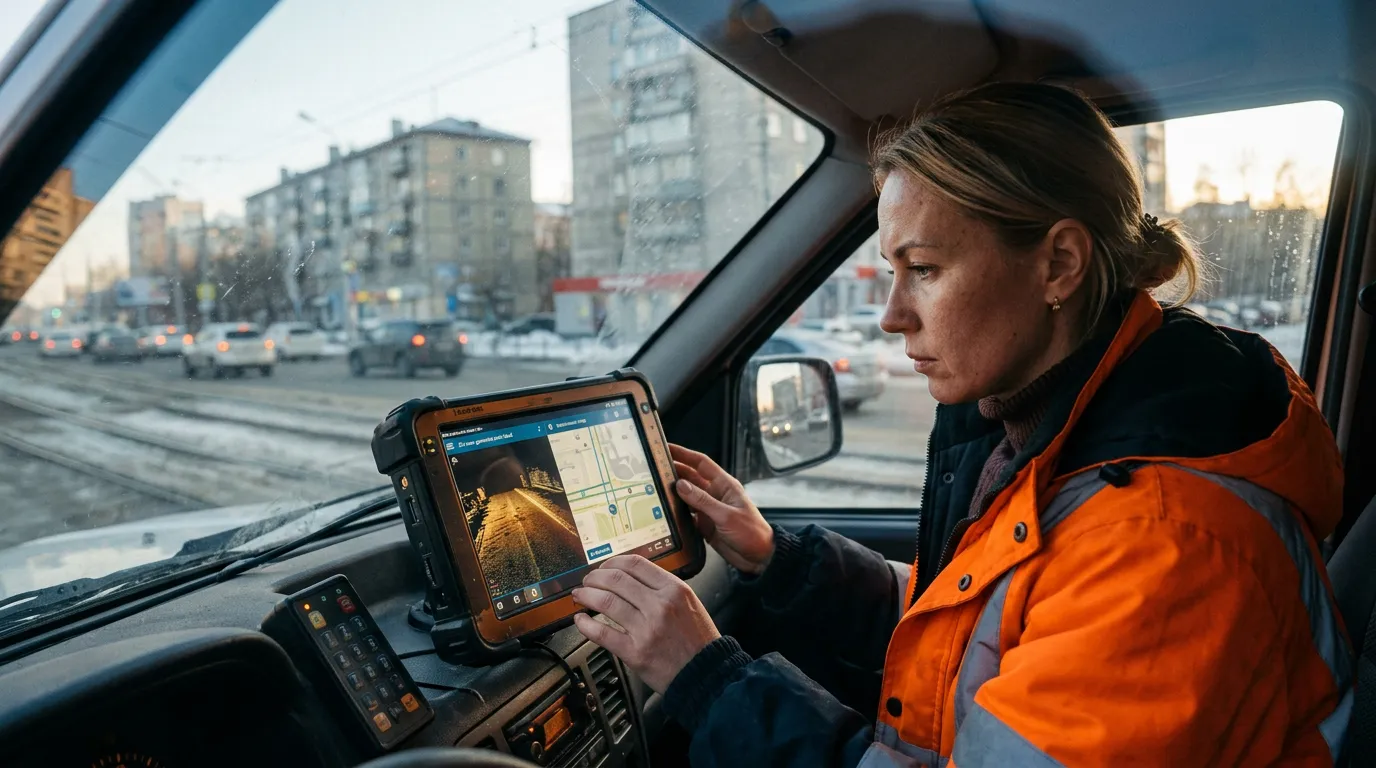
Starting in 2027, the Novosibirsk region plans to launch large-scale road scanning using laser technologies and specialized software. The system will automatically collect data on road surface conditions, identify defects and build a digital model of the infrastructure. The Territorial Administration of Motor Roads is developing the project jointly with Novosibirsk State Technical University. By 2027, laser scanners are planned for installation not only on specialized road laboratories but also on regular public transit vehicles, including buses and trolleybuses.
From Trassa-2 to a Continuous Data Stream
A mobile Trassa-2 laboratory acquired by Novosibirsk in 2026 had surveyed more than 500 kilometers of roads by mid-August, measuring ruts and recording cracks. But even the most advanced vehicle cannot provide a continuous picture of road conditions. Hundreds of buses traveling the same routes every day are a different proposition. Soon, public transit could become a vast distributed network for collecting road data, allowing information on a specific section to be updated daily rather than once a year.
Technically, the project has three layers. The first is collecting a point cloud with laser scanners. The second is having specialized software interpret that data and distinguish an actual pothole from a shadow, snow or a puddle. The third, and most important for road management, is georeferencing and visualization in a digital model. That model will allow road authorities to see not just a static map but a digital “history” of the road.
The Bus as a Laboratory
Laser scanning and computer vision are already widely used for road monitoring. The Russian Road Research Institute (ROSDORNII), for example, regularly conducts large-scale diagnostics of Russia’s road network. It uses innovative mobile road laboratories equipped with laser scanning and panoramic video recording systems.
In Moscow, neural networks have been analyzing roads using cameras since 2022. In the Moscow region, 40 mobile AI systems identified more than 3,000 defects last year, reducing the number of complaints from residents by 10%. The Murmansk region has also launched an AI-based road monitoring project. A mobile neural-network monitoring system mounted on a vehicle identifies road infrastructure problems in real time, including potholes, cracks, worn or damaged road markings, and broken or unreadable traffic signs.
But the Novosibirsk approach is somewhat different. It does not require the region to build a separate fleet of expensive laboratories. Instead, the region is trying to use infrastructure it already has, public transit, as a platform for measurement equipment. Data collected from a bus will inevitably be less precise than data from a calibrated laboratory. That makes a two-tier system the most realistic scenario. Transit vehicles would provide mass monitoring, quickly identifying problem areas, while Trassa-2 would be sent out for detailed diagnostics. This could save both resources and time.
A Direct Route to a Digital Future
The Novosibirsk region already has similar smart road-quality diagnostics. Scientists at the Center for Artificial Intelligence at Novosibirsk State University have developed an intelligent system that uses video cameras installed around the city and a specially trained neural network to identify various defects in urban infrastructure with a high degree of accuracy. A logic-semantic module can then generate a recommendation for addressing those problems. For a region that already has an intelligent transportation system with hundreds of video detectors, scanning data could provide a missing layer of information.
Research confirms the economic value of digital systems: digital twins cost 1.5 to two times less than traditional field surveys and deliver up-to-date data 2.5 to three times faster. By comparing road surface conditions with traffic intensity and crash rates, authorities can make more precise decisions about which sections need repairs.
Modern digital solutions for more effective traffic management are being deployed ahead of schedule. Overall, our goal is to reach a point by 2030 where intelligent systems have achieved at least Level 1 maturity in 66 cities that form urban agglomerations,” Russian Deputy Prime Minister Marat Khusnullin said.

Work to deploy and develop intelligent transportation systems (ITS) in the regions began in 2020 under the national Safe, High-Quality Roads project. Since 2025, these efforts have been carried out under the national Infrastructure for Life project, and the number of participating regions has continued to grow. In 2025, the federal government allocated 2.7 billion rubles (about $32 million) to develop intelligent transportation systems in the regions.