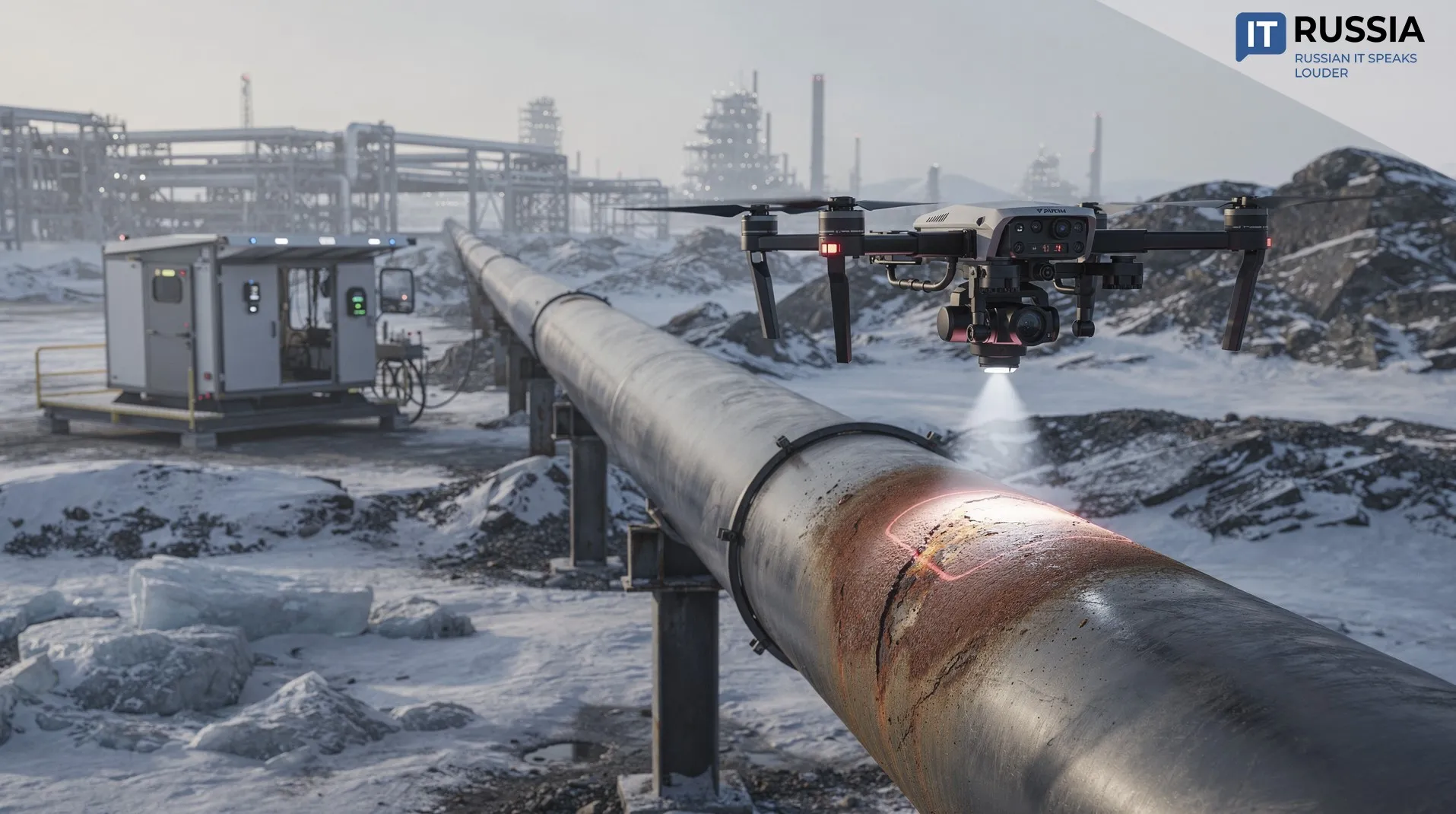
Road-Building Robotics Are Reshaping Infrastructure Development in Donbas
Donbas is becoming a testbed for Russian autonomous technologies in road construction. The project launching at the Karansky Quarry (Karansky kar'yer) is more than an experiment – it marks the beginning of a new phase in the country's infrastructure development.

In February 2026, a landmark agreement was signed to pave the way for large-scale automation of Donbas' road construction sector. The Karansky Quarry (Karansky kar'yer) will serve as a pilot site where robotic control systems for construction and quarry equipment will be deployed for the first time in a real-world infrastructure recovery project. The initiative brings together major industry players, including Mostovik, VNII Signal (All-Russian Research Institute Signal), ROSDORNII (Russian Road Research Institute), the R.O.S.ASFALT Association and the Digital Transport Era Association. Their goal is not simply to demonstrate automation technologies, but to integrate them into everyday industrial operations.
A central role belongs to Rostec's domestic technologies – the Prometey (Prometheus) autonomous control suite and the Filin (Eagle Owl) system, both capable of managing ground vehicles, including heavy quarry and road construction machinery. Together, they form a comprehensive industrial IT ecosystem that spans precision positioning, fleet dispatching, machine vision and sensor technologies. For a region where approximately 2,500 kilometers of roads have already been restored since 2022, such capabilities are becoming a necessity rather than a luxury. Automation is expected to accelerate construction, reduce risks in hazardous areas and minimize human error, particularly under demanding reconstruction schedules.
Vector for Growth
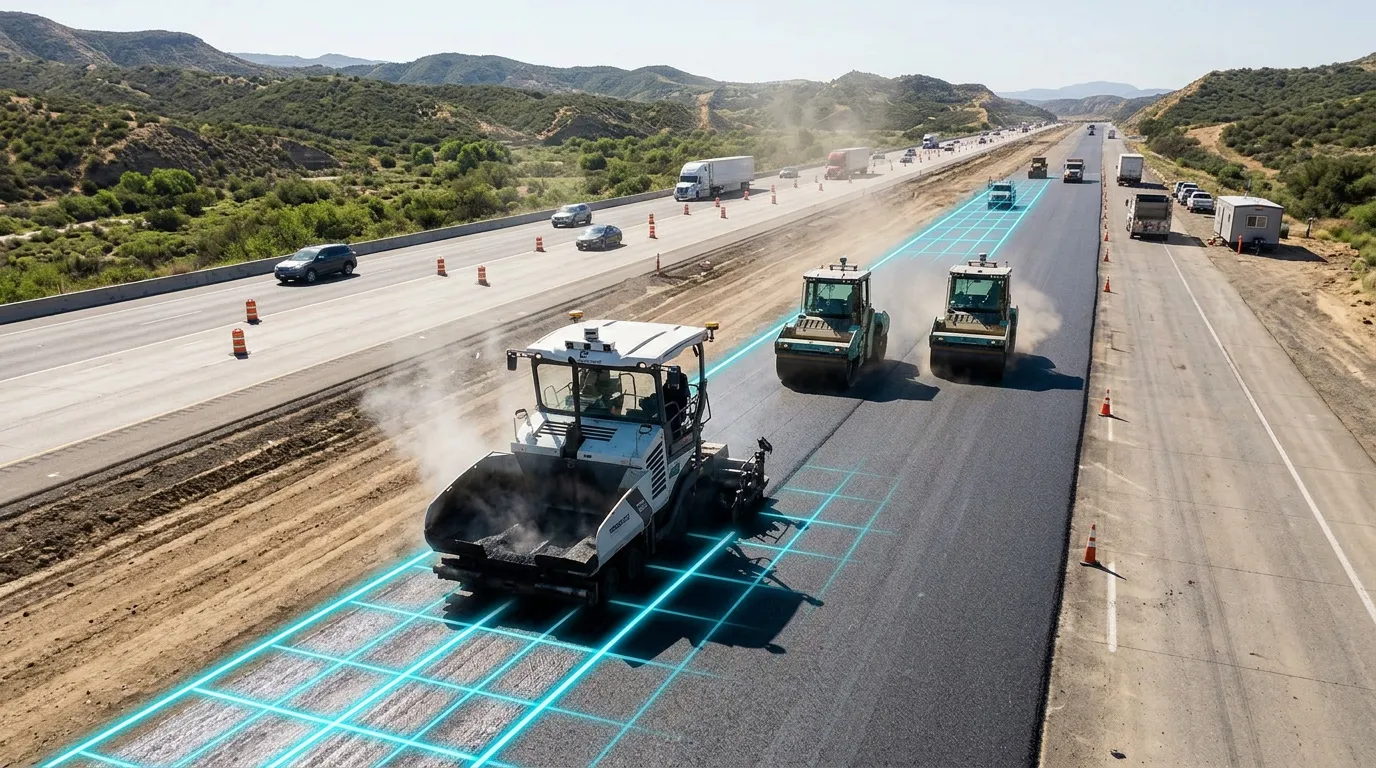
The project's potential extends well beyond Donbas. If trials at the Karansky Quarry prove successful, the next phase will expand deployment to additional applications. The technology is expected to support autonomous haul trucks, automated asphalt paving and compaction, and remote supervision of construction equipment operating in difficult environments. For Russia's road construction industry, this would represent the next step in an ongoing transition toward digital infrastructure.
ROSDORNII identified digital technologies as a key driver of safer, longer-lasting road infrastructure back in 2026. The Donbas project could provide the real-world validation needed to scale domestic solutions across the country.
Its export potential will ultimately depend on the results of the pilot projects. Countries facing large-scale infrastructure challenges while seeking to reduce dependence on Western automation technologies are likely to take an interest in Russian-developed systems.
The Road to Autonomy
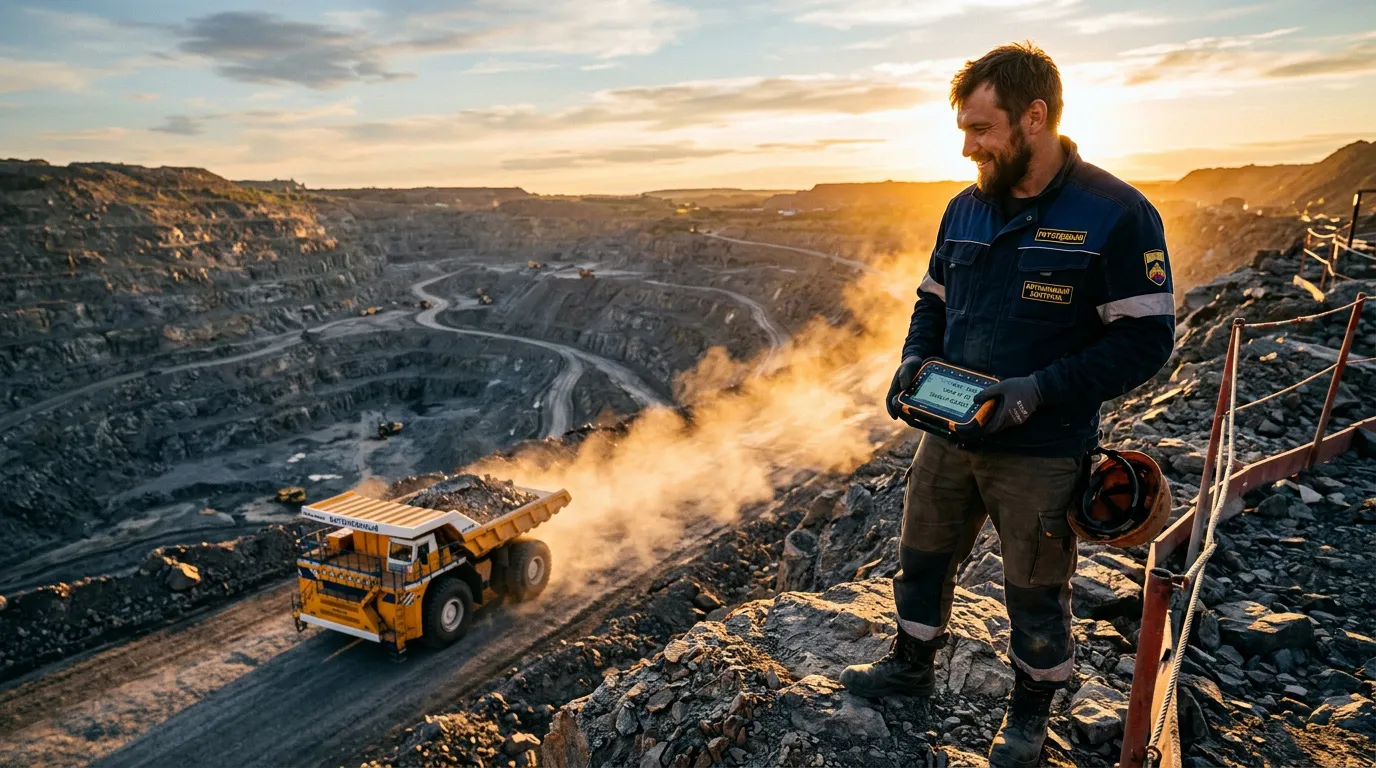
The drive to automate heavy machinery did not emerge overnight. Over the past five years, Russia has steadily built the technological foundation for this transition. In 2023, Avtodor-Engineering introduced a digital road design laboratory alongside a drone for monitoring construction sites, marking one of the first steps toward creating a digital ecosystem for the road construction industry.
In 2024, Kuzbass State Technical University (KuzSTU) and KAMAZ advanced the development of an autonomous 220-ton mining truck, refining self-driving and fleet management technologies.
The breakthrough came in 2025, when the High-Precision Systems holding company demonstrated automated asphalt paving for the first time. Its Desna 2100 paver and RV-7DD/RV-11DD rollers operated autonomously using the same Prometey and Filin technologies. In that context, the Donbas initiative is not an isolated experiment but the logical continuation of a development roadmap in which each stage laid the groundwork for the next.
Outcomes and Future Outlook
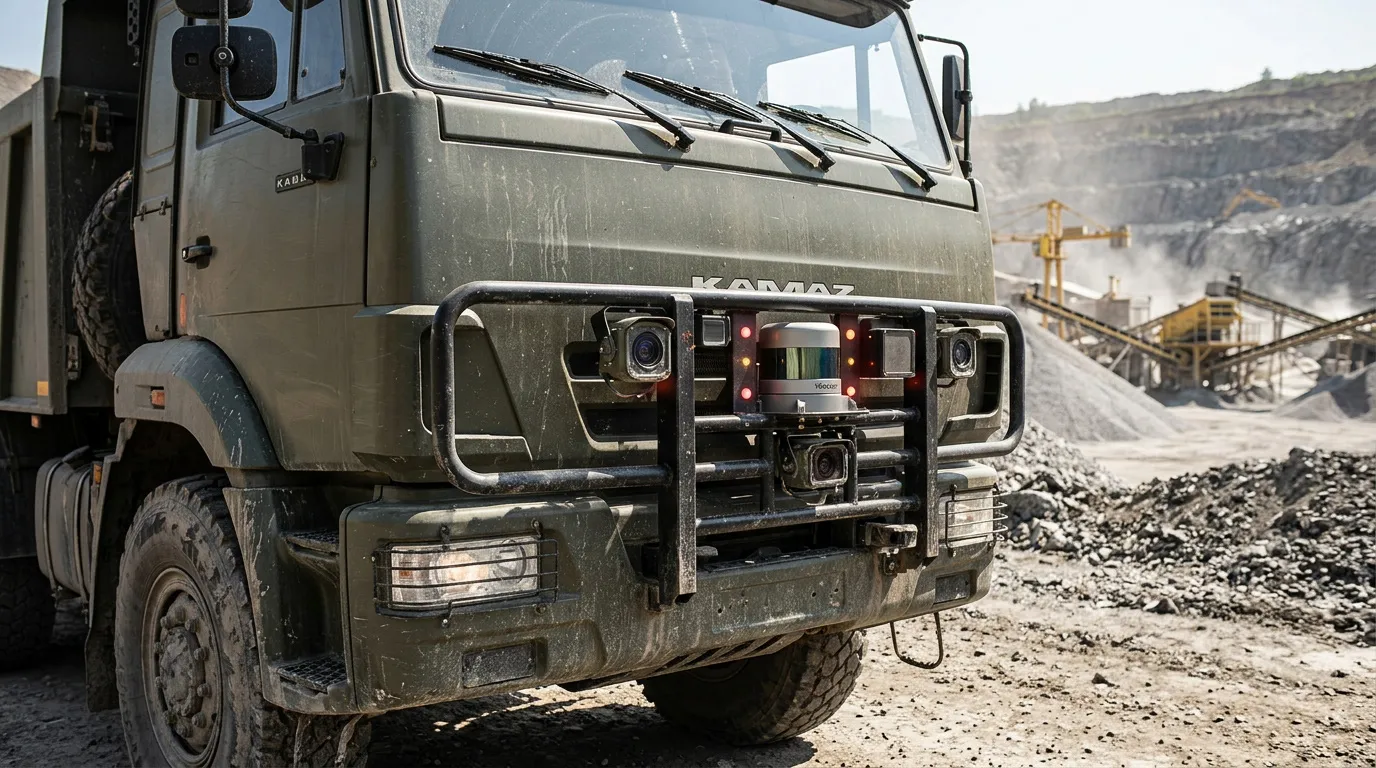
The Donbas initiative is more than a local road reconstruction project. It serves as a proving environment for assessing the maturity of Russian technologies under real, and often demanding, operating conditions. For the region itself, it could become a catalyst for technological modernization. The focus is not simply on rebuilding roads, but on rebuilding them more intelligently and more safely. For Russia's IT sector, the project also demonstrates how domestically developed industrial automation technologies can replace foreign alternatives in applications where precision and reliability are paramount.
In the near term, the technology will continue to be deployed in controlled environments, including quarries, closed industrial sites and selected construction zones. If testing proceeds successfully, deployment could gradually expand from robotic haul trucks to fully automated asphalt paving systems and digital fleet dispatch platforms. Over the longer term, experience gained in Donbas could help establish a new benchmark for road construction not only in Russia but internationally.