Russian AI Helps Make Nuclear Fuel Safer
Researchers in Russia have developed a machine-learning model that tackles one of nuclear energy’s most persistent problems – how to safely manage technetium, a long-lived radioactive byproduct found in spent nuclear fuel.
Inside the Research
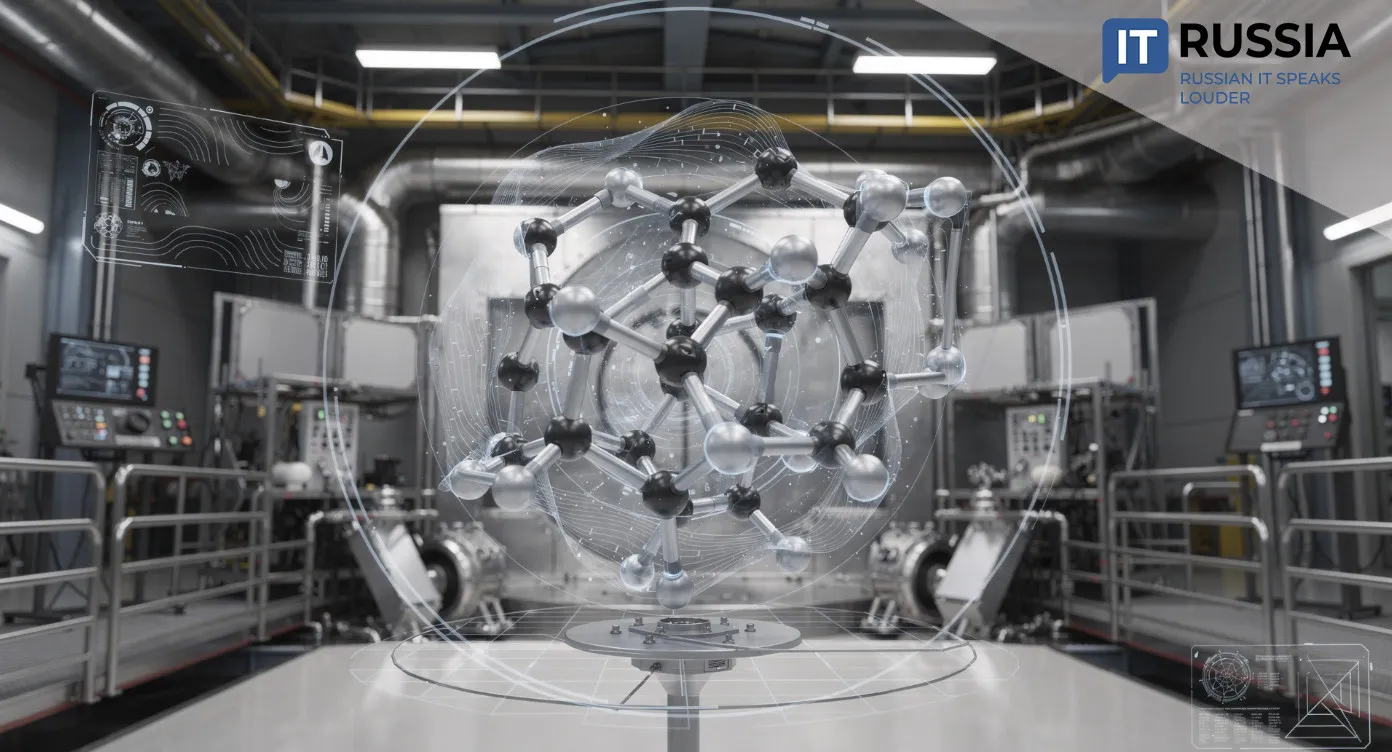
A research team from the Artificial Intelligence Research Institute (AIRI), Skolkovo Institute of Science and Technology, Sberbank, the D. I. Mendeleev University of Chemical Technology of Russia, and the Frumkin Institute of Physical Chemistry and Electrochemistry of the Russian Academy of Sciences has developed a machine-learning model designed to study technetium–carbon systems.
The model predicts the thermodynamic properties of atomic configurations formed by technetium and carbon. It helps identify which carbide structures are stable and under what conditions it is most efficient to transmute technetium-99 into the stable isotope ruthenium-100.
The work combines quantum chemistry methods with artificial intelligence algorithms. Researchers trained the model on large sets of calculated data and then used it to rapidly screen promising materials. This approach reduces the need for expensive laboratory experiments and allows scientists to focus their efforts on configurations that are most likely to work in practice.
Why the Problem Matters
Technetium-99 is one of the longest-lived fission products that accumulates in spent nuclear fuel. It decays very slowly and can migrate through the environment via groundwater, which makes it one of the most problematic radionuclides when it comes to long-term storage and disposal of radioactive waste. Addressing the technetium problem lowers environmental risks and simplifies the management of spent fuel.


One promising strategy is either to immobilize technetium within carbide matrices or to convert it into a more stable isotope through neutron irradiation. If technetium is transformed into ruthenium-100, the resulting metal can be reused in industry, including catalytic applications and microelectronics.

How the Model Works
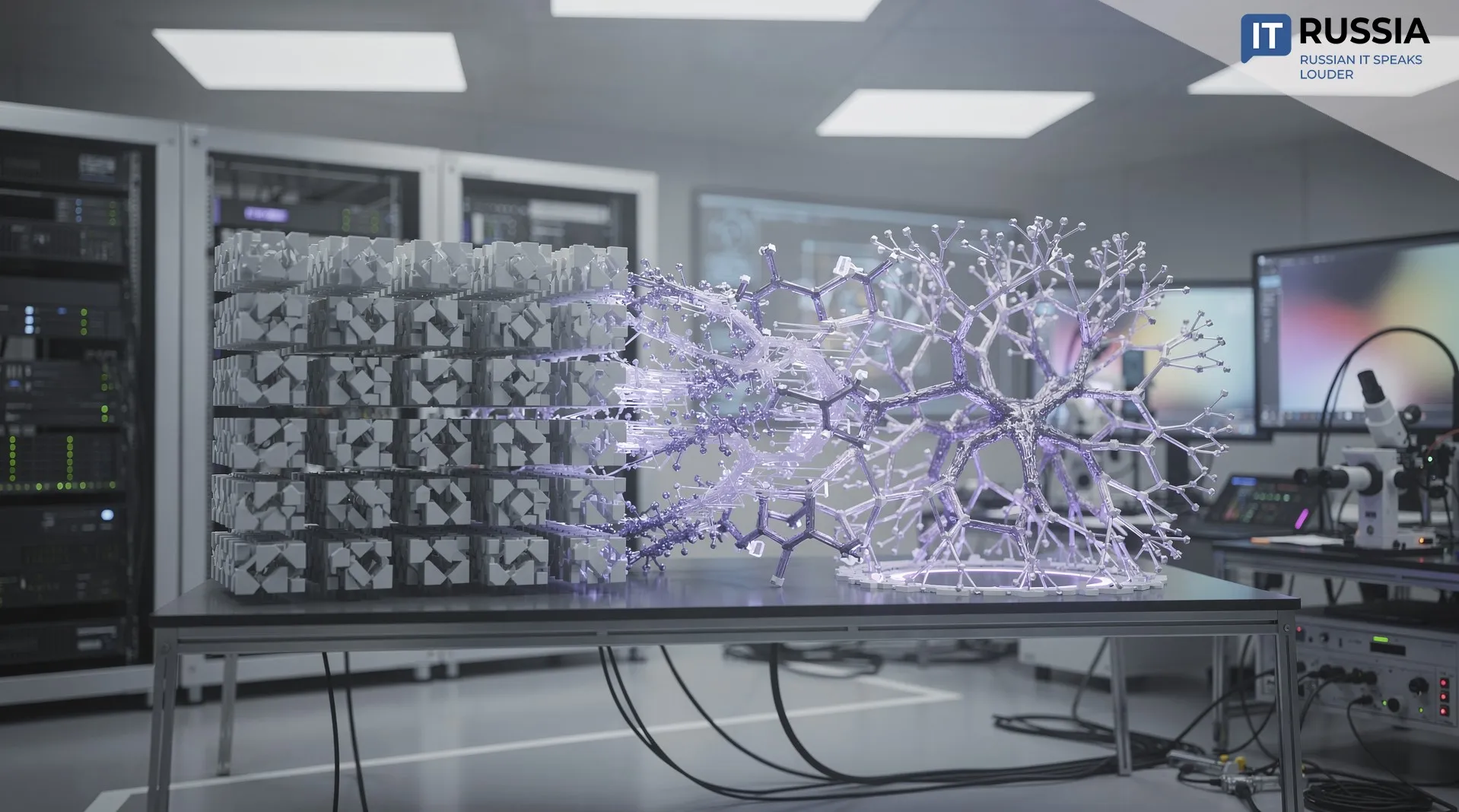
The model evaluates a large number of possible atomic arrangements of technetium and carbon, calculates their energies, and predicts which configurations will remain stable under specific conditions. Researchers are effectively dealing with an enormous set of structural “building blocks,” and the model quickly flags those that are unlikely to break down under heat or radiation. This saves months of computational work.
Technically, the approach combines quantum chemistry, which provides accurate calculations, with machine learning, which allows those results to be generalized across vast datasets. The model does not replace experiments, but it indicates where experiments are most needed. This kind of “first-stage filter” is especially valuable for systems with a huge number of possible configurations.
Practical Implications for Nuclear Waste Management
Using the model, researchers can select materials for subsequent neutron irradiation, calculate optimal temperatures and compositions, and predict how reliably technetium will be retained within a matrix. This accelerates the development of technologies that can either securely immobilize technetium or convert it into a form that is safer to store and easier to reuse.

For the nuclear industry, this offers a direct path toward reducing the volume of hazardous waste and improving fuel reprocessing schemes. Over time, such approaches could significantly reduce the environmental footprint of nuclear power.