Russian CubeSat Captures Solar Eclipse From Orbit
Geoscan’s InnoSat16 small satellite has captured a solar eclipse from space for the first time, demonstrating that the spacecraft could help build Avrora (Aurora), a distributed solar observatory.
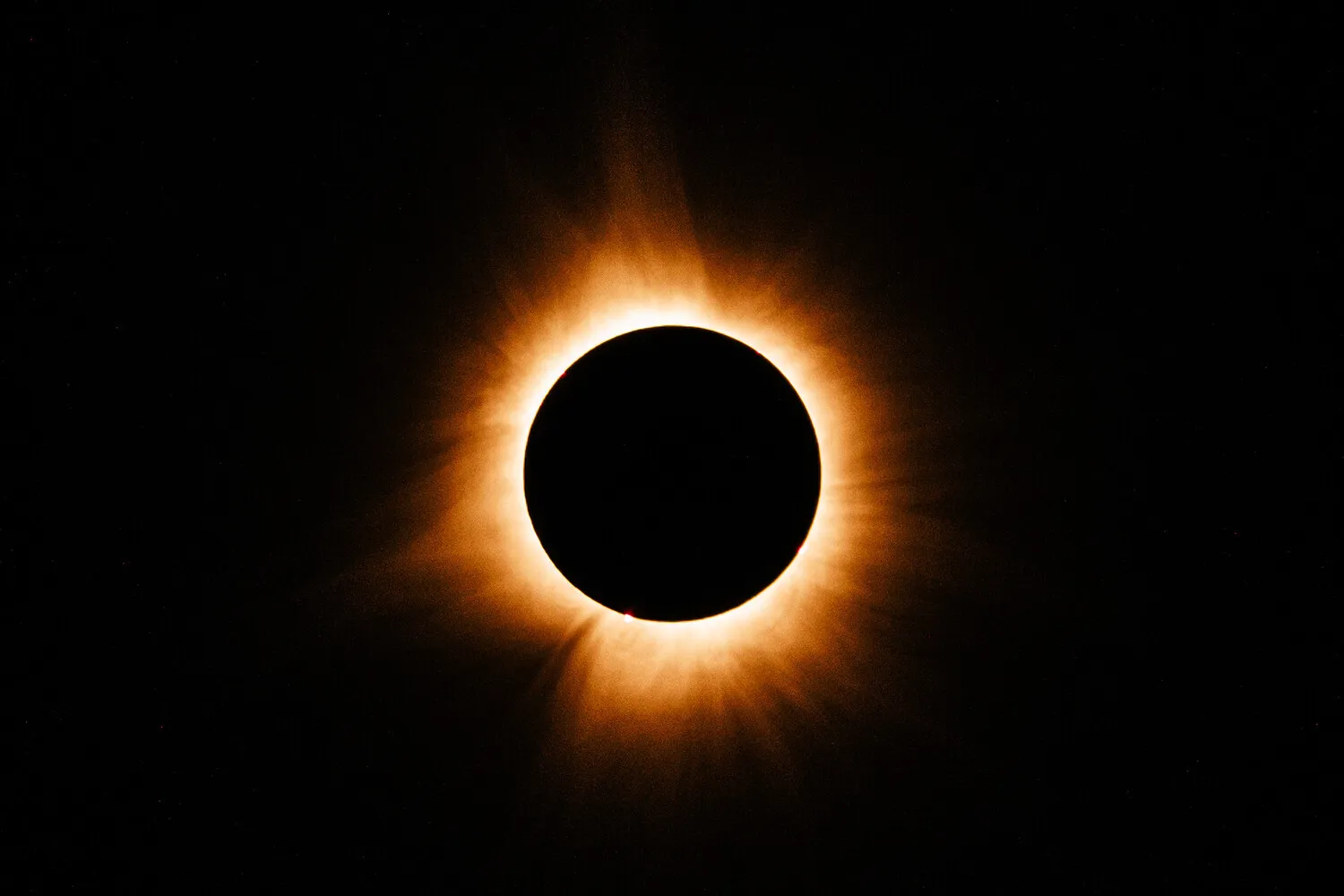
The eclipse was visible on Aug. 12 from 6:34 pm to 10:58 pm Moscow time, reaching a maximum magnitude of 1.019 at 8:46 pm and remaining at maximum for just over two minutes. The images were captured by Tsiklop (Cyclops), a technology camera developed in-house by Geoscan. Although the camera has no solar filters, the observation allowed the company to test how accurately the spacecraft could point at a target.
The company said orbital observations could open up new opportunities for studying the solar corona and solar activity because, unlike ground-based telescopes, a satellite is unaffected by the atmosphere or weather. InnoSat16 was launched from the Vostochny Cosmodrome on July 25, 2025, becoming Russia’s first 16U CubeSat in orbit. Geoscan and the Space Research Institute of the Russian Academy of Sciences unveiled the Avrora observatory project in April to monitor solar activity.