Venus Mission Antenna Passes Key Tests at MAI
Researchers at the Moscow Aviation Institute (MAI) have successfully tested a communications antenna designed for Russia's future Venera-D mission. The system is capable of transmitting scientific data across hundreds of millions of kilometers, providing one of the mission's critical communication links.
Russia is actively preparing for the Venera-D research mission, which is expected to deliver new scientific insights into Venus. One of the mission's most critical components is its communications system, which must reliably transmit information across vast interplanetary distances.
Antenna Performance Confirmed
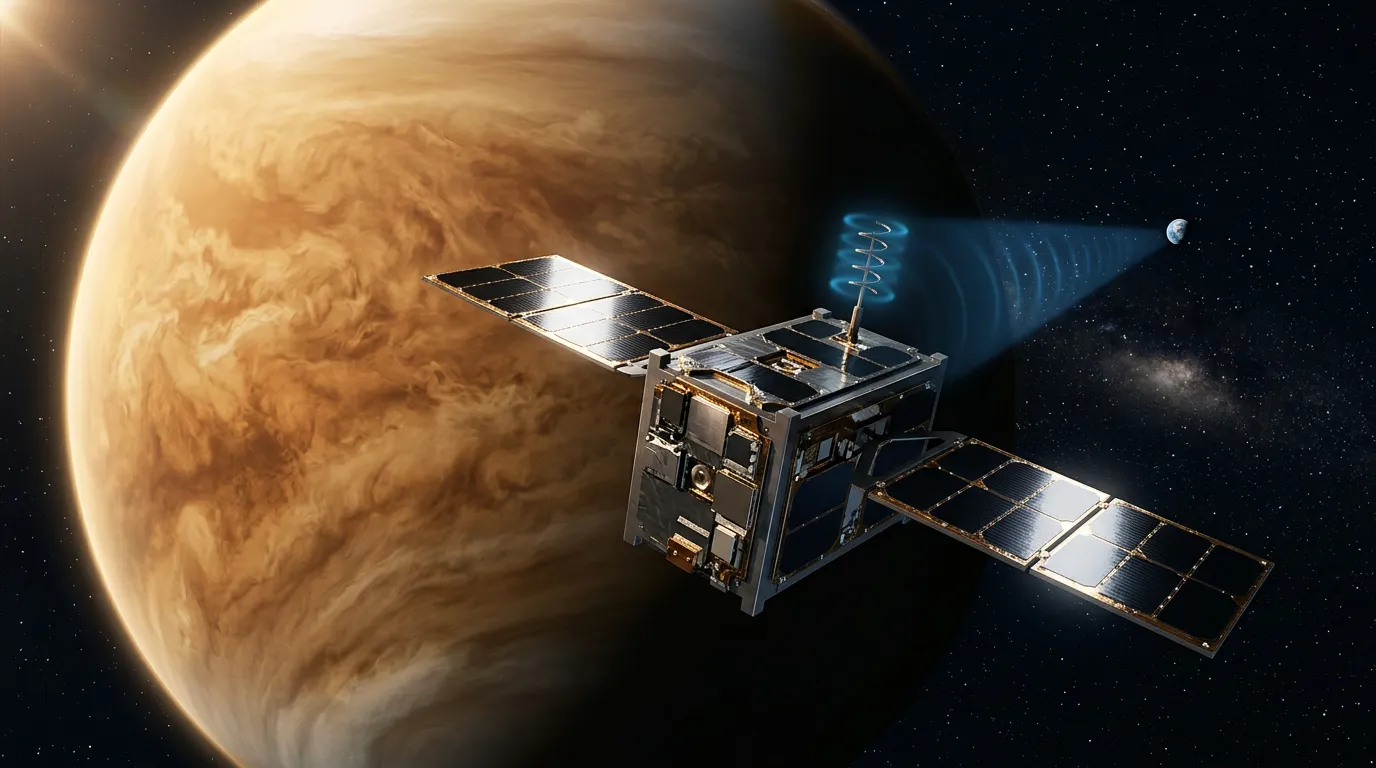
Engineers at the Moscow Aviation Institute have completed testing of an antenna that will be installed on a small relay satellite. Its role will be to receive scientific data collected by other spacecraft participating in the mission and transmit that information back toward Earth.
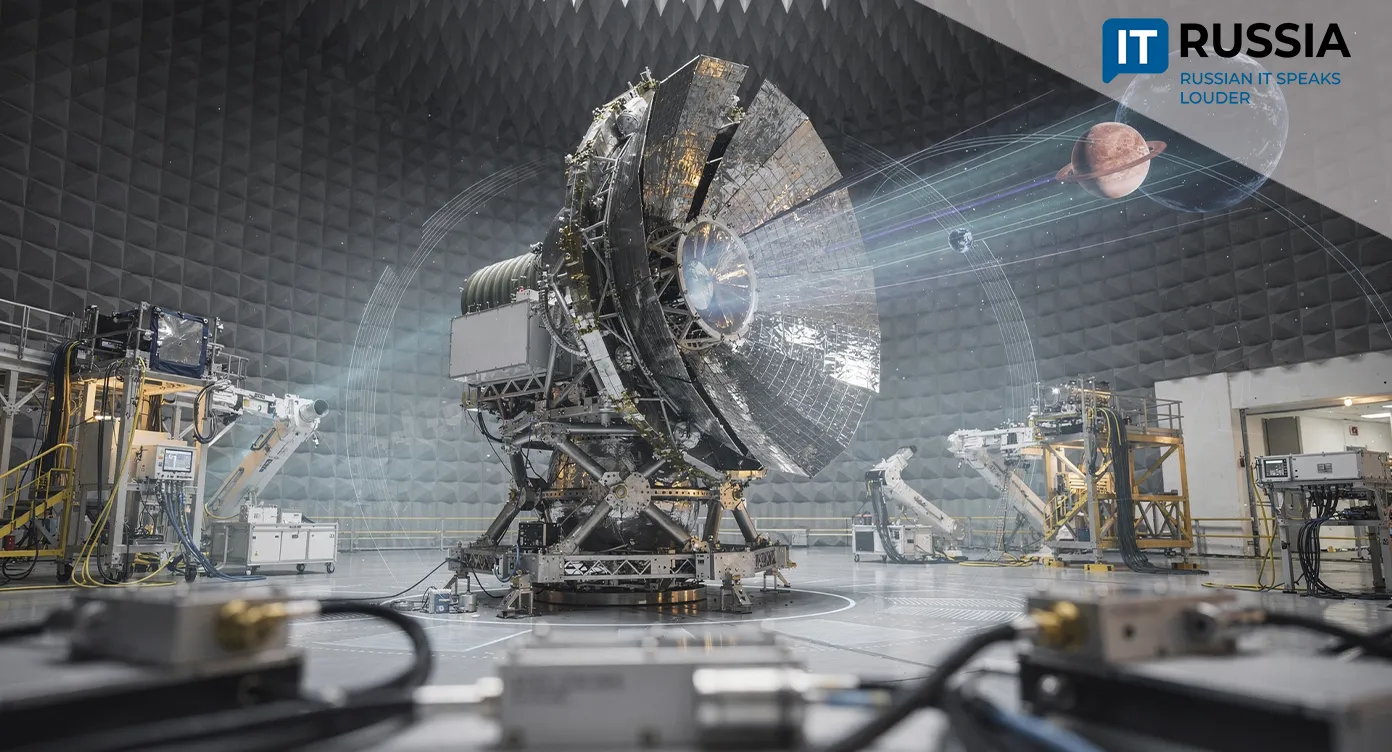
The antenna was evaluated inside a specialized anechoic chamber designed to eliminate radio-frequency reflections from walls, floors, and ceilings while shielding the test environment from external signals. The trials confirmed that the antenna met all performance specifications established during the design phase.
"During the mission, the CubeSat will relay photographs, telemetry, and other scientific data from Russian balloons and planetary surface vehicles operating on Venus back to Earth," the development team explained. "The specially designed reflector-array antenna will enable rapid and uninterrupted data transmission across hundreds of millions of kilometers of space. The system consists of a transmitter and a reflector that captures dispersed radio signals and redirects them into a tightly focused beam before transmitting them accurately toward Earth."
Potential Applications Beyond Russia
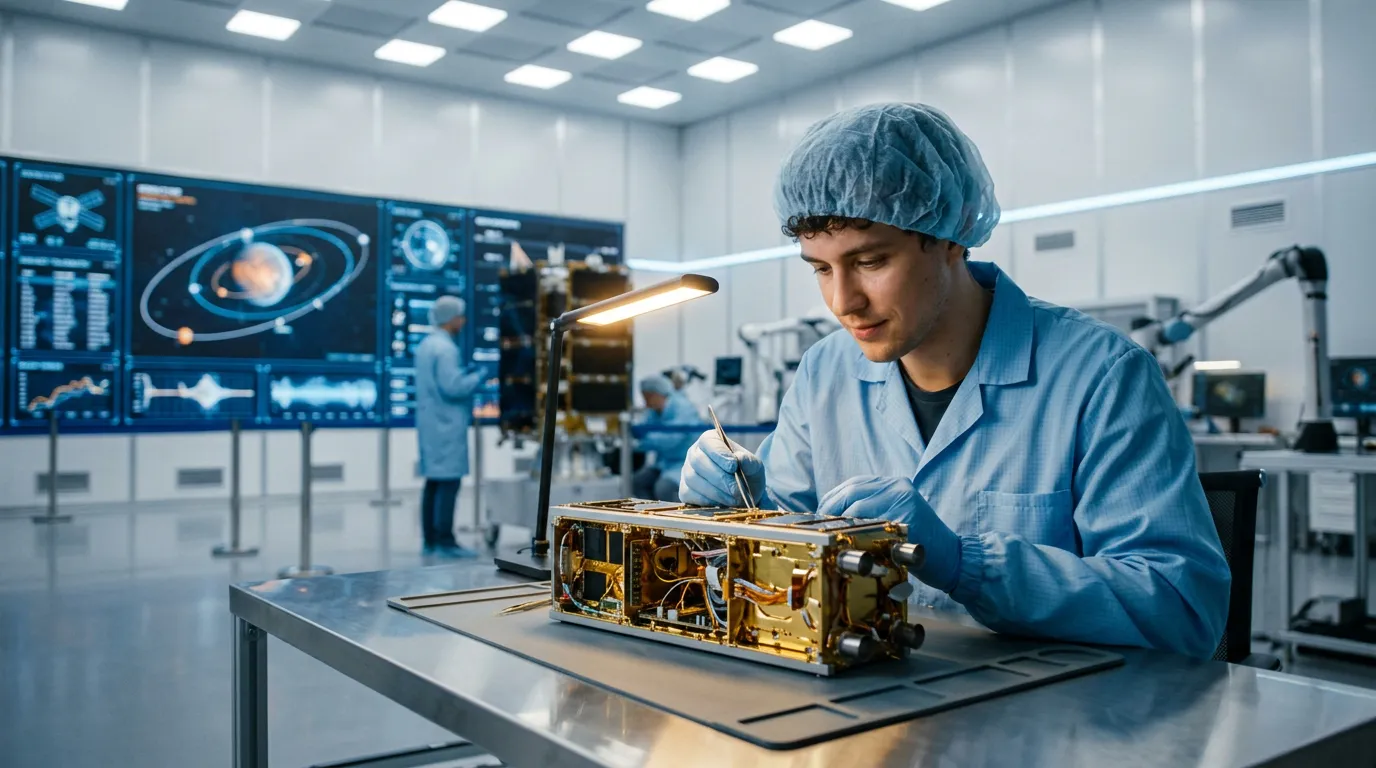
An important aspect of the project is the involvement of early-career engineers. By participating in the design and development of highly sophisticated space hardware, they gain practical experience that will support future aerospace programs.
The relay satellite and its antenna are also expected to serve purposes beyond the Venera-D mission itself. Other countries conducting Venus exploration missions could potentially use the spacecraft as a communications relay. In addition, the antenna is suitable for remote sensing of Venus, enabling the collection of up-to-date information about the planet's surface, an important capability given Venus's high level of geological activity.
What Is Venera-D Looking For?
Venera-D is a future automated interplanetary spacecraft designed to investigate Venus. It represents an advanced successor to the Soviet-era Venera series and is being developed by Lavochkin NPO in Khimki, with the Space Research Institute of the Russian Academy of Sciences serving as the lead scientific organization. The mission's primary objectives include studying the mechanisms behind Venus's greenhouse effect, determining whether the planet still has active volcanoes, and searching for possible signs of primitive life within the cloud layer approximately 50 kilometers above the surface, where temperature and atmospheric pressure approach conditions found on Earth.
Part of a National Space Initiative
In 2025, development of the Venera-D spacecraft was incorporated into the national Kosmos (Space) project, which outlines Russia's space development strategy through 2036. The mission launch is also scheduled for that year.
Other countries are also moving forward with their own Venus exploration programs. The United States, for example, is preparing two missions - DAVINCI+ and VERITAS. DAVINCI+ will conduct a detailed investigation of Venus's atmosphere to better understand how it formed and evolved and whether the planet once hosted an ocean. VERITAS will focus on mapping the planet's surface and reconstructing its geological history. Using radar observations, the spacecraft will generate three-dimensional maps while studying tectonic structures and volcanic activity. Both missions are currently planned for launch between 2028 and 2030.

Against that backdrop, successful implementation of Russia's own Venus program remains strategically important. The successful testing of the mission's communications hardware demonstrates that technical preparations are progressing as planned, although the mission's ultimate success will depend on multiple factors, including stable long-term funding.