Universal Robot Built for Vineyards and City Streets
Researchers in Crimea have developed an autonomous robotic platform designed to spray vineyards and support municipal maintenance, offering a practical response to labor shortages in agriculture and public services.
A shortage of workers willing to perform physically demanding jobs has become one of the biggest obstacles to the continued growth of Russian agriculture. That is why developing automated systems and field robots capable of reducing dependence on manual labor has become a major priority for Russia's digital industry.
Robotic Platform From KIPU
Engineers at Fevzi Yakubov Crimean Engineering and Pedagogical University (KIPU) have developed Zubrus, a universal robotic platform that can operate in both agriculture and urban environments. The battery-powered robot produces no direct emissions during operation, making it suitable for environmentally sensitive applications.
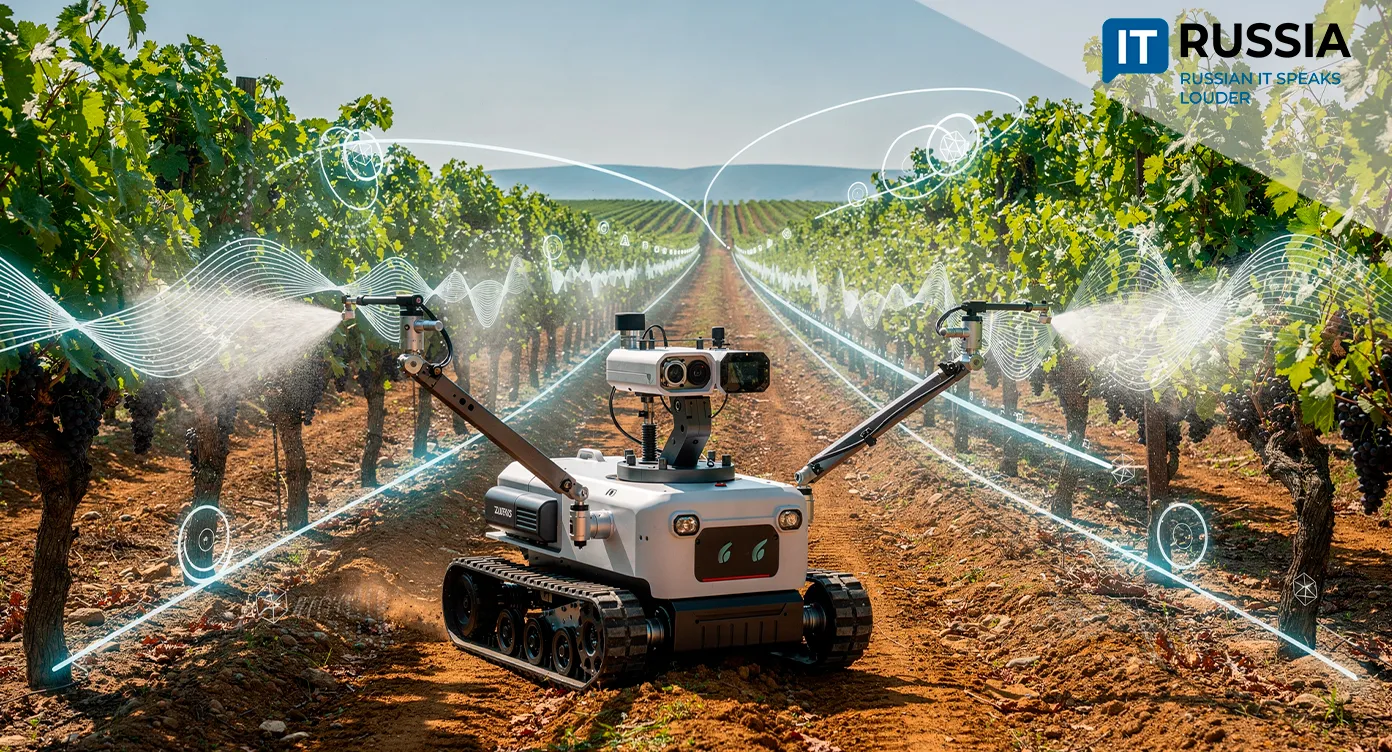
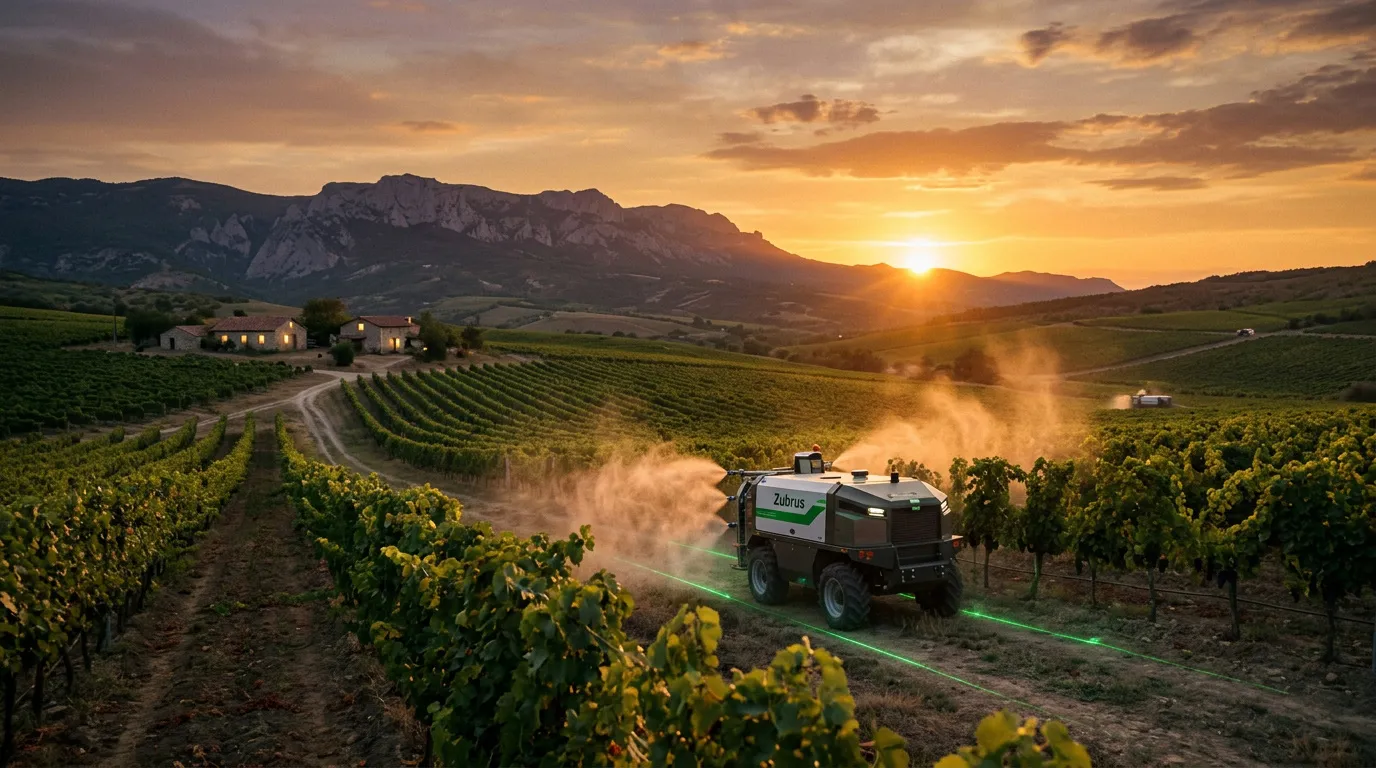
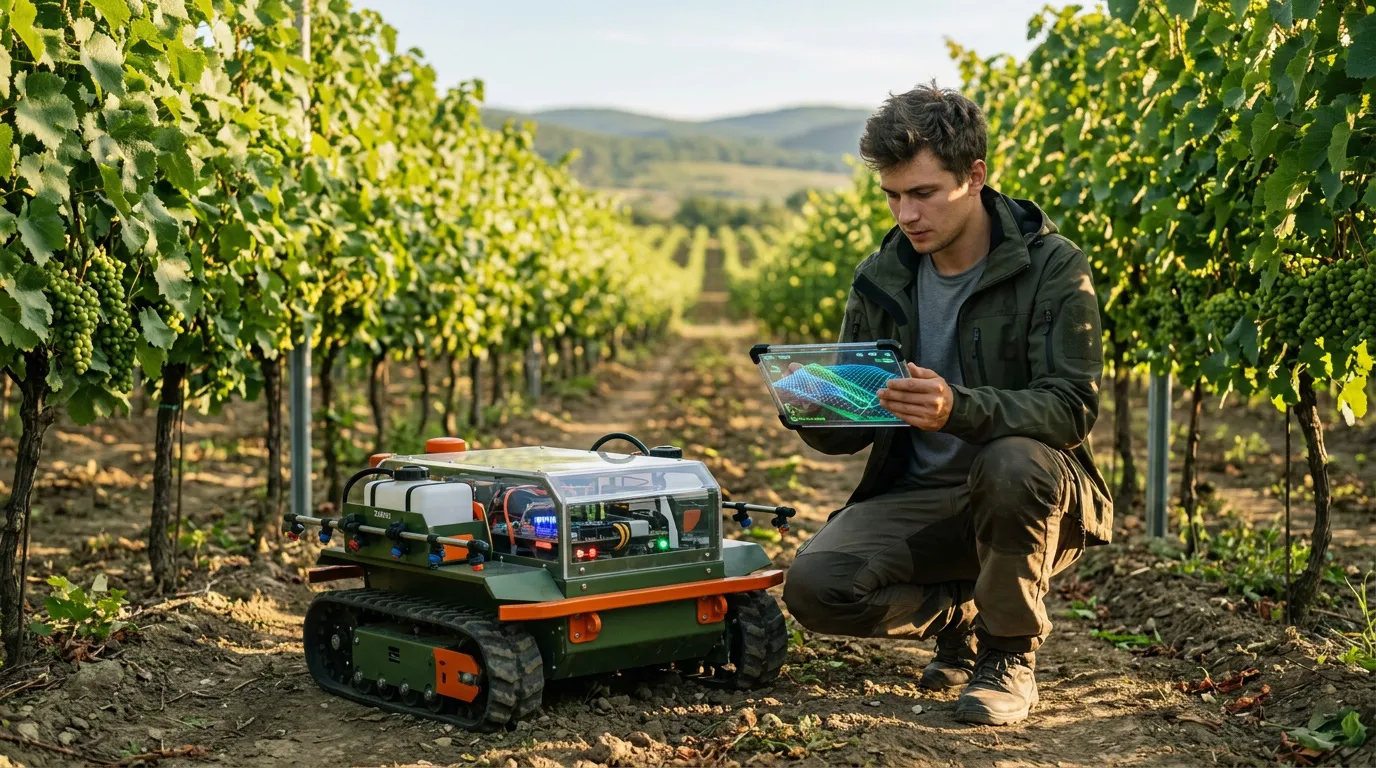
The platform's primary role is spraying vineyards. Measuring about one meter high, 1.5 meters wide, and two meters long, the compact robot is designed so that several autonomous spraying units can operate simultaneously between vineyard rows. The platform is fully autonomous and can continue working even without navigation system signals.
Before starting work, operators upload a digital field map into the Zubrus control system and assign a work schedule. From that point, the platform operates autonomously under AI control. After completing one vineyard row, the robot automatically turns and proceeds to the next row according to its assigned task.
According to Ervin Umerov, Head of KIPU's Research and Production Center for Engineering Technologies, the platform attracted customers while it was still under development. In Crimea alone, potential buyers have already expressed interest in about 80 units. The demand reflects a shortage of qualified tractor operators needed for vineyard spraying, combined with the narrow application window, as vineyards typically need to be treated within a single week. Growers are actively looking for alternatives to manual labor.
From Prototype to Production
The prototype of the Zubrus universal modular robotic platform was unveiled on April 29, 2026, during a meeting of the Scientific and Technical Council of the Ministry of Industry of Crimea.
The project has already entered the commercialization phase. KIPU has signed agreements with Crimean industrial manufacturers that will produce the robot at scale. One company will manufacture the electronic control boards, while another will build the electric vehicles. KIPU will remain responsible for platform development and testing. All engineering work is being carried out through the university's Research and Production Center for Engineering Technologies. Commercial production is scheduled to begin by the end of 2027.
Orders for the platform arrived before manufacturing even began. Demand is expected to be especially strong in southern Russia, where vineyard cultivation continues to expand rapidly. Large vineyards require fast treatment over extensive acreage, making labor-saving automation increasingly valuable.
Another advantage of Zubrus is its versatility. Beyond vineyard operations, it can mow grass and transport equipment, making it suitable for municipal maintenance services across virtually every region of Russia.
Robots for Precision Viticulture
Russia's agricultural robotics sector is expanding rapidly. By the end of 2024, the country had 33 service companies providing robot maintenance for the agricultural sector. Domestic development of vineyard robots is also accelerating.
At Don State Technical University (DSTU), researchers working under the Prioritet-2030 (Priority 2030) program have developed a modular vineyard robot equipped to prune vines, remove dead branches, spray crops, and cultivate soil using interchangeable tools mounted on a robotic platform. DSTU has also created a grape-harvesting robot named Dionis (Dionysus), designed to replace two workers during a single shift.
The new project represents an effort to build a locally developed autonomous platform tailored to the specific needs of southern Russia. At the same time, its deployment is expected to drive further advances in automation systems and artificial intelligence.
The adoption of robotics in Russian viticulture appears increasingly inevitable. Without autonomous machines, building precision agriculture platforms for vineyards will be difficult at a time when grape production is expanding rapidly. Between 2015 and 2025, vineyard acreage across five key wine-growing regions – Crimea, Krasnodar Krai, Stavropol Krai, Rostov Region, and Dagestan – increased by 25%, from 88,900 hectares to 110,200 hectares. More than 770 new vineyards were established during that period, creating a growing customer base for domestically developed agricultural robots.