AI Helps Protect the Health of Reindeer
Researchers at the St. Petersburg Federal Research Center of the Russian Academy of Sciences have developed a neural network that remotely assesses the health of reindeer.

Russia has the world's largest reindeer population. Today, however, the reindeer husbandry sector faces a range of challenges. According to Russia's Ministry of Science and Higher Education, these include a shortage of qualified personnel on reindeer farms and limited data on the animals' hereditary traits. One way to address these issues is through automation technologies that can increase workforce productivity while improving both the quantity and quality of data collected on reindeer.
AI for Reindeer
The health of reindeer can now be evaluated using external physical characteristics alone. The assessment is performed by an artificial intelligence system based on computer vision. The platform was developed by researchers from the Sankt-Peterburgskiy Institut Informatiki i Avtomatizatsii (St. Petersburg Institute for Informatics and Automation, SPIIRAS) and the Severo-Zapadny Tsentr Mezhdistsiplinarnykh Problem Prodovolstvennogo Obespecheniya (Northwestern Center for Interdisciplinary Food Supply Research, SZCPPO). Both institutions are part of the St. Petersburg Federal Research Center of the Russian Academy of Sciences.
The researchers developed an automated system that evaluates the phenotypic, or external, characteristics of reindeer by analyzing video recordings. The project is built on the YOLOv11 neural network architecture and uses the AutoGenNet software platform to automate and optimize data analysis. Computer vision algorithms then extract phenotypic information directly from video footage.
The system identifies seven key biometric parameters: height at the withers, chest girth, oblique body length, elbow height, chest depth, chest width and hip width measured across the tuber coxae. Together, these measurements provide an objective assessment of an animal's health status. The training and validation dataset consisted of 60 photographs of reindeer collected from an experimental herd in the Yamal region. Experimental results showed that when applied to previously unseen animals, the system identified all seven biometric parameters with an average measurement error of approximately 2 centimeters, providing a high degree of accuracy in the overall health assessment.
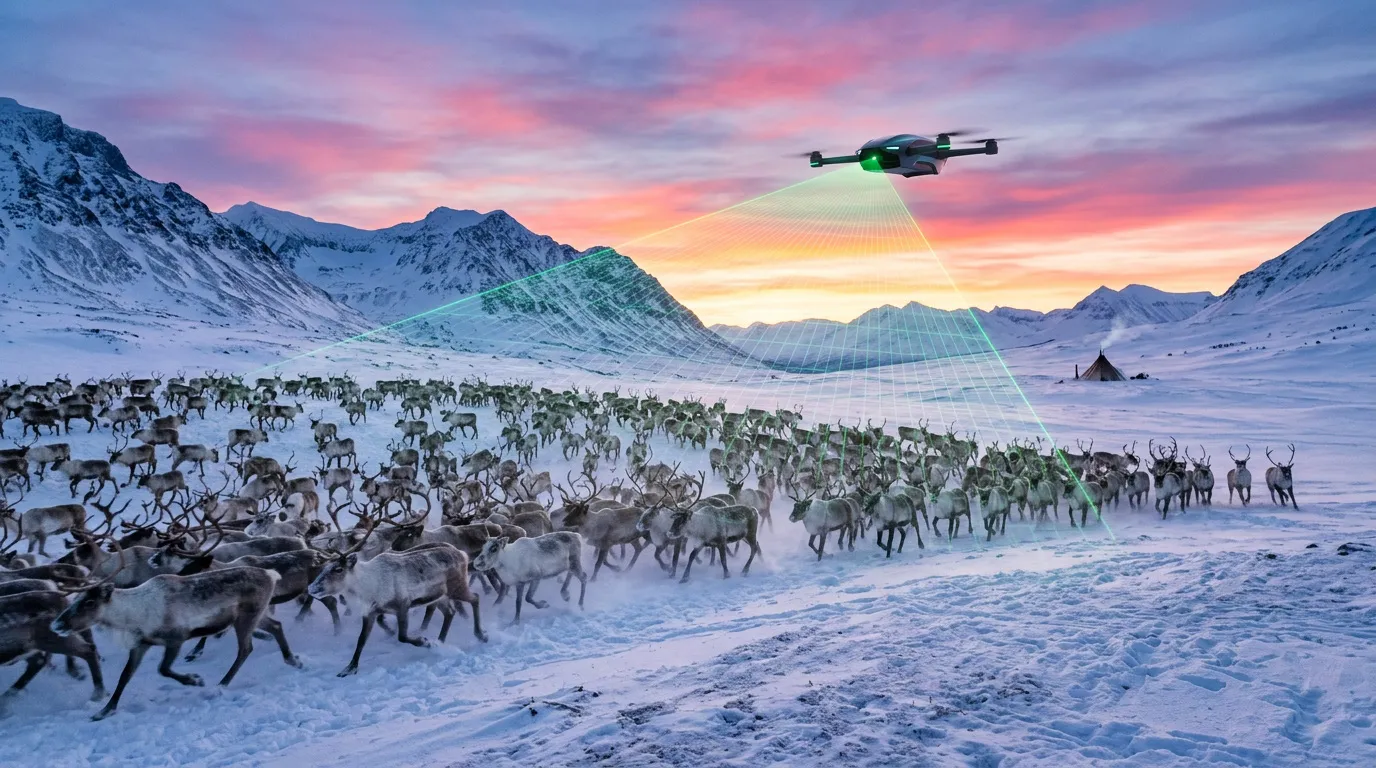
Remote Health Assessment
Researchers can now evaluate the condition of individual reindeer remotely, providing information that can support measures to maintain and improve herd health.
"In addition, our system enables completely contact-free monitoring of reindeer, eliminating stress factors that animals experience when wearable sensors are used, for example," said Vladislav Sobolevsky, Senior Researcher at the Laboratory of Information Technologies for Systems Analysis and Modeling at SPIIRAS, St. Petersburg Federal Research Center of the Russian Academy of Sciences.
According to experts, only a combination of complementary digital technologies can support the continued development of this highly specialized and challenging agricultural sector.
"Monitoring large reindeer herds remains a complex task because even domesticated reindeer retain many characteristics of semi-wild animals. As a result, every technological approach requires specialized expertise and has its own practical considerations. Modern tools such as unmanned aerial vehicles, satellite collars and electronic identification chips are making a real difference, while artificial intelligence analyzes the growing volumes of data they generate. The adoption of these technologies will undoubtedly provide substantial support for the management of reindeer herds," said Kasim Layshev, Head of the Department of Animal Husbandry and Sustainable Natural Resource Management at SZCPPO, St. Petersburg Federal Research Center of the Russian Academy of Sciences.
In effect, this new AI system, developed specifically for Arctic climatic and operational conditions, opens a new market for Russia's IT sector by extending domestically developed digital technologies into Arctic reindeer husbandry.
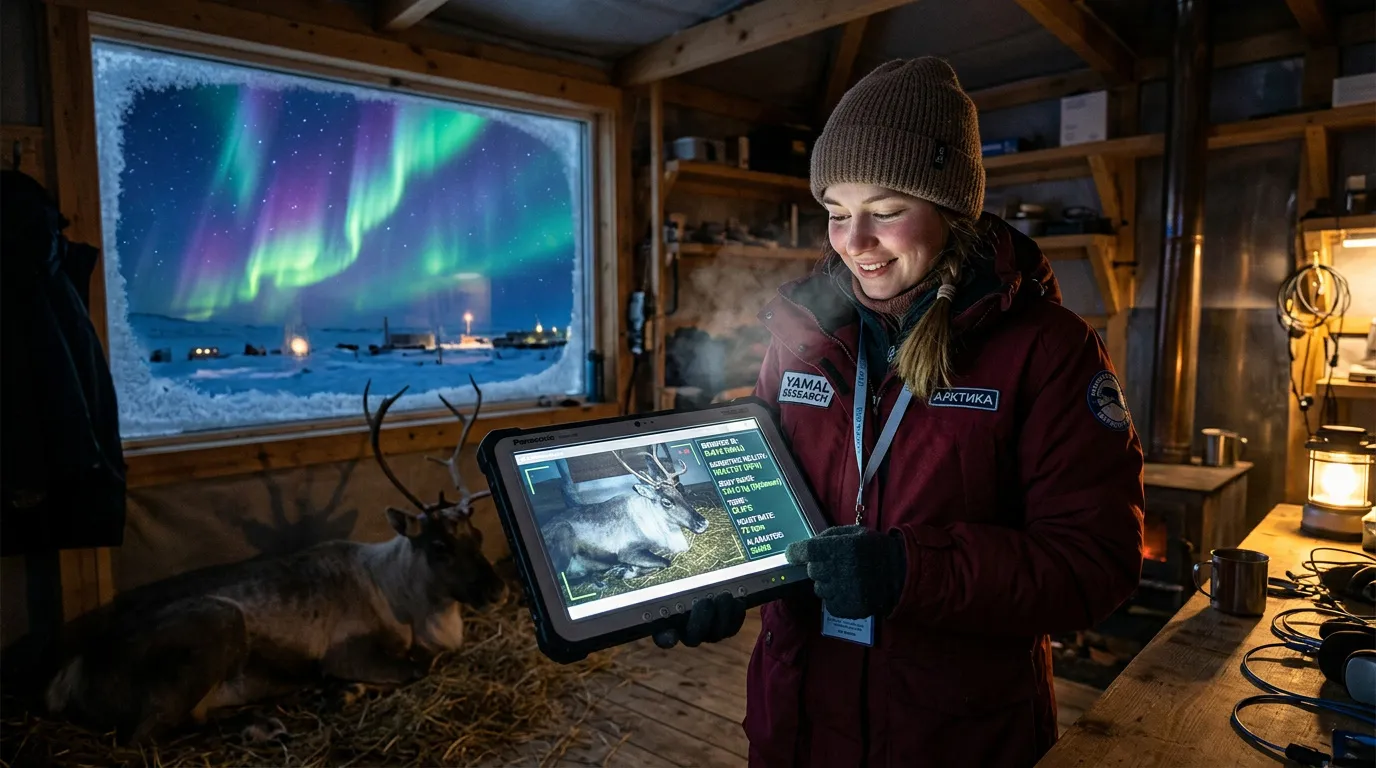
New Markets for Russian IT Technologies
The AI platform developed by researchers in St. Petersburg supports the preservation and development of traditional economic activities practiced by Russia's Indigenous peoples of the North. Earlier detection of disease can reduce livestock losses while improving the efficiency of reindeer farming operations. That is particularly important in Arctic regions, where reindeer husbandry remains central to the traditional way of life of Indigenous communities.
In the future, the system could be integrated with other digital platforms supporting reindeer husbandry. In the Yamalo-Nenets Autonomous Okrug, the region with Russia's largest domesticated reindeer population, authorities have launched the Bezopasnaya Tundra (Safe Tundra) project, which includes large-scale satellite monitoring of reindeer migration routes. The initiative will cover more than 100,000 animals, approximately one-sixth of all domesticated reindeer in the region.
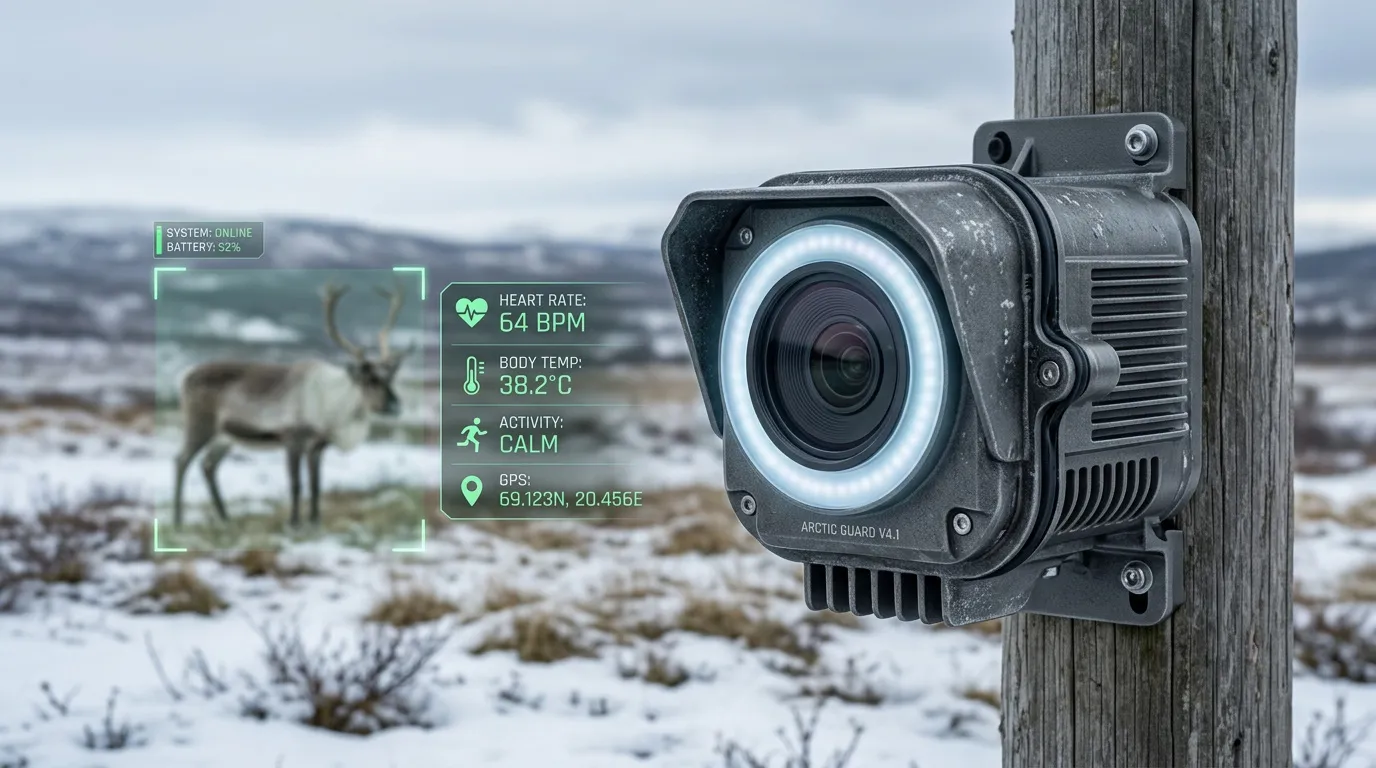
The platform could eventually be expanded to include digital pasture management, identification of individual animals, automatic generation of digital health records and continuous analysis of changes in body weight and physical condition. Over the medium term, the technology could become the foundation of a nationwide digital platform for managing Russia's reindeer farming industry.