Components for UAVs Move Into Serial Production
Moscow Polytechnic University has developed a technology for serial production of engine and transmission components for helicopter-type UAVs, accelerating the development of Russia’s unmanned aviation systems industry.
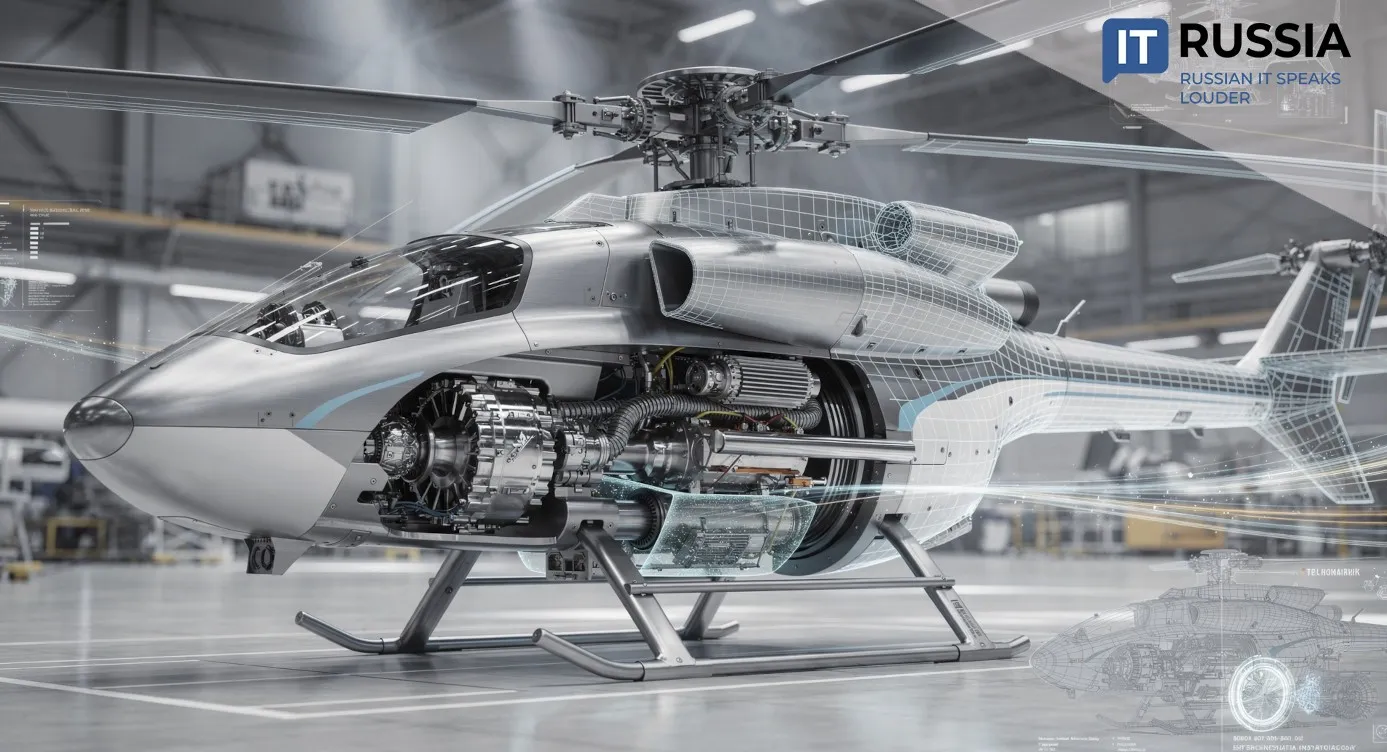
Moscow Polytechnic University has prepared six full sets of design documentation tailored for serial production of UAV components, along with control programs for CNC turning-milling and five-axis milling machines. This shifts the project from laboratory prototyping into an industrial manufacturing phase and addresses one of the market’s core constraints – the ability to produce critical UAV components consistently, repeatably, and at viable cost. Today, these systems extend beyond aviation, forming part of a broader digital industrial ecosystem that integrates CAD/CAM, CNC machining, digital twins, industrial software, and control systems.
Higher levels of localization and serial production in unmanned aviation systems bring the industry closer to large-scale deployment of UAVs for delivery, infrastructure inspection, agriculture, geodesy, and emergency response applications.
From Domestic Market to Global Reach
The Moscow Polytechnic development aligns with state policy aimed at establishing a full-cycle UAV production ecosystem – from R&D and testing to a network of research and manufacturing centers and the launch of serial component production. The national program targets a 70% share of Russian-made UAVs in the domestic market by 2030. If the university and its industrial partners scale the solution to stable small- or medium-batch production, it is likely to see demand among manufacturers of civil UAVs for asset inspection, territory monitoring, and cargo logistics on hard-to-reach routes.
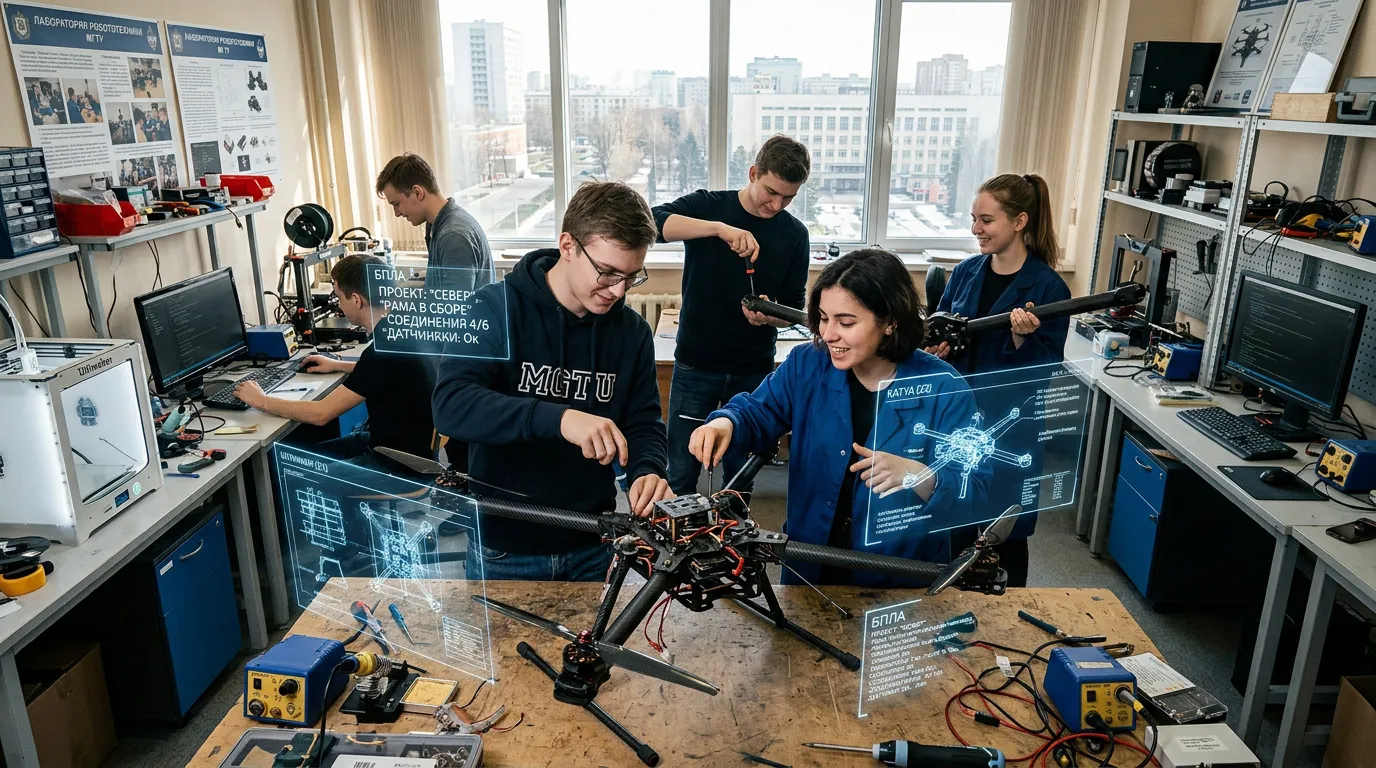
Export potential is also emerging, as the market increasingly favors exporting engineering capabilities rather than finished platforms – including manufacturing technologies, production solutions, and localized components. Global experience shows that moving from engineering development to stable serial production can position UAV manufacturers as significant international players – as demonstrated by Turkey’s Baykar, which has signed export agreements with 36 countries.
Industry Retrospective
UAV manufacturing in Russia is progressing steadily. In 2024, SibNIA announced a heavy UAV project, “Partizan,” equipped with a domestically produced engine and plans to move toward serial production of a fully localized platform. In February 2026, serial production began for the ED-9060 engine designed for heavy UAVs – marking a transition from design to industrial-scale manufacturing of a critical component required for industry scaling.
The national UAV program has formally defined the objective of serial production of drones and components, alongside the creation of a network of regional research and production centers. While UAV-related news previously focused on prototypes, the state is now building a comprehensive industrial framework that includes testing, standardization, support for industry participants, and grants for scaling production.
Maturing Russian UAV Market
The Moscow Polytechnic case illustrates the growing maturity of Russia’s UAV market, where the focus is shifting from isolated prototypes to scalable manufacturing technologies for both platforms and components. This shift represents a more meaningful indicator of industry maturity than the introduction of new aircraft designs.
In the short term, such projects will see strong domestic demand across logistics, monitoring, industrial inspection, and operations in remote regions. Over the medium term, deeper collaboration is expected among universities, research and production centers, industrial manufacturers, and propulsion system developers. The most likely trajectory is the emergence of specialized platforms and components tailored to specific use cases, rather than universal drone designs.
The Moscow Polytechnic development represents not just a technological milestone for a single institution, but part of a broader systemic effort to establish a domestic UAV production ecosystem in Russia.