High-Tech Livestock Farming Takes Hold in Udmurtia
The agricultural production cooperative Progress in Udmurtia’s Alnashsky District has launched two robotic dairy farms, each designed for 140 cows, along with a calf barn for 300 head, marking another step in the digital transformation of Russian livestock farming.
Digital Analysis and Automated Animal Care
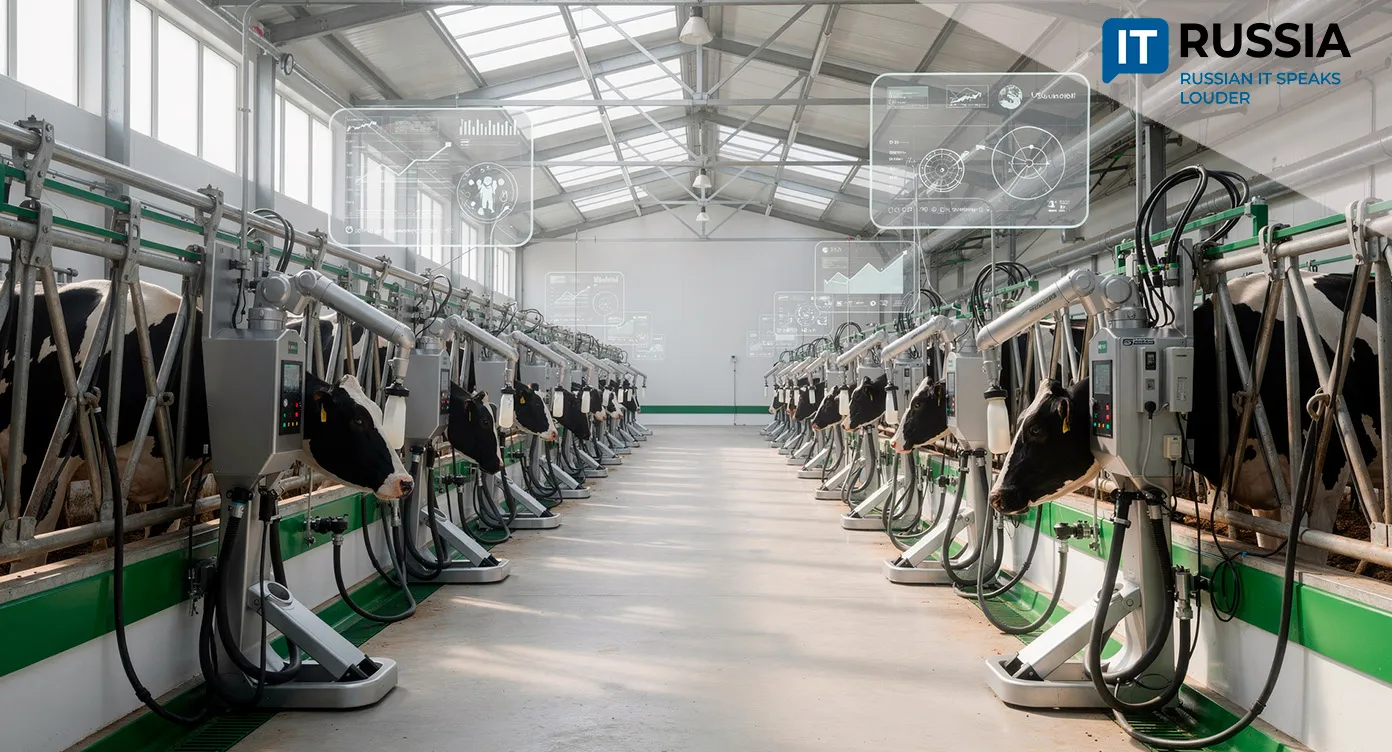
Livestock farming in the Udmurt Republic continues to move toward full-scale digitalization. On January 29, 2026, the agricultural production cooperative SPK Progress officially opened a new production complex in the Alnashsky District. The facility includes two farms with capacity for 140 cows each and a calf barn for 300 animals. Their defining feature is end-to-end automation. Animal care and milking are handled by four robotic milking units that operate around the clock. They do not tire, minimize human error, and can function continuously.
Farm staff now focus only on overall herd management and supervision of the milking process. No physical human involvement is required in routine operations. The workflow is tightly scripted. Cows are guided into a dedicated section with specially formulated feed, where the robot reads sensor data, assesses the animal’s condition and health, and determines the milking schedule. Rollers then prepare the udder, while laser targeting systems position the milking cups. After milking, the milk is automatically analyzed. Only milk that meets quality standards and comes from healthy animals is transferred into the shared storage tank.
As a result, a farm designed for 140 cows operates with just three workers per shift. The economic effect is clear. On a robotic farm, a cow produces more than 30 kilograms of milk per day, compared with the farm’s average of 26.6 kilograms.
Scaling Automated Production in Udmurtia
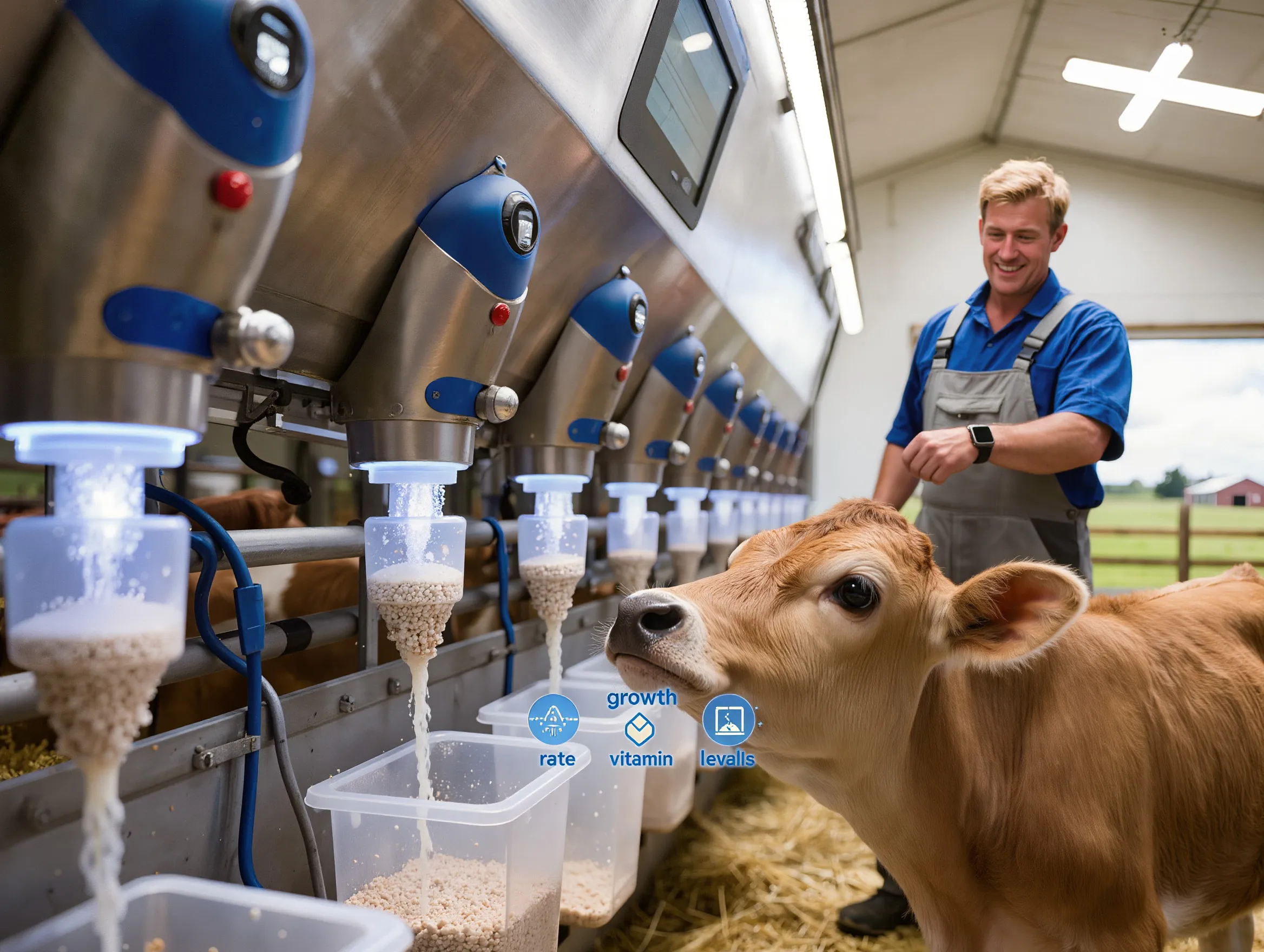
SPK Progress has been investing consistently in production modernization for years. The first robotic cowshed for 140 head was built in 2021. In 2024, a second robotic complex with the same capacity began operating, along with a 100-head calf barn and a modern maternity unit. Across all facilities, robots handle routine tasks. Total cattle numbers at Progress stand at 2,800 head. In 2025, the cooperative produced 10,700 tonnes of milk, which is 108 tonnes more than in the same period a year earlier.


More broadly, livestock farming across Udmurtia is steadily becoming more automated. In 2025, four robot-equipped farms were built in the region by the farms Rassvet in the Igrinsky District, Luch in the Mozhginsky District, and Pervyi Mai and Molniya in the Malopurginsky District. As of February 2026, the republic has 26 robotic dairy farms in operation.
Digital Livestock Farming in Russia
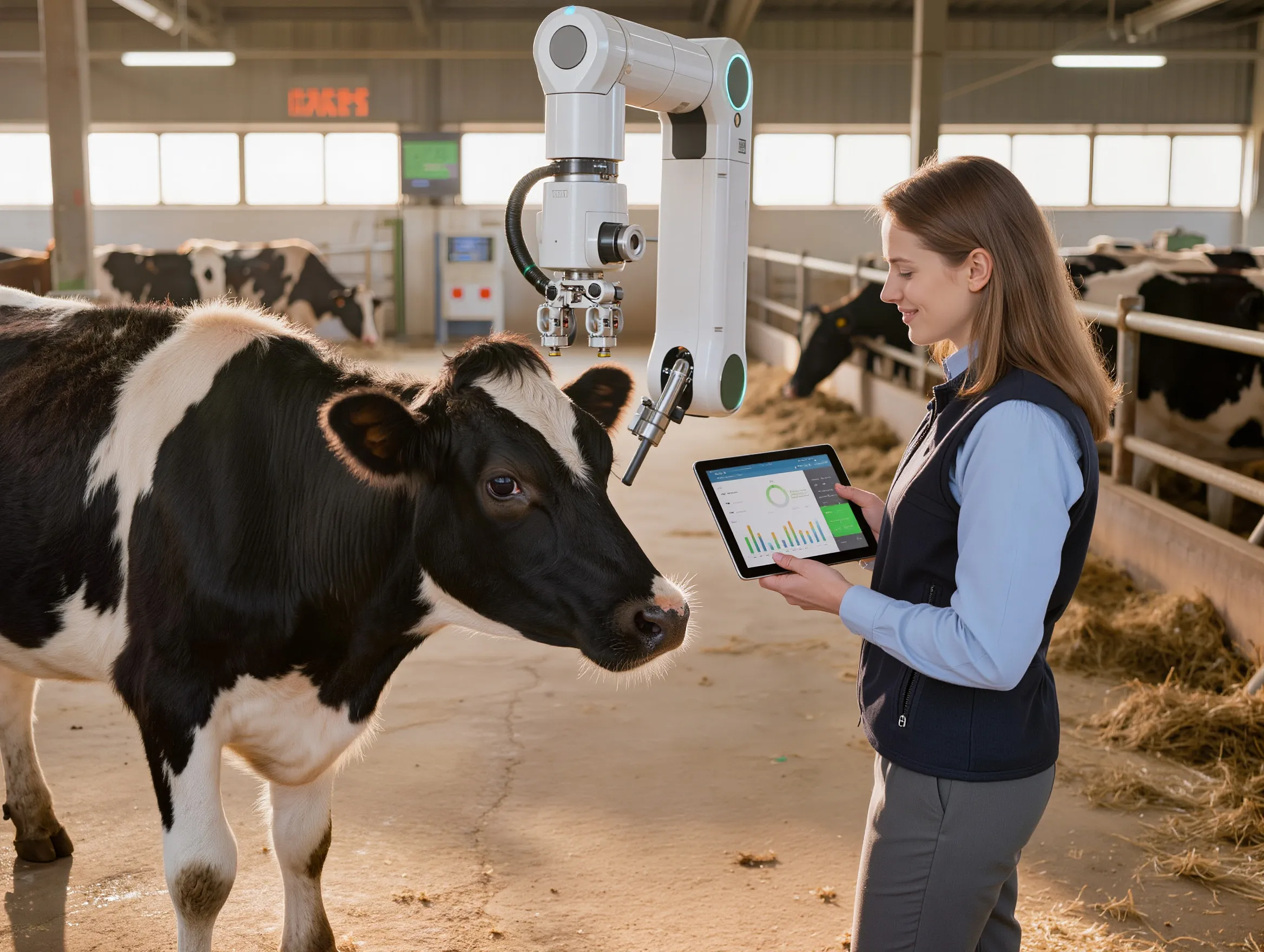
Many Russian regions are now actively experimenting with robotic equipment for livestock farming, reflecting a wider trend toward digital transformation of the sector. Domestic solutions are also emerging. In 2025, specialists at the Baltic Engineering Center for Mechanical Engineering developed and launched production of an autonomous robotic feed pusher for livestock. The device integrates easily into existing information systems and can operate autonomously for up to nine hours. It is currently undergoing testing.
Another successful example of digital adoption is the Tritikum farm in the Omsk Region. All processes – from feed and water delivery to manure removal – are automated. Each cow wears a collar fitted with sensors that monitor the animal’s condition in real time.
In the Chelyabinsk Region, the company Khlebinka is preparing to launch a unique robotic dairy complex designed for 700 head.
More developments of this kind are expected across Russia, as government programs supporting the agro-industrial complex and the digital economy are set to increase funding for such initiatives. Digitalization of milk production directly supports the national project Tekhnologicheskoe obespechenie prodovolstvennoi bezopasnosti (Technological Support for Food Security), which came into force in Russia in 2025.
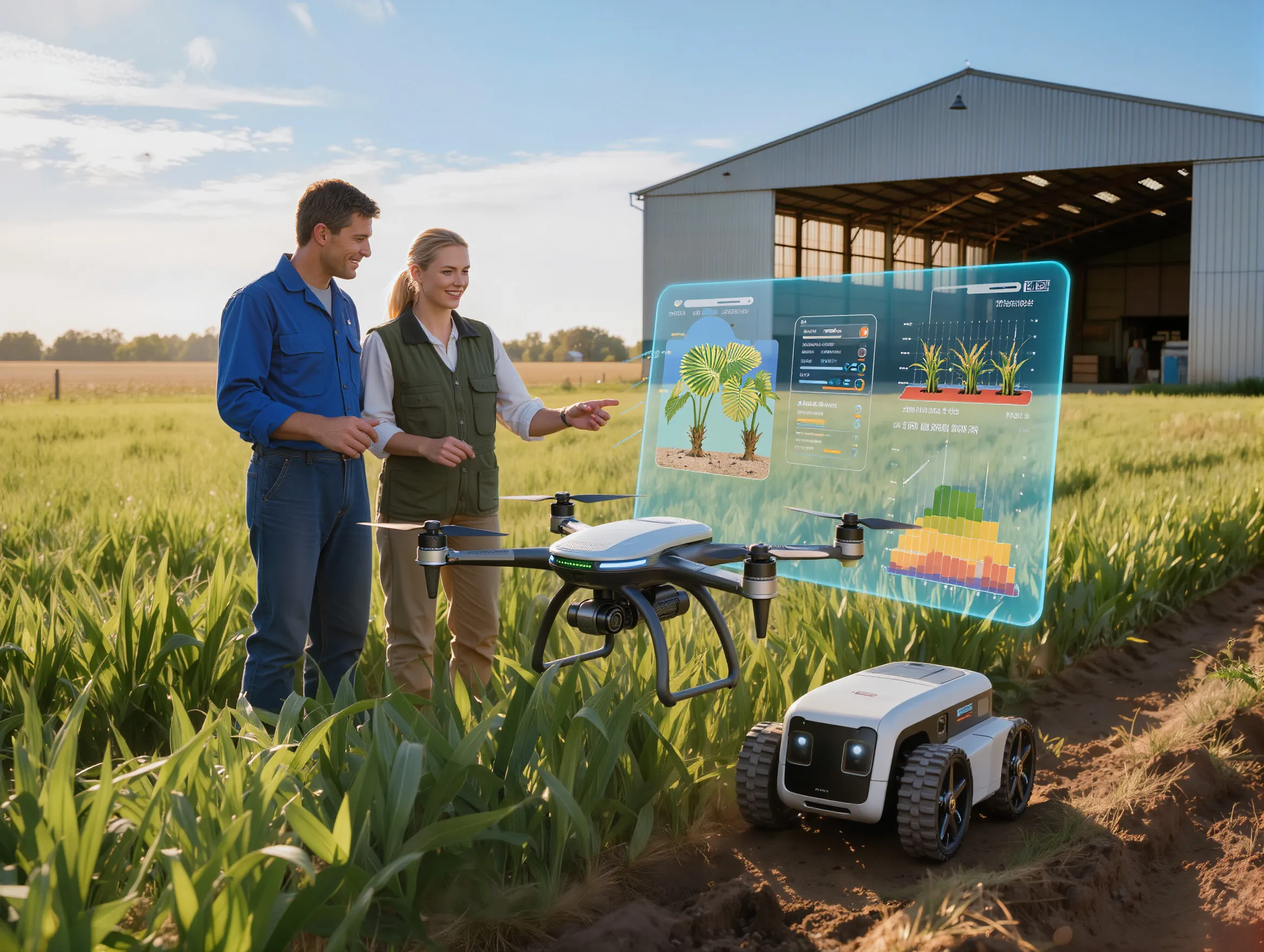
For Russian IT companies, this creates new growth opportunities. Demand is emerging for dynamic AI training systems based on large-scale herd data, intelligent agromonitoring platforms, and cloud services for farmers. Technology providers gain customers who require continuous upgrades and long-term digital support.
Robotic livestock farming has become a stable trend in Russia because it enables a significant increase in milk output, which is a core objective of the country’s agro-industrial sector.