National Security Agent: An AI Service for Patriotism Lessons Is Being Tested in Grozny
The digital assistant turns a neural network from a source of questionable facts into a reliable tool.
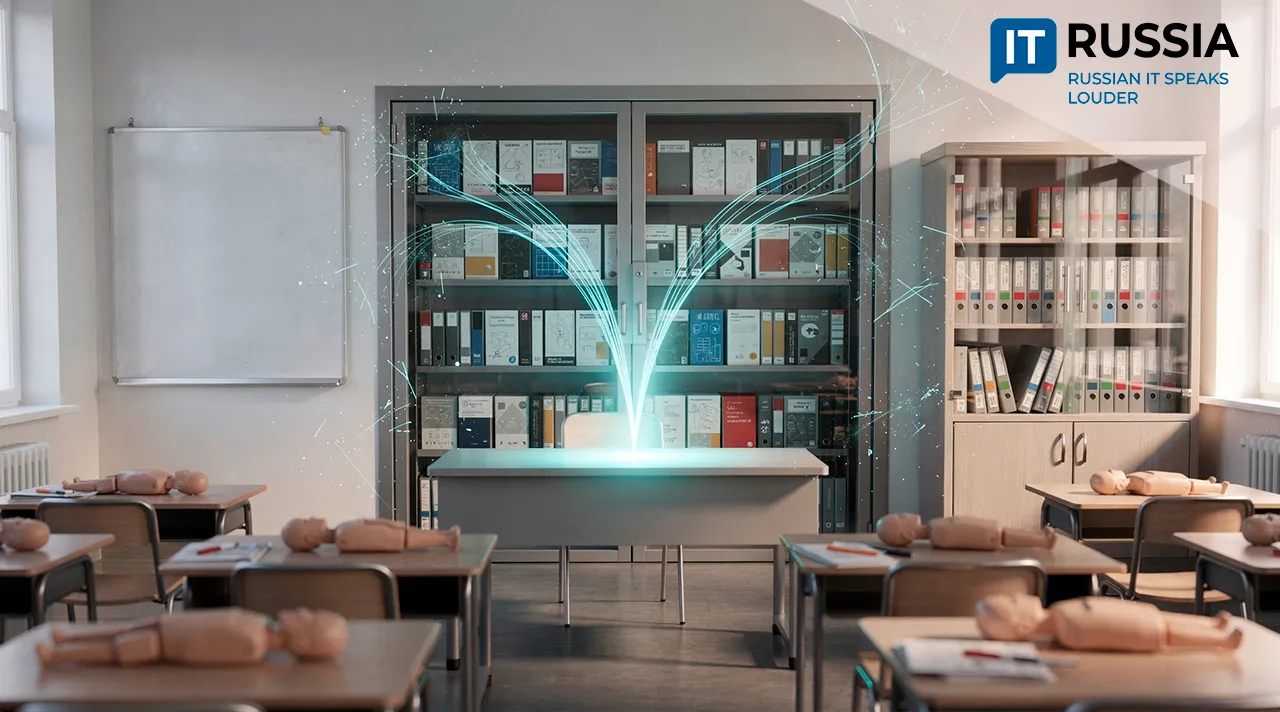
The more often schools use generative neural networks, the more pressing the question of trust becomes. A conventional chatbot can easily invent a fact, mix up a date, or cite a questionable source. In science and education, the cost of such an error is particularly high. Researchers at Chechen State Pedagogical University are working specifically on this problem. They have created an AI assistant for lessons in Osnovy Bezopasnosti i Zashchity Rodiny (Fundamentals of Safety and Homeland Protection), or OBZR, using RAG technology.
Nothing but the Truth: A Conversation About What Matters
RAG is short for Retrieval-Augmented Generation. The idea is straightforward: first, the system searches for the required information in sources from a preselected database, and then generates an answer based solely on those materials. The AI service uses a closed information repository containing only OBZR textbooks, regulations, and official instructional materials from the Ministry of Education and the Ministry of Emergency Situations.
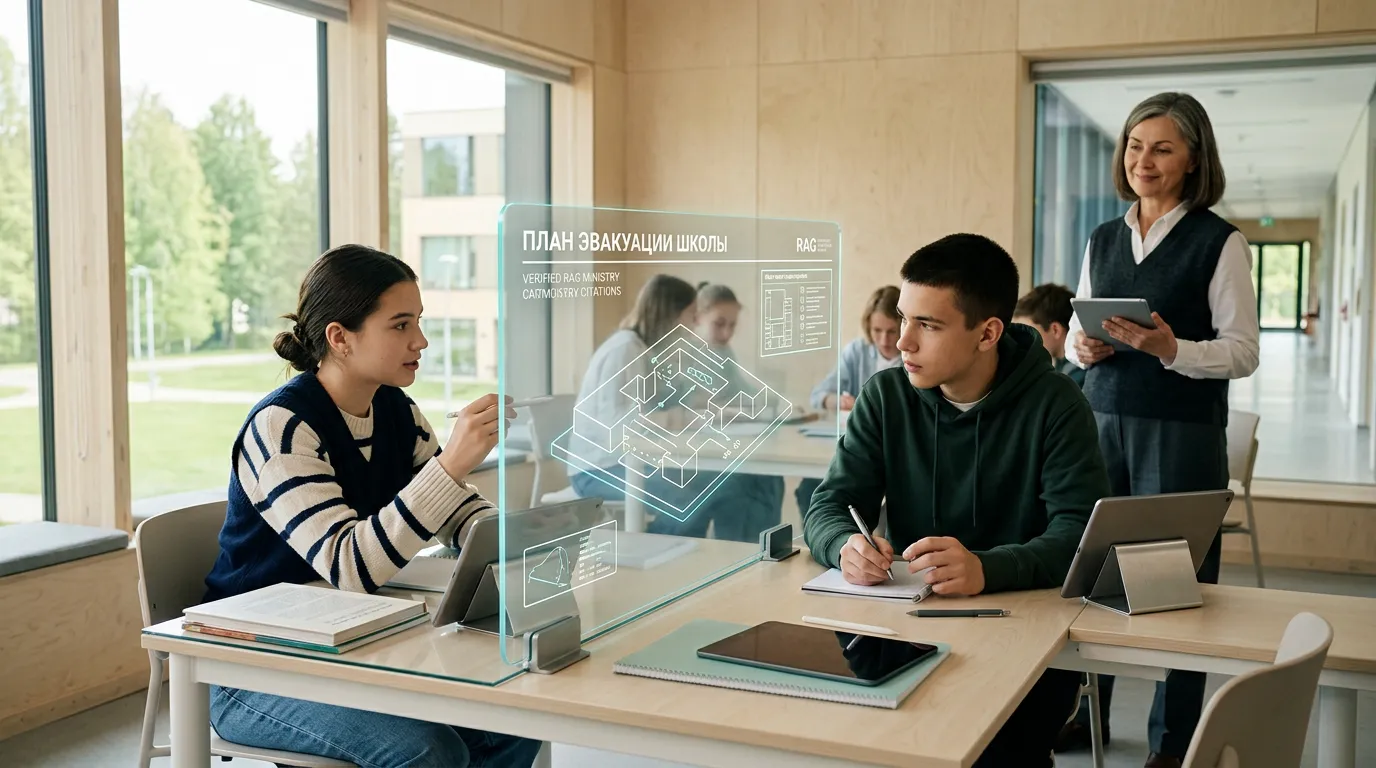
The assistant works only with the materials that have been uploaded to it and, when necessary, clarifies exactly where the information came from. This approach is especially important in settings where students cannot be exposed to unreliable data.

For high school students, the assistant is designed to function as a conversation partner. It answers questions about patriotism, Russian history, national security, military service, and what to do in emergency situations, relying only on verified sources. The system tracks which sections a student uses most often and suggests related topics on its own. For example, if a student starts with a section on first aid, the system may next suggest materials covering the basics of tactical medicine.
This also makes teachers’ work easier. They no longer have to recheck facts and gather materials every time. In addition, Chechen State Pedagogical University has developed an eight-module, 72-hour professional development course for educators. It teaches them how to work with neural networks and, crucially, how to verify everything they create with them.
Bots in Action
Even before the Chechen university’s project was created, similar solutions had been tested at other Russian universities, each with its own features. The closest in concept to the Chechen development was a 2024 RAG assistant created by the National Research University Higher School of Economics for its academic offices. It draws on more than 280 questions and answers as well as the university’s internal documents. Built around a RAG pipeline, the system provides users with answers that include source links and operates around the clock. “The new tool will not only reduce the workload on administrators but also help us gather feedback on which questions concern students most at different points in the academic year,” explained Anna Korovko, Senior Director for Core Educational Programs at the National Research University Higher School of Economics. The system’s RAG pipelines were configured using GigaChat.
New examples emerged in 2025. Samara State Medical University began developing an entire system of AI assistants for faculty members and graduate students. Prosveshcheniye launched Miron, an assistant for fifth- and sixth-grade Russian language classes. Moscow State Pedagogical University developed NeyroLik, a platform for creating personalized assistants, and later held a hackathon focused on AI assistants for school students.
Abroad, at Tecnológico de Monterrey and The Hong Kong Polytechnic University, universities are also increasingly moving away from general-purpose chatbots in favor of more narrowly focused tools.
An Adviser on Internship
The underlying idea – combining generative AI with a reliable subject-specific knowledge base – can also be applied to other fields. Developers would only need to replace the source set to launch the same type of system for history, biology, or computer science classes. RAG architecture makes it possible to preserve the overall technology stack while changing only the document corpus.
At the National Research University Higher School of Economics, where a similar approach has already been tested for an academic office, researchers point to the broad range of possible applications while acknowledging that these systems are labor-intensive to create. “Despite the simplicity of the idea, it is a fairly labor-intensive process that requires both high-quality data and creative engineering solutions,” said Alexey Masyutin, Chief Operating Officer of the Institute of Artificial Intelligence and Digital Sciences.
Even so, this approach to building digital services for education could provide a foundation for developing an entire series of assistants. For now, the Chechen assistant is undergoing an ‘internship’ in schools.