Perm Researchers Double the Speed of Detecting Faults in Aircraft Engines
An analog-to-digital converter that can detect irregularities in aircraft engine performance nearly twice as fast as conventional systems has been developed by researchers at Perm National Research Polytechnic University. The device is designed to identify early signs of compressor instability in gas turbine engines, reducing response time from 19 milliseconds to 9 milliseconds.
A Persistent Vulnerability in Gas Turbine Engines
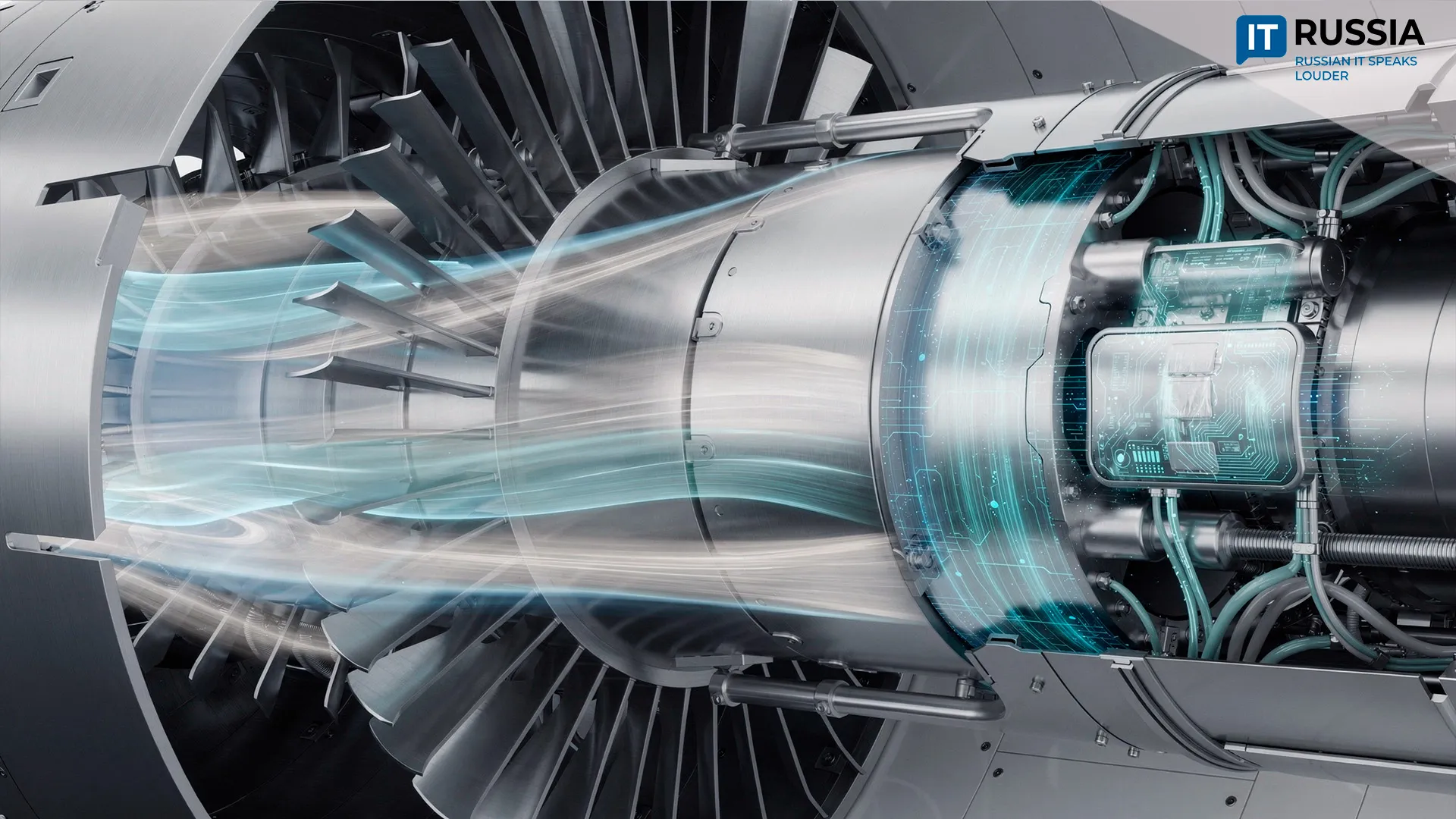
Gas turbine engines form the backbone of modern aviation. These compact, high-power propulsion systems compress air, mix it with fuel and generate thrust that enables aircraft to take off and sustain long-distance flight. Similar engines power naval vessels and high-speed ships, and they drive pumps, compressors and generators in industrial settings.
One of the most dangerous operating modes in such engines is compressor surge – a sudden breakdown of stable airflow that can damage blades, cause thrust loss and, in extreme cases, trigger fire. Surge events may arise during abrupt maneuvers or mechanical faults. Airflow inside the compressor becomes unstable, generating intense vibrations and shock loads. To prevent structural failure, the control system must react within milliseconds by temporarily reducing fuel supply to stabilize internal pressure.
Modern onboard computers process only digital data. Yet pressure and vibration sensors generate continuous analog signals. An analog-to-digital converter, or ADC, translates these signals into digital form, and its speed determines how quickly a threat is recognized. Conventional ADCs operate at a fixed measurement rate. Whether the engine runs under steady conditions or enters a critical regime, the device completes measurement cycles of identical duration. In emergency scenarios, this inflexibility introduces delays in data transmission at precisely the moment when rapid intervention is essential.

The engine control system must detect the earliest signs of surge and act immediately by briefly cutting fuel supply to relieve pressure and restore stable airflow. Even a delay of a few milliseconds can allow destructive oscillations to intensify.
An Adaptive Neural Converter
Researchers at Perm National Research Polytechnic University developed an adaptive neural analog-to-digital converter for aircraft engine sensors. The system responds to hazardous oscillations such as surge in approximately 9 milliseconds, compared with 19 milliseconds for traditional converters.
The team had previously created a prototype neural ADC capable of diagnosing its own faults. The new model introduces adaptive measurement control. It evaluates signal dynamics in real time and adjusts sampling speed accordingly.
How the System Works
The proposed device is a self-adjusting system that determines how rapidly measurements must be taken at any given moment. At its core lies a dedicated module that continuously analyzes the degree of signal change since the previous measurement. If compressor pressure begins to fluctuate sharply, the module interprets the pattern as potentially dangerous and commands the system to operate at maximum update speed. When the signal remains stable, the converter reduces sampling frequency, conserving computational resources and improving measurement precision until instability emerges.
When abrupt pressure spikes occur, the module sends an immediate signal to the converter, which switches to accelerated mode. The engine control system analyzes the updated data, confirms the onset of surge and temporarily reduces fuel supply to stabilize pressure. Once parameters normalize, engine operation resumes.


Reliability as a Strategic Priority
The development has clear practical implications for improving the reliability of aviation gas turbine engines. Faster and more adaptive signal processing could support the deployment of intelligent, high-speed control systems that protect high-value components such as compressor and turbine blades, enhance operational safety and reduce the risk of catastrophic failure.
Adaptive ADC technology is of interest to the global engine manufacturing sector and avionics system developers. If the algorithms demonstrate stable performance and achieve certification, the technology could be exported and licensed for integration into international aviation projects.