The “Gold Standard” of Analytical Chemistry – Russian Edition
Russia Joins the Select Club as MEPhI Develops a Homegrown Mass Spectrometer to Replace Imports
Russia to Launch Domestic Spectrometer Production
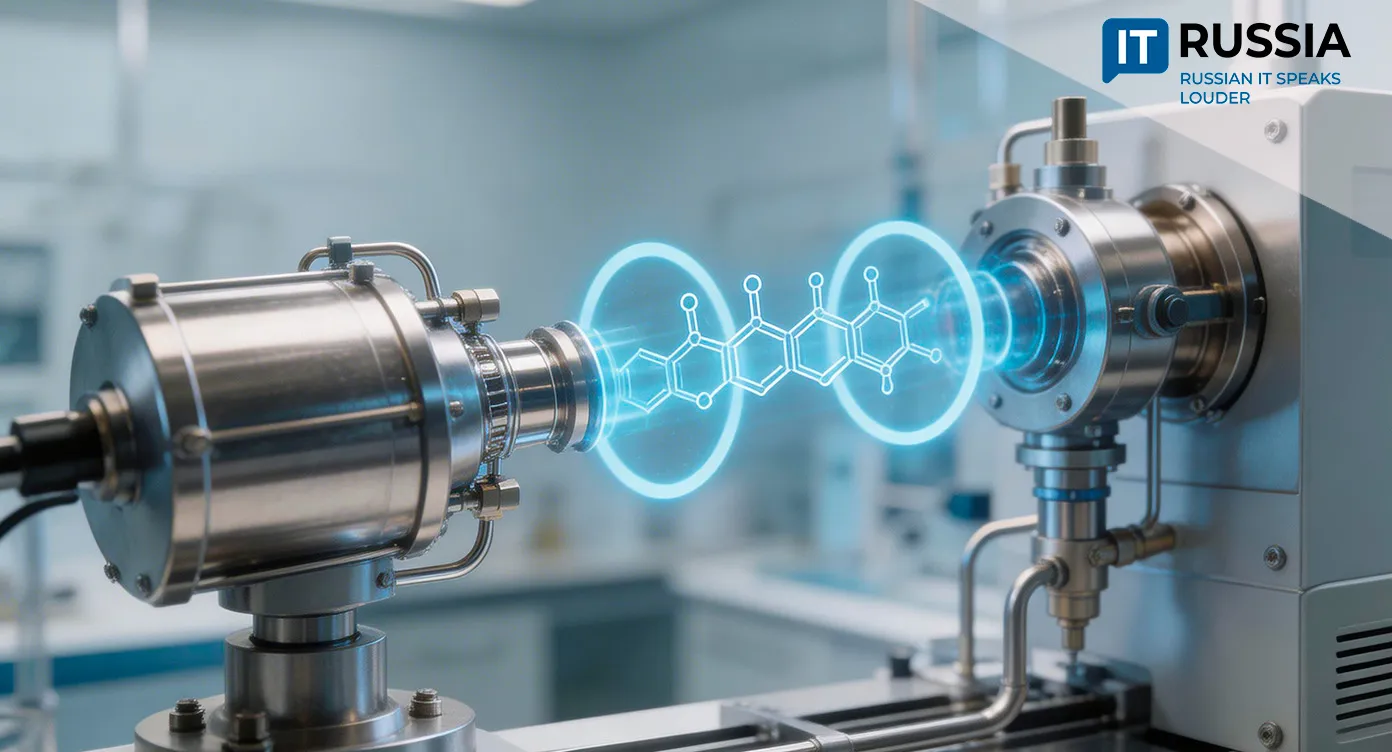
In 2026 – 2027, Russia will begin producing its first domestically developed tandem triple quadrupole mass spectrometer with soft ionization. The instrument, created by National Research Nuclear University MEPhI in partnership with four industrial collaborators, successfully completed state certification tests at the end of 2025.
Tandem mass spectrometry is widely regarded as the gold standard of analytical chemistry. It is indispensable for analyzing complex mixtures and detecting substances at ultra-trace concentrations. Mass spectrometers allow researchers to determine both the composition of a mixture and the precise concentration of its components. In a liquid chromatography – mass spectrometry system, liquid samples pass through molecular “filters” known as quadrupoles. A single quadrupole acts as a molecular sieve. Two quadrupoles make it possible to analyze what passes through that filter. A third quadrupole enables highly selective and highly sensitive quantitative analysis, dramatically increasing measurement precision.
Globally, only seven foreign manufacturers currently produce triple quadrupole instruments. MEPhI now joins that group, positioning Russia within a highly specialized segment of advanced analytical instrumentation.

Molecular-Level Control
Triple quadrupole mass spectrometers serve a wide range of industries. In healthcare, the instrument can support early diagnosis of rare genetic disorders in newborns – conditions that may lead to severe outcomes if therapeutic correction is not introduced during infancy. In transplant medicine, it helps physicians prevent organ rejection by monitoring immunosuppressant levels with molecular precision. In pharmaceuticals, it underpins drug development, as well as preclinical and clinical trials.


In agriculture, mass spectrometers are essential for ensuring the quality and safety of agricultural products. Tandem mass spectrometry also plays a central role in veterinary drug quality control and in monitoring the safety of livestock products. Environmental scientists use such instruments to measure contamination in water bodies and atmospheric air. The resulting data supports research into how pollutants affect living ecosystems. Beyond established sectors, the instrument is critical in emerging scientific fields that require molecular-level process control. Researchers rely on tandem mass spectrometry in synthesizing novel compounds, monitoring chemical reactions, and conducting advanced biological studies.

Sanctions as a Catalyst for Technological Development
MEPhI’s school of mass spectrometric instrument engineering has operated for more than 60 years. Despite its experience in developing hybrid instruments, university prototypes had not previously reached serial production due to the absence of suitable federal support programs. The situation changed in 2022 with the launch of the federal program Razvitie Otechestvennogo Priborostroeniya Grazhdanskogo Naznacheniya dlya Nauchnykh Issledovaniy (Development of Domestic Civil Scientific Instrumentation), which included the tandem triple quadrupole mass spectrometer project with electrospray ionization.
The development team faced strict import restrictions, but those constraints accelerated the creation of domestic manufacturing capabilities for critical components. Engineers established in-house technologies for precision machining and assembly of macroscopic components with tolerances as tight as one micron. Import limitations on detectors were addressed by the Russian company Baspik, which adapted secondary electron multipliers to meet project specifications and to provide the dynamic range required for modern instruments. Vacuum systems represent another critical element. A two-stage turbomolecular pump is produced by OOO VTsMO in Vladimir, engineered in close coordination with the developers’ technical requirements. Control system modules and the most precise ion optics components are manufactured and assembled by MEPhI and its partners. Most mechanical assemblies are produced by the Experimental Plant of the Academy of Sciences in Chernogolovka. Final assembly and commissioning take place at MEPhI’s experimental facility.
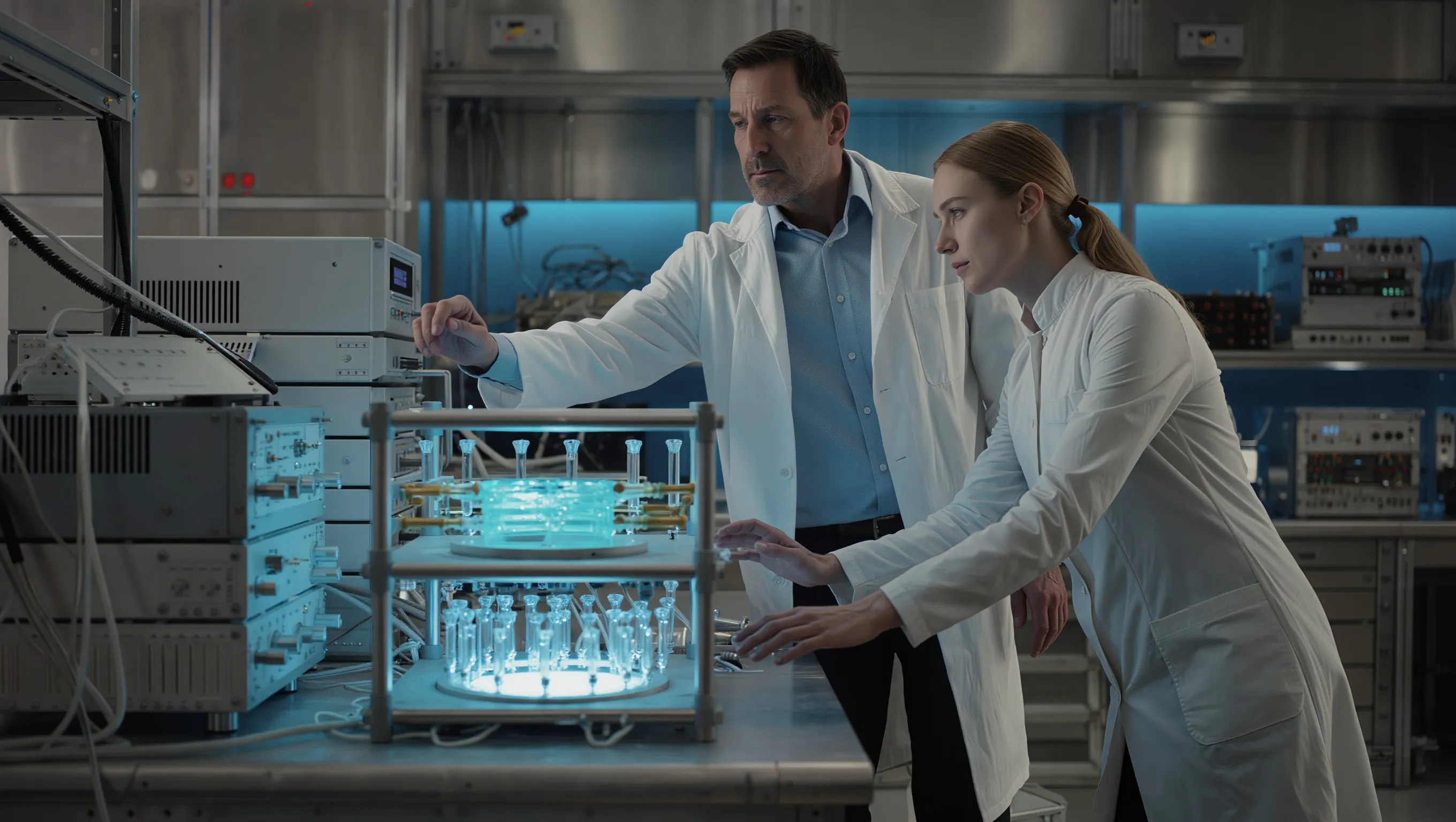
At present, the system uses a liquid chromatograph manufactured in the Moscow region – the Series 1000 unit produced by individual entrepreneur A.V. Sevko. The team plans to make the system compatible with additional liquid chromatograph models.
From Pilot Batch to Export
A triple quadrupole mass spectrometer is among the most sought-after yet technically demanding instruments on the analytical market. Assembly of a single unit takes approximately three months. Producing 50 units would require 12 dedicated assembly stands and highly skilled personnel. The task is complex but achievable. Developers are currently preparing a pilot batch of two to five instruments to refine manufacturing processes and eliminate remaining technical issues. In 2026 – 2027, the team expects to obtain official certification as a measuring instrument. Serial production and expansion of the product line will follow.
Until 2020, Russia imported approximately 50 tandem triple quadrupole mass spectrometers annually. Launching domestic production would fully replace that demand and supply scientific and industrial laboratories with high-precision Russian-made equipment. The project also carries export potential. Foreign partners have already expressed interest, opening opportunities for entry into international markets and strengthening Russia’s position in high-tech analytical instrumentation.