First Grade, First Password: Moscow Region Schools Launch "Cyber Lessons"
The pilot project will include 215 educational institutions across the Moscow Region, with total participation expected to exceed 55,000 students.
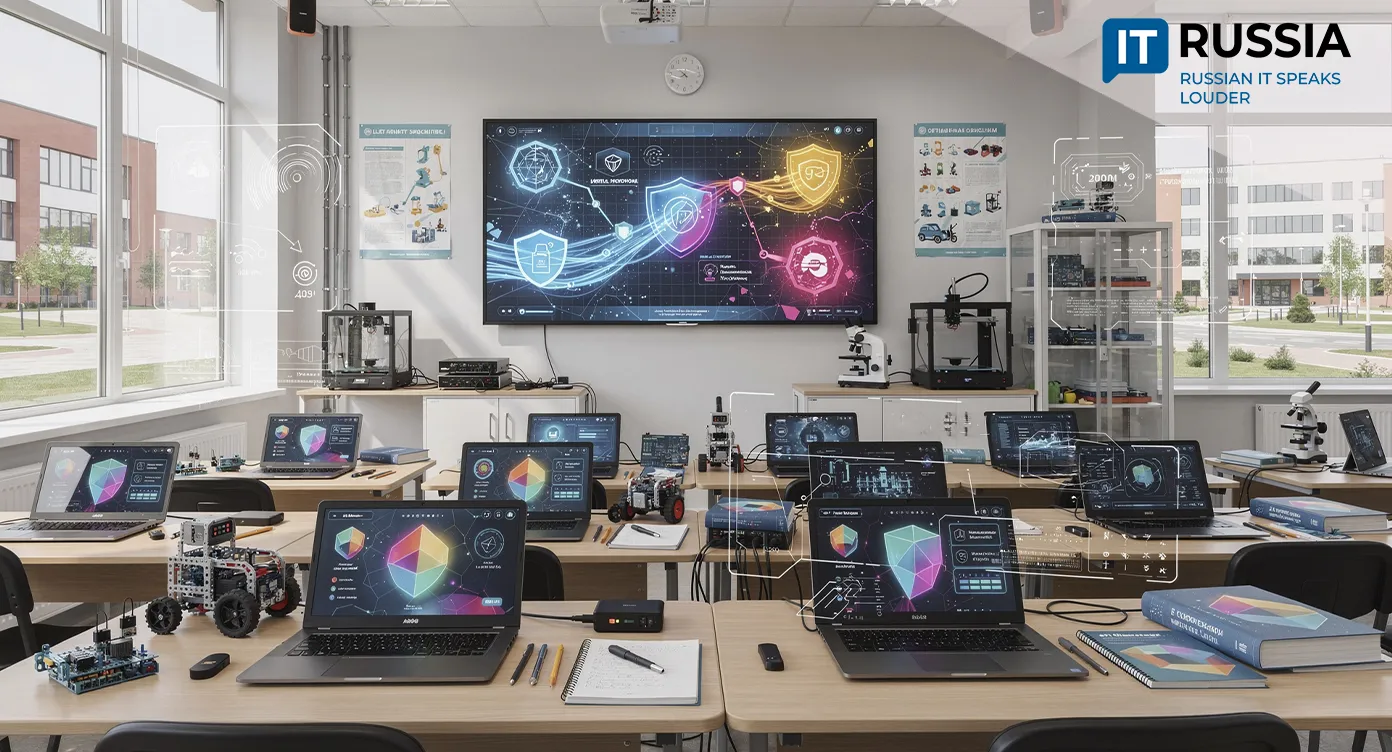
The Moscow Region is becoming the first region in Russia where cyber literacy education will be continuous, teaching children from their first day of school through graduation. For example, in Reutov, students from first through eleventh grade at the city's gymnasium, lyceum, and Schools No. 1, No. 3, No. 6, No. 7, and No. 10 will take part in the program.
Russian President Vladimir Putin personally called for improving digital literacy. In December 2025, during a meeting of the Council for Workforce Development, he instructed the government, together with the Moscow Region, to launch a pilot project teaching schoolchildren information technology, artificial intelligence, and cybersecurity.
Cyber Lessons: What, How and Why?
The aforementioned schools in Reutov have been busy preparing for the launch, with parents naturally asking many questions. At the local lyceum, Principal Svetlana Belyayevskaya and Deputy Principal Olga Monaenkova explained in detail how the new Kiberurok (Cyber Lesson) differs from traditional safety education or computer science classes. The program goes well beyond teaching students how to avoid online scams. Instead, it includes practical, age-appropriate exercises designed for every grade level.
Students will also learn how to communicate safely in messaging apps, protect personal data, and critically evaluate online information. In addition, they will develop their own digital products and learn how to use digital tools effectively in both everyday life and their studies.
Scammers and Elementary School
Russia launched its Tsifrovoy likbez (Digital Literacy Campaign) project in 2022. The Digital Economy ANO, together with IT companies, produced animated videos about online safety. Even then, those videos addressed essential topics including personal data protection, social engineering, digital footprints, cyberbullying, and other online risks. By 2024, the initiative had reached all 89 Russian regions, with more than 2.7 million students participating.
The next step came with Urok tsifry (Digital Lesson), which delivered eight thematic classes during the 2024-2025 academic year, covering topics ranging from prompt engineering to quantum computing. More than 21.4 million people across Russia used the program's interactive learning simulators.
At the same time, Russia's Ministry of Education emphasized the need for continuous cybersecurity education. In late 2025, Deputy Minister Irina Shvartsman explained that elementary school students were already learning to recognize common fraud schemes in their environmental studies classes, while computer science lessons introduced network etiquette and safe online behavior.
In 2026, the Kiberurok (Cyber Lesson) project received federal support. Instead of standalone lessons, it became a continuous curriculum spanning first through eleventh grade and built around real-world scenarios. After all, every era brings new digital threats.
Fully Equipped for the Digital World
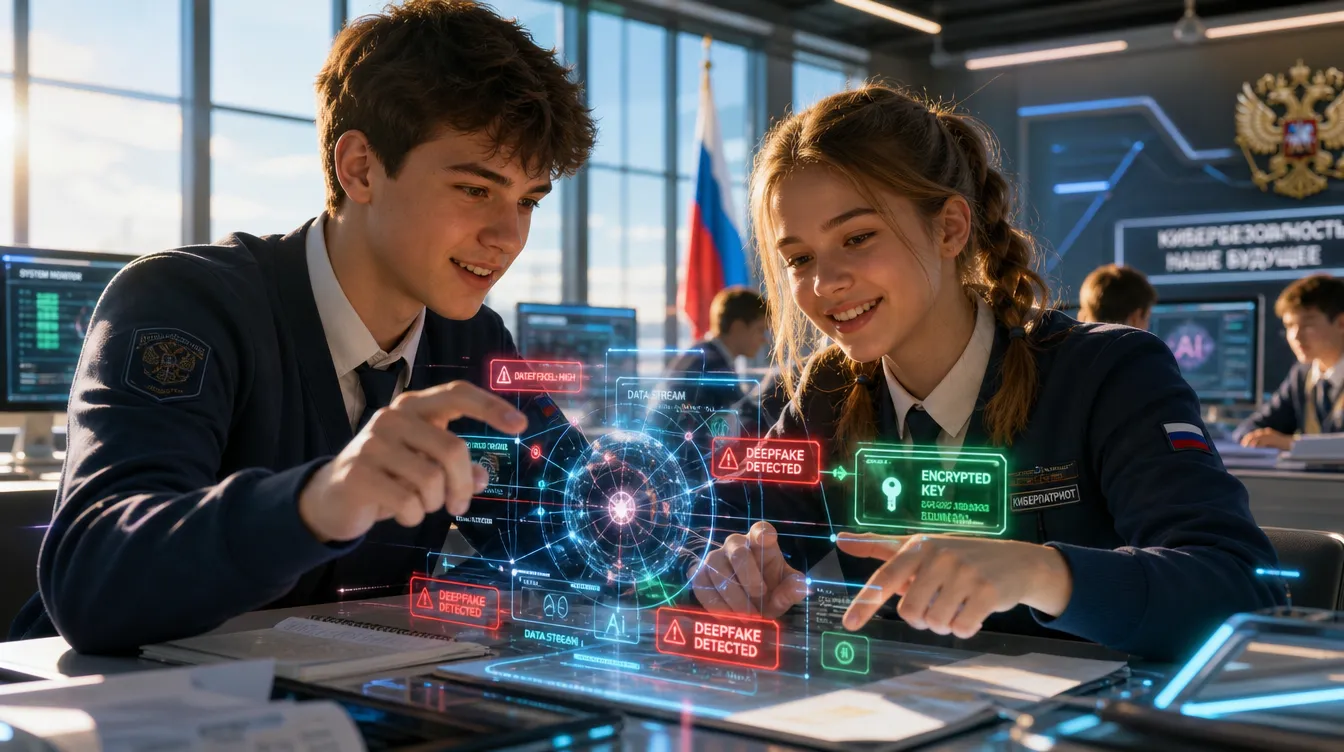
Pilot lessons have already been conducted for eighth-grade students at Reutov School No. 3. Students learned what deepfakes are, practiced writing prompts for AI systems, and explored Sber's generative AI models. Experts from Sber and the Corporate University for Education Development are participating in the development of the curriculum.
The future curriculum will extend well beyond AI. For example, the Tsifrovoy likbez (Digital Literacy Campaign) previously covered topics such as account theft, doxing, mobile threats, phishing links, electronic payments, digital footprints, and cyberbullying. These risks affect people of every age, so the curriculum is tailored separately for elementary, middle, and high school students. First graders learn through simple stories explaining why they should never share their passwords, even with friends. Older students, meanwhile, study social engineering techniques.
Teachers Learn Through Simulations
For several years, Russia's Ministry of Education has promoted digital literacy through its Razgovory o vazhnom (Conversations about the Most Important) program, along with teacher seminars and nationwide parent meetings. Kiberurok, however, places greater emphasis on developing practical digital skills rather than simply teaching theory.
Preparing teachers is now the top priority. Ideally, educators will receive more than theoretical instruction – they will also be equipped with classroom tools including simulators, interactive exercises, and teaching materials. Russian IT companies, including Sber and Kaspersky Lab, are already actively participating in developing these resources. In 2027, officials plan to expand Kiberurok to every school in the Moscow Region.