Large Language Models Enter Oil and Gas Workflows
Gazprom Mezhregiongaz Engineering presented its experience using large language models to develop software for the oil and gas sector at the All-Russian Scientific and Technical Conference “Current Challenges in the Development of Russia’s Oil and Gas Complex.”
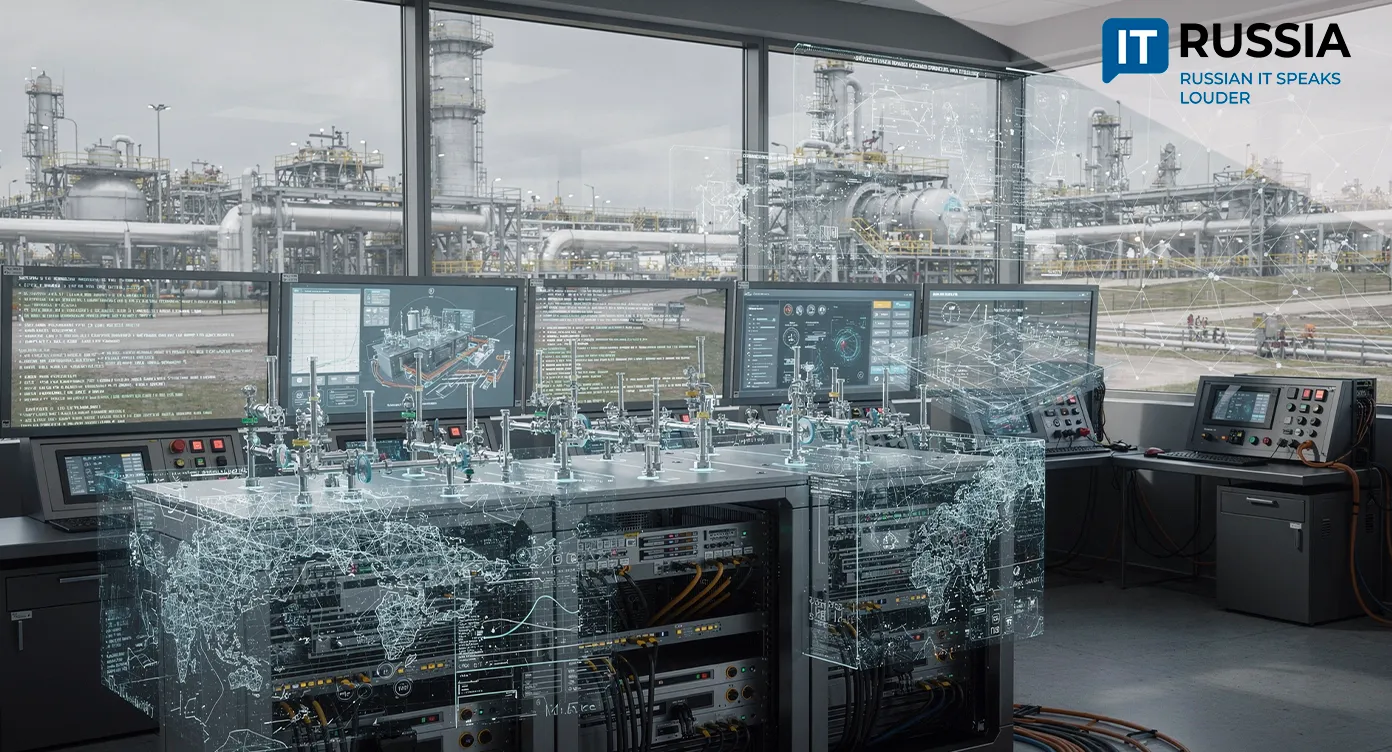
The company’s approach combines LLMs (large language models), structured prompts, and mandatory developer oversight. AI accelerates data processing and solution drafting, while engineers retain control over problem framing, domain specificity, and output quality.
Applying generative AI in one of Russia’s most technologically and economically critical sectors – oil and gas – has become a focal point for many enterprises. This is particularly relevant against the backdrop of import substitution in engineering and industrial software. According to industry research, the share of mature Russian software in oil and gas increased from 10% to 80% between 2014 and 2024, while domestic solutions now dominate new projects launched in 2024–2026.
Experts stress that the shift toward domestic software is inevitable. By the end of 2027, Russia’s oil and gas IT landscape is expected to be fully supported by locally developed solutions. Currently, the level of import substitution across the sector stands at 81%.

From Adoption to Operational Control
At the beginning of the year, CSoft Development released a comprehensive forecast incorporating input from the Ministry of Energy, the Oil and Gas Industry Competence Center, Innopolis University, audit firm Kept, TAdviser, and consulting firm Yakov & Partners. The study examined the dynamics of import substitution across engineering software, including CAD systems, simulation platforms, and product lifecycle management systems, as well as digital twins, process control systems, data acquisition systems, manufacturing execution systems, and enterprise resource planning tools.
Before 2022, imported software accounted for 92% of Russia’s oil and gas IT needs. The transition to domestic solutions took place primarily between 2024 and 2026. Over a ten-year period leading up to 2024, the share of mature Russian software rose from 10% to 80%.
Recent data shows the highest adoption of domestic solutions in structural and pipeline calculations (90%), as well as basic graphics and 2D/3D modeling (60–70%). Adoption remains significantly lower in engineering analysis, P&ID systems, and instrumentation and control, where domestic solutions account for 30–40%. Digital twins and PLM platforms developed in Russia are still limited, with adoption levels at 10–20%.
In 2025, the Russian engineering software market grew by 16% compared to 2024. On average, companies allocate 5–15% of their annual IT budgets to software and AI in this segment. The current market trend is shifting away from license procurement toward implementation, integration, and workforce training.

Economic Impact and Forecasts
Data from the Ministry of Energy indicates that IT solutions generate an annual economic effect of approximately 700 billion rubles (around $7.5 billion) in the oil and gas sector, with AI accounting for 14% of the IT budget. By 2040, this impact is projected to reach 5.4 trillion rubles (approximately $58 billion).
By 2030, the target share of domestic software is expected to reach 90%, while the engineering software market will grow to 60 billion rubles (about $650 million). The number of developer companies is projected to increase from 1,300 to 3,700, and AI investment is expected to reach 130 billion rubles (roughly $1.4 billion).
However, achieving these targets will require overcoming several constraints. New solutions must integrate into broader digital ecosystems rather than operate as standalone tools. The industry will also need to address a persistent reluctance among companies to share proprietary developments. Further work is required to strengthen the functional, technological, and infrastructure capabilities of domestic solutions.

Toward Industry-Grade AI
The evolution of large language models from tools for text and code assistance into full-scale industrial platforms for development, maintenance, and analysis of IT systems is accelerating multiple workflows. These include software design, documentation preparation, regulatory analysis, code verification, interface development for engineering systems, and processing of large volumes of production data.
Oil and gas companies do not need to build models from scratch. Instead, they can adopt baseline Russian models fine-tuned on industry datasets, regulatory frameworks, engineering terminology, and typical operational tasks, significantly reducing deployment time and cost.