MTUCI Rector Sergey Erokhin: How Do You Build a Next-Generation University? MTUCI’s Digital Transformation
Today, a university is not only an educational institution but also a complex digital ecosystem. What data does a university leader rely on to make management decisions? What results has MTUCI’s digital transformation delivered? What lessons have been learned from completed projects, and what challenges lie ahead?

Sergey Erokhin, rector of the Moscow Technical University of Communications and Informatics, answers these and a number of other questions in an interview with the journal Upravlenie predpriyatiem (Enterprise Management). This is the second part of the interview – read the beginning here. The ITRussia editorial team could not pass up this fascinating conversation on some of today’s most pressing issues.
Part 2. Results, Lessons and Plans for the Future
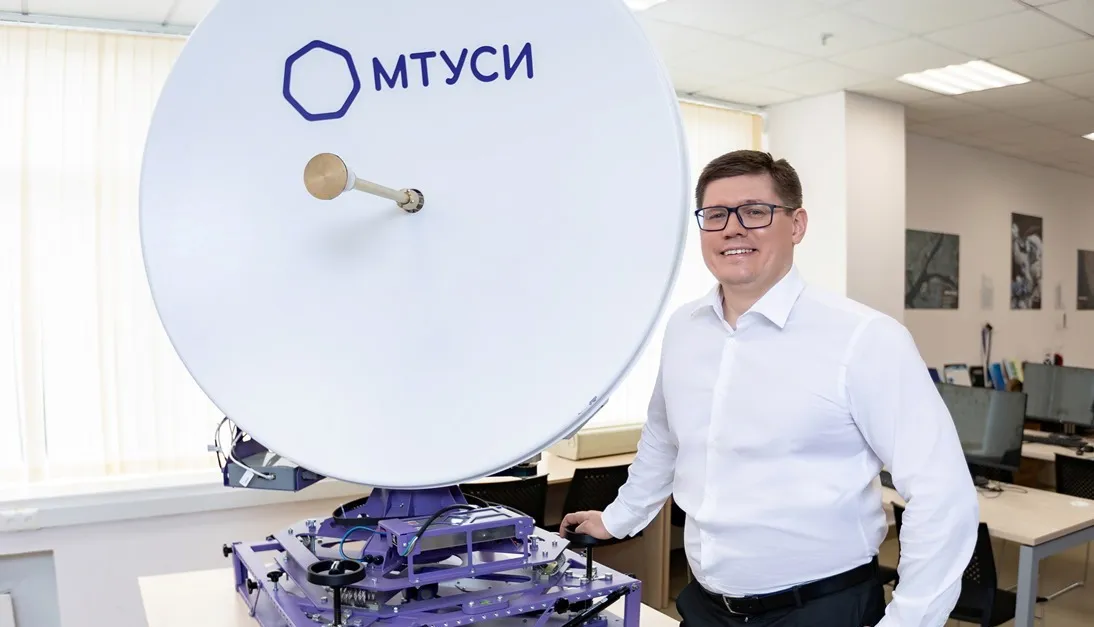
– Let’s continue our conversation. Which IT project do you consider the most successful?
– I consider the Moi MTUCI (My MTUCI) mobile app one of MTUCI’s most successful digital projects. It was launched in its current form two years ago and has become a key part of the university’s digital ecosystem.
A modern technology stack made it possible to create a flexible, user-friendly solution that adapts to the needs of each user. But the app’s main value lies not in the technology itself. Rather, it has become a single channel connecting students with the university.
Today, it is much more than an electronic class schedule or a tool for receiving homework assignments. Through the app, students can access virtually every aspect of university life: educational services, attendance and academic performance information, dormitory matters, tuition payments, extracurricular activities and many other services. Our goal was to bring the most in-demand services together in a single digital environment and make them as convenient as possible for users. In my view, that is precisely the kind of approach that defines the quality of a modern educational environment.
– How much does it cost the university to maintain an IT landscape like this? And what is your view on developing software in-house?
– MTUCI is a large university with a complex, multilayered digital infrastructure. As a result, developing and maintaining its information systems costs tens of millions of rubles a year. That is a significant investment, but we made a deliberate decision not to build the entire digital ecosystem solely in-house.
At first glance, in-house development may seem like an attractive option. Over the long term, however, this approach carries serious risks. Supporting a large information system requires more than assembling a strong development team. You also have to continually invest in the team’s professional growth, keep its expertise up to date and give its members opportunities to work on large-scale projects.
When professionals work exclusively on the internal needs of a single organization, the risk of technological isolation grows over time. Moreover, any system becomes vulnerable if its key developers leave the project. In that situation, the university could face serious difficulties maintaining and further developing mission-critical services.
Of course, MTUCI has its own programmers and IT professionals. Their primary role, however, is to integrate different solutions, adapt systems to the university’s needs and work with external partners.
We believe that the creation and development of major software products are best entrusted to specialized companies with the resources, expertise and experience needed to deliver comparable projects. This approach helps ensure the resilience of the digital infrastructure and its continued development over the long term.
The effectiveness of the approach we chose becomes particularly clear during periods of peak demand, especially during admissions. Once high school students receive their graduation certificates, the number of applications submitted to the university rises sharply. During this relatively short period, the load on our information systems increases many times over. For example, the number of operations in the 1C:Universitet PROF (1C:University PROF) system can increase tenfold compared with normal operating levels. Yet the system must remain stable, process data at high speed and continue operating without disruption.
Achieving that requires both a reliable technology platform and a team of highly qualified professionals capable of designing the solution architecture properly, ensuring fault tolerance, configuring databases and setting up redundancy mechanisms. It is at moments like these that the importance of professional support and enterprise-grade IT solutions becomes particularly clear.

– Which university performance indicators matter most to you as rector?
– First and foremost are the indicators related to educational activities, which I obtain from the 1C:Universitet PROF (1C:University PROF) system. These include student enrollment, class attendance, academic performance and trends in student withdrawals. Digital tools make all this information available virtually in real time and present it in a format that is convenient for analysis.
One important milestone in our digital transformation was the complete elimination of paper-based document workflows from the educational process. Today, instructors prepare grade sheets in their personal accounts and sign them electronically. The data is then automatically transmitted to university and federal information systems. This approach has eliminated duplicate operations, reduced errors and significantly accelerated workflows.
Students, in turn, have access to up-to-date information through their personal accounts, where they can track their academic results, attendance and other indicators of their educational progress.
For the university leadership, the ability to see the bigger picture is particularly valuable. We analyze not only individual student performance but also the engagement of student groups, the effectiveness of how the educational process is organized and classroom utilization.
Procurement data is equally important to me. This includes the number of procurements, contract values, fulfillment of obligations and the use of financial resources.
Research is another distinct area. Here, I regularly analyze faculty and staff publication activity, the results of research projects and other indicators collected within the university’s digital environment. Monitoring the admissions process is particularly important. During this period, we focus on the number of applications submitted, the number of contracts signed, enrollment consents and the competitive situation for each academic program. The heads of faculties and institutes monitor the indicators for their respective units and promptly inform the university leadership of emerging risks or issues.
Class attendance data is also highly important. Modern digital tools allow us to do more than simply record whether students are present. They enable us to identify trends and respond to deviations in a timely manner. If we see attendance declining in particular courses or student groups, it is important to understand why – whether the reasons lie in the course content, teaching methods or other factors.
The main advantage of this management system is that it allows us to make decisions based not on subjective impressions or isolated observations, but on objective data and comprehensive analytics.
– What management decisions do you make based on this information?
– Most often, it involves adjusting the university’s financial and management plans. Any change in the university’s key performance indicators will, in one way or another, affect budget planning.
For example, procurement procedures may result in savings. In such cases, we have an opportunity to redirect the funds that have been freed up to additional university development initiatives. The reverse can also happen, with certain areas requiring more spending than originally anticipated. It is important to identify these deviations in time, understand what is causing them and make the necessary decisions.
In practice, digital analytics allows us to keep a constant finger on the pulse of all the university’s key processes and make management decisions based on objective data rather than assumptions.
Automating dormitory management is another important area. The system allows us to see actual occupancy levels across our residential facilities and access up-to-date information on student housing.
This matters for more than record-keeping. The data allows us to assess how efficiently the infrastructure is being used and make decisions about its further development. In some cases, we need to verify whether a student’s formal housing status reflects the actual situation so that the available resources can be used as efficiently as possible.

– Which results of the digital transformation are you particularly proud of? What benefits have you achieved?
– What matters greatly to us is that digitalization has delivered not only technological improvements but also tangible, measurable management benefits.
For example, department heads now allocate teaching workloads through a web interface that automatically checks compliance with the university’s internal regulations. As a result, the time required for workload planning has been cut by more than 50%, while the number of calculation errors has fallen by about 15%.
Scheduling has also become significantly more efficient. The time required to prepare class schedules has been reduced by 25%, while any changes are automatically published on the university website in real time.
Another important step was the introduction of an electronic service request system. Administrators can now create new services themselves and configure the required parameters without involving developers.
In 2025 alone, more than 6,000 services were delivered electronically through the system. At the same time, the number of requests increased by 18% compared with the period when paper-based procedures were used, while the need for in-person visits by employees and students declined noticeably.
In my view, changes like these best demonstrate the practical value of digital transformation: it does not simply automate processes but makes them faster, more convenient and more efficient for everyone across the educational environment.
– Speaking of the lessons you have learned from this experience, what would you do differently?
– It is difficult to point to any decisions that I would want to fundamentally reconsider. A significant share of the changes we had to make as the projects progressed resulted from external factors, primarily the evolving regulatory framework and changes in legislation.
Still, looking back, I can say that some decisions should have been made earlier. The main phase of MTUCI’s transition to a modern digital landscape took place between 2017 and 2022. Had this work begun five to seven years earlier, the university could have moved more quickly to fully electronic document workflows and eliminated a significant share of its paper-based processes.
The reason for this is largely universal. As long as an existing system works reasonably well, there is always a temptation to keep things the way they are. People adapt to established processes, while any change requires additional effort, resources and time to learn new tools.
That is why digital transformation is, first and foremost, a matter of management’s readiness for change. It requires an organization’s leadership to make strategic decisions, invest in development and rethink established ways of working.
The advantages of new approaches are particularly evident in document workflows. Paper documents often create opportunities for delays, lost information and blurred accountability. In a digital system, every stage of a document’s journey is transparent and traceable. This improves management efficiency, speeds up processes and makes individual responsibilities much clearer.

– How open is MTUCI to sharing its experience with other universities?
– We are always open to professional dialogue and sharing best practices. MTUCI has established strong partnerships with a number of Russian universities. We regularly look at solutions our peers are using, discuss approaches to digital transformation and share our own experience.
This collaboration is particularly active with universities specializing in the same industry sectors, since we face similar challenges – from managing admissions to developing digital infrastructure and educational services.
In my view, sharing best practices can significantly accelerate universities’ development and help them avoid many of the mistakes that inevitably arise when implementing large-scale digital projects.
– What prospects do you see for the development of education over the next few years?
– In my view, one of the key areas of development will continue to be the emergence of a hybrid learning model.
For a technical university, in-person learning remains an essential part of educating future professionals. Many engineering disciplines require laboratory work, the use of specialized equipment and direct interaction between instructors and students. At the same time, a significant part of the educational process can already be delivered effectively in a digital format. This applies to lecture courses, independent study, homework assignments and many programs in programming and digital technologies.
The main challenge is to find the right balance between traditional educational practices and new technological capabilities. On the one hand, we need to maintain a high standard of professional education; on the other, we need to take advantage of modern digital tools.
Another distinctive feature of technology education is the need for constant renewal. New approaches, tools and technologies emerge virtually every few years, and universities have to respond quickly to these changes.
A good example is the growing popularity of low-code and no-code technologies, which make it possible to create digital products with minimal traditional programming or without writing code at all. These approaches are already beginning to reshape the software development market, and the education system needs to take these changes into account.
That is why one of our most important tasks is to adapt educational programs, digital infrastructure and learning services to new technological realities in a timely manner.
Another notable trend in recent years is the changing way students interact with the digital environment. In the past, the computer lab was the primary digital workspace for learning. Today, most students come to the university with their own laptops and prefer to use their personal devices.
This means the university’s digital ecosystem must be accessible from anywhere and on any device. Students should be able to log into their personal accounts, access learning materials, complete assignments and use the services they need regardless of whether they are in a classroom, a dormitory or at home.
In this way, the modern university is increasingly becoming not only a place of learning but also a full-fledged digital platform that supports students throughout their entire time at the university.

– And if we look further ahead, at the longer-term strategic outlook?
– Making long-term predictions is never easy. But one important trend is already clear today – growing interest among international students in Russian education. This means that universities’ digital infrastructure needs to be designed from the outset with an international audience in mind. Information systems, mobile apps and educational services should support multiple languages and offer a seamless experience for users from different countries.
For many years, Russian universities had to compete for international students primarily with educational institutions in Europe and the United States. Today, that situation is gradually changing. More and more young people are consciously considering Russia as a promising destination for their education. Students expect not only high-quality academic programs but also a modern digital environment comparable with leading global practices.
MTUCI already has successful experience in international collaboration. We are carrying out joint projects with universities in Vietnam, Tanzania and Ethiopia. It is still too early to talk about rolling out similar solutions on a large scale, but demand for international collaboration is becoming increasingly apparent. Accordingly, the university’s digital services need to be ready to operate in a global educational environment.
If we are talking about a personal ambition, I would like to see an educational platform capable of competing on equal terms with leading international offerings such as Coursera. This is not merely a technological challenge. It requires strong content, high-quality educational materials, effective management and a willingness to keep moving forward.
In this sense, a university’s digital transformation can never be reduced to implementing a particular information system or completing a specific project. It is a continuous process of development where students’ interests, government requirements, industry needs and the capabilities of modern technology all intersect.
That is why there can be no final endpoint in digital transformation, no moment when we can simply declare the work complete. Every solution we put in place merely becomes the foundation for the next stage of development.
– Sergey Dmitrievich, thank you for such a detailed and insightful conversation.
– Thank you. I was glad to share our experience and our perspective on the development of the modern university.









![Astra AI [Code] vs. Open Source: Why Deploying an Open Model in a Secure Environment Is Costly and Risky](https://storage.yandexcloud.net/itrussia/uploads/c3b5b6da-1bf7-49cb-817e-0bab1cea8cff.webp)