Russia’s AI-and-Cloud Strategy in an Era of Global Volatility (part III)
As the global AI market faces turbulence, inflated expectations, and signs of an infrastructural correction, Russia is pursuing a quieter but more resilient path — one built on open-model adaptation, cost efficiency, sector-specific solutions, and long-term technological sovereignty rather than headline-driven AGI races.
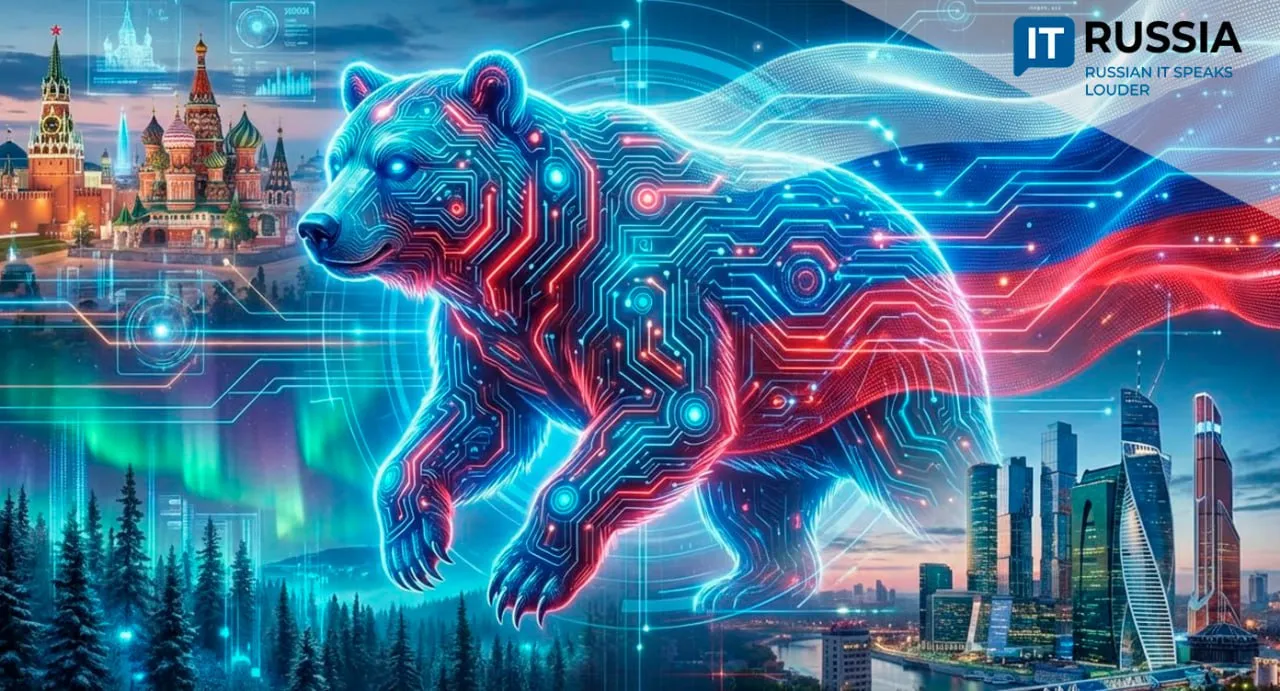
A Pragmatic, Sustainable Russian Model
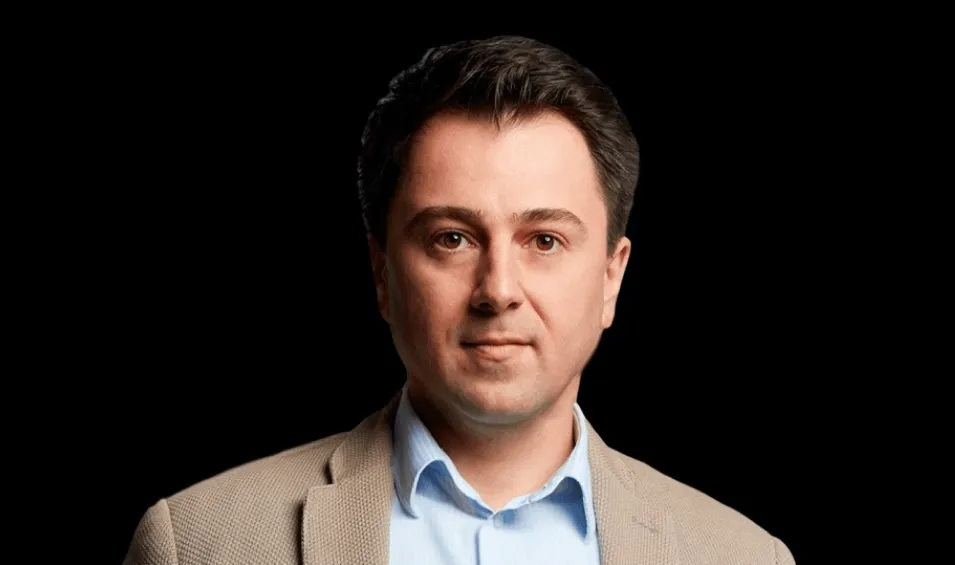
This article concludes the analytical series prepared by Konstantin Anisimov, Deputy CEO of Astra Cloud (part of the Astra Group). Unlike the United States and China — where national strategies are driven by scale, capital concentration, or global expansion — Russia’s long-term AI trajectory is shaped by constraints that have become competitive advantages.
Rather than competing in predictions about who will “reach AGI first by 2027–2028,” Russian companies are prioritizing highly applied, domain-specific systems for government operations, defense, healthcare, finance, industry, and education. The emphasis is on solutions that deliver measurable value to people and institutions, not speculative future breakthroughs.


Several developments illustrate how this strategy works in practice:
- T-Bank adapted China’s Qwen-2.5 to create T-Lite (7 billion parameters) and T-Pro (32 billion parameters). On many Russian-language tasks, these systems outperform GPT-4o, while inference and training costs have dropped by 80–90 percent.
- Sberbank continues expanding its GigaChat family. GigaChat Ultra Preview is one of the largest open models in Europe, distributed under the MIT license, and it leads the MERA benchmark for the Russian language.
- Yandex released YandexGPT 5.0 (February 2025), integrating it across more than 20 services, including its Alice AI for education and household tasks. Importantly, the system received ISO/IEC 42001 certification — a critical requirement for secure data use.
- MTS leverages DeepSeek and Yi-1.5 models, fine-tuning them for content generation and internal workflows.
Russian startups such as Gen-A, specializing in AI-enhanced video, photo, and audio processing, follow the same pattern: deep fine-tuning of open or Chinese models instead of building cost-prohibitive foundational systems.
Crucially, Russia’s ecosystem avoids the American trap of dependence on expensive proprietary APIs from OpenAI. Instead, companies focus on minimizing infrastructure costs and building autonomy. Platforms like Astra Cloud provide the sovereign compute base needed to train and deploy adapted models — giving startups and enterprises the resources they need without relying on Western hyperscalers.
Sanctions as an Accidental Immunity Mechanism
Paradoxically, U.S. sanctions created a kind of immunity for Russia’s AI sector. Cutting off access to Western APIs and official NVIDIA hardware simultaneously:
- protected Russian companies from highly risky, expensive dependencies on closed systems and hyperscale GPU clusters,
- prevented them from being pulled into the inflated investment bubble surrounding NVIDIA, OpenAI, and tightly coupled U.S. AI players.
Functionally, Russia trails top Western frontier models by one to two years. But its systemic risk is dramatically lower. The country is investing in proven technologies, resource efficiency, flexible adaptation of open models, and gradual expansion of its own infrastructure.
In a world increasingly shaped by volatility, this stability is an advantage, not a handicap.
Hardware and Infrastructure: “Less, but Enough”
On the hardware side, official large-scale NVIDIA imports are blocked, but grey-market imports continue. In parallel, Russia is building clusters using Chinese GPUs such as Moore Threads MTT S4000, equipped with 48 GB of VRAM and 768 GB/s bandwidth. These cards can be combined into multi-thousand-GPU clusters via MTLink, offering functionality similar to NVIDIA DGX-class systems.
Russia’s infrastructure investments are intentionally conservative. Through 2042, the country plans to allocate roughly 45 trillion rubles (about $580 billion) for new energy generation, data centers, and electrical-grid modernization. By comparison, global projections estimate $5.2 trillion spent on data centers alone by 2030.
Russia’s approach is deliberate: do not inflate infrastructure in anticipation of hypothetical AGI. Build capacity in line with real economic demand. The goal is not to match U.S. “hardware volume” at any cost, but to create a sufficient, sustainable infrastructure base for the sectors where AI brings the greatest public benefit.
Decentralization: Freedom From Monopolies
Another rising trend in Russia is decentralized compute, which shifts AI workloads away from hyperscale data centers into distributed networks powered by end users.
A notable example is Cocoon, Pavel Durov’s TON-based platform introduced in autumn 2025. GPU owners can join the network and process encrypted AI tasks — for instance, translation requests inside the Telegram ecosystem. They receive TON tokens as compensation, while users get confidential and affordable AI services.
The key is that data remains encrypted, and compute providers cannot see the content they process.
Another project, Gonka.ai by the Liberman brothers with $12 million in funding from Bitfury, operates as an L1 blockchain specialized in verifiable AI tasks. The protocol rewards only genuinely completed computations, reducing fraud and creating a transparent market for distributed AI resources.
These initiatives decentralize computational power, reduce reliance on NVIDIA and major clouds, and expand access to AI compute for startups and developing regions. They align naturally with Russia’s vision of technological sovereignty and a multipolar world.
Conclusion: An Antifragile Strategy for a Turbulent Era
The year 2025 became a turning point for global AI. The U.S. model — built on capital hyper-concentration, fragile supply chains, and inflated expectations around imminent AGI — is showing early signs of correction. NVIDIA’s crash, rising short positions, smart-money outflows, and benchmark plateaus such as ARC-AGI reveal the stress fractures.
Russia’s strategy, by contrast, has proven accidentally antifragile. Limited access to Western tech forced companies to pursue leaner, more rational solutions rather than chase overheated markets and infrastructure bubbles.
Widespread adoption of open and Chinese pretrained models, specialization in Russian-language and industry-specific tasks, steady development of sovereign compute, and interest in decentralized AI all contribute to a sustainable growth model.
This strategy will not produce “superintelligence tomorrow.” But it offers something far more valuable in a volatile, multipolar world: predictable, economically grounded, and controllable progress.
While the West risks a correction reminiscent of the dot-com crash of 2000–2002, Russia is quietly expanding its competencies without spending trillions on infrastructure that may be rendered obsolete by the next wave of cheap, open models.
Russia has repeatedly demonstrated its ability to solve technological challenges. The country built its own national search engine — one of only three nations in the world where a non-localized domestic engine dominates (along with the United States and China). It operates advanced banking systems, sophisticated marketplaces, and one of the world’s most effective e-government platforms. Russia has never hesitated to take the world’s best open technologies and build the products it needs on top of them.
There is every reason to expect it will succeed in the AI era as well.
Strategy prepared by Konstantin Anisimov, Deputy CEO of Astra Cloud (part of the Astra Group)







![Astra AI [Code] vs. Open Source: Why Deploying an Open Model in a Secure Environment Is Costly and Risky](https://storage.yandexcloud.net/itrussia/uploads/c3b5b6da-1bf7-49cb-817e-0bab1cea8cff.webp)